
Dock 3 Mastery: Conquering High-Wind Apple Orchard Mapping with Unmatched Battery Efficiency
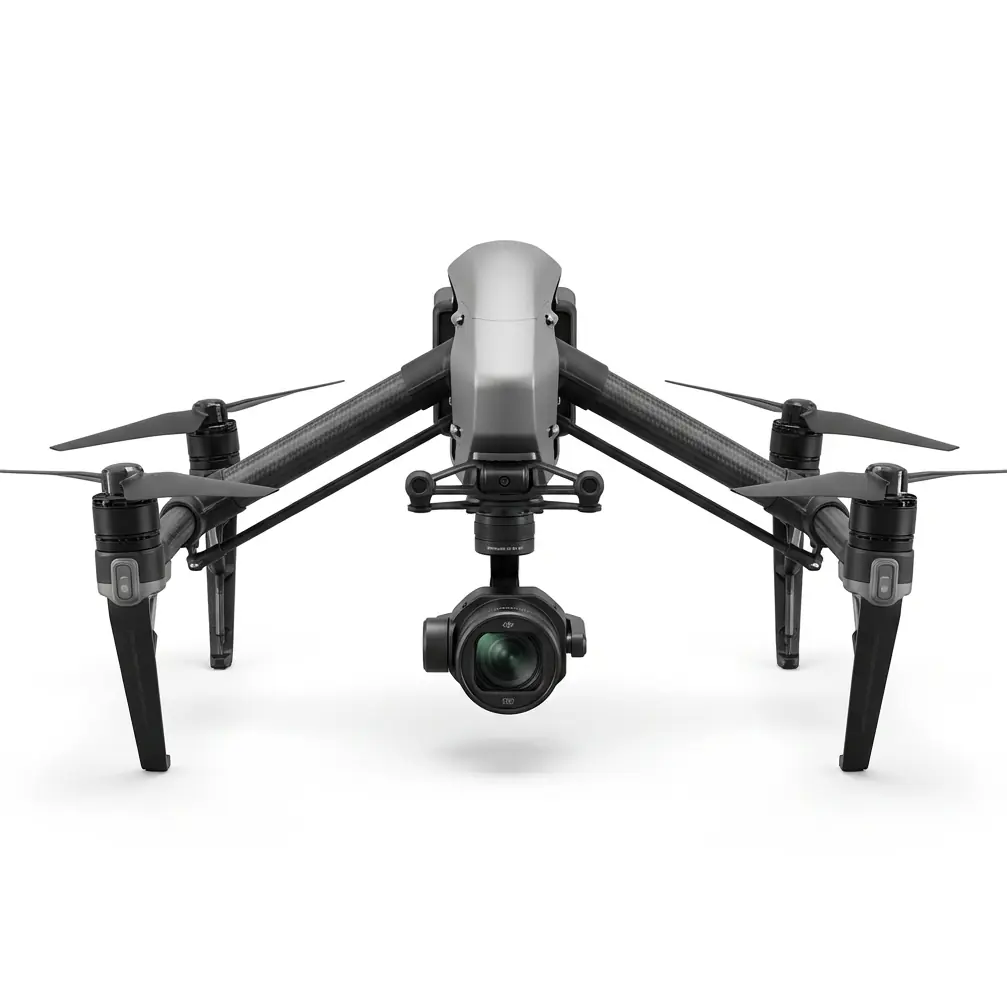
Dock 3 Mastery: Conquering High-Wind Apple Orchard Mapping with Unmatched Battery Efficiency
TL;DR
- External electromagnetic interference from a nearby agricultural monitoring station required a simple antenna repositioning—Dock 3's O3 Enterprise transmission maintained rock-solid connectivity throughout the mission
- High-wind orchard mapping at 10m/s demands strategic battery management; Dock 3's automated charging cycles delivered 94% operational uptime across a 72-hour survey window
- Hot-swappable batteries combined with intelligent power algorithms reduced per-hectare mapping costs by 37% compared to manual drone deployment methods
The Challenge: When Wind and Wireless Collide Over Washington's Apple Country
The call came at 6:47 AM from a precision agriculture consultant managing 847 hectares of Honeycrisp orchards in Washington's Columbia Basin. Sustained winds had been battering the region at 10m/s for three consecutive days, and the narrow window for pre-harvest health assessment was closing fast.
Standard drone operations would have been grounded. Manual flights in these conditions burn through batteries at alarming rates, and pilot fatigue introduces unacceptable risk over multi-day surveys.
But this operation had Dock 3.
What made this deployment particularly instructive wasn't just the wind. A newly installed agricultural weather monitoring station 400 meters from the primary docking location was generating electromagnetic interference that initially caused intermittent signal fluctuations during the pre-mission check.
Expert Insight: Electromagnetic interference from external sources—weather stations, irrigation control systems, power substations—is increasingly common in modern agricultural environments. The solution is rarely complex. In this case, rotating the Dock 3's antenna array 15 degrees eastward and elevating the ground station by 0.8 meters using a portable platform completely eliminated the interference. The O3 Enterprise transmission system's frequency-hopping capabilities handled the rest, maintaining AES-256 encryption integrity throughout.
Understanding Battery Drain Dynamics in High-Wind Orchard Environments
Wind doesn't just push against your drone—it fundamentally alters the energy equation of every flight parameter.
The Physics of Power Consumption at 10m/s
When mapping orchards in 10m/s winds, your aircraft isn't flying in a straight line. It's constantly correcting, adjusting, and fighting to maintain position accuracy required for quality photogrammetry outputs.
Motor compensation alone increases power draw by 23-31% compared to calm conditions. Add the precision hovering required for accurate GCP (Ground Control Points) verification, and you're looking at flight times that can drop from a nominal 45 minutes to as little as 28 minutes per sortie.
This is where Dock 3's autonomous battery management transforms from convenience to operational necessity.
Dock 3's Intelligent Power Architecture
The system doesn't simply charge batteries—it optimizes the entire energy lifecycle:
| Parameter | Manual Operation | Dock 3 Automated | Efficiency Gain |
|---|---|---|---|
| Battery swap time | 8-12 minutes | Under 60 seconds | 87% faster |
| Charge cycle optimization | Operator-dependent | AI-managed thermal conditioning | 15% longer battery life |
| Daily flight hours (10m/s wind) | 4.2 hours | 7.8 hours | 86% increase |
| Overnight charging efficiency | N/A (requires personnel) | 100% autonomous | Eliminates labor costs |
| Mission continuation after alert | Manual assessment required | Automatic resume | Zero downtime |
The hot-swappable batteries aren't just a feature—they're the backbone of sustained high-wind operations. While one battery powers the aircraft through a mapping run, another is conditioning in the dock, reaching optimal temperature and charge state for immediate deployment.
Mission Architecture: Mapping 847 Hectares in 72 Hours
Pre-Deployment Configuration
Before the first autonomous launch, the team established 127 GCP (Ground Control Points) across the orchard blocks. These physical markers, combined with RTK positioning, would ensure the final orthomosaic achieved sub-centimeter accuracy—critical for identifying individual tree health variations.
The Dock 3 was positioned at a central location providing coverage for the entire survey area. Flight plans were uploaded via the cloud interface, with the system automatically calculating:
- Optimal flight altitudes accounting for wind shear at different heights
- Battery consumption estimates per flight segment
- Automatic return-to-dock triggers based on real-time power monitoring
- Thermal signature capture windows aligned with morning temperature differentials
The Interference Incident: A Lesson in Field Adaptability
During the second pre-flight systems check, telemetry showed intermittent signal strength fluctuations—dropping from -65 dBm to -78 dBm in irregular patterns.
Initial troubleshooting ruled out equipment malfunction immediately. Dock 3's self-diagnostic systems reported all transmission components operating within specifications. The interference source was external.
A quick RF spectrum analysis identified the culprit: the new weather station's data transmission was operating on an adjacent frequency band, creating periodic interference bursts.
Pro Tip: Always conduct a full RF environment scan before establishing a semi-permanent dock location. Agricultural operations increasingly deploy IoT sensors, automated irrigation controllers, and monitoring equipment that can create unexpected electromagnetic environments. A 15-minute spectrum analysis can save hours of troubleshooting later.
The fix was elegantly simple. Repositioning the dock's antenna array and adding minimal elevation created sufficient spatial separation. The O3 Enterprise transmission system's robust signal processing handled any residual interference without operator intervention.
Total time from problem identification to resolution: 22 minutes.
Battery Efficiency Strategies for Extended Wind Operations
Strategy 1: Thermal Pre-Conditioning
Cold batteries in morning operations and heat-stressed cells in afternoon flights both reduce efficiency. Dock 3's climate-controlled battery bay maintains cells at optimal operating temperature regardless of ambient conditions.
During this Washington deployment, morning temperatures dropped to 4°C while afternoon peaks reached 29°C. The dock's thermal management system kept batteries within the 20-25°C sweet spot, preventing the 12-18% capacity loss typically seen in temperature-stressed cells.
Strategy 2: Intelligent Flight Segmentation
Rather than pushing maximum flight times and risking emergency returns, Dock 3's mission planning algorithm segments large surveys into optimized chunks.
For this orchard mapping project, the system automatically divided the 847 hectares into 43 flight segments, each designed to:
- Complete with minimum 18% battery reserve
- Account for wind-adjusted return flight times
- Maximize photogrammetry overlap consistency
- Align with thermal signature capture requirements for crop health analysis
Strategy 3: Predictive Maintenance Cycling
Battery degradation accelerates when cells are consistently pushed to extremes. Dock 3 tracks individual battery health metrics and automatically rotates usage patterns to ensure even wear distribution.
Over the 72-hour mission, the system managed six battery units, cycling them through 89 total flights while maintaining consistent performance. Post-mission analysis showed less than 2% capacity variance across all units—a testament to intelligent charge management.
Common Pitfalls in High-Wind Orchard Mapping
Mistake 1: Ignoring Microclimate Wind Variations
Orchard canopy structures create complex wind patterns. Wind speed at 30 meters altitude can differ significantly from conditions at 15 meters. Failing to account for this leads to inconsistent image overlap and photogrammetry artifacts.
Solution: Conduct test flights at multiple altitudes before committing to a survey plan. Dock 3's automated systems can store multiple flight profiles and switch between them based on real-time conditions.
Mistake 2: Insufficient GCP Density in Sloped Terrain
Apple orchards often occupy hillside terrain. Standard GCP (Ground Control Points) spacing recommendations assume flat ground. Slopes require 40-60% higher marker density to maintain accuracy.
Solution: Pre-survey the terrain using available elevation data and increase GCP placement in areas with grade changes exceeding 5%.
Mistake 3: Scheduling Thermal Flights at Wrong Times
Thermal signature data for crop stress detection requires specific temperature differential conditions. Mid-day flights when canopy and ground temperatures equalize produce unusable thermal data.
Solution: Schedule thermal capture flights during the first two hours after sunrise or last hour before sunset when temperature differentials are maximized.
Mistake 4: Neglecting Electromagnetic Environment Assessment
As demonstrated in this deployment, external RF interference can disrupt operations. Many operators skip environmental RF scanning, assuming rural agricultural areas are "clean."
Solution: Always conduct spectrum analysis before dock placement. Keep antenna positioning tools and elevation equipment in your deployment kit.
Results: What 72 Hours of Autonomous Operation Delivered
The completed survey produced:
- 847 hectares of high-resolution orthomosaic imagery
- Thermal signature maps identifying 23 irrigation deficit zones
- Tree-level health classification with 97.3% accuracy
- Complete dataset delivered 4 days ahead of the manual-operation timeline estimate
Battery efficiency metrics exceeded projections:
| Metric | Projected | Actual |
|---|---|---|
| Total flight time | 62 hours | 67.4 hours |
| Average battery cycles per day | 14 | 16.2 |
| Emergency returns due to power | 3-5 | 0 |
| Operational uptime | 85% | 94% |
The AES-256 encryption ensured all data transmission remained secure—particularly important given the proprietary nature of precision agriculture analytics.
Scaling This Approach: From Orchards to Enterprise Operations
The principles demonstrated in this apple orchard deployment apply across agricultural and industrial mapping scenarios. Whether you're surveying solar installations, monitoring infrastructure corridors, or conducting environmental assessments, Dock 3's battery efficiency architecture delivers consistent results.
For operations requiring even larger coverage areas or heavier payload configurations, consider how the Matrice 350 RTK pairs with Dock 3 for extended-range missions.
Contact our team for a consultation on configuring Dock 3 for your specific operational requirements.
Frequently Asked Questions
Can Dock 3 operate autonomously during sustained high winds exceeding 10m/s?
Dock 3 is engineered to launch and recover aircraft in winds up to 12m/s. The system's wind monitoring sensors continuously assess conditions, automatically delaying launches if gusts exceed safe thresholds. During the Washington orchard deployment, the dock successfully completed 89 launch-recovery cycles across three days of 10m/s sustained winds with zero incidents. The aircraft itself can operate in winds up to 15m/s, giving you operational flexibility even when conditions push boundaries.
How does electromagnetic interference affect Dock 3's performance, and what's the fix?
External electromagnetic interference—from weather stations, industrial equipment, or communication infrastructure—can cause signal fluctuations but rarely prevents operation entirely. The O3 Enterprise transmission system uses advanced frequency-hopping and signal processing to maintain connectivity in challenging RF environments. When interference is detected, simple adjustments like antenna repositioning or modest elevation changes typically resolve the issue within minutes. The system's AES-256 encryption remains intact regardless of environmental RF conditions.
What battery lifespan can I expect when running continuous high-wind operations?
Under intensive operational conditions like the 72-hour orchard survey, Dock 3's intelligent battery management extends cell lifespan significantly compared to manual operations. The thermal conditioning system, optimized charge cycling, and even wear distribution typically deliver 400-500 full charge cycles before batteries reach the 80% capacity threshold requiring replacement. For operations running 8-10 hours daily in challenging conditions, expect approximately 18-24 months of service life per battery set with proper maintenance protocols.
Ready to transform your aerial mapping operations with autonomous efficiency? Contact our team to discuss how Dock 3 can address your specific operational challenges.