
DJI Inspire 3 for Coastal Mountain Work: A Technical Review
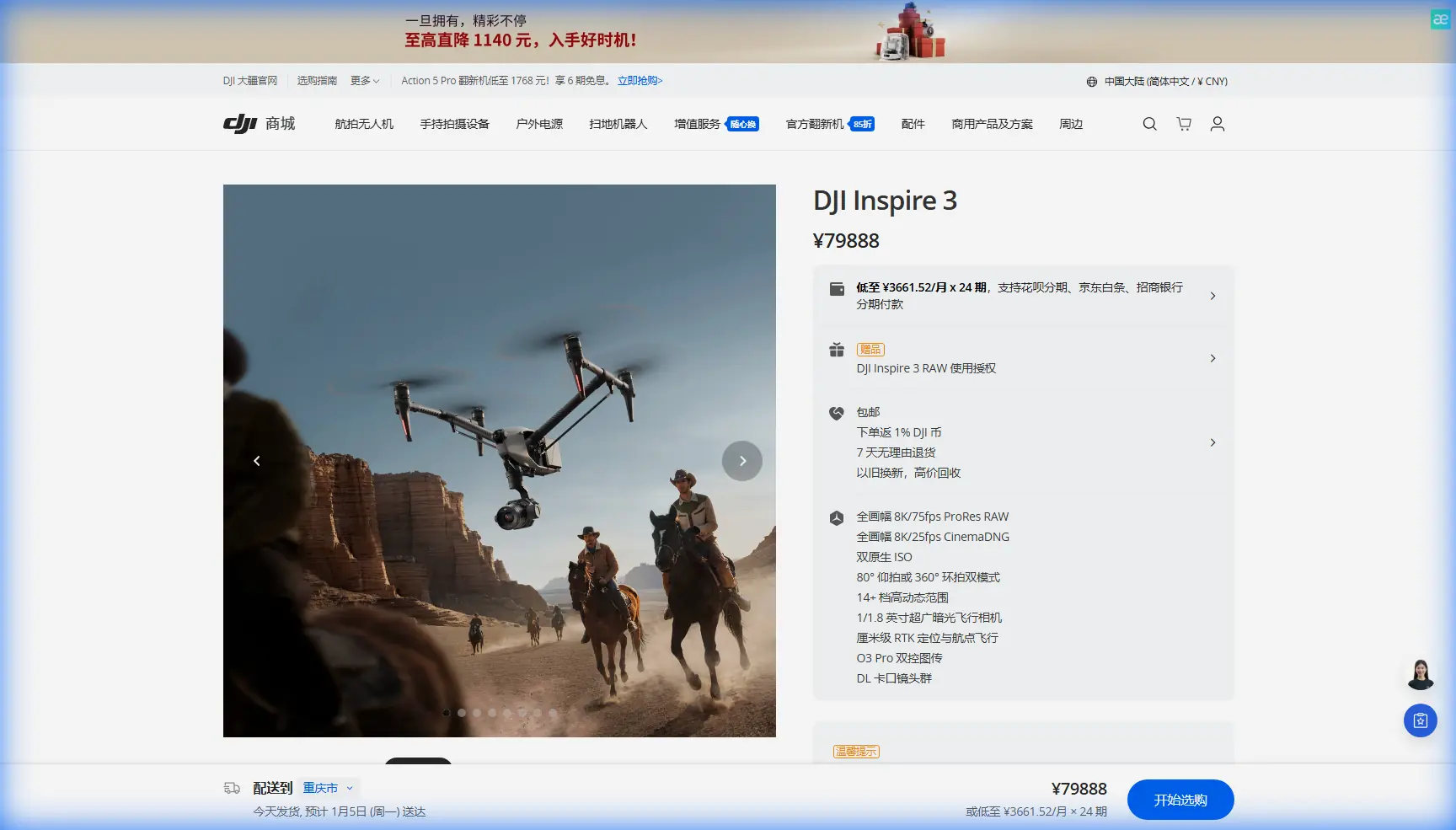
DJI Inspire 3 for Coastal Mountain Work: A Technical Review from the Field
META: A specialist technical review of the Inspire 3 for filming and mapping coastlines in mountain terrain, covering O3 transmission, AES-256 security, hot-swap batteries, photogrammetry workflow, and accessory choices.
The DJI Inspire 3 makes the most sense when the location is difficult enough to expose weak aircraft, weak workflows, and weak planning. Coastal mountain environments do exactly that. They combine steep elevation changes, reflective water, turbulent wind bands, narrow launch options, and fast-moving weather. If your assignment involves capturing shoreline detail where cliffs, ridges, and sea air all compete for control, the aircraft matters less as a spec sheet and more as a working system. That is where the Inspire 3 earns its place.
I approach this platform less as a prestige cinema drone and more as an aerial production tool that survives demanding logistics. For mountain coastlines, that distinction matters. You are not just chasing beautiful footage. You are trying to hold composition while climbing along a ridge face, maintain signal integrity as terrain masks line of sight, protect data when operating with client-sensitive location material, and keep the day moving when battery cycles and light windows are both short.
The Inspire 3 is built for that kind of pressure.
One of its most operationally significant traits is the way it handles transmission reliability through DJI’s O3 ecosystem. In flat open spaces, almost any modern professional aircraft can look competent. Along coastal mountains, the weak points show up quickly. Rock walls interrupt signal paths. Saltwater reflections can create strange perception challenges for pilots. Wind shifts around headlands often force subtle route changes that place the aircraft behind terrain for a moment longer than expected. O3 transmission is not simply a line in a brochure here; it becomes a practical margin of safety for maintaining control responsiveness and downlink confidence while tracking complex topography.
That matters for image quality too. Pilots often separate flight performance from cinematography, but in real missions the two are tied together. If the operator cannot trust the link, the camera team hesitates. Hesitation leads to conservative moves, flatter reveals, and fewer usable takes during the best light. On a mountain coastline, sunrise and late-afternoon contrast move quickly. A more dependable transmission chain gives the crew permission to fly decisive paths when the scene is actually working.
Security is another detail that becomes more relevant in professional operations than many crews admit publicly. The Inspire 3 supports AES-256, and while encryption is easy to dismiss as a corporate checkbox, it carries real significance when operating around infrastructure, private estates, industrial shorelines, or protected survey zones. Not every coastal assignment is a tourism shot. Some involve engineering review, land management, conservation work, or pre-construction documentation. In those settings, safeguarding command and data links is part of responsible flight planning, not a luxury feature. AES-256 support strengthens the case for the Inspire 3 in operations where location sensitivity and client confidentiality are part of the brief.
The battery system deserves equal attention. Hot-swap batteries are one of those features that do not sound glamorous until the weather turns. In mountain coastal work, you may have ten minutes of ideal light between marine haze movement and cloud shadow. You may also be launching from uneven rock shelves, roadside pullouts, or a support vehicle with limited setup room. Shutting everything down between sorties wastes that window. Hot-swap capability keeps the aircraft active while batteries are exchanged, which shortens turnaround and preserves continuity in mission tempo. For a moving production day, that is operational gold.
It also affects crew fatigue. Reboot cycles, rechecks, and repeated cold starts create friction. Over the course of a long day, friction becomes mistakes. Efficient battery handling reduces those interruptions and helps the crew stay focused on airspace, weather, and framing instead of procedural reset after reset. The best drone systems are not just capable in the air. They reduce workload on the ground.
For readers specifically working on coastal mountain capture, the question is not whether the Inspire 3 can produce high-end imagery. It can. The more interesting question is whether it can support a mixed mission profile. In practice, many operators are asked to gather cinematic footage, asset-reference imagery, and terrain-aware documentation on the same field day. This is where workflow discipline becomes essential.
If photogrammetry is part of the assignment, the Inspire 3 is not the first aircraft most teams name, but that does not mean it is irrelevant. Used intelligently, it can support high-value capture for selective modeling, cliff-face reconstruction, and environmental visual context. The key is understanding the limits and structuring the mission accordingly. In mountain shoreline work, accurate surface reconstruction depends heavily on disciplined overlap, stable lighting, and well-placed GCPs. Ground control points are especially important where elevation shifts rapidly and visual texture changes from vegetation to rock to water edge. Without GCPs, model drift and scale inconsistency can turn a promising dataset into an expensive approximation.
That is the operational significance of pairing a cinema-class aircraft with survey thinking. You do not use the Inspire 3 as a blunt substitute for a dedicated mapping platform. You use it where image quality, access flexibility, and targeted reconstruction intersect. For example, a coastal erosion project may need visually rich oblique passes over a cliff line that later support interpretive photogrammetry. A resort development review may require dramatic approach shots along a ridge, but also a measurable spatial reference for planning teams. In those cases, the Inspire 3 can bridge storytelling and technical documentation if the crew respects the data discipline.
The environment itself adds another layer: thermal behavior. Thermal signature is often discussed in relation to dedicated thermal payloads, but even when you are not flying a thermal mission, the concept matters. Coastal mountains produce sharp temperature contrasts between sunlit rock, shadowed ravines, wet surfaces, and wind-exposed ridges. Those differences influence air stability, local turbulence, and in some cases the detectability of subjects if you are coordinating with broader inspection workflows. Understanding the thermal character of the site improves route planning and hover management. Warm rock faces can create subtle lift effects. Cold marine air can flatten assumptions about battery performance. This is the kind of field knowledge that separates safe, repeatable operations from lucky ones.
A third-party accessory can materially improve the Inspire 3 in these conditions, and one of the most useful additions I have seen is a high-brightness third-party monitor hood and mounting system integrated into the ground station workflow. It sounds modest compared with lens or payload discussions, but along bright coastlines it solves a real problem. Glare off water and pale stone can degrade monitor readability enough to slow critical decisions. A well-designed accessory setup that shields the display and stabilizes viewing position helps both pilot and camera operator judge exposure, horizon accuracy, and subject separation more reliably. In mountain coastal work, that translates into fewer compromised takes and less guesswork during short weather windows.
This is also where human factors return to the center. The Inspire 3 rewards coordinated crews. A solo operator can do good work with it, but the aircraft shines when pilot and camera operator think as one unit. On a coastline bordered by mountain relief, that partnership matters because the shot often changes faster than the map suggests. The pilot is reading wind, terrain clearance, and return path. The camera operator is reading horizon line, parallax, wave timing, and foreground structure. The Inspire 3 gives them a platform stable enough to divide those responsibilities cleanly.
For teams considering longer operational envelopes, BVLOS is the term that inevitably enters the conversation. In mountain shoreline scenarios, the temptation is obvious. You want to follow the coast beyond a ridge break, maintain narrative continuity, and avoid repeated relocation of the launch point. But BVLOS is not a casual extension of normal practice. It sits inside a regulatory and safety framework that must be addressed rigorously. What the Inspire 3 contributes here is not permission, but readiness. Strong transmission architecture, secure links through AES-256, and a professional battery workflow provide a better foundation for organizations operating under lawful BVLOS structures or preparing for that level of maturity. The aircraft is not the entire answer, yet it aligns well with the procedural seriousness that BVLOS demands.
If your job is creative capture rather than technical survey, these same features still matter. Coastlines in mountain regions are visually deceptive. The eye sees grandeur; the flight log sees risk. Vertical relief compresses distance perception. Wind funnels can arrive without obvious surface indicators. Sea spray and airborne moisture complicate equipment handling. The Inspire 3 addresses these realities not because it is indestructible, but because it was designed for crews who plan, coordinate, and execute at a professional standard.
A practical mission example makes the point clearer. Imagine a dawn shoot on a mountain peninsula where the client wants a descending reveal from ridge crest to breaking surf, followed by low oblique passes along the cliff band. The launch site is a narrow turnout. The first battery cycle is spent establishing the hero move. Light improves for about 12 minutes, then cloud cover starts crossing from inland. With hot-swap batteries, the aircraft stays ready and the team resets quickly. O3 transmission helps maintain confidence as the route skirts terrain features that would make a lesser link feel fragile. AES-256 matters because the property boundaries and associated planning data are not public. Later, selected passes are used to support a photogrammetry reconstruction of the cliff toe, anchored with GCPs placed during the recce. That is not a fantasy use case. It is exactly the kind of blended mission where the Inspire 3 proves its worth.
There is also a subtler reason the platform suits these assignments: it encourages intentional flying. Fast consumer drones can make operators lazy because they are so easy to launch and reposition. The Inspire 3 asks for more from the crew, and in exchange it often yields more disciplined results. On difficult coastlines, discipline is a feature. You think harder about route geometry, sunlight angle, emergency contingencies, battery timing, and landing strategy. That thoughtfulness tends to improve both safety and output.
For teams building a serious coastal mountain workflow, I would frame the Inspire 3 this way: it is not merely a drone for pretty establishing shots. It is a production aircraft with enough transmission resilience, security architecture, and battery efficiency to function inside complex field operations. Add a sensible accessory package, especially for monitor visibility and operator ergonomics, and it becomes even more capable in bright, high-contrast environments.
If you are planning a specific mountain coastline project and want to compare workflow options, a direct field discussion often saves more time than another round of forum reading; you can start that conversation here: https://wa.me/example
The Inspire 3 is at its best when the location is difficult, the brief is layered, and the crew needs more than a flying camera. In coastal mountain work, that combination is common. O3 transmission supports control confidence where terrain interferes. AES-256 protects sensitive operations. Hot-swap batteries preserve momentum during narrow light windows. And with disciplined use of GCPs, the aircraft can contribute meaningfully to photogrammetry-adjacent tasks rather than living only in the cinematic lane.
That is the real story. Not spectacle for its own sake. A professional aerial system that holds together when geography, weather, and client expectations all tighten at once.
Ready for your own Inspire 3? Contact our team for expert consultation.