
Inspire 3 on Remote Coastlines: What Aircraft
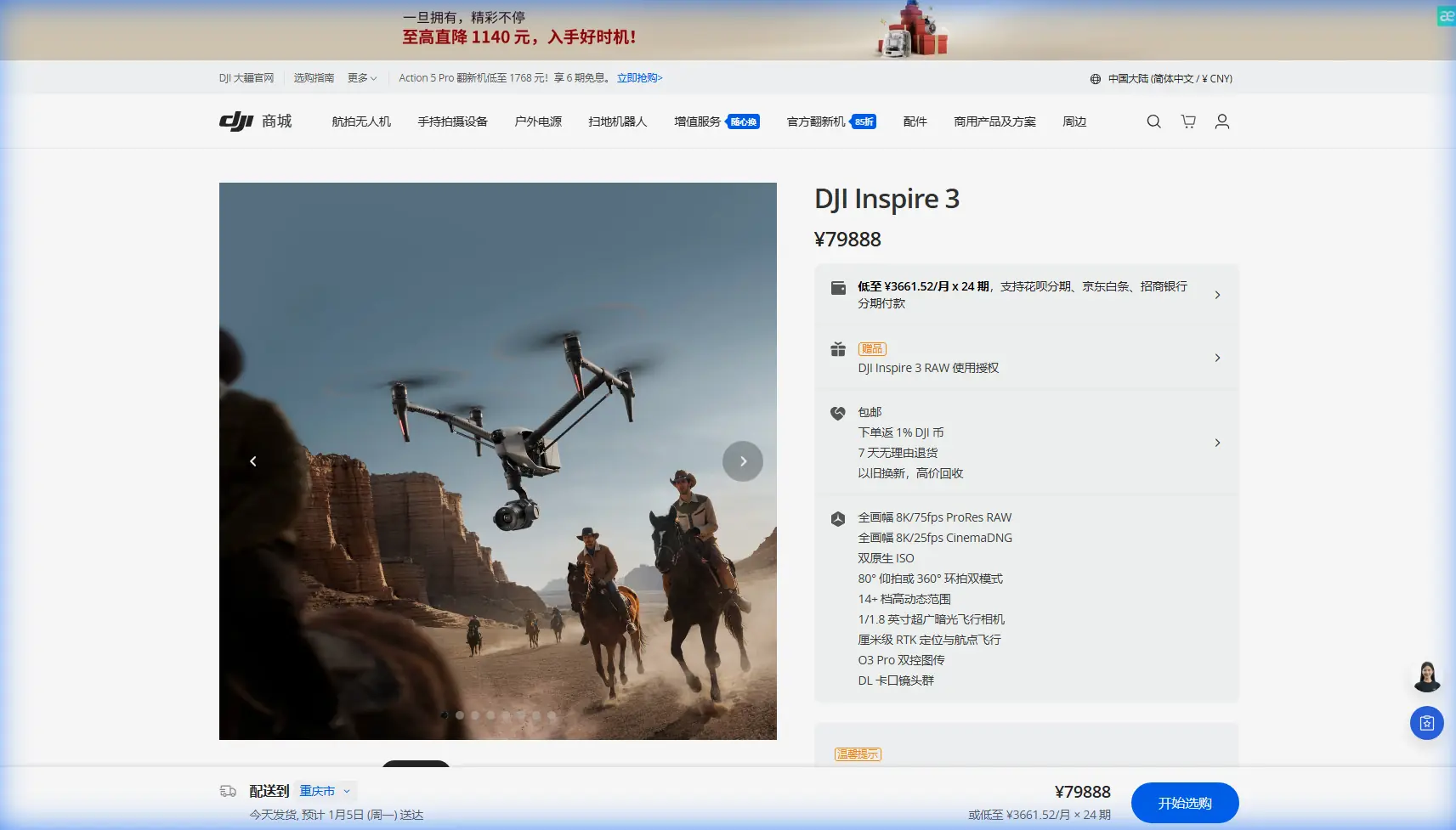
Inspire 3 on Remote Coastlines: What Aircraft-Level Design Lessons Mean in the Field
META: A practical expert guide to using Inspire 3 for remote coastline filming and mapping, with insight into lightning exposure, composite protection, power checks, and operational reliability.
Remote coastlines are beautiful right up until they stop being forgiving.
Salt haze creeps into connectors. Wind changes shape as it hits cliffs. Launch windows are short, recovery spots are uneven, and weather can turn from usable to unsafe faster than most crews expect. If you are planning to use an Inspire 3 in that environment, the real question is not just image quality. It is resilience: how the aircraft, the power workflow, and your field discipline hold together when the coast starts pushing back.
That is where old-school aircraft design logic becomes surprisingly relevant.
Two technical threads from conventional aviation deserve attention here: lightning protection in composite structures, and power-system monitoring before energizing the aircraft. Neither was written for an Inspire 3 specifically, but both point to the same operating truth for serious drone work in remote maritime locations: a high-performance aircraft is only as dependable as the protective systems wrapped around its structure and power chain.
The coastline problem most crews underestimate
People usually prepare for the obvious issues first. Wind. GPS multipath near rock faces. Landing zone selection. Exposure changes over reflective water. All valid.
The less obvious threat is cumulative stress. Remote coastal work often means long transits, repeated battery swaps, damp equipment cases, and pressure to keep flying through marginal atmospheric conditions because the light is finally right. On paper, the Inspire 3 is built for professional capture. In practice, the crew still has to think like operators, not hobbyists.
I learned this on a shoreline survey and cinematic pass sequence where the assignment shifted midway from pure image capture to documentation of erosion patterns for later photogrammetry. We were working along a rugged section of coast, alternating low oblique passes and wider top-down runs intended to support GCP-tied reconstruction later. During one leg, a gull cut sharply across the flight path from behind a rock face. The aircraft’s sensing and route management gave us enough margin to avoid a rushed stick input, but the moment mattered for another reason: it happened just as the weather was beginning to build inland and the marine layer was thickening.
That is the sort of day when operational decisions become more important than specifications.
Why lightning protection matters even when you are not flying in a storm
Let’s be clear. You should not be flying an Inspire 3 anywhere near thunderstorm conditions.
Still, lightning-related design data tells us something useful about composite airframes and conductive pathways. One of the source references notes that in a lightning zone, the conductive path across the aircraft surface between strike entry and exit points must be able to carry 100kA peak current and transfer 200C of charge in 1 to 2 seconds without excessive heating or ignition. Another requirement in the same material raises the survivability bar to 500C in 1 to 2 seconds for certain protection conditions. Those are manned-aircraft numbers, and far beyond the scale of a UAV. But the engineering principle is what matters.
Current wants a path. If the path is poor, heat and damage follow.
That becomes especially relevant with advanced composites. The structural reference states that advanced composite parts without a lightning protection layer suffered severe damage after simulated lightning exposure in the 60–100kA range, with as little as 1.9C of discharge charge. That contrast is striking. A composite component can look sophisticated and still be vulnerable if it lacks a properly integrated conductive layer.
For an Inspire 3 operator on the coast, the takeaway is not “my drone needs manned-aircraft lightning certification.” The takeaway is more practical:
- Composite-rich aircraft need respect around atmospheric electricity.
- Surface condition and continuity matter.
- Hidden structural damage is a bigger risk than cosmetic wear suggests.
- Remote coastal weather is exactly the kind of environment where conservative go/no-go calls save equipment.
Salt-laden air compounds that caution. It does not create lightning, but it does encourage corrosion and contamination at interfaces. If your aircraft has been repeatedly exposed to sea spray, tiny degradations in conductive bonding, connector health, or shielding effectiveness can stack up over time. You may never see the problem during a calm inland test flight. You might see it when transmission quality dips on a cliff edge or when a battery handoff does not feel as clean as it should.
A small structural detail with a big lesson
One detail from the aircraft handbook is worth pulling forward because it shows how specific protection design gets. It describes a solution using 0.1524 mm aluminum material arranged at 50 mm spacing on a composite surface, oriented perpendicular to airflow, and validated in simulated lightning testing as delivering protection comparable to full foil coverage.
That is not a trivia point. It is a reminder that reliability is often built from subtle material and geometry decisions rather than one dramatic feature. The Inspire 3 lives in that same reality. Its value in remote coastline work comes from system integration: airframe, payload, power, transmission, thermal behavior, and crew procedures all reinforcing one another.
When I inspect a drone before coastal deployment, I am looking for the UAV equivalent of that disciplined engineering mindset. Not whether it looks clean from three feet away, but whether critical surfaces, contact points, seals, vents, and battery interfaces tell the story of an aircraft that has been maintained for repeated professional use.
The power chain is where remote shoots quietly fail
The second source document focuses on external power monitoring in aircraft electrical systems. Again, not drone-specific, but highly instructive.
It describes a straightforward but rigorous philosophy: do not connect outside power to the aircraft unless voltage, frequency, and protective thresholds are within acceptable limits. For AC systems, the referenced standard allows connection when external voltage is within 112.8 to 118.2 and frequency within 390 to 410, with response time to connect not exceeding 1.5. It also warns that monitoring thresholds must never be looser than the power source characteristics, because that defeats the protection purpose and only adds weight and complexity.
That last point applies beautifully to Inspire 3 field work.
A lot of coastal drone failures are blamed on “the environment,” when the actual root cause is a sloppy power workflow. Batteries warmed inconsistently. Charge states mixed. Generator output assumed rather than checked. Vehicle inverter used as a convenience source. Firmware updates rushed between sorties. The aircraft gets airborne, but the electrical discipline behind it is weak.
Professional crews should borrow the same mindset as certified aviation systems: verify before energizing, not after the fault appears.
With Inspire 3, that means every remote coastline operation should treat power as a controlled chain rather than a bag of batteries. If you are using hot-swap batteries to keep the aircraft turning quickly between runs, the speed benefit is real, but it only works when the pack rotation is tightly tracked. On a cold, wet shoreline, one marginal battery can turn a smooth sortie cycle into a forced schedule reset. If your support gear includes charging from portable external sources, the principle from the aircraft reference still stands: the incoming power should be proven stable before it touches mission-critical equipment.
What this means for actual Inspire 3 coastline work
So how does all of this translate when the mission is capturing remote shorelines?
It changes the way you plan.
A coastline assignment with Inspire 3 is often split between two competing goals: cinematic movement and geographically useful coverage. One wants freedom. The other wants repeatability. The aircraft can serve both, but only if the mission architecture is built around environmental reality.
For cinematic work, you may be running long lateral passes with changing relative altitude as the terrain falls away. O3 transmission quality matters here, not just for control confidence but for image decision-making at distance. In broken coastal topography, transmission paths can be interrupted by cliffs and headlands even when the aircraft seems visually unobstructed from the launch point. A strong link budget is useful, but link discipline matters more: antenna orientation, launch placement, and conservative stand-off from terrain edges.
For mapping or photogrammetry support, the requirements tighten. Consistent overlap, stable speed, controlled shutter strategy, and GCP planning all become essential. Wind over water can alter groundspeed enough to affect capture consistency on repeated legs. If your aircraft is fighting the air, your model quality pays for it later.
That is why I often tell crews that coastline imaging is really a systems test disguised as a pretty shoot.
Thermal awareness is not just for dramatic visuals
The LSI terms around thermal signature deserve a practical note too. Along the coast, thermal behavior can reveal operational risks before they become obvious in the visible feed. Sun-warmed rocks, wet surfaces, cold spray zones, and patchy fog create temperature gradients that affect both the environment and the aircraft. Not every Inspire 3 mission is a thermal mission, but thermal thinking helps.
For instance, if you are operating near seabird nesting areas or marine wildlife haul-outs, understanding heat contrast and movement patterns can improve route decisions and reduce disturbance. On one morning sortie, we adjusted a pass after identifying a seal group clustered on a cooler shelf below a sunlit rock band. The visible view alone made the ledge look empty at first glance. That kind of adjustment protects the subject and keeps the operation professional.
Wildlife awareness also reinforces a larger point: remote coastline flying is not just about what the aircraft can survive. It is about how precisely the crew can move through a complex environment without forcing unnecessary risk onto nature, the aircraft, or the client’s schedule.
Security and continuity still matter offshore
Remote does not mean isolated from data risk. If your coastline work involves sensitive commercial infrastructure, land-development documentation, environmental survey records, or pre-publication film assets, secure handling matters. AES-256 is one of those terms that can sound abstract until you are transmitting or storing material that should not leak early.
The same goes for continuity planning. If your team intends to scale toward longer corridor captures or future BVLOS-capable workflows where regulations permit, you need habits now that will hold up later: documented checklists, battery traceability, site-specific weather thresholds, and recorded preflight system checks.
This is where the power-system reference becomes more than an engineering footnote. It describes two self-test approaches: startup self-checks and continuous or periodic self-detection. That distinction is useful in drone operations. A startup check tells you whether the aircraft is ready to launch. Ongoing situational checks tell you whether the mission remains healthy once reality starts changing around you.
The best Inspire 3 crews do both. They do not treat preflight as a box-ticking ritual. They treat it as the first of several decision gates.
A practical field standard for Inspire 3 coastal deployments
If I were setting a house standard for remote coastline use, it would look something like this:
- Weather discipline first. If convective activity is building, stop trying to squeeze one more run out of the day. The composite-structure lessons from aviation are enough to justify zero complacency.
- Inspect surfaces and interfaces closely. Salt exposure is sneaky. Pay extra attention to battery contacts, access points, external fittings, and any area that repeatedly sees mist or spray.
- Control your power source. If charging or supporting gear in the field, verify source stability before connecting. Do not let convenience outrank protection logic.
- Use hot-swap capability intelligently. Fast turnarounds only help if batteries are temperature-managed, logged, and rotated with discipline.
- Plan for transmission geography, not just transmission range. Cliffs and inlets change link behavior. O3 performance is strongest when the pilot respects terrain geometry.
- Separate cinematic legs from survey legs. Trying to make one flight profile do both usually weakens both.
- Keep wildlife avoidance active. The gull that appears from nowhere is not rare on the coast. It is normal.
If you want help building an Inspire 3 workflow around that kind of field reliability, you can message our expedition planning desk here: https://wa.me/85255379740
The real advantage of Inspire 3 on the coast
People often talk about flagship drones as if the advantage is mainly in the camera. With Inspire 3, the bigger advantage on remote coastlines is confidence under pressure. Not bravado. Not spec-sheet confidence. Operational confidence.
That confidence comes from understanding that a professional UAV is part aircraft, part sensor platform, part power system, and part discipline. The aviation references behind this article make that visible in hard numbers: 100kA conductive path capability, 200C to 500C charge transfer requirements, composite damage beginning around 60–100kA without protection, AC acceptance windows like 112.8 to 118.2 and 390 to 410, and connection response targets of 1.5 or less. You are not applying those figures directly to an Inspire 3. You are applying the design mindset they represent.
And on a wet headland, with wind coming off the water and a bird crossing the frame just as the light turns perfect, mindset is what keeps the mission productive.
Ready for your own Inspire 3? Contact our team for expert consultation.