
Inspire 3 Field Report: Filming Urban Forest Corridors
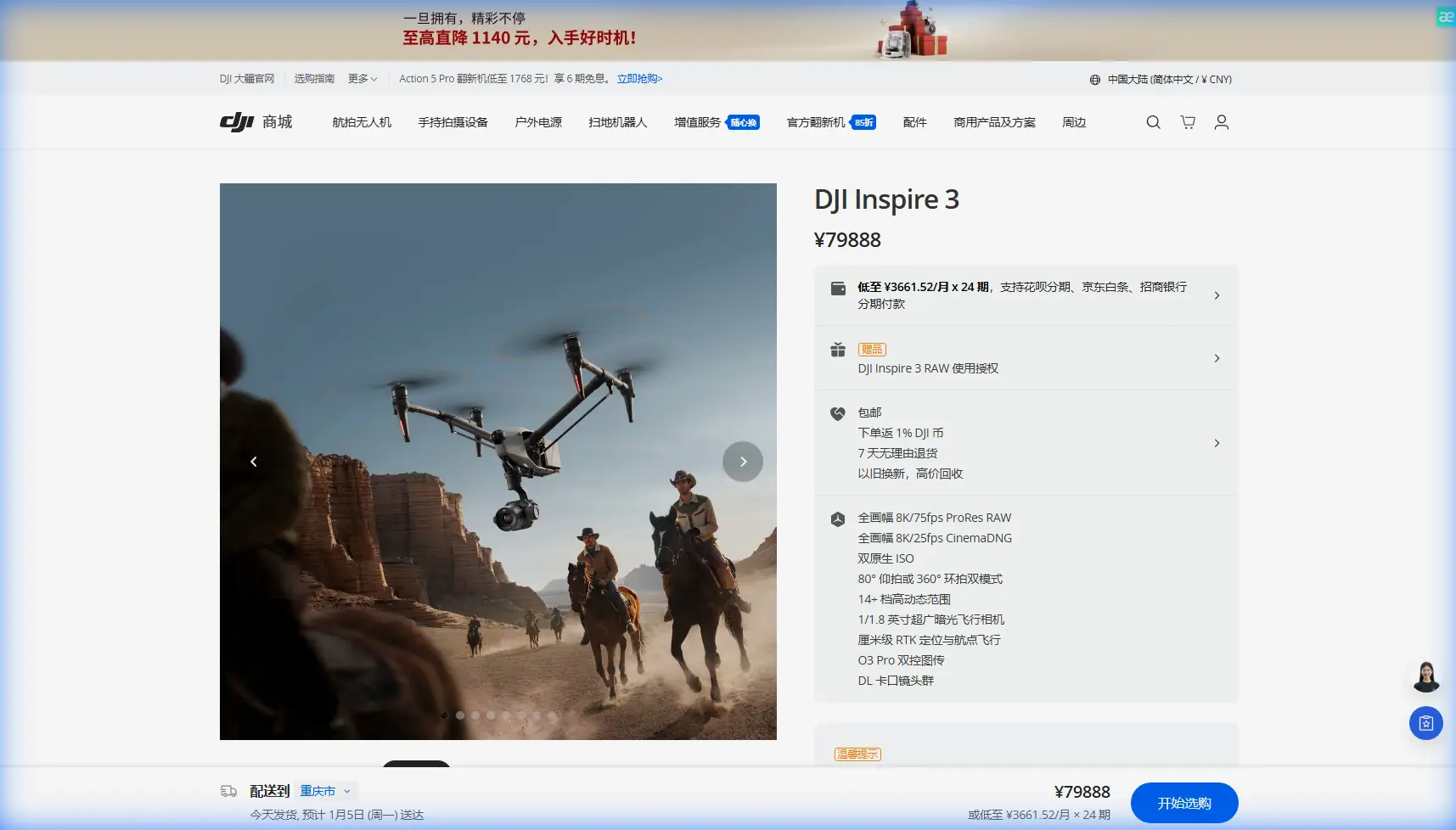
Inspire 3 Field Report: Filming Urban Forest Corridors Without Losing Signal or Precision
META: Expert field report on using the DJI Inspire 3 for urban forest capture, covering O3 transmission, AES-256 security, hot-swap batteries, EMI handling, and practical flight planning.
Urban forest work looks simple from the sidewalk. It rarely is from the pilot’s screen.
On paper, the assignment sounds straightforward: capture tree canopy, pathways, rooflines, drainage edges, and street-level transitions inside a built-up environment. In practice, this is one of the more demanding missions you can hand to an Inspire 3 crew. You are threading cinematic flight through a maze of reflective glass, steel framing, Wi‑Fi congestion, traffic movement, and broken GPS geometry under branches. Add the need for repeatable passes or mapping-grade overlap, and the margin for error narrows quickly.
That is where the Inspire 3 becomes interesting. Not because it is simply “powerful,” but because several of its design decisions have direct operational value in urban forest capture. Two stand out immediately in the field: its O3 transmission system and its support for hot-swap batteries. A third matters the moment the operation involves sensitive infrastructure or client confidentiality: AES-256 encryption.
I spent time thinking about this platform through a very specific use case: documenting wooded greenbelts and tree clusters inside dense urban zones, where the brief often mixes aesthetics with inspection logic. One pass may be about motion and composition. The next may be about identifying stress patterns in a canopy edge, building a photogrammetry base layer, or preserving a repeatable route for later comparison. The Inspire 3 is not a forestry drone in the narrow sense, but in this niche it can be exceptionally effective if the crew understands what the environment is trying to do to the aircraft.
The real problem is not the trees
Pilots who are new to urban woodland work often assume the primary obstacle is vegetation. It is not. Trees complicate line of sight, disrupt vertical composition, and create sudden low-contrast pockets. But the larger operational threat is electromagnetic clutter.
Urban forests are usually bordered by apartment blocks, utility corridors, telecom equipment, rail lines, signalized intersections, rooftop access points, and dense consumer device traffic. The result is a flight environment that can degrade signal stability in subtle ways before any obvious warning appears. You may still have control, but your feed starts to lose confidence. Latency becomes less predictable. Signal bars dip on a heading that looked clean during takeoff. The aircraft is not failing. The radio environment is changing around it.
This is where O3 transmission matters as more than a spec-sheet badge. In urban tree work, robust transmission is not just about range. It is about maintaining usable situational awareness when the aircraft moves from an open lane into partial canopy cover and then past a reflective facade. That transition happens fast. A link that feels stable in a parking lot can become much less forgiving 40 meters later when the drone is framed by wet leaves on one side and steel on the other.
The operational significance is simple: better transmission resilience gives the pilot more time to make good decisions instead of rushed ones. That is the real value. It means you can slow down before a tight reveal shot near a tree line. It means the camera operator is less likely to chase a stuttering feed. It means the crew can hold a cleaner route across a corridor where branch structure obscures parts of the aircraft at different moments.
Antenna adjustment is not a minor detail
Most signal issues in these environments are not solved by flying higher and hoping for the best. They are solved by paying attention to antenna geometry.
When I think about Inspire 3 deployments around urban forests, one recurring field habit matters more than many crews admit: adjusting ground antenna orientation as the aircraft shifts from broadside movement to direct outbound or inbound legs. Too many operators set their position once, glance at the monitor, and never revisit the physical relationship between the controller antennas and the aircraft’s path.
That is a mistake, especially near EMI-heavy structures.
If interference starts showing up near a block of offices or along a utility edge, the first corrective move is not always retreat. Often it is a controlled pause in a cleaner segment of airspace, followed by a deliberate adjustment of body stance and antenna angle to optimize the link for the next segment. In practical terms, that can mean rotating a few degrees off a reflective building line, raising the controller position slightly, or changing the pilot’s orientation so the antenna faces the aircraft’s actual travel corridor rather than its original takeoff heading.
This sounds small. It is not. In an urban forest mission, tiny geometry changes can restore link stability enough to complete the shot without widening the route or sacrificing the intended parallax.
That is one reason I would brief antenna handling explicitly before launch, not as an afterthought. If your crew is filming under intermittent canopy near dense buildings, antenna discipline belongs in the same category as battery checks and obstacle review.
Hot-swap batteries change the tempo of the mission
Urban forest capture is often interrupted work. Pedestrian windows open and close. Traffic timing affects access. Light shifts across the canopy faster than many operators expect because buildings carve hard shadows across the scene. You may have 12 clean minutes, then lose the look entirely.
The Inspire 3’s hot-swap battery capability matters here because it protects continuity. You can land, exchange batteries, and get back airborne without a full system reset cycle that breaks crew rhythm and risks losing the exact atmospheric conditions you were working with. In urban tree work, continuity is not a luxury. It is often the difference between a coherent sequence and a patchwork of mismatched clips.
There is also a mapping and inspection benefit. If the mission includes photogrammetry passes over a park strip, boulevard tree run, or stormwater edge lined with vegetation, short turnaround between battery changes helps preserve sun angle consistency and shadow behavior. That improves image uniformity for processing. It does not eliminate the need for careful overlap planning, but it reduces one avoidable source of variation.
When ground control points, or GCPs, are part of the workflow, time discipline becomes even more important. Markers placed in mixed urban-green spaces can be visually compromised by leaf litter, dappled light, and foot traffic. The longer the mission stretches, the more likely those references become less reliable or less visible. Faster re-entry after landing keeps the capture window tighter and the data cleaner.
Security matters more than many creative teams expect
AES-256 encryption does not usually headline discussions about an Inspire 3 shoot in a city park or wooded civic corridor. It probably should.
Many urban forest missions sit close to sensitive sites: campuses, municipal assets, private developments, transport links, utility easements, or environmental restoration zones not yet open to the public. In those contexts, the security of the transmission path matters operationally, not just administratively. Crews are often collecting footage that reveals access routes, structural relationships, roof conditions, or site staging details beyond the trees themselves.
AES-256 support matters because it helps protect the integrity of that live data link in environments where information sensitivity is real. If you are working under a client protocol, municipal permit condition, or internal security policy, this is not abstract. It can influence whether the platform is acceptable for the mission in the first place.
And there is a softer operational effect too: when stakeholders trust the platform, approvals move more smoothly. That matters when the site window is narrow and the location manager, arborist, survey lead, and pilot all need to align quickly.
Forest capture in a city often becomes a mixed-sensor problem
The brief may start with visuals, but urban woodland work often drifts toward analysis. Once a client sees the canopy from above, new questions arrive. Which trees are shading drainage assets? Where are edge trees showing possible stress? Is there enough consistency in the route to compare seasonal changes? Can the flight support photogrammetry outputs for planning?
That is why crews need to think beyond “pretty pass through the trees.”
Thermal signature analysis, for example, can become relevant when urban heat islands meet vegetation health questions. While the Inspire 3 itself is primarily recognized for high-end imaging rather than dedicated thermal payload work, the concept still matters at the planning stage. If stakeholders are using Inspire 3 footage alongside thermal data from another platform, route consistency, altitude discipline, and common reference points become essential. A cinematic system can still anchor a broader documentation workflow if flown with measurement in mind.
This is also where GCP placement and repeatable route design deserve more respect. If the mission may later support photogrammetry, even indirectly, the crew should avoid improvising every move. Build at least one clean, repeatable acquisition pattern around the area of interest. Keep turns predictable. Preserve overlap where possible. Note canopy gaps, reflective rooftops, and places where urban clutter may confuse reconstruction.
The strongest Inspire 3 operators in these environments are the ones who can move between film logic and data logic without treating them as separate universes.
BVLOS talk needs realism
BVLOS remains a tempting idea when looking at long urban green corridors. On a map, a tree-lined route through a city can seem ideal for extended runs. Operationally, that assumption can collapse fast.
Dense infrastructure, variable line of sight, changing airspace considerations, and the unpredictability of people on the ground make urban forest corridors poor candidates for casual thinking about BVLOS. Even where regulation may permit advanced operations under the right framework, this is not a setting for loose interpretation. Buildings mask visibility. Trees hide lateral movement. RF conditions change block by block.
For most Inspire 3 crews, the smarter move is to treat these missions as precision corridor work with strict visual discipline, conservative route segmentation, and pre-identified recovery positions. Break the scene into manageable sections. Plan where signal quality is strongest. Identify points where antenna realignment may be needed. Fly the environment you actually have, not the one the map suggests.
What the Inspire 3 does well here
The platform’s value in urban forest work is not about brute force. It is about composure.
It holds together when the mission asks for cinematic accuracy in a technically messy place. O3 transmission supports control confidence in cluttered RF conditions. Hot-swap batteries preserve momentum and route continuity. AES-256 helps satisfy the security expectations that increasingly surround urban operations. Those are not glamorous talking points. They are the reasons a demanding day can stay orderly.
Just as important, the Inspire 3 encourages a professional style of working. You cannot get the best from it by rushing into tree corridors and reacting to every warning after the fact. It rewards pre-briefing, route design, antenna awareness, and disciplined resets between takes. In that sense, it is a platform that exposes crew quality very quickly.
If I were advising a team preparing for this exact scenario, I would keep the checklist short and serious:
Know the RF trouble spots before takeoff.
Plan one cinematic route and one repeatable documentation route.
Place GCPs where canopy flicker will not bury them.
Use battery swaps to protect continuity, not just endurance.
Train the pilot to treat antenna position as an active control variable.
That last point deserves repeating. In dense urban greenery, signal management is physical. The best crews do not simply monitor transmission quality; they shape it. A slight change in orientation can be the difference between a clean corridor move and a compromised one.
For teams that want to compare notes on urban capture planning, permit constraints, or route setup, I’d suggest using this direct project chat: message the flight desk.
The Inspire 3 is at its best when the mission sits at the intersection of visual ambition and operational discipline. Urban forest filming lives exactly there. It asks for aesthetic control, radio awareness, safe positioning, data-minded planning, and enough humility to let the environment dictate the method. When flown that way, the aircraft becomes less of a spectacle and more of a reliable instrument.
That is the difference experienced operators care about. Not whether the drone can fly through a city park, but whether it can do the job cleanly, securely, and repeatably when the surroundings are working against it.
Ready for your own Inspire 3? Contact our team for expert consultation.