
Inspire 3 Field Report: Capturing High-Altitude Forests
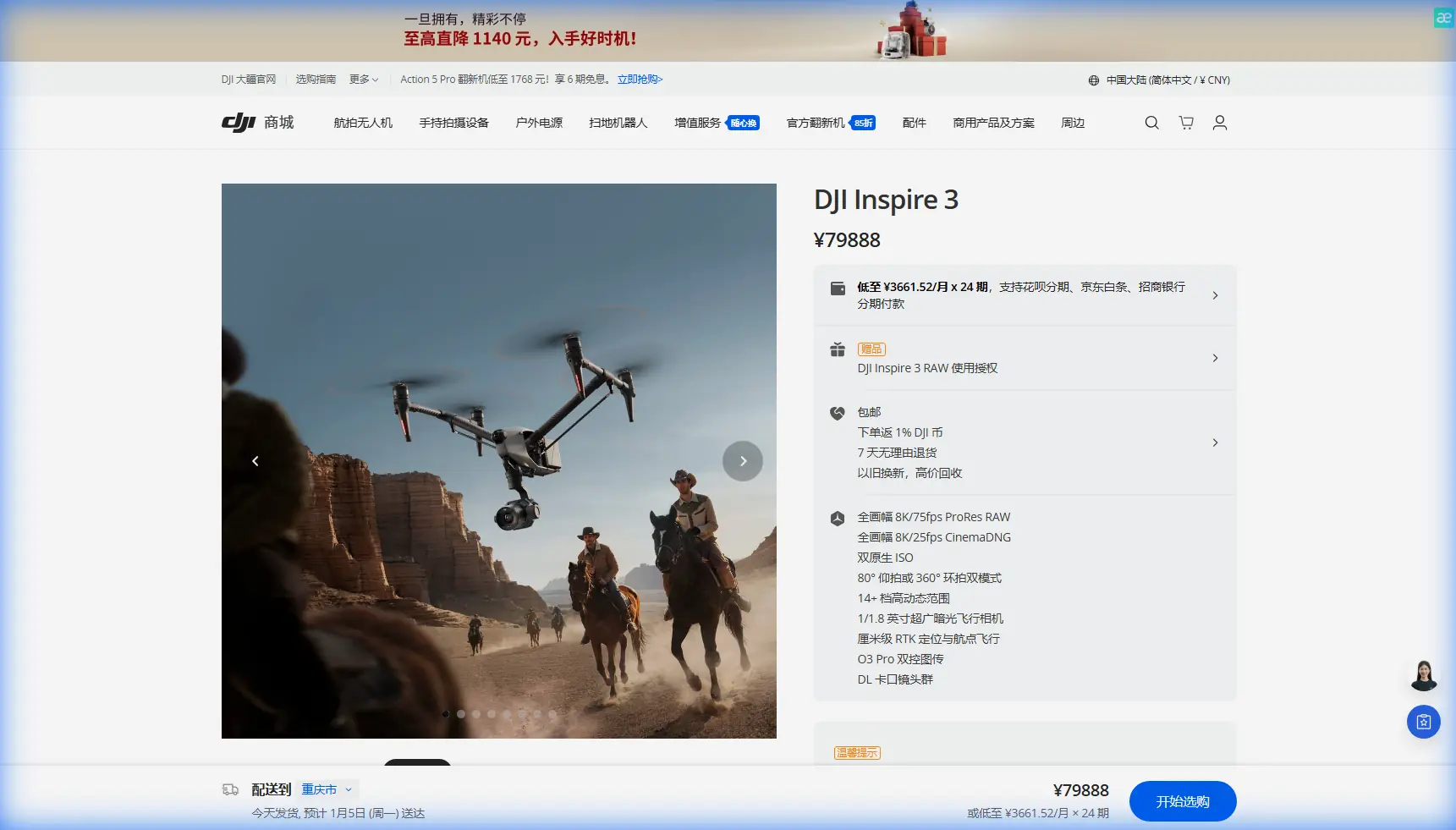
Inspire 3 Field Report: Capturing High-Altitude Forests When Temperature, Materials, and Reliability Actually Matter
META: A field report on using Inspire 3 for high-altitude forest imaging, with practical insight on thermal behavior, reliability under heat stress, materials selection, O3 transmission, hot-swap batteries, and mapping workflow.
I’ve spent enough time in mountain forests to know that the hardest part of a flight is rarely the shot list. It’s everything the environment is quietly doing to the aircraft before you even lift off.
High-altitude woodland work with the Inspire 3 looks glamorous from the outside: tree canopies rolling over ridgelines, layered mist, cold morning light, and clean tracking lines through valleys that seem purpose-built for cinematic flight. The reality is more technical. Temperature swings are sharp. Surfaces heat unevenly. Moisture appears where you don’t want it. Components that behave perfectly at staging can drift once the aircraft is climbing, hovering, transmitting, and processing continuously.
That is where serious field planning separates attractive footage from dependable results.
On one recent forest mission, we were working above the tree line’s lower edge, documenting canopy condition and terrain transitions for a mixed visual-capture and photogrammetry brief. The site combined steep elevation changes with exposed sun pockets and cold shaded gullies. Mid-flight, a deer broke cover from the conifer edge and crossed into a clearing beneath our planned lateral path. It was a small moment, but it forced a live adjustment. Instead of pressing through, we widened the line, held altitude, and let the aircraft’s situational awareness and stable transmission link do their job while we re-composed. In forest work, the most valuable sensor behavior is often not about spectacle. It is about giving you enough confidence to make calm decisions when the scene changes under you.
The Inspire 3 is well suited to that kind of assignment, especially when you are balancing cinematic capture with practical data collection. But in high-altitude forests, the aircraft’s value is not just image quality or flight performance. It’s how the platform holds its composure as thermal load, material stress, and transmission demands begin stacking up at once.
Why temperature management is not a side issue in forest operations
A detail from aircraft reliability engineering is worth bringing into drone work because it explains a lot of what operators see in the field. In a reliability design reference for electronic equipment, the failure-rate behavior of components such as metal film resistors is modeled against stress and temperature. One table shows that for a resistor rated at 70°C, the basic failure rate rises as temperature and applied stress increase. Even within the excerpted values, you can see movement from roughly 0.006 up to 0.030 in the listed failure-rate scale as conditions intensify.
That number is not something an Inspire 3 pilot plugs directly into a flight app. The significance is operational: electronic reliability is not static. It shifts with thermal and electrical burden. The same reference also states that once environmental conditions move beyond a certain threshold, using full rated stress is no longer suitable, and that semiconductor devices must be checked against junction-temperature derating requirements rather than assumed safe by default.
For a high-altitude forest mission, this matters more than many crews realize.
People often imagine mountain operations as purely cold-weather flying. That is only half true. Ambient air may be cool, but the aircraft can still face intense localized heating. Dark rock faces radiate. Exposed launch pads absorb sun. Batteries warm under continuous demand. Gimbals and onboard processing remain active for long windows. If you are running repeated climbs, aggressive repositioning, long hover holds over canopy gaps, and high-bitrate capture, the internal thermal picture can diverge sharply from what the operator feels on the ground.
With the Inspire 3, this translates into a simple discipline: treat thermal state as a mission variable, not a footnote.
That means shorter assumptions and longer checks. Don’t just ask whether the aircraft can fly. Ask whether it can sustain the specific profile you want without pushing subsystems into avoidable stress. When your mission includes multiple takes across changing sun exposure, battery hot-swaps, and data-heavy capture, the thermal story is cumulative.
The hidden link between aircraft materials and image consistency
The second reference point comes from an aircraft materials manual. Even from the table of contents, one message is clear: engineering materials are never evaluated by a single property. The document emphasizes coefficient of thermal expansion, electrical conductivity, mechanical properties at different temperatures, corrosion resistance, processability, storage, and special categories such as transparent materials and edge connection materials.
At first glance, that sounds remote from an Inspire 3 field workflow. It isn’t.
High-altitude forest work exposes a drone to repeated transitions between cold shade and direct solar heating. Materials expand, contract, and react at different rates. Transparent elements, adhesive interfaces, housings, cable protection, and edge-bonded assemblies do not all respond uniformly. In practical terms, this can affect sensor stability, enclosure integrity over time, connector confidence, and ultimately the repeatability of your capture.
Why does that matter for a forest operator? Because repeatability is everything when the job mixes beauty shots with photogrammetry.
If your morning pass over a ridge is being matched later with another angle for terrain modeling, your platform needs to behave consistently across changing conditions. Even subtle shifts in thermal response can influence calibration confidence, especially if the workflow depends on precise overlap, stable attitude, and repeat camera geometry. You do not need to be redesigning the aircraft to benefit from this knowledge. You just need to respect it in the field.
That starts with handling and storage. The materials reference explicitly treats transport, storage, and safekeeping as part of the engineering story, not an afterthought. For Inspire 3 crews, that means cases left in direct sun, lenses moved too quickly between cold and warm air, and components staged on abrasive or moisture-prone ground should all be seen as reliability decisions. They are not merely housekeeping.
Forest missions are won before takeoff
When I prepare the Inspire 3 for mountain forest capture, I work backward from the environment rather than forward from the storyboard.
If the goal is cinematic motion through layered canopy at altitude, I first map signal behavior. Dense vegetation, ridges, and narrow valley geometry can all complicate control confidence. This is where O3 transmission matters in a very real way. In open conditions, it gives you the stability to hold intent over distance. In forests, its practical value is less about maximum reach and more about preserving command and monitoring quality when terrain and tree mass are trying to break up your line. If the brief touches future corridor work or wider-area observation concepts, the conversation may naturally move toward BVLOS planning, but in complex forest terrain, disciplined visual operations and conservative route design still define safe civilian practice.
Then I plan for battery rhythm. Hot-swap batteries are one of the most useful operational features on a platform like Inspire 3, especially when mountain weather opens short windows. At altitude, light quality can shift in minutes. You may get one clean interval where mist lifts, crosswind softens, and the canopy finally reveals texture. Hot-swapping lets you preserve setup momentum and camera readiness instead of treating each battery change like a full reset. That sounds minor until you’re standing on a ridge with a six-minute weather opening.
There is also a thermal benefit to organized swap discipline. Fast changes reduce needless powered idle time, which in turn helps prevent heat accumulation during setup pauses. Reliability engineering again shows its relevance here: every unnecessary minute of energized waiting adds stress somewhere.
Thermal signature is not just for heat imagery
The phrase thermal signature gets used loosely, but in forest work I think of it in two layers.
The first is environmental. Slopes, rock shelves, standing water, and tree density create uneven heat patterns that shape airflow and surface contrast. These conditions can influence battery behavior, lens transitions, and the comfort margin you have during prolonged hovers.
The second is the aircraft’s own signature: the way its electronics, power system, and structural materials respond to an evolving mission profile. A drone that has been flying repeated ascents over open sunlit clearings is not in the same internal state as one that has been drifting gently through shaded coverage, even if the battery percentage suggests similar remaining time.
This is one reason I avoid treating all forest shots as interchangeable. If the mission includes both narrative video and photogrammetry, sequence matters. I prefer to capture the most geometry-sensitive mapping lines while the aircraft is in its most thermally predictable condition, then shift into more fluid cinematic passes once the strict overlap and alignment requirements are satisfied.
When we run mapping, GCP placement becomes the anchor that turns good-looking imagery into usable spatial output. In forested high-altitude sites, canopy interference and broken terrain make ground reference even more valuable. The Inspire 3 is not a dedicated survey airframe in the narrowest sense, but with disciplined planning, adequate overlap, and well-established GCPs, it can support high-quality visual datasets while still producing polished production footage. The key is honesty about the environment. Forests hide the ground, distort scale, and tempt crews into sacrificing consistency for spectacle.
The wildlife factor is real, and it changes flight behavior
That deer crossing I mentioned earlier is the kind of event you remember because it arrives without warning and tests whether your workflow is genuinely mature.
Forests are not closed sets. Birds, ungulates, and smaller animals move through them unpredictably. If your route design is too rigid, wildlife becomes a disruption. If your approach is adaptive, it becomes another operational variable you know how to accommodate. We held the shot, shifted our path, and resumed once the clearing was empty. No drama. That was possible because the aircraft’s positioning confidence, transmission continuity, and camera stability gave us time to think rather than react impulsively.
This is also where AES-256 enters the conversation in a practical way. For teams working on commercial land management, ecological documentation, or sensitive client sites, secure transmission architecture matters. It is not just an IT checkbox. It affects whether your capture chain can be trusted when dealing with proprietary mapping, conservation work, or infrastructure bordering remote woodland corridors. In mountain operations, where crews are often mobile and linked through field devices, a robust security layer belongs in the mission plan.
What Inspire 3 does especially well in high-altitude forests
The Inspire 3 earns its place in this environment because it handles complexity without forcing the operator into one kind of job. It can serve a film crew chasing moving light over treetops, a land team building a visual terrain record, or a hybrid operation that needs both aesthetic and analytical output in a single deployment.
That flexibility is only valuable, though, if the crew respects the engineering logic behind it.
The reliability reference reminds us that components do not enjoy unlimited thermal and stress exposure. The materials reference reminds us that temperature-dependent mechanical behavior, corrosion awareness, transparent elements, connection materials, and storage practice all have consequences. Those are aircraft design truths, but they translate directly to drone field discipline.
For Inspire 3 operators in alpine and subalpine forests, the best gains usually come from five habits:
- Launch with a thermal plan, not just a battery plan.
- Sequence precision capture before the aircraft accumulates unnecessary heat load.
- Treat storage, transport, and staging surfaces as part of reliability management.
- Use hot-swaps to preserve timing and reduce dead-power idling.
- Build route flexibility for wildlife movement and changing light.
That is not glamorous advice. It works.
If you are planning a forest imaging program and need a second set of eyes on mission design, transmission strategy, or mapping workflow, you can message our field team here and discuss the specifics of your site.
The bigger takeaway from the mountain
What stays with me after these jobs is not one dramatic shot. It is the pattern. Every successful high-altitude forest mission with the Inspire 3 is really a story about margins: thermal margins, signal margins, timing margins, and decision margins.
A ridge flight in cold air can still be a heat-management exercise. A stable airframe can still be undermined by poor handling between sorties. A beautiful forest pass can fail to become useful data if GCP strategy is weak. A confident pilot can still be caught off guard by wildlife if the route leaves no room to breathe.
The best Inspire 3 results come from operators who understand that performance is not a single specification. It is the sum of many small engineering truths honored in the field.
That is why I keep coming back to those two aircraft-design references. One speaks bluntly about rising failure rates as temperature and stress climb, and about the need to respect semiconductor derating. The other frames materials as a system of properties shaped by temperature, handling, fabrication, and use. Together, they describe something every serious forest operator eventually learns: the environment is always negotiating with your aircraft.
The Inspire 3 is a remarkably capable platform for that negotiation. In high-altitude forests, capability alone is not the win. Consistency is.
Ready for your own Inspire 3? Contact our team for expert consultation.