
Inspire 3 Best Practices for Coastal Forest Capture
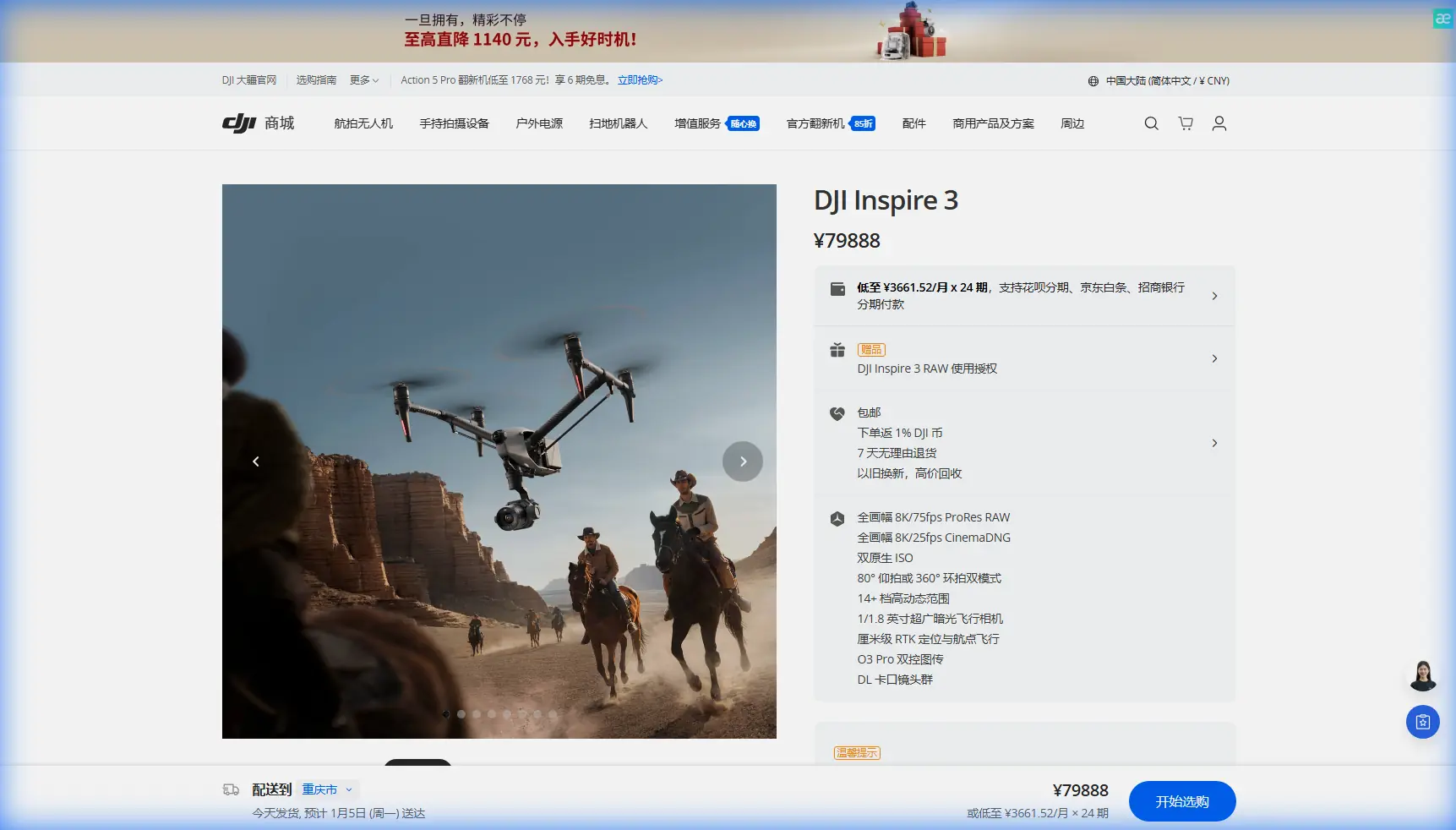
Inspire 3 Best Practices for Coastal Forest Capture: What Actually Matters in the Field
META: Expert tutorial on using Inspire 3 in coastal forest environments, with practical flight planning, weather, thermal, transmission, battery, and reliability insights grounded in real UAV testing standards.
Coastal forests expose every weak point in an aerial workflow.
Salt in the air. Damp vegetation. Fast-moving weather. Uneven canopy height. Light that shifts every few minutes. If you are trying to capture useful visual data in that environment with an Inspire 3, the challenge is not simply getting cinematic footage. It is getting repeatable, clean, dependable results when moisture, temperature swings, and signal complexity are all working against you.
I learned that the hard way on a shoreline forest survey where the aircraft itself was only half the problem. The real friction came from the operating system around it: batteries warming unevenly at dawn, lens surfaces catching fine mist, controller handling in wet conditions, and transmission confidence dropping as the aircraft moved from open beach edge into dense tree cover. Since then, my approach to the Inspire 3 in coastal woodland work has become much stricter. Not because the aircraft is fragile, but because these environments punish casual habits.
This guide is built around that reality.
Why coastal forest work is different
A forest near the coast creates a strange overlap of risks. You are dealing with the moisture profile of a marine environment and the visual complexity of a wooded one. That means three things happen at once:
- Water exposure becomes operational, not theoretical.
- Structural and electrical reliability matter more than headline specs.
- Signal discipline becomes as important as camera settings.
That is why I think it helps to look at Inspire 3 operations through the lens of formal aircraft system testing, not just shooting technique. One of the reference standards for multirotor systems specifies a rain test at 2 mm/min, with the aircraft expected to keep functioning during the test and still perform normal takeoff, hover, and landing afterward. Another section requires exposure to -20°C ±2°C for 2 hours, 55°C ±2°C for 2 hours, and even 60°C ±2°C for 12 hours, followed by normal flight capability.
Those numbers matter even if your forest mission never sees those exact extremes. They frame the kind of environmental resilience a professional operator should think about. Coastal flying is rarely dramatic on paper. It is death by accumulation: damp controls, repeated condensation, thermal cycling, and long days of stop-start deployment. The operator who plans for those effects gets the data. The one who trusts luck ends up rescheduling.
Start with the mission objective, not the camera menu
When readers say “capturing forests,” I always ask one question first: are you collecting footage, measurement-grade imagery, thermal signature data, or a mixture?
The Inspire 3 can be part of more than one workflow, but the flight pattern changes depending on the output.
If your goal is visual storytelling or environmental documentation, you can prioritize reveal angles, tracking paths along canopy edges, and sun position. If your goal is photogrammetry, everything becomes more rigid: overlap, speed consistency, altitude discipline, and GCP alignment take priority over artistic movement. If thermal signature interpretation is part of the job, time of day becomes critical because coastal moisture and vegetation temperature equalization can flatten useful contrast faster than many crews expect.
In other words, the aircraft is not the workflow. The deliverable is.
The preflight checks that matter most near the coast
A generic preflight list is not enough here. For Inspire 3 work in coastal forests, I use a specific sequence.
1. Moisture check before power-up
Do not only inspect the airframe. Inspect the transition from transport case to ambient air. A drone that came from an air-conditioned vehicle into warm marine humidity can fog surfaces almost immediately. That includes lenses, connectors, and exposed interface points. The reference material on multirotor system inspection explicitly calls out exposed positions such as lenses, covers, battery compartment-related areas, and interfaces as test-relevant points. Operationally, that is a useful reminder: the vulnerable parts are rarely the obvious ones.
I let the system acclimate before rushing into initialization. That saves more flights than people admit.
2. Battery temperature management
Hot-swap batteries are a real advantage on the Inspire 3, especially when you are trying to maintain rhythm in short weather windows. But speed creates sloppiness. In damp coastal conditions, every battery exchange is also an exposure event. Keep swaps organized, shield the aircraft during exchange if possible, and track pack temperature instead of assuming all batteries in the case are equally ready.
Those environmental test references about cold and heat exposure are not abstract. They point to something practical: temperature stability affects more than endurance. It affects confidence in the whole sortie.
3. Controller and control station protection
One of the source standards requires that the control station maintain normal control during and after protection-grade testing. That is a bigger deal than it sounds. In coastal forest work, the pilot station is often where moisture first interferes with the mission. Wet touch surfaces, mist on displays, and damp handling can degrade decision-making before the aircraft itself shows any issue.
I treat the ground control setup as part of the aircraft, not as an accessory.
Flight planning for forest canopy and shoreline transitions
The most common mistake with Inspire 3 over coastal forest is planning a route that works visually but not aeronautically.
The shoreline edge tricks pilots into thinking they have clean air and clean signal. Then the route pushes inland over varying canopy density, and suddenly the aircraft is flying in a more cluttered RF and visual environment than expected. This is where O3 transmission discipline pays off. Transmission capability is only useful if the route respects line-of-sight geometry, terrain masking, and the way tree cover changes situational awareness.
My rule is simple: break the mission into zones.
- Edge zone: beach, marsh, or open shoreline margin
- Transition zone: mixed open/covered terrain
- Interior canopy zone: dense trees with limited visual texture from above
Each zone gets its own altitude, speed expectation, and return path. That matters for two reasons. First, it protects the signal margin. Second, it keeps your image set consistent. A photogrammetry run that changes speed and altitude too freely across zones may still look fine to the eye, but it weakens downstream reconstruction quality.
If you are working with GCPs, place them where they remain visible and stable despite dappled light and wet ground reflectance. Coastal environments can make high-contrast targets less readable than expected once sun and moisture combine.
Rain, mist, and the “almost flyable” trap
Most bad decisions happen in conditions that are not clearly unsafe.
Heavy rain usually grounds the mission. Fine drizzle, airborne mist, or canopy drip is where people talk themselves into flying. That is exactly why the rain-test detail from the standard is so useful. A specified rainfall intensity of 2 mm/min is a structured test condition, not a permission slip for casual wet-weather operation. The point is not “the system can handle rain.” The point is that weather tolerance should be evaluated against controlled criteria, while field exposure is chaotic and cumulative.
For Inspire 3 work in a coastal forest, I separate moisture into three categories:
- Direct precipitation
- Suspended moisture in the air
- Residual moisture from vegetation and ground conditions
The third one is underrated. Low passes along tree lines can expose the aircraft to more water than the pilot realizes, especially after overnight saturation. Rotor wash stirs up droplets, and repeated runs magnify the effect. If the mission is not time-critical, waiting even an hour for canopy drip to reduce can materially improve reliability and image clarity.
Thermal signature work requires timing, not just hardware
If your forest mission includes thermal signature analysis, the coast changes the rules. Marine air dampens temperature contrast. Dense vegetation holds moisture. Morning can either help or hurt depending on what you are trying to isolate.
In practice, I plan thermal sorties around differential behavior, not clock time. Shoreline vegetation, exposed sand, water channels, and interior tree masses warm and cool at different rates. The useful window is often shorter than expected. When crews miss that window, they blame the sensor. Usually the problem is timing.
With Inspire 3 operations, I recommend capturing your structural reference imagery and your thermal pass as separate missions if the end product justifies it. Trying to satisfy both at once often compromises both.
Reliability is not a marketing word
One line from the reference material deserves more attention than it usually gets: multirotor systems are evaluated for average fault-free operating time. That is the right mindset for professional Inspire 3 use in remote or semi-remote coastal work. Reliability is not just whether the aircraft flies today. It is whether the system can keep performing over repeated sorties with environmental stress accumulating in the background.
That includes:
- connectors exposed to humidity,
- landing routines on damp surfaces,
- repeated battery insertion cycles,
- controller handling in wet air,
- transport between hot exteriors and cooled vehicles.
The helicopter design reference adds another layer that is equally relevant. It stresses that component tests should reflect the full load and environmental spectrum experienced during service life, and it discusses fatigue testing for high-cycle components as well as rain testing for every aircraft to verify water tightness and drainage.
Why does that matter to an Inspire 3 operator shooting forests?
Because your aircraft does not live one mission at a time. It lives a service life. Coastal work adds vibration, moisture, corrosion pressure, and repeated transport stress. If you treat maintenance as an afterthought, you are gambling against fatigue and environmental degradation that may not show up until the day you need clean data most.
Practical capture settings and movement discipline
For image quality over trees, smoothness matters more than aggressive movement. Forest canopies create high-frequency detail that punishes abrupt acceleration and yaw corrections. I keep these principles front and center:
- Fly slower than you think you need to.
- Keep gimbal movement minimal during mapping-style passes.
- Avoid combining lateral motion, vertical change, and pan in the same shot unless the deliverable is purely cinematic.
- Rehearse return paths before committing to deep canopy-edge runs.
For photogrammetry, consistency beats drama. For visual capture, layered motion works best when the aircraft path is simple and the environment provides the complexity. Coastal forests already give you enough texture.
Signal security and operational discipline
When teams discuss secure workflows, they often focus only on file handling. In a professional Inspire 3 operation, link security matters too. If you are running a workflow where AES-256 is part of the transmission and data protection conversation, that should be integrated into your mission planning, not tacked on after the fact. Security has an operational side: who has access, how footage is handed off, and how command-and-control confidence is maintained under field pressure.
That becomes more relevant in projects involving environmental documentation, industrial corridor surveys, or protected land assessments where data sensitivity is real even though the mission is entirely civilian.
A field routine that has saved me time
On one coastal woodland job, the old approach would have been to rush the dawn window, chase the best-looking light, and fix the inconsistencies later. Instead, we staged the mission in three blocks: a dry systems verification hop, a structured canopy imaging pass, and then a lower-priority cinematic sweep only after confirming signal behavior and lens stability. That simple sequencing reduced rework more than any camera tweak.
If you are trying to set up a similar workflow and want a practical checklist for coastal Inspire 3 operations, I usually share one directly rather than bury it in a PDF. You can message me here for the field checklist.
When BVLOS enters the conversation
Some coastal forest projects tempt operators to think bigger than visual-line missions, especially where shoreline corridors stretch for long distances. BVLOS planning is a separate discipline, and it should be treated that way. The aircraft capability is only one layer. Regulatory approval, risk assessment, communication reliability, route segmentation, emergency planning, and data continuity all become more demanding.
For most teams using Inspire 3 in forest-adjacent environments, better VLOS planning solves more problems than premature BVLOS ambition.
The real advantage of Inspire 3 in this kind of work
What makes the Inspire 3 useful in coastal forest capture is not one isolated specification. It is the way the platform supports disciplined operation when conditions are changing faster than the shot list.
Hot-swap batteries help preserve the weather window. O3 transmission supports more confident route structure when signal conditions shift between shore and canopy. Secure transmission practices such as AES-256 fit professional data workflows. And if you approach the platform with the kind of environmental thinking reflected in formal rain, temperature, and reliability testing, you stop treating the mission like a lucky outing and start treating it like repeatable aerial work.
That shift is what separates attractive footage from dependable field results.
If your next Inspire 3 mission is over a coastal forest, prepare for moisture before you prepare for color. Build the route around signal geometry, not just scenery. Separate thermal goals from visual goals when necessary. And think in terms of service life, not single-flight confidence.
That is how you get home with data you can actually use.
Ready for your own Inspire 3? Contact our team for expert consultation.