
Capturing Urban Highways with Inspire 3: What Actually
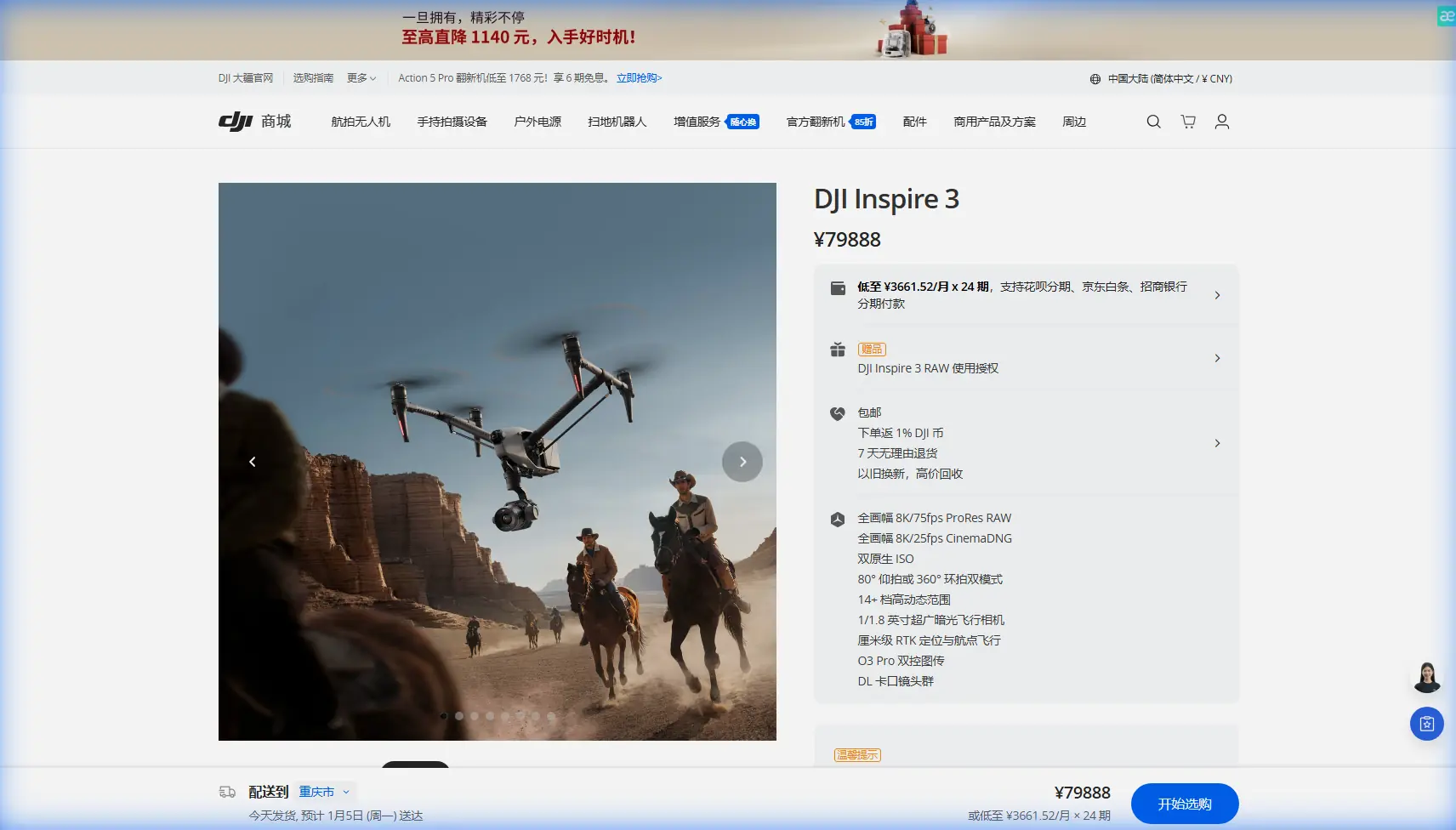
Capturing Urban Highways with Inspire 3: What Actually Matters When Conditions Shift
META: Expert guide to using Inspire 3 for urban highway capture, with practical insights on mission profiling, control logic, weather changes, transmission stability, and reliable data collection.
Urban highway work looks simple from the sidewalk. Long corridors. Repeatable geometry. Plenty of visual references. In practice, it is one of the more demanding civilian capture environments you can put a drone into.
I’m not talking about cinematic passes alone. I mean real production work: corridor mapping, construction progress records, pavement condition documentation, interchange modeling, traffic-flow observation support, and photogrammetry runs where every missed segment creates downstream problems in stitching, alignment, or reporting. On paper, the Inspire 3 has the performance to do this comfortably. In the field, what separates a clean mission from a compromised one is not raw power. It is how well the aircraft, control setup, and mission logic hold together when the environment stops behaving.
That becomes obvious the moment weather shifts mid-flight.
On one recent urban corridor scenario, the mission began under stable light with predictable winds channeled along the roadway. Twenty minutes later, the conditions changed. Gusts started bouncing off retaining walls and elevated structures. A brighter patch of sky gave way to flatter light. Traffic heat shimmer increased above dark asphalt. None of that is exotic. It is exactly the kind of change that makes highway capture harder than many operators expect.
This is where Inspire 3 earns its place, but only if the operator understands how to structure the mission like an engineer rather than improvising like a hobbyist.
The real problem with urban highway capture
Highways create a narrow operational corridor full of conflicting variables. You want consistent overlap for photogrammetry, but the environment keeps trying to break consistency.
Crosswinds don’t just push the aircraft sideways. In cities, they shear and curl around overpasses, sound barriers, light poles, and tower blocks. That affects heading stability and image geometry. Transmission can also become less predictable when the aircraft tracks close to dense infrastructure. Lighting changes quickly because reflective surfaces, cloud movement, and shadow bands from tall buildings alter exposure across the route. If you are collecting thermal signature data for surface comparisons, those changes matter even more because road materials, vehicle presence, and solar load can shift interpretation from one segment to the next.
Many teams attack this by flying shorter flights and hoping for the best. That helps, but it does not solve the deeper issue: you need a repeatable mission profile.
That phrase comes from aircraft fatigue design, and it deserves more attention in drone operations than it usually gets. In one helicopter design reference, engineers built a basic mission profile by analyzing state frequency, time spent in each condition, and state transitions. The result was not an abstract theory exercise. It was a structured cycle made of 8 flight-and-landing task segments, totaling 50 states, 182 state transitions, and 7,200 seconds. They even used concrete timing such as about 30 seconds for each 90-degree turn and an average flight cycle time of 900 seconds. Why does that matter to an Inspire 3 operator capturing highways in a city? Because the same mindset reduces mission drift, pilot workload, and data inconsistency.
You should not think of an urban highway job as “fly there, orbit that, run a mapping line, then grab a few hero shots.” You should think in cycles.
A better way to fly Inspire 3 over highways
For corridor work, I prefer to divide an Inspire 3 mission into a repeatable sequence of segments rather than one long freeform sortie. That may include:
- approach and climb segment
- alignment and heading confirmation
- straight corridor capture
- interchange or ramp transition
- verification pass
- oblique documentation segment
- reposition segment
- return and landing
This sounds obvious until weather changes. Once the air starts moving unpredictably, operators without a fixed mission rhythm begin making continuous micro-decisions. That is where inconsistency creeps in. Overlap changes. Speed changes. Camera angle wanders. Altitude over grade subtly shifts. The aircraft may still fly well, but the dataset stops being uniform.
With Inspire 3, the goal is to use its stability and transmission architecture to preserve the plan when the environment degrades. O3 transmission matters here not as a marketing spec, but as an operational buffer. In urban highway work, video downlink confidence affects pilot behavior. If the feed starts feeling unreliable near concrete structures or over long corridor stretches, many operators unconsciously shorten lines, rush turns, or abandon useful passes. A strong transmission link helps maintain deliberate pacing, especially when the route runs under varying RF conditions.
If your client requires protected project data, AES-256 support also matters for a different reason: infrastructure projects often involve sensitive geospatial records, construction staging, and asset condition imagery. Security is not glamorous, but it is part of professional workflow.
What changed when the weather turned
Mid-flight weather changes rarely announce themselves as a dramatic event. Usually it starts with small signs. The aircraft needs a little more correction on the outbound leg. Hover checks look clean, but transitions into turns feel busier. Shadow edges harden or disappear. Surface contrast shifts on the road deck.
In this kind of moment, Inspire 3’s value is not just thrust or speed. It is composure under workflow pressure. The aircraft can hold a stable platform while the operator decides whether the original capture objective is still achievable without degrading data quality.
That decision should be based on mission profile logic.
In the helicopter design material, the key insight was that fatigue evaluation had to reflect realistic usage, not idealized flight. One detail stands out: because stress in the tail section was significantly higher than in the mid and forward fuselage, fatigue testing focused on the tail section instead of the whole body. Operational significance? Engineers targeted the part of the system carrying the highest structural burden.
That same principle translates directly to Inspire 3 highway work. When weather shifts, do not evaluate the whole mission in vague terms. Identify the segment carrying the highest operational burden. For an urban corridor job, that is often the turn and transition zone: ramps, cloverleaf edges, elevated merges, or any section where yaw control, lateral tracking, and framing precision all get stressed at once. If those segments remain clean, the rest of the mission usually follows. If those segments begin to degrade, the sortie needs adjustment even if the straight runs still look acceptable.
This is also where hot-swap batteries become more than a convenience. In unstable weather, you do not always want to force completion of the entire corridor in one continuous push. The smarter move is often to preserve the repeatable structure of the mission, land, review critical segments, swap power quickly, and relaunch while environmental conditions are still within a usable window. Hot-swap capability protects continuity. You are not resetting the whole operation emotionally or logistically each time the aircraft comes down.
Control logic matters more than people admit
There is another useful lesson buried in the reference material, this time from a radio control manual. It describes a rudder-to-aileron mix function used when rudder input contributes to roll behavior, with adjustable mixing rates from -100% to +100%, switchable in flight, and even configurable with a 5-point curve for fixed-wing models.
No, Inspire 3 is not a glider and this feature is not something you directly transplant. But the operational idea is valuable: good control systems anticipate coupled behavior rather than treating each input as isolated.
That matters on urban highway missions because corridor turns and lateral re-centering often happen when the pilot is also compensating for wind, preserving camera direction, and managing speed. The lesson is that control strategy should reduce workload during coupled maneuvers. On Inspire 3, that means rehearsing turn geometry, gimbal behavior, and speed changes as one coordinated action set, not as separate corrections made in sequence.
A lot of poor urban capture comes from pilots who are technically capable but control-reactive. They fix drift, then heading, then framing, then altitude. By the time the fourth correction happens, the imaging geometry is already uneven. Experienced operators build a predictable response pattern before takeoff. If the wind comes from the left along the corridor, they already know how much earlier they will begin the turn, where they will level out, and when to verify the camera line. That is the drone equivalent of mission profile engineering.
Inspire 3 and photogrammetry on highways
For photogrammetry, consistency beats drama. A highway project usually needs repeatable scale, stable overlap, and dependable alignment from one segment to the next. That means three things.
First, GCP strategy must respect the corridor itself. Interchanges, bridges, and grade changes are where control quality pays off most. If your GCP spacing is visually convenient rather than geometrically purposeful, the model will show it.
Second, weather changes must be logged against capture segments, not just against flight time. If clouds roll in during only one ramp complex, that section should be flagged for review. Treating the entire sortie as one lighting condition is how avoidable stitching and texture issues slip into final deliverables.
Third, thermal signature work should not be casually bundled with visual mapping unless the environmental timing supports both. Asphalt temperature variance, vehicle presence, and changing sun exposure can quickly turn comparative thermal data into a mixed-condition dataset. Inspire 3 can support demanding capture work, but the operator still has to decide whether the thermal objective remains valid after the weather shift.
BVLOS, urban limits, and professional discipline
Some highway clients ask about BVLOS potential because road corridors naturally extend beyond comfortable visual range. The aircraft may be capable, but the mission framework has to match the regulatory environment, observer plan, and project risk profile. In urban work especially, discipline matters more than ambition. The best Inspire 3 operations are not the ones that try to stretch every boundary. They are the ones that return complete, defendable data without forcing compromised flight decisions.
That is also why pre-briefing matters. Before launch, I want the team aligned on the abort threshold for wind, lighting, traffic-induced complications, and transmission confidence. If conditions change, the team should not debate from scratch. They should execute a decision tree.
A practical field sequence that works
For urban highway capture with Inspire 3, this sequence has proven reliable:
Start with a short stabilization segment rather than rolling directly into the main run. Confirm heading hold, lateral behavior, and image consistency over a small representative section.
Run the corridor in defined blocks instead of one seamless marathon. Think in mission cycles, the way the helicopter reference organized repeated states into a basic operational period. That structure gives you cleaner quality checks and simpler reflight decisions.
Prioritize the highest-burden segments first. In most cities, that means elevated ramps, merges, flyovers, and areas with stronger reflected wind effects.
Use hot-swap battery workflow to preserve timing and continuity, not merely endurance.
If the weather shifts, compare the current conditions to the opening baseline and decide whether the dataset is still internally consistent. Do not ask only whether the drone can still fly. Ask whether the data still belongs in the same deliverable.
When needed, brief the client or project team in real time through a direct operations channel like this field coordination contact, especially if you are deciding whether to split a corridor into separate environmental capture windows.
The bottom line on Inspire 3 for urban highways
Inspire 3 is strong in this role because it combines flight precision, professional imaging capability, reliable transmission, and efficient field workflow. But those features only pay off when the mission is designed around repeatability.
That is the thread connecting both reference sources. One shows how serious flight work is broken into measurable operational states and timed cycles. The other shows that control logic becomes more effective when you account for coupled behavior instead of reacting to one axis at a time. For Inspire 3 highway capture, those lessons are not academic. They are exactly what helps you keep a dataset usable when wind shifts, light changes, and the city starts pushing back.
Urban corridor work rewards methodical operators. If you build the mission like a sequence, protect your critical segments, and make weather decisions based on data consistency rather than pride, Inspire 3 becomes a very capable tool for highways that do not give you much margin.
Ready for your own Inspire 3? Contact our team for expert consultation.