
Capturing Solar Farms in Extreme Temperatures with the Inspi
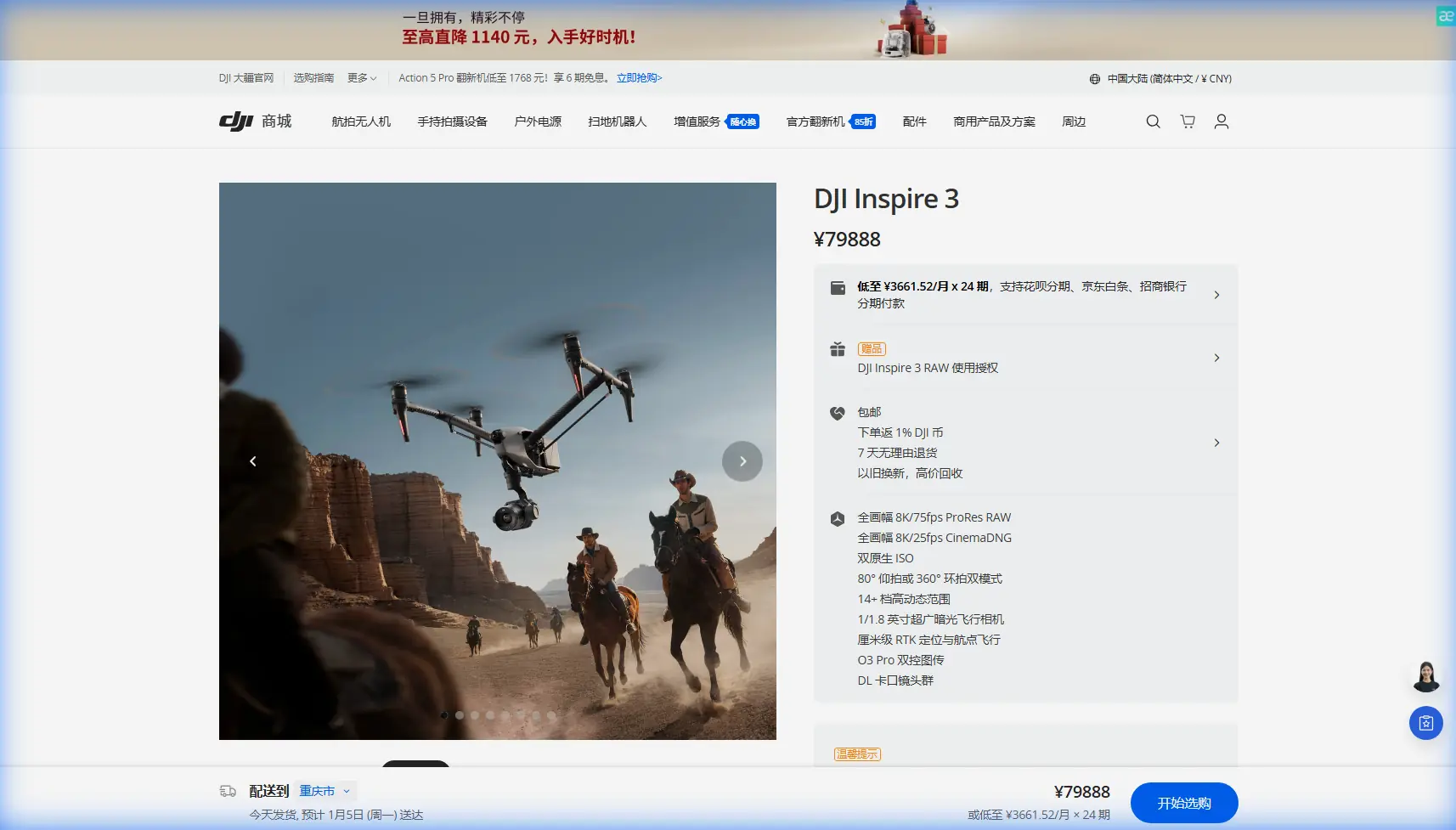
Capturing Solar Farms in Extreme Temperatures with the Inspire 3
META: Expert technical review of using the DJI Inspire 3 for solar farm imaging in extreme heat and cold, including battery strategy, transmission reliability, photogrammetry workflow, and field tips.
Solar farms look simple from the air until you try to document them properly.
Row after row of repeating geometry, reflective surfaces, heat shimmer, long distances, and often very little natural shade for crew or equipment. Add extreme temperatures and the assignment changes from a standard aerial shoot into a technical exercise in endurance, consistency, and risk control. The DJI Inspire 3 sits in an interesting place for this kind of work. It is first and foremost a cinema platform, but in capable hands it can also become a highly effective tool for solar site documentation, visual assessment, and certain photogrammetry-adjacent capture tasks where image quality, repeatability, and operational speed matter more than carrying a dedicated survey payload.
That distinction matters. If your only goal is thermal inspection at utility scale, you would usually reach for a platform designed around a radiometric thermal sensor. But many solar operators, EPC firms, asset managers, and O&M teams still need high-quality visible-light capture for construction progress, string layout verification, vegetation encroachment records, access road condition checks, perimeter assessments, and investor-grade documentation. In those environments, the Inspire 3 can be unusually effective, especially when the weather is doing its best to make the job difficult.
Why the Inspire 3 makes sense at a solar farm
The Inspire 3’s strongest advantage on a solar project is not one single specification. It is the way several operational traits combine in the field.
You have a platform with excellent flight stability, strong image quality, professional flight control, and a transmission system built for complex professional operations. DJI’s O3 Pro transmission is especially relevant on large solar sites because these facilities are often expansive, visually repetitive, and prone to line-of-sight interruptions from terrain undulations, inverter stations, fencing, and infrastructure. A robust link is not just a convenience. It protects continuity. If you are flying a long perimeter sweep or trying to keep framing consistent over identical rows of panels, transmission reliability directly affects the quality of the final dataset.
There is also a security angle. AES-256 encryption on transmission becomes more than a brochure detail when you are working on energy infrastructure. Even for civilian commercial operations, site owners increasingly care about data handling discipline. If you are capturing imagery of substations, inverter blocks, access control points, and proprietary site layouts, encrypted transmission helps support a more defensible operational posture.
Neither of those points turns the Inspire 3 into a survey drone in the strictest sense. What they do is make it a more trustworthy aircraft for sensitive industrial environments where stable capture and secure handling are expected rather than optional.
Extreme heat changes everything
The biggest mistake people make on solar farms in hot weather is thinking only about aircraft battery percentage.
State of charge matters, but temperature management matters earlier and more often.
Solar arrays create punishing microclimates. Open ground reflects heat. Dark components absorb it. Air above the panels can shimmer badly by midday. Even if the official ambient temperature looks manageable, the on-site thermal load can be much harsher. That affects batteries, sensors, crew decision-making, and image consistency.
This is where the Inspire 3’s hot-swap battery design becomes more than a workflow convenience. On a large site, stopping to fully power down between every battery cycle costs time and interrupts momentum. With hot-swap capability, you can keep the aircraft active during battery changes, maintain operational rhythm, and reduce the kind of repeated cold-start delays that drag out field windows. On a hot day, that means less time standing in exposed conditions and more control over when you choose to fly your most critical passes.
But here is the field tip that saves more missions than any settings tweak: rotate batteries by temperature exposure, not just by charge order.
In practice, that means separating packs into at least three states:
- ready packs stored in shade or a cooled case
- recently flown packs resting until they normalize
- reserve packs that are charged but kept out of the active cycle until needed
I have seen crews burn through battery health by landing, swapping quickly, and then putting still-warm packs straight onto a charger in the back of a vehicle parked beside a reflective array field. That is a slow way to shorten useful battery life and a fast way to create inconsistent flight performance later in the day. Let batteries come down to a stable temperature before charging. Keep them out of direct sun even during short breaks. If you are working from a pickup tailgate or mobile station, your battery plan should include shade as deliberately as it includes chargers.
At solar farms, battery discipline is operational discipline.
Cold weather has a different failure pattern
Extreme cold is less common on some solar projects, but when it shows up it creates a different set of problems. Instead of fighting thermal saturation, you are fighting sluggish battery chemistry, condensation risk during transitions, and reduced confidence during the first minutes of flight.
The Inspire 3 platform benefits from a professional power system, but physics still wins. Packs that have spent the morning in a freezing vehicle will not perform like packs kept within a managed temperature range. The practical move is to warm batteries before deployment and avoid launching immediately into a long-distance run. Start with a shorter profile that lets you confirm voltage behavior and aircraft responsiveness before committing to your main capture sequence.
Cold weather also punishes rushed packing procedures. Bringing the aircraft from freezing outdoor air into a heated vehicle can cause condensation on surfaces and connectors. On a solar site where dust is already in play, moisture becomes one more contamination risk. Build transition time into the day rather than treating the final landing as the end of the job.
Visual capture versus thermal signature work
The phrase thermal signature gets thrown around loosely in drone operations. On solar sites, that can create confusion.
The Inspire 3 is not the obvious platform for thermal defect detection because the job typically calls for a dedicated thermal payload. But thermal signature still matters to visible-light operators for two reasons.
First, heat changes the look of the site. High panel temperatures, air distortion, and reflective glare can degrade image sharpness and make defects harder to contextualize in standard optical imagery. Second, thermal conditions affect your timing. If your visible-light mission supports a broader inspection program, your capture should be scheduled with awareness of how site temperature influences both visual readability and any separate thermal operations happening before or after your flight window.
That is why the best Inspire 3 work on solar farms often happens during shoulder hours rather than the harsh center of the day. Early morning gives cleaner air, lower glare angles, and better consistency across long rows. Late afternoon can also work, especially for cinematic site overviews and progress documentation, though shadows become a bigger compositional factor.
If the brief mixes engineering records with presentation-grade footage, split the mission. Do not try to make one flight window serve every purpose.
Can you use the Inspire 3 for photogrammetry?
Yes, with caveats, and the caveats are what separate useful output from frustration.
For pure survey work, a dedicated mapping platform is usually the cleaner answer. Still, there are cases where Inspire 3 photogrammetry is viable: construction progress, stockpile context around the site, road and drainage documentation, and high-detail modeling of selected areas such as substations, O&M compounds, or representative panel blocks. In these cases, the camera quality can be a real asset.
The challenge is repeatability. Solar farms are full of repeating patterns and reflective surfaces, which can make image matching more difficult than operators expect. That is where GCPs become operationally significant. Ground Control Points are not just about squeezing out better accuracy on paper. On a visually repetitive site, they help anchor the model in a way that reduces ambiguity and improves confidence in usable output.
If you are attempting a photogrammetry workflow with the Inspire 3, a few field realities matter:
- avoid peak glare periods
- maintain high overlap because repetitive panel rows can confuse reconstruction
- use clearly visible GCPs in areas with distinct surrounding texture
- capture cross-grid or oblique passes when appropriate to strengthen geometry
- be realistic about where this platform fits compared with a dedicated mapping drone
On solar sites, photogrammetry is often most valuable when used selectively rather than universally. Trying to model every panel on a vast utility-scale plant with a cinema-first aircraft is usually the wrong fight. Using the Inspire 3 to create high-fidelity models of critical segments, construction interfaces, cable routes, or damage zones can make far more sense.
O3 transmission and large-site confidence
There is a reason experienced pilots talk about transmission quality differently after working industrial sites. In open fields, almost any modern system can seem adequate. On energy sites, adequacy starts to feel thin.
The Inspire 3’s O3 Pro transmission supports more reliable control and monitoring on expansive properties where distance, infrastructure, and environmental conditions can complicate the link. Operationally, that means fewer interruptions during long runway-style tracking shots over array rows and more confidence when repositioning around obstacles or working with a dual-operator setup.
For commercial solar documentation, this is not about flying recklessly far. It is about preserving image continuity and reducing distractions. Every time a pilot has to second-guess link integrity, framing quality suffers. A strong transmission chain protects attention, and attention is what keeps capture clean.
If your organization is evaluating workflows that may eventually extend into BVLOS programs under the appropriate regulatory framework, transmission performance and encryption discipline become even more relevant at the planning stage. That does not mean the Inspire 3 should be treated as a default BVLOS solution. It means serious infrastructure operators should think beyond isolated specs and look at how communications reliability, data security, and site procedures fit together.
Image strategy for panel-heavy environments
Solar farms punish lazy camera work.
The geometry is repetitive, the highlights can clip fast, and the scene often lacks the vertical variety that naturally gives aerial shots depth. To make Inspire 3 footage or stills genuinely useful, your image strategy should be deliberate.
For technical records, consistency beats drama. Keep altitude and angle repeatable. Build a capture pattern that mirrors the logic of the site. Document transitions between blocks, access paths, inverter stations, drainage lines, and perimeter conditions. Think like an asset manager, not just a pilot.
For stakeholder visuals, use the site’s scale intelligently. Long lateral reveals across panel rows can show layout density. Slightly elevated oblique frames help distinguish terrain, fencing, and maintenance routes. The Inspire 3’s imaging strength gives you room to produce material that is both operationally useful and presentation-ready, but only if you respect how visually monotonous these sites can become from above.
One practical workflow adjustment that pays off
On extreme-temperature solar jobs, shorten your first sortie.
That sounds minor, but it changes the day. Make your initial flight a systems-validation pass rather than your main event. Confirm battery behavior, transmission stability, glare conditions, and crew pacing. Then adjust. Maybe the heat shimmer is already stronger than expected on the eastern blocks. Maybe a planned altitude is giving you too much visual compression for inspection context. Maybe your battery cooling cycle needs to be longer than what looked sensible on paper.
A five- to eight-minute validation flight can prevent a full morning of compromised capture.
That kind of judgment is what separates professional drone work from aircraft ownership.
Final take
The Inspire 3 is not the default answer to every solar farm mission, and pretending otherwise helps no one. But for high-quality visible-light documentation on large energy sites, especially in extreme temperatures, it can be an outstanding platform when used with discipline. Its hot-swap battery system supports continuity. O3 Pro transmission improves confidence on sprawling sites. AES-256 encryption aligns well with infrastructure-sensitive operations. And with careful planning, it can contribute to selective photogrammetry workflows where GCP-backed accuracy and image quality matter.
The real story is not that the aircraft is powerful. The real story is that solar farms expose every weakness in planning. Battery handling, flight timing, data security, and capture structure all show up immediately in the result.
If you are building an Inspire 3 workflow for solar projects and want to compare field setups or operational options, you can message the flight team here.
Ready for your own Inspire 3? Contact our team for expert consultation.