
Inspire 3 at High Altitude: A Smarter Workflow for Solar
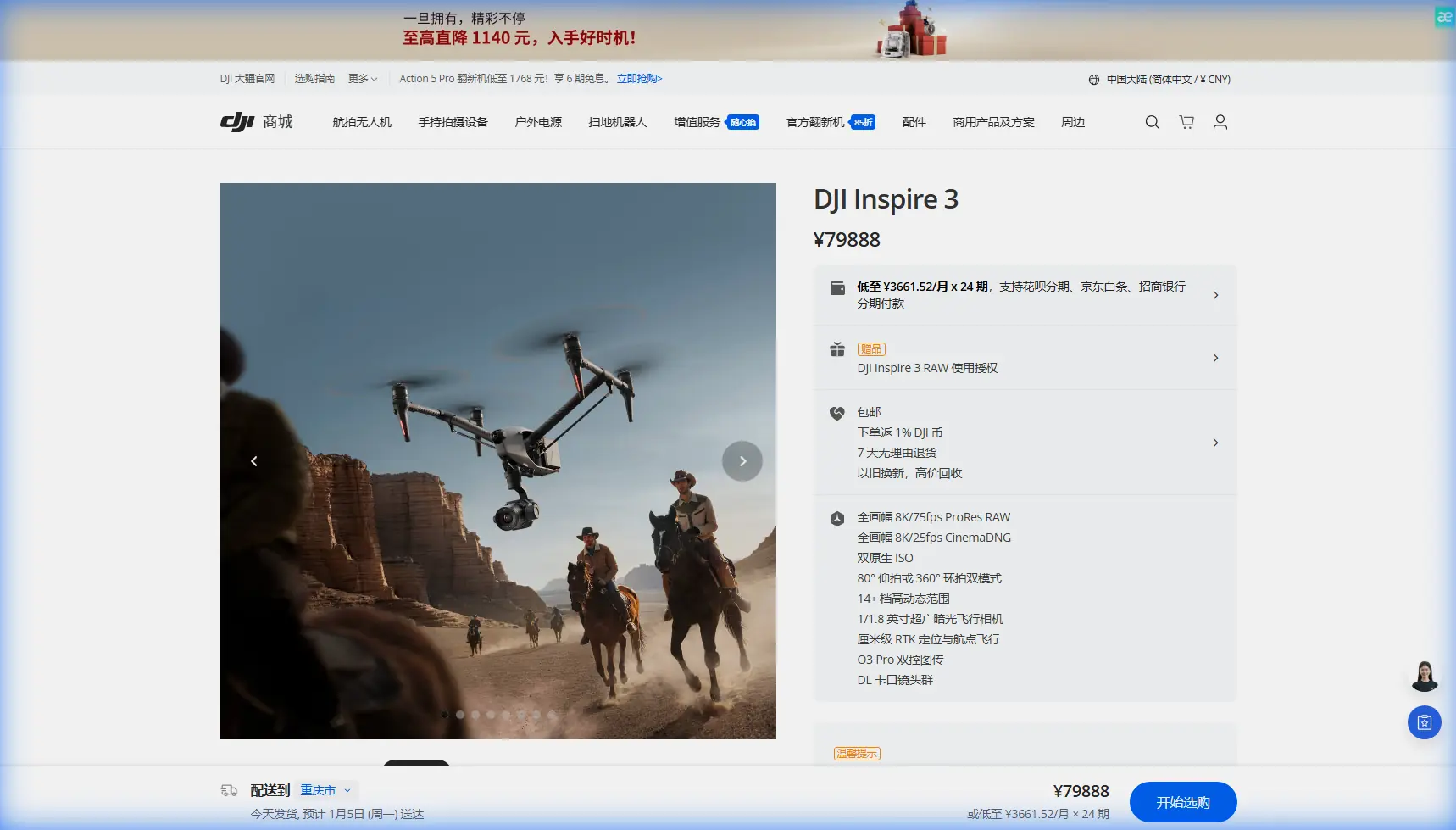
Inspire 3 at High Altitude: A Smarter Workflow for Solar Farm Capture
META: Expert guide to using DJI Inspire 3 for high-altitude solar farm capture, covering pre-flight cleaning, O3 transmission, hot-swap batteries, AES-256 security, GCP workflow, and photogrammetry considerations.
Solar farms in high-altitude environments expose every weak link in an aerial workflow. Thin air cuts rotor efficiency. Wind arrives fast and changes direction without much warning. Dust settles on sensors, landing gear, and battery contacts. Light bounces off panel glass in ways that can confuse exposure and complicate photogrammetry. If the mission involves a large site, every lost minute on the ground becomes expensive in a very practical way: less usable light, fewer flight windows, and more repeated passes.
That is where the Inspire 3 earns its place. Not because it solves everything automatically, but because its design fits the operational realities of demanding commercial capture better than many crews expect at first glance.
For solar farm imaging at elevation, the real story is not just image quality. It is how image quality, aircraft reliability, transmission stability, and turnaround speed connect into one field-ready system.
The actual problem at altitude
A high-altitude solar site creates a stack of small complications that can quietly ruin deliverables.
Start with aircraft performance. Higher elevations mean lower air density. Motors and propellers need to work harder to generate the same lift, and that changes how the aircraft feels in climbs, braking, and sustained forward flight. Add cold mornings, sharp UV, and dusty access roads, and even a well-planned job can turn inefficient.
Then there is the site itself. Solar farms are repetitive by nature. Row after row of similar geometry makes it easy to lose visual reference, and highly reflective surfaces can create inconsistent image sets if your exposure strategy is sloppy. If the purpose of the flight is photogrammetry, that inconsistency shows up later as alignment issues, weak tie points, or data gaps around panel edges and cable runs. If the purpose is visual inspection content for stakeholders, the same inconsistency makes the project look careless.
Transmission also matters more than many teams admit. Large solar sites often stretch farther than they appear from the takeoff point. Terrain undulations, inverter buildings, fencing, and service roads can all interfere with a clean operational rhythm. A stable link is not only about seeing the camera feed. It affects pilot confidence, framing accuracy, and decision-making under pressure.
Security is another layer. Solar assets are critical infrastructure in a civilian commercial sense. Site imagery, operational layouts, and maintenance records should not be treated casually. If your team is moving sensitive footage or survey-related content through the air, link security is not a box to tick after the mission. It belongs in planning.
Why Inspire 3 fits this environment
The Inspire 3 is often discussed as a cinema aircraft, but that framing is too narrow for high-altitude solar work. Its value here comes from a combination of professional flight behavior, strong transmission, and fast field recovery between sorties.
One of the most useful details is O3 transmission. In practical terms, a robust digital link helps the crew maintain a cleaner workflow across a spread-out site, especially when the aircraft is working over long rows of panels where visual sameness can erode situational awareness. At altitude, where wind can shift quickly and repositioning the ground team is not always convenient, stable transmission reduces hesitation. You spend less time second-guessing the feed and more time executing planned passes.
The other field-critical feature is hot-swap batteries. On a solar farm, that is not just a convenience feature. It changes how a crew manages continuity. When you are trying to maintain the same sun angle across multiple flights, or finish a mapped section before glare conditions shift, saving even a short reset interval matters. Hot-swapping helps keep the aircraft ready while preserving mission momentum. That can be the difference between a single coherent dataset and a patchwork collected under changing light.
AES-256 encryption deserves attention too. For infrastructure documentation, secure transmission is an operational requirement, not an abstract spec. If your crew is capturing panel layout, inverter zones, access roads, maintenance staging, or site expansion areas, encrypted transmission helps protect commercially sensitive information during flight operations. That matters for owner-operators, EPC firms, and O&M providers who need stronger control over visual data.
The pre-flight step crews skip too often
Before talking about route planning or camera strategy, there is a simple pre-flight habit that deserves more respect: cleaning the aircraft’s safety-critical surfaces and contact points.
At high-altitude solar sites, dust is not cosmetic. It collects around sensors, venting areas, landing gear mechanisms, and battery interfaces. A rushed crew may wipe the lens and call it good. That is not enough.
A proper pre-flight cleaning step should include:
- Inspecting and gently cleaning obstacle sensing areas
- Checking landing gear movement for grit or resistance
- Wiping battery contacts and confirming clean seating
- Clearing dust from cooling paths
- Inspecting propellers for chips, abrasion, or fine cracks
Why does this matter operationally? Because altitude already narrows your margin. If sensor performance is degraded by dust, the aircraft may not interpret its environment as reliably during takeoff, landing, or low-altitude repositioning near perimeter structures. If battery contacts are dirty, you increase the chance of avoidable interruptions at exactly the point where thin air and cold morning conditions are already asking more from the power system. If cooling paths are partially obstructed, sustained work under strong sun becomes less forgiving.
This is one of those habits that looks minor on paper and saves jobs in the field.
A better capture method for solar farms
For high-altitude solar work, the Inspire 3 performs best when the mission is treated as two linked operations rather than one generic flight.
First, fly a structured visual pass plan for clean, controlled acquisition. Second, fly any supplementary angles needed for context, stakeholder reporting, or asset storytelling. Trying to combine these in a single improvised sortie usually produces mediocre data for both purposes.
If your goal includes photogrammetry, discipline matters. Use a repeatable altitude, stable overlap strategy, and a camera setup built around consistency rather than dramatic composition. Panel arrays can fool operators into chasing visual symmetry instead of data quality. The deliverable does not care how cinematic the grid looked in the air. It cares whether the software can reconstruct the site accurately.
This is where GCPs come in. Ground control points remain one of the most practical ways to improve spatial reliability, especially across large utility-scale sites where repetitive surface patterns can challenge autonomous alignment. On a solar farm, GCPs give the dataset anchor points that help the model hold shape over long distances. Their operational significance is straightforward: better geospatial confidence, fewer surprises in processing, and stronger trust from engineering or asset management teams using the output.
Even if the Inspire 3 is not the first aircraft people name for pure mapping work, a disciplined workflow with GCP support can make it very effective for hybrid deliverables where visual quality and site documentation both matter.
Managing glare, heat, and the panel problem
Solar panels create one of the strangest visual environments in drone work. From one angle they behave like dark geometric textures. From another, they throw back bright reflections that can destabilize exposure and make detail inconsistent across adjacent rows.
At high altitude, the atmosphere can give you beautifully crisp visibility, but that does not remove the need for timing. Early and late light may look attractive, yet low-angle reflection can intensify glare across the field. Midday can flatten some contrast but may increase thermal load on equipment and crew.
This is also where the phrase “thermal signature” can confuse clients. If a project specifically requires thermal inspection, that is a different sensor conversation. For standard Inspire 3 missions, the practical takeaway is not that the aircraft performs thermal analysis by default, but that operators should understand how heat, panel reflectivity, and surface conditions affect visible-light capture. Heat shimmer, reflective hotspots, and dark-to-bright transitions all shape the final dataset. Clear client expectations here prevent bad assumptions later.
Transmission confidence and long-site discipline
Large solar farms encourage one bad habit: letting the mission sprawl.
The pilot sees a little more range available, pushes farther down the array, then adds one extra orbit around an inverter block, then another run over the substation perimeter road. Soon the aircraft is doing five jobs under one battery cycle and the crew is reacting instead of following plan.
O3 transmission helps by keeping control and viewing confidence stronger over complex sites, but strong transmission should support discipline, not replace it. Segment the farm. Define battery-specific sections. Brief expected wind behavior for each leg. At altitude, descending and returning against a headwind can feel very different from the outbound segment. Break the mission into logical blocks and let the aircraft’s link reliability support that structure.
If your operation is evolving toward more advanced workflow planning, including future BVLOS discussions under the appropriate civil regulatory framework, this kind of segmentation discipline becomes even more valuable. Not because the Inspire 3 turns every site into a BVLOS platform automatically, but because high-standard mission design starts with line-of-sight jobs done properly.
Security and stakeholder trust
A solar project often includes multiple interested parties: developers, operators, insurers, EPC teams, maintenance contractors, and investors. That means image data travels through many hands. When an aircraft uses AES-256 encrypted transmission, you are not just protecting a live feed. You are reinforcing a professional standard around infrastructure data handling.
That can be a quiet differentiator. Serious clients notice when a flight team can explain not only how the aircraft flies, but how mission data is protected in transit and handled after landing.
If you are refining a capture plan for an elevated solar site and want a second set of eyes on workflow, battery rotation, or shot sequencing, you can message the team here: https://wa.me/85255379740
Where Inspire 3 really stands out
The strongest argument for the Inspire 3 in this scenario is not a single spec. It is the way several features stack together under field pressure.
Hot-swap batteries help preserve continuity when mountain weather or shifting sun angle squeezes the working window. O3 transmission supports confident operation across broad, repetitive infrastructure layouts. AES-256 encryption adds a layer of professionalism for sensitive commercial sites. And with a careful pre-flight cleaning routine, the aircraft’s safety systems and power interfaces are better positioned to perform as intended in dusty, high-elevation conditions.
That combination is operationally meaningful.
A crew capturing a solar farm in the plains may get away with rough habits and a loose flight plan. At altitude, those habits show up in the results. You see them in inconsistent coverage, avoidable downtime, unstable processing, and footage that looked acceptable in the field but fails under client review.
The Inspire 3 gives experienced teams a better platform for avoiding those failures. Not by removing the need for skill, but by rewarding disciplined operators with cleaner execution.
That is the real takeaway. High-altitude solar work is not mainly about flying higher or farther. It is about reducing friction in every stage of the mission so the aircraft, crew, and dataset all stay predictable.
Predictability is what turns difficult terrain into repeatable output. And repeatable output is what clients remember.
Ready for your own Inspire 3? Contact our team for expert consultation.