
Inspire 3 in Coastal Wildlife Work: A Field Report on What
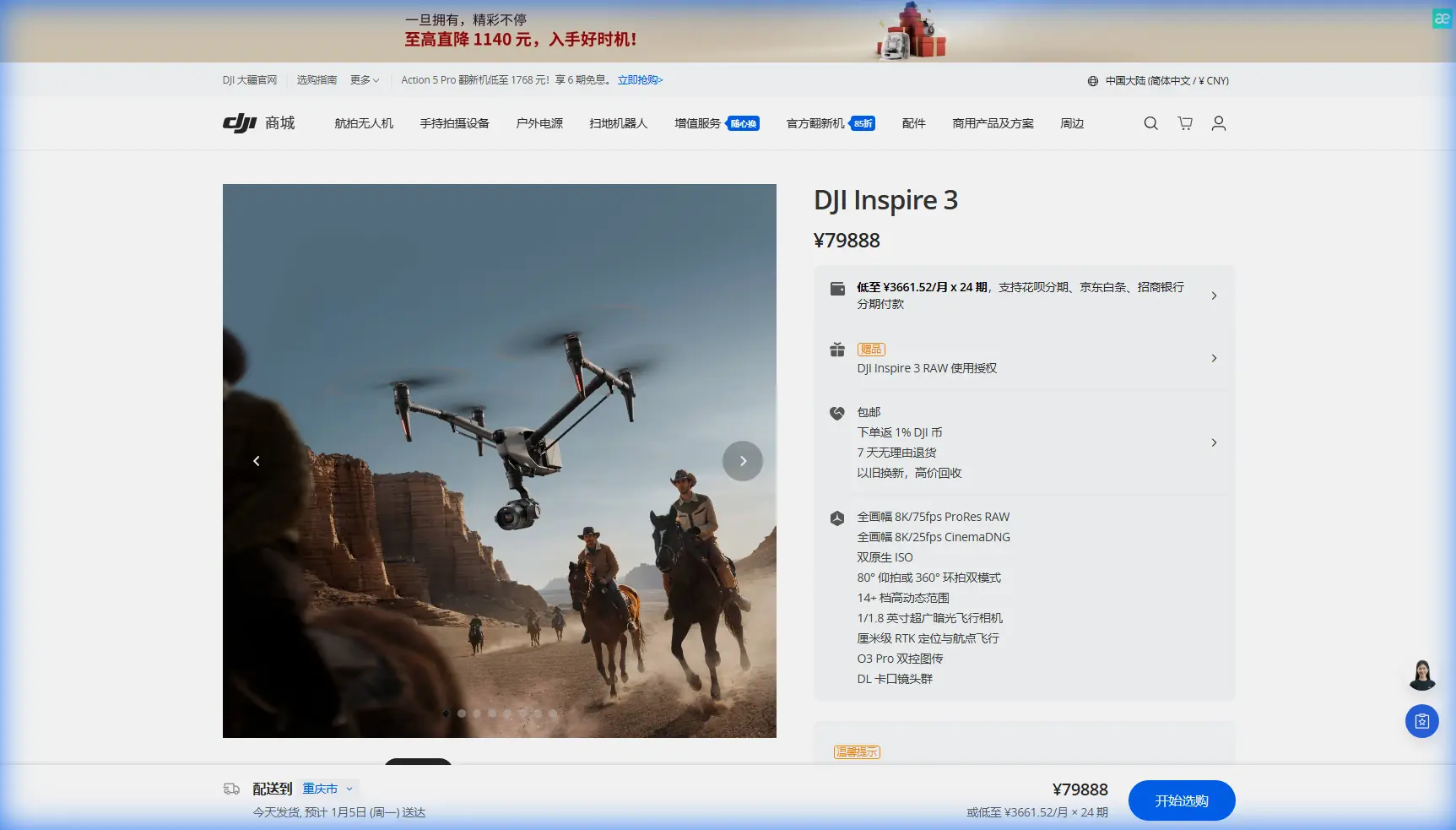
Inspire 3 in Coastal Wildlife Work: A Field Report on What Actually Matters
META: Expert field report on using DJI Inspire 3 for coastal wildlife filming and survey work, with practical tips on battery management, O3 transmission, hot-swap workflow, and stable image capture in demanding shoreline conditions.
Coastal wildlife work has a way of exposing weak assumptions fast.
A drone that behaves beautifully inland can become temperamental once salt air, shifting wind, reflective water, and skittish animal behavior enter the picture. That is where the Inspire 3 starts to make sense, not as a status platform, but as a working tool for crews who need repeatable results under pressure. I have seen that difference most clearly when filming seabird colonies, shoreline mammals, and tidal habitat edges where you rarely get a second clean pass.
This is not a generic overview. It is a field-minded look at how the Inspire 3 fits real coastal wildlife capture, especially when the brief demands stable footage, disciplined flight planning, and minimal disturbance to the subject.
Why coastal wildlife is harder than it looks
People often imagine wildlife work as a camera problem. In practice, it is an operations problem.
The coast creates visual and aerodynamic complexity at the same time. Bright sky behind a dark cliff line. Sun flashing off open water. Wind moving in layers as it hits dunes, rocks, and vegetation. Add animals that react differently to sound and shadow depending on species, nesting season, and tide state, and the margin for error narrows quickly.
That is why aircraft behavior matters as much as image quality. You need a platform that can reposition cleanly, hold a line when the wind shifts, and avoid unnecessary downtime when the light finally gets interesting for six minutes and then disappears.
The Inspire 3 is strong here because it combines cinema-grade imaging with a workflow that still feels operational rather than fussy. For wildlife teams, that distinction matters.
The hidden value of hot-swap batteries in the field
One detail that sounds minor on paper but becomes decisive in the field is hot-swap batteries.
On the coast, battery changes are rarely just battery changes. They are interruptions in rhythm. Every stop means reassessing wind, subject position, vessel movement if you are operating near water, and the animals’ comfort with the aircraft’s presence. If you have to fully power down and cold restart every time, you lose more than minutes. You lose continuity.
With a hot-swap workflow, the Inspire 3 lets the aircraft stay powered during battery replacement for a limited window, which means faster turnaround and less disruption to your camera setup and mission flow. Operationally, that changes how you approach wildlife coverage. Instead of treating each battery as a separate mini-mission, you can maintain one continuous working sequence.
A simple field tip from experience: never run both batteries down evenly when working a coastal wildlife sequence you cannot repeat. I prefer swapping earlier than most crews think necessary, especially when the aircraft has already been dealing with gusts and repeated directional changes. Salt-air environments and wind correction can turn a “safe on paper” battery estimate into a rushed return. My own habit is to designate one crew member to call battery state and time-to-home at fixed intervals, even on short flights. That one discipline has prevented more poor decisions than any clever feature ever has.
Another practical note: keep replacement batteries sheltered from direct sun and blowing salt mist, and rotate packs methodically rather than grabbing whichever pair is nearest. In coastal work, laziness in battery handling tends to show up exactly when the tide is right and the animals are finally where you need them.
O3 transmission matters more over water than many pilots expect
One of the most useful details for this kind of work is the Inspire 3’s O3 transmission system.
Over water, signal behavior can become less intuitive than pilots expect. Reflections, low-angle flight paths along shoreline contours, and changing elevation around cliffs or man-made structures can all complicate link stability. Strong transmission does not give you permission to fly carelessly, but it does give the pilot and camera operator a cleaner, more confident connection when precision matters.
That matters in wildlife work for two reasons.
First, it helps support smooth coordination between pilot and camera operator during delicate approaches. If you are filming a seal haul-out area or a line of nesting birds, the aim is not to force proximity. The aim is to establish a respectful stand-off distance and still produce useful footage. A dependable downlink makes that easier because framing decisions can be made earlier and with less guesswork.
Second, transmission quality affects decision-making. Poor video confidence leads to overcorrection. Overcorrection creates erratic movement. Erratic movement is exactly what tends to unsettle wildlife. A stable link contributes to a calmer aircraft profile, which in turn contributes to less intrusive operations.
I would add a quiet but relevant point here: when handling location-sensitive footage, AES-256 encryption is not just a spec-sheet line. For wildlife teams documenting breeding sites or vulnerable habitats, secure transmission and data handling have real operational value. Some locations should not be casually exposed through sloppy media workflow. Protecting footage can be part of protecting the subject.
Coastal wildlife capture is often about restraint, not reach
The worst drone wildlife footage usually comes from forcing the aircraft into the scene.
The better approach with the Inspire 3 is to let the aircraft’s image quality and stable flight characteristics do the heavy lifting from a less intrusive position. Coastal animals are often already managing enough environmental stress: tide movement, feeding windows, territorial behavior, weather shifts. The aircraft should not become the dominant event.
This is where mission planning and lens choice often matter more than bravado. If the brief is documentary, survey-adjacent, or habitat monitoring, I would rather collect a sequence of stable, well-timed passes than chase dramatic but disruptive proximity. The Inspire 3 gives crews the image latitude to work this way without making the material feel compromised.
That is also why I advise wildlife operators to brief the entire team on animal response thresholds before launch. Do not wait for the pilot alone to decide whether the aircraft is too close. The camera operator, field ecologist, and visual observer should all know the cues: head-lifting, flock agitation, directional movement, interrupted feeding, repeated vocal alarms. Good drone use in wildlife work is less about what the aircraft can do and more about what the team chooses not to demand from it.
When mapping logic improves filming results
Even when the assignment is cinematic, I often borrow methods from survey operations.
For repeated coastal shoots, some crews benefit from setting GCP references and building a basic photogrammetry mindset into the workflow, especially if the project combines storytelling footage with habitat documentation. You may not need a formal orthomosaic every time, but geospatial discipline can improve repeatability.
Why does that matter for Inspire 3 users?
Because coastal wildlife stories are often seasonal. You may return to the same estuary, cliff shelf, or marsh edge over weeks or months. If you have consistent reference points, you can recreate angles, track habitat change, compare colony size, and align visual storytelling with measurable environmental context. The footage stops being merely beautiful and becomes more useful.
This is especially effective when documenting erosion zones, nest buffer areas, or tidal channel changes around habitat. Even if the Inspire 3 is primarily serving as a high-end image platform, a survey-informed workflow can make the project more valuable to conservation teams, land managers, or coastal researchers.
I would not oversell that crossover, but I would absolutely encourage operators to think beyond single-flight aesthetics. Some of the best coastal drone work earns its place because it is cinematic and structurally useful.
A word on thermal expectations
Since “thermal signature” often comes up in broader UAV discussions, it is worth being precise. The Inspire 3 is not a thermal-first platform. For coastal wildlife teams, that means you should frame your mission honestly. If the project depends on dedicated thermal detection, species counting in low visibility, or heat-based search methodology, this is not the aircraft you choose for that sensor category alone.
Where thermal thinking still helps is in environmental interpretation. Coastal surfaces heat and cool unevenly. Air above rock, water, sand, and vegetation behaves differently through the day, and those changes can influence flight stability as much as subject activity. Understanding thermal patterns in the environment can help you pick safer and quieter flight windows, even if the aircraft itself is not carrying a thermal payload.
That distinction matters because too many operators confuse sensor capability with operational awareness. In wildlife work, awareness is often the more valuable skill.
Battery management in coastal wind: the field rule I trust
Here is the battery tip I give new Inspire 3 crews after a few difficult shoreline jobs: plan your return against the outbound headwind you have not felt yet.
Pilots often launch with a tailwind or a crosswind, get absorbed in the shot, and only appreciate the power draw when turning home into stronger resistance. Over open coastal stretches, that can become uncomfortable very quickly. The Inspire 3 is capable, but no aircraft becomes more efficient because the pilot wants one more orbit.
My rule is simple. If the subject is mobile, the wind is building, or the flight path includes open-water segments, start compressing your margin early. Do not negotiate with the battery. On a wildlife assignment, the cost of landing early is usually a missed angle. The cost of landing late can be much worse.
Also, after each landing, look at pack temperature trends and consistency between battery pairs rather than focusing only on remaining percentage. In repetitive coastal sorties, imbalance and heat history tell you more than the headline number. Teams that monitor battery behavior over the day tend to fly more smoothly by the last sortie, when fatigue starts nudging people toward lazy judgment.
BVLOS, legality, and the reality of wildlife operations
Some readers will naturally think about BVLOS when discussing long coastal stretches, offshore islands, or estuary systems. The technical temptation is understandable. The practical answer is straightforward: operate strictly within the regulatory framework of your jurisdiction and the permissions of the site.
For most wildlife capture work, the more productive question is not “How far can we go?” but “How can we structure the operation so the needed footage is gathered safely and lawfully?” Often that means staging from better launch points, using spotters intelligently, and planning shorter, cleaner missions.
The Inspire 3 rewards that discipline. It is not an aircraft that needs reckless use to prove its value. In fact, its strengths show best when the crew is methodical.
What makes the Inspire 3 especially strong for this niche
If I strip away marketing language and focus on practical value, three things stand out in coastal wildlife work.
First, it reduces downtime in moments that matter. The hot-swap battery system keeps the aircraft in the game when light, tide, and animal behavior briefly align.
Second, O3 transmission supports calmer, more precise teamwork, which directly helps crews maintain respectful distance from wildlife while still capturing usable material.
Third, security details like AES-256 are not abstract. They support responsible handling of sensitive footage from ecologically important locations.
That combination is what makes the Inspire 3 attractive for serious civilian field use. Not because it promises easy results, but because it supports disciplined operators in difficult environments.
If you are planning a coastal wildlife workflow and want to compare field setups or discuss mission design, you can message an Inspire specialist here.
Final field note
The best Inspire 3 flights I have seen on the coast were not the loudest or the closest. They were the ones where the crew understood the place first and used the aircraft second.
That may sound obvious, but it is the dividing line between footage that merely shows wildlife and footage that respects it.
The Inspire 3 is well suited to that kind of work. It has the transmission reliability, battery workflow, and professional operating feel to handle complex shoreline conditions. Yet the real advantage appears only when the pilot treats every feature as a way to reduce disturbance, preserve timing, and come home with footage that still means something a month later.
Ready for your own Inspire 3? Contact our team for expert consultation.