
Inspire 3 Best Practices for Wildlife Work in Extreme Temper
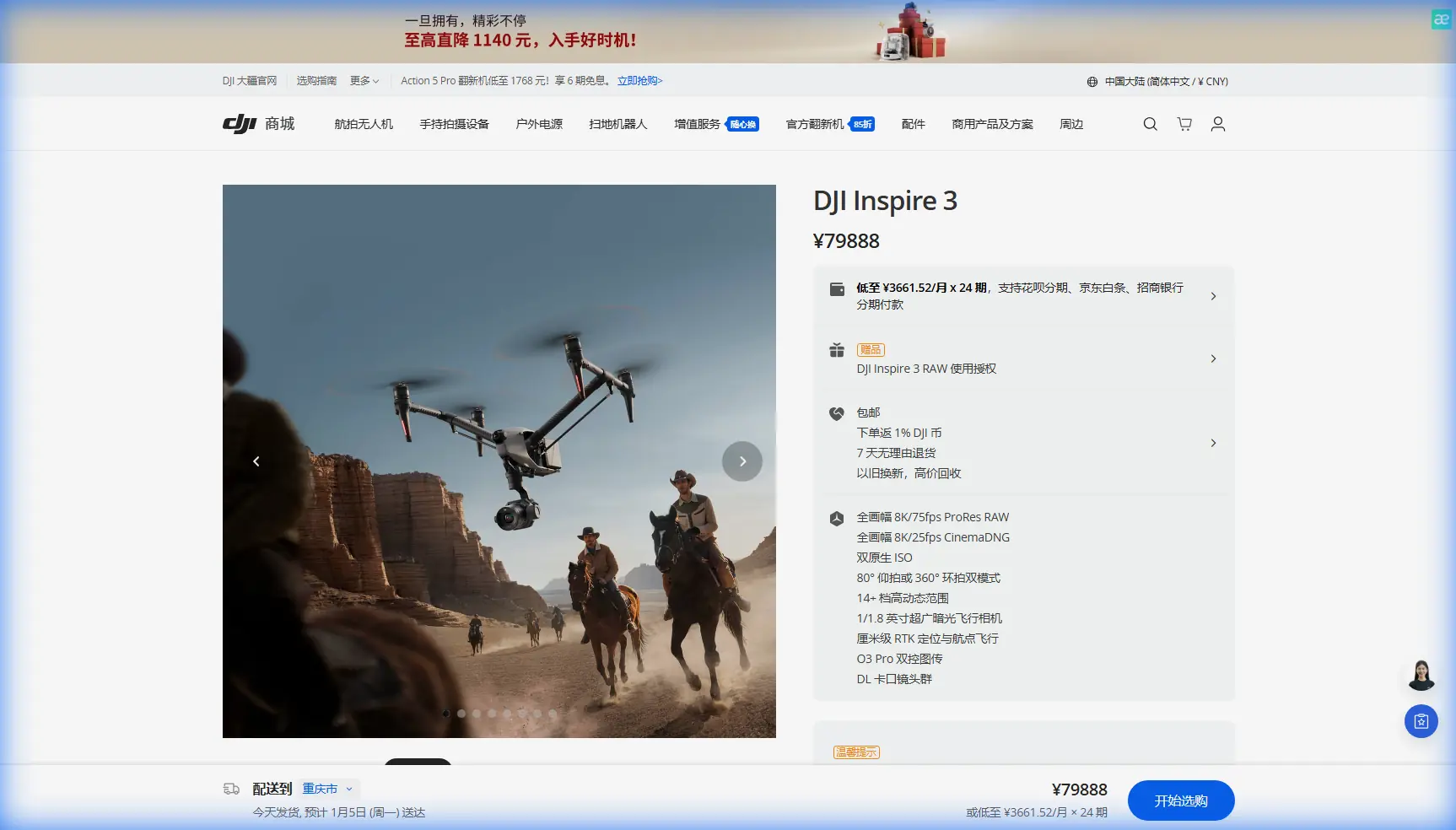
Inspire 3 Best Practices for Wildlife Work in Extreme Temperatures
META: Expert how-to guide for using Inspire 3 in extreme heat and cold for wildlife filming, with practical advice on stability, maintenance access, thermal conditions, transmission reliability, and field workflow.
I learned this lesson the hard way on a winter wildlife shoot where every weakness in an aircraft workflow became obvious within minutes. Batteries cooled faster than expected. Lens changes felt clumsy in gloves. Small handling issues became big delays, and delays are exactly what ruin animal behavior sequences. When you are trying to capture a snow leopard crossing a ridge at dawn or document herd movement over a baked grassland at midday, the drone matters less as a spec sheet and more as a system that stays predictable under stress.
That is the right way to think about the Inspire 3.
Not as a glamorous cinema platform in isolation, but as an aircraft-and-operations package that reduces friction when the environment is already working against you. For wildlife crews dealing with extreme temperatures, that distinction is everything.
Why extreme-temperature wildlife missions expose weak drone setups
Wildlife work is unforgiving because you rarely get a second pass. The animal may move once. Light may hold for ten minutes. Wind can shift without warning. In very cold or very hot conditions, a drone is also dealing with another layer of complexity: changing aerodynamic behavior, battery performance swings, and field servicing problems that are easy to underestimate when planning from a desk.
There is an old principle from civil aircraft design that still applies here. At the concept stage, designers do not always rely on simplified analysis for every stability effect because the error can be too large; some behaviors are only pinned down after wind-tunnel testing and after factors like angle of attack, thrust, and wing position are better established. That matters operationally for Inspire 3 users because it explains a truth many pilots discover late: aircraft confidence in difficult air is not built from brochure claims. It comes from tested, integrated behavior.
In wildlife filming, especially in mountain cold or desert heat, that integrated behavior shows up as smoother course corrections, less workload for the pilot, and fewer surprises when the drone transitions across ridgelines, open water, or thermally active terrain.
Stability is not abstract when you are tracking wildlife
One detail from traditional aircraft design is especially relevant here: the vertical position of the wing relative to the fuselage centerline directly affects lateral stability characteristics. In plain language, geometry changes how an aircraft reacts in roll and how naturally it resists disturbance. Another design control principle sets practical limits on how strong a positive dihedral effect should be, because if the stabilizing tendency becomes excessive, it can start to overpower the pilot’s usable control authority. One cited threshold puts that upper limit at 75% of available control effectiveness, while acceptable control forces are also capped, including 41 N for stick force and 82 N for wheel force.
You are not manually moving a stick in an Inspire 3 the way a pilot does in a conventional aircraft, but the operational lesson is surprisingly direct. Good aerial wildlife work depends on a platform that balances self-stability with precise control. Too much automatic “correction” can make framing feel heavy or delayed. Too little stability can make the aircraft fussy in gusts and force constant input, which increases fatigue and risk.
In the field, this becomes practical in three moments:
1. Crosswind animal tracking
When an elk, wolf, or antelope moves diagonally across a valley in winter wind, you need the aircraft to hold a clean line without hunting laterally. The more settled the platform feels, the less you overcorrect and the more natural the footage looks.
2. Hovering over temperature-driven air movement
Hot ground layers can create irregular lift and small disturbances. If you are filming from a static position over scrubland or rock faces at midday, control harmony matters more than raw speed.
3. Precision movement near terrain features
Wildlife cinematography often means following contour lines, tree gaps, or river bends. A stable aircraft with predictable response lets the pilot concentrate on safe separation and shot continuity rather than fighting the machine.
That is one reason the Inspire 3 fits this kind of work so well when used properly. It is built for crews who need confidence under variable conditions, not just image quality.
The hidden advantage: maintainability in the field
A second principle from aircraft structure design is rarely discussed in drone marketing, but it matters enormously in extreme environments. Designers have long recognized that drawings alone cannot guarantee proper coordination between systems or ease of maintenance. When many systems are packed inside the fuselage, physical prototypes are often required because system-to-system and system-to-structure interactions only become clear when technicians and operators work with real access constraints.
That may sound far removed from a drone in a wildlife reserve. It is not.
The Inspire 3 rewards crews who think in the same way: as a serviceable operating system rather than a flying camera. In cold weather, every extra step costs dexterity and time. In heat, every unnecessary delay increases exposure of batteries, sensors, and operators. Internal coordination, access, and swap speed are not side issues. They determine whether you launch on the moment that matters.
This is where hot-swap batteries become more than a convenience. In extreme temperatures, hot-swapping helps preserve mission continuity while minimizing downtime during critical activity windows. If a herd begins moving just as battery reserves approach your threshold, the ability to cycle power efficiently can be the difference between finishing the sequence and missing it entirely.
The same mindset applies to lens and payload readiness, prop inspection, gimbal checks, SSD handling, and controller workflow. If your team has to improvise every exchange in freezing wind, you are operating below the level the Inspire 3 can support.
A practical Inspire 3 workflow for extreme heat and cold
Here is the method I recommend to crews capturing wildlife with Inspire 3 in difficult temperature conditions.
1. Build the mission around behavior windows, not battery windows
In cold environments, crews often become so battery-focused that they start timing flights around hardware anxiety instead of animal movement. Reverse that. Study the likely wildlife activity first, then shape battery staging around those windows.
For example, if you expect movement at sunrise, warm and stage flight packs in advance, assign swap order, and define your launch/no-launch thresholds before first light. In heat, do the opposite: keep packs out of direct sun, reduce idle-on-pad time, and avoid powering the aircraft too early.
The point is simple. The Inspire 3 performs best when the crew manages thermal exposure intentionally, not reactively.
2. Use O3 transmission discipline, not just O3 transmission capability
People mention O3 transmission as if range alone solves the mission. It does not. In wildlife work, transmission reliability matters because it affects compositional confidence and safety margins when terrain, vegetation, or atmospheric conditions interfere with the link.
In cold mountain terrain, ridges can complicate signal geometry. In hot, open environments, shimmer and distance can degrade the operator’s confidence even before a hard link issue appears. So do not treat transmission as a passive feature. Treat it as an active planning variable.
That means:
- choosing takeoff points with cleaner line-of-sight,
- limiting unnecessary lateral masking behind terrain,
- planning return corridors before launch,
- and setting conservative operational boundaries even if the system can technically go farther.
If your mission profile includes extended observation or future BVLOS-regulated workflows under lawful civilian frameworks, signal planning becomes even more critical. The Inspire 3 gives you a capable transmission foundation, but the pilot still needs disciplined geometry.
3. Let thermal conditions shape your shot design
Extreme temperatures do not just affect the drone. They affect the image.
In high heat, thermal shimmer can soften distant detail and reduce the usefulness of long, static telephoto-style compositions. You may get stronger results by flying slightly closer, lowering the angle, or emphasizing motion across the frame rather than relying on distant compressed views.
In deep cold, air can be clearer, but battery behavior and crew dexterity become the bigger constraints. That often favors shorter, more deliberate flights with exact shot priority. Do not launch with a vague brief. Know whether the first sortie is for establishing motion, top-down environmental context, or low parallax tracking.
If you are working with thermal signature analysis as part of a broader ecological documentation workflow, remember that environmental heat patterns can change how subjects separate from the landscape. The Inspire 3 is not a substitute for a dedicated thermal platform, but understanding ambient temperature behavior still helps you decide when visible-spectrum imagery will reveal the most meaningful contrast and movement.
4. Use photogrammetry logic even when the mission is cinematic
This surprises some crews, but wildlife documentation often improves when cinema teams borrow habits from mapping teams. If you are capturing habitat change, nesting zones, migration corridors, or environmental context around a featured sequence, think like a photogrammetry operator for part of the day.
That means maintaining repeatable flight paths, noting altitude consistency, and using GCP-backed reference workflows where permitted and appropriate for habitat monitoring projects. Even if your main deliverable is a film sequence, those repeatable data habits make your footage more valuable to conservation groups, land managers, and researchers.
The Inspire 3 is strong enough as an imaging platform that it can support this dual role when the crew is organized: one phase for visual storytelling, another for structured site capture.
5. Protect your footage and your location data
Wildlife work often involves sensitive site information. Nesting areas, den locations, and migration routes should not be handled casually. This is where AES-256 support and disciplined data handling matter. Not as a buzzword, but as part of ethical field practice.
Secure transmission and secure media workflows help reduce the chance that location-sensitive material is exposed unnecessarily. That is especially relevant when working with protected species, private conservation land, or embargoed research activity.
A strong Inspire 3 workflow is not only about what you capture. It is also about who can access it, when, and under what controls.
6. Shorten every service action
One more aircraft design insight is useful here. Some nose structures in aviation are designed less around brute strength and more around function, access, sealing, and quick opening or closing. One cited clearance requirement during opening and closing is a minimum gap of 20 to 25 mm around critical internal equipment, precisely so operation and maintenance do not create interference.
That mindset is smart for drone crews too.
When setting up an Inspire 3 field kit for extreme temperatures, ask:
- Can every battery swap be done with gloves?
- Can media be changed without exposing components for too long?
- Can the aircraft be inspected quickly for moisture, frost, or dust intrusion?
- Can the controller, monitors, and storage be accessed without unpacking the entire kit in bad weather?
If not, the problem is not the aircraft. It is the support system around it.
My field checklist for Inspire 3 wildlife sessions
Before launch, I run through these questions:
- What is the exact animal behavior we are trying to capture?
- Which flight gets priority if weather or battery limits us to one strong sortie?
- Where is the cleanest transmission line?
- What is the warm/cool battery rotation plan?
- What is the shortest safe recovery route?
- Are media handling and backups secured?
- If habitat context is needed, can we capture a repeatable photogrammetry pass after the primary sequence?
That discipline changed my results more than any single hardware upgrade ever did.
When the Inspire 3 makes the biggest difference
The Inspire 3 stands out most when the mission demands both creative precision and operational resilience. Wildlife crews in extreme temperatures need an aircraft that supports fast resets, stable control, dependable transmission, and secure data practices. But none of those strengths pay off automatically. They only matter when the crew builds a system around them.
That is the real shift I noticed after difficult earlier assignments. I stopped evaluating drones by isolated features and started measuring how many problems they removed from the field day. With the Inspire 3, the reduction in friction is the story.
If you are planning a demanding wildlife setup and want help tailoring an Inspire 3 field workflow, you can message a specialist here to discuss operating conditions, payload strategy, and crew setup.
And if your work spans both cinematic capture and habitat documentation, the Inspire 3 becomes even more useful. It can help one team move from behavior-driven footage to structured environmental context without changing the entire production logic. In remote heat or severe cold, that flexibility is not a luxury. It is efficiency, safety, and better outcomes for the project.
Ready for your own Inspire 3? Contact our team for expert consultation.