
Inspire 3 for High-Altitude Wildlife Work: Antenna Setup
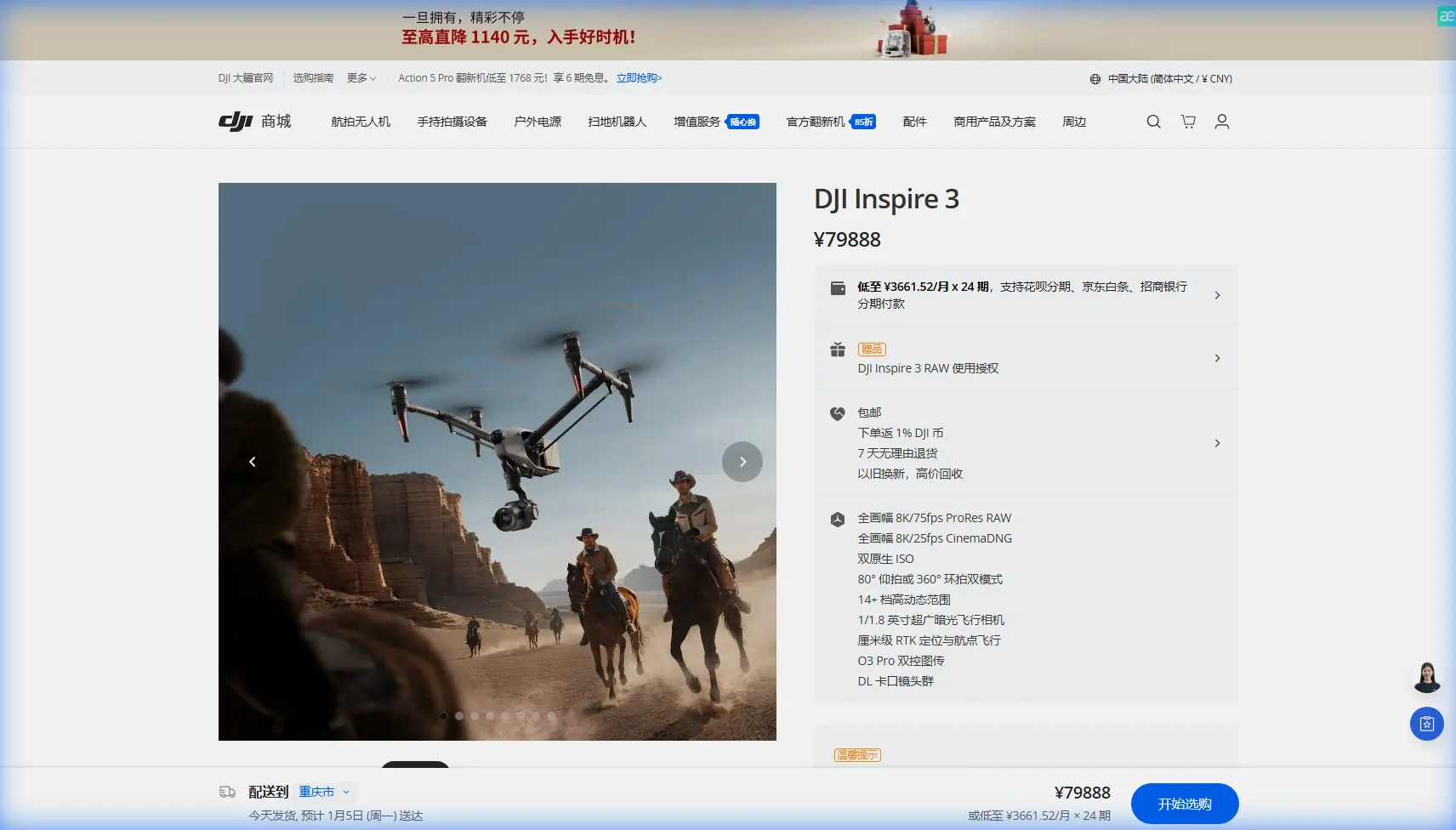
Inspire 3 for High-Altitude Wildlife Work: Antenna Setup, Electrical Reliability, and Cold-Weather Field Discipline
META: Expert how-to for using DJI Inspire 3 in high-altitude wildlife capture, with antenna positioning advice, O3 transmission considerations, battery workflow, and aircraft-system reliability lessons drawn from aircraft electrical and materials design references.
High-altitude wildlife filming looks cinematic from the outside. In practice, it is a systems job. Thin air, cold-soaked batteries, shifting line of sight, snow glare, and long stand-off distances all expose weak habits fast. With the Inspire 3, the difference between a clean wildlife sequence and a lost opportunity often comes down to discipline in setup rather than pure flying skill.
I approach this as both a UAV operator and a systems person. The most useful clue in the reference material is not about drones at all. It comes from traditional aircraft electrical installation practice: power paths must be treated differently from signal paths, wiring must be clearly identified, enclosure design must support maintenance, and environmental testing of representative assemblies matters because the field punishes assumptions. Those principles map surprisingly well to the Inspire 3 when you are filming wildlife above the tree line.
This guide focuses on one scenario: capturing wildlife in high-altitude terrain while protecting image quality, transmission stability, and aircraft reliability.
Start with the mission, not the camera move
Wildlife work in alpine environments is not just “fly higher.” Your aircraft may be operating from a ridge, across a valley, or near broken rock faces that interfere with transmission paths. Animals may appear small against huge terrain, and your safest stand-off position may not be your strongest radio position.
That is why I build the mission around three pillars:
- Stable command and video link
- Predictable battery behavior in cold conditions
- Low-disturbance positioning that respects wildlife and terrain
The Inspire 3 gives you a serious platform for this kind of work, especially when you need refined camera control and dependable professional workflows. But the aircraft only performs as well as the operator’s field logic.
The most overlooked range tip: antenna positioning is a terrain problem
Let’s address the practical point first. If you want maximum range and a cleaner live view with O3 transmission, antenna placement is not a trivial detail. In high-altitude wildlife operations, it is often the deciding factor.
A common mistake is pointing the controller antennas directly at the aircraft like a flashlight. That is not the strongest orientation. For most controller antenna designs, the strongest radiation pattern spreads outward from the sides, not the tip. In plain field terms: present the broad face of the antenna pattern to the aircraft, not the narrow end.
My field method for Inspire 3 in mountain terrain
- Stand where you have the clearest possible line of sight to the aircraft’s likely flight box, not just the takeoff point.
- Keep your body from blocking the controller side facing the aircraft.
- Angle the controller and antennas so the aircraft sits inside the broadside signal pattern.
- When the aircraft climbs or crosses slope lines, make small orientation corrections instead of waiting for signal quality to degrade.
- Avoid setting up immediately behind rock shelves, vehicles, metal tripods, or cliff lips that can create local shadowing or reflections.
Why this matters operationally: mountain environments create signal geometry problems before they create distance problems. You can be well within acceptable range and still get unstable transmission because the aircraft has dipped behind a ridge contour or your controller is shadowed by your own body position.
If your team is coordinating from a fixed wildlife observation point and wants a second opinion on field positioning, I sometimes recommend sharing a site sketch and topographic screenshot first through our WhatsApp flight planning line. A ten-minute review can save a wasted weather window.
Read the radio environment like an aviator reads wiring
One of the strongest reference details comes from aircraft electrical design practice: power lines are shown as heavy lines, signal lines as fine lines, and every wire is identified. That distinction matters because not all pathways have the same function or tolerance.
Apply that thinking to the Inspire 3 mission.
Your aircraft has its own “power path” problems:
- battery temperature
- voltage sag under load
- hot-swap turnaround discipline
- preflight state-of-charge logic
And it has “signal path” problems:
- O3 transmission visibility
- antenna orientation
- controller placement
- interference from terrain and structures
Many operators treat these as one blended issue. They are not. If your live feed glitches, that does not automatically mean your power system is under stress. If your aircraft response becomes conservative in the cold, that does not automatically mean transmission is weak. Separate the two in your troubleshooting.
That single mental habit speeds up decision-making in the field.
High altitude changes wildlife capture in three ways
1. You lose margin faster than you think
Cold air can help with motor efficiency in some respects, but high-altitude operations are still margin-sensitive. Climb performance, braking feel, and reserve planning all deserve more caution than they would at low elevation.
With wildlife, you often cannot repeat the moment. That tempts pilots to stretch. Resist that instinct. Keep extra energy reserve for return, repositioning, and a go-around if the animal changes direction.
2. Batteries stop being passive equipment
The Inspire 3 hot-swap battery workflow is valuable in alpine work because it cuts ground downtime and helps you keep the aircraft in a ready state while the wildlife window is still open. But hot-swap convenience does not remove cold-weather battery physics. It only improves your operational rhythm.
I treat batteries as active mission components:
- warm before use
- rotate systematically
- log performance by cycle and ambient conditions
- reject any pack pair that shows mismatch behavior
In the reference material, electrical enclosures are designed with maintenance access in mind, often with quick-opening structures rather than awkward permanent closures. The operational significance is obvious: systems that need inspection must be designed for fast and reliable access. The Inspire 3 battery workflow benefits from the same mindset. If your battery management process is slow, improvised, or poorly labeled, you are effectively building maintenance friction into the mission.
3. Wildlife ethics become flight-planning constraints
At altitude, sound can travel unpredictably across open slopes and bowl-shaped terrain. Maintain stand-off distance. Use longer lens strategy and patient positioning rather than direct approach. If thermal signature monitoring is part of a broader conservation workflow, keep that separate from cinematic capture decisions. Thermal tools can help locate heat contrast in low-light environments, but they do not justify intrusive flight paths.
Build a preflight routine around enclosure logic
Another useful detail from the aircraft handbook concerns enclosure construction. It describes boxes built in two parts, a base and a cover, typically from metal sheet in the 0.8 to 2.5 mm range, with rounded internal geometry and protective insulation where wiring might otherwise contact the housing and create a short.
That sounds far removed from UAV operations, but the lesson is direct: reliability depends on what happens inside the structure, not just what appears on the outside.
For Inspire 3 field prep, translate that into a five-part inspection:
1. Check all exposed interfaces
Battery contacts, gimbal locking surfaces, controller ports, monitor cable seating, media bay closure. Cold and dust make minor seating errors more likely.
2. Look for abrasion points
The handbook warns against wire-to-housing short risk and calls for insulation where needed. Your drone equivalent is cable rub, accessory pressure points, and transport wear. Any repeated contact point deserves attention before the mission.
3. Keep component mounting stable
The source notes that capacitors and semiconductor devices are mounted on dedicated brackets before being fixed inside an enclosure. Operationally, that means delicate electronics are not left floating or stressed. For Inspire 3 crews, this translates into disciplined transport and setup. Do not toss monitors, battery hubs, SSD readers, or RTK accessories loose into one hard case and expect long-term reliability.
4. Prioritize fast-access maintenance
If a component or connection may need rechecking in the field, arrange your kit so it can be reached without unpacking the entire operation. Fast access preserves both time and judgment under pressure.
5. Use environmental logic, not hope
The handbook states that testing a representative enclosure can stand in for the wider system under certain environmental qualification logic. In drone terms, your own representative test matters. Before a high-altitude wildlife trip, perform a controlled cold-weather trial with your actual battery sets, your actual monitoring setup, and your actual transmission workflow. Do not assume a platform that behaved well at sea level will behave identically on a cold ridge.
O3 transmission in wildlife terrain: what actually improves link quality
The marketing shorthand around transmission systems often oversimplifies what field crews need to know. In wildlife work, your link quality is improved less by blind faith in spec sheets and more by site geometry and operator habits.
Here is what consistently works:
Maintain clean Fresnel space where possible
You do not need to compute the full radio geometry in the field, but you should understand the principle. A hill edge, stand of wet trees, or rock outcrop can degrade the link even if the aircraft is not fully hidden.
Elevate the pilot position when safe
A small change in standing position can outperform a much larger change in aircraft altitude. One or two meters of extra pilot elevation on a slope can clean up the path.
Avoid lateral self-shadowing
If the aircraft is off to one side and your torso is between controller and aircraft, you may be attenuating your own signal path.
Keep the aircraft where you can keep the antennas honest
Wildlife operators sometimes become so focused on subject behavior that they stop adjusting antenna orientation. Build the habit of micro-correcting the controller every time the aircraft relocates significantly.
Plan for valleys and ridgelines
Cross-valley shots are often stronger than ridge-behind-ridge shots. If you must work behind contour breaks, reposition the pilot instead of asking the link to solve a geography problem.
Image capture: choose repeatable geometry over dramatic improvisation
High-altitude wildlife sequences can become chaotic if you chase behavior reactively. A better method is to define predictable camera lanes.
I usually recommend:
- one observation orbit zone well outside disturbance range
- one lateral tracking lane aligned with terrain contours
- one exit route with minimal elevation penalty
- one emergency return route that preserves line of sight
If you are collecting photogrammetry or habitat context alongside cinematic footage, bring the same rigor you would use for mapping: stable overlap logic, consistent altitude relative to terrain, and properly documented GCP use if ground control is part of the deliverable. Even if the primary mission is visual storytelling, structured capture expands the value of each sortie for researchers, land managers, or conservation teams.
Security and data hygiene still matter in the mountains
Remote does not mean low risk. If your workflow includes sensitive wildlife location data, nesting sites, or conservation survey coordinates, transmission and storage discipline matter. Where supported, use secure data practices and protect field devices accordingly. References to AES-256 in broader professional workflows are not just enterprise jargon. They point to a real operational truth: rare wildlife location data should not be handled casually.
That applies equally to flight logs, observer notes, and geotagged footage.
A specialist’s checklist before takeoff
Before I launch an Inspire 3 for wildlife in alpine terrain, I want clear answers to these questions:
- Where is my strongest controller position after the aircraft leaves the takeoff point?
- Which ridge, rock face, or tree line is most likely to interfere with O3 transmission?
- Are my batteries warm, balanced, and rotated in a documented sequence?
- Do I have a clean return route if the animal moves and I need to hold longer than planned?
- Have I separated signal issues from power issues in my preflight logic?
- Is my kit arranged for fast battery exchange and quick fault isolation?
- Am I collecting only the footage I need, with minimal disturbance?
That last point is not philosophical. It is operational. The less you improvise around wildlife, the better the result usually is.
Final field advice
The references behind this article come from mature aircraft design thinking, and that is exactly why they are useful. They remind us that performance is built from small engineering decisions: clear distinction between power and signal paths, labeling and traceability, maintenance-friendly access, environmental validation, insulation against avoidable faults, and stable mounting of sensitive components.
Those principles matter when your Inspire 3 is on a cold ridge waiting for a short wildlife window.
The aircraft is capable. The environment is not forgiving. If you want stronger range, better link stability, and fewer aborted takes, start with where you stand, how you aim the antennas, how you manage batteries, and how seriously you treat field reliability. High-altitude wildlife work rewards operators who think like system designers.
Ready for your own Inspire 3? Contact our team for expert consultation.