
Inspire 3 on Windy Coastlines: What Shandong’s New Low
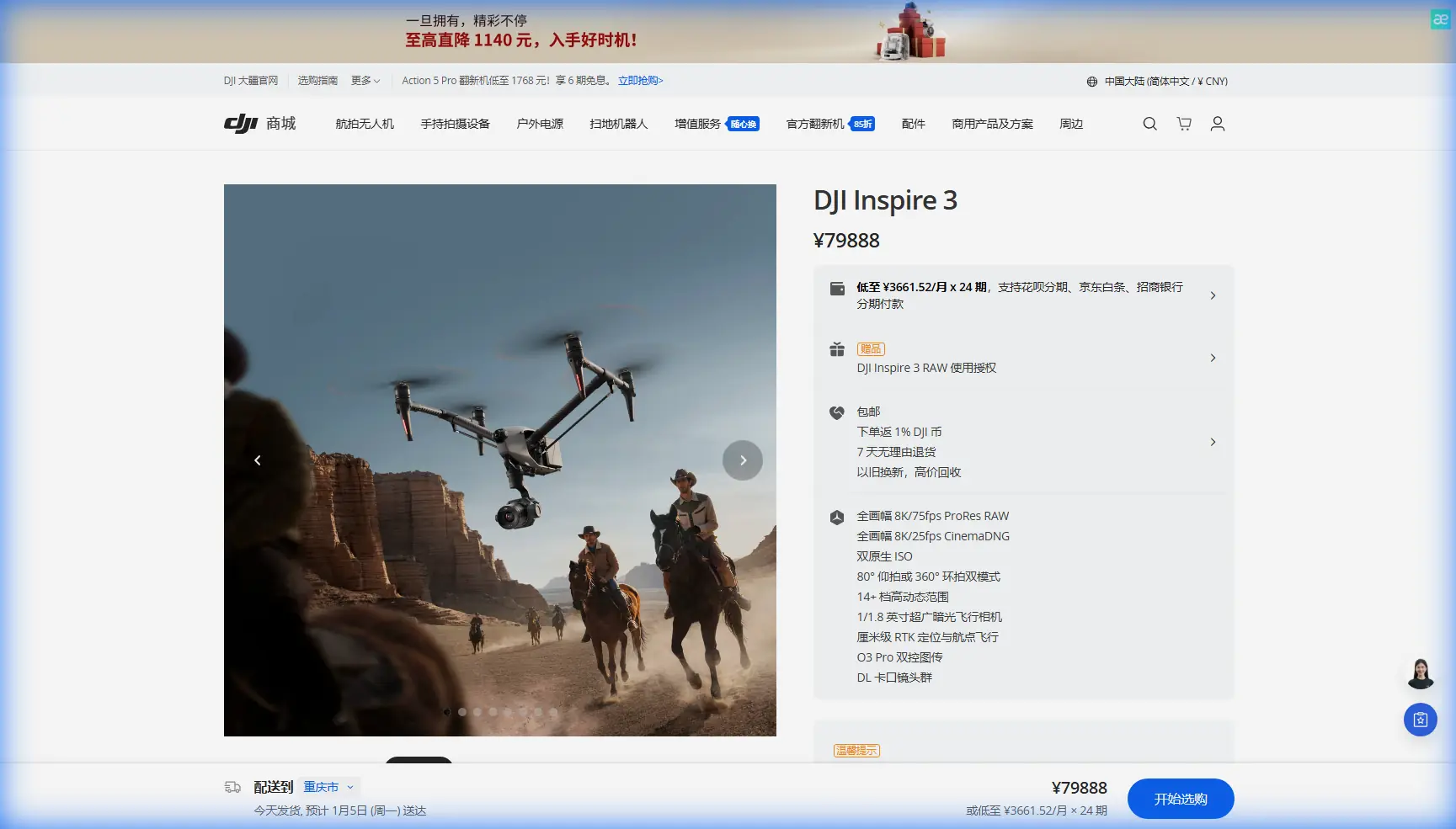
Inspire 3 on Windy Coastlines: What Shandong’s New Low-Altitude Plan Means for Real-World Operations
META: A field-driven look at how DJI Inspire 3 fits coastal, windy, low-altitude logistics and inspection workflows as Shandong advances new low-altitude applications, including the Yantai–Dalian cross-sea corridor.
By James Mitchell
Shandong’s latest policy move matters because it shifts low-altitude aviation out of the abstract and into named operating scenarios. On April 14, the General Office of the Shandong Provincial Government officially issued an action plan on supporting scenario cultivation and open application to drive breakthroughs in new quality productive forces. The document spans 20 key fields, but for Inspire 3 operators, one line stands out immediately: a clear push to strengthen low-altitude flight service support and build landmark application scenarios, including a Yantai-to-Dalian cross-sea low-altitude logistics corridor.
That is not just a headline for logistics companies. It signals something bigger for the wider drone ecosystem around coastal operations: more attention on route reliability, communications resilience, weather tolerance, airspace coordination, and repeatable mission standards. Even when the Inspire 3 is not the aircraft chosen to carry cargo across open water, it becomes highly relevant as a platform for route validation, shoreline infrastructure inspection, visual surveying, operational training, and pre-deployment risk assessment.
For readers focused on delivering along coastlines in windy conditions, that distinction is operationally significant. The real question is not whether Inspire 3 is a parcel drone. It isn’t. The useful question is where a high-end aerial platform fits when a province begins formalizing low-altitude infrastructure around maritime corridors. The answer is: in the preparatory layer, the verification layer, and the continuous monitoring layer.
Why this policy matters to Inspire 3 operators
A cross-sea low-altitude corridor between Yantai and Dalian implies one immediate challenge set: coastal wind, moisture, variable visibility, RF complexity near developed shoreline zones, and limited tolerance for mission interruptions. Any drone operation supporting that environment must be stable, predictable, and able to collect clean data quickly.
That is where Inspire 3 enters the conversation.
Its value on windy coastlines is less about hauling goods and more about helping commercial teams understand whether a route, launch point, transfer site, or coastal asset is actually workable day after day. Before logistics operations scale, somebody has to inspect shoreline staging areas, map approach paths, document obstacles, verify changing conditions around ports and bluffs, and produce visual intelligence that decision-makers can trust. A cinema-grade airframe may sound like overkill until you realize that route planning near water often fails on small details: a rooftop launch area with turbulent airflow, a cliff edge causing mechanical turbulence, a communications dead zone behind harbor infrastructure, or glare conditions that hide obstructions at certain hours.
High-quality imaging is not vanity in that context. It is risk control.
The coastline problem: wind is only half the story
Most people reduce coastal drone work to one issue: wind. Wind matters, but it is only part of the operating picture.
Coastal work combines several stressors at once:
- gust fronts that change faster than inland conditions
- salt-heavy moisture that punishes exposed equipment
- strong reflections from water that complicate visual assessment
- sparse emergency landing options in some shoreline sections
- transmission inconsistency around harbors, vessels, cranes, and built-up waterfronts
- fast battery draw when repeated position corrections are required
That last point is the one newer teams often underestimate. In field practice, wind does not only affect controllability; it changes the battery curve. An aircraft that looks comfortable in a hover can consume energy much faster while fighting lateral drift on a long shoreline pass. If your workflow includes repeated repositioning for photogrammetry or detailed visual inspection, the drain can become uneven enough to distort your safety margin.
With Inspire 3, battery discipline matters more on coasts than on inland sets.
A field tip on battery management that saves missions
Here is the battery habit I push on every coastal team: do not wait for a single low-battery threshold to drive swap decisions on windy shoreline jobs. Instead, build a return rule around wind exposure plus task phase.
In practice, that means if the mission includes an outbound leg over water or along an exposed seawall, I prefer to rotate batteries before the pack reaches the level that would still feel acceptable inland. Why? Because the return leg is usually flown with less flexibility. If the aircraft has been correcting constantly against gusts, remaining percentage can look deceptively healthy until voltage sag appears under load.
The Inspire 3’s hot-swap batteries are especially useful here. On paper, hot swapping is about fast turnaround. In reality, on a coastline mission, it is about maintaining mission rhythm without rushing preflight checks. You can land, replace packs efficiently, confirm aircraft status, and get back up while preserving continuity in changing light or tide windows. That continuity is critical when you are documenting a harbor edge, breakwater, ferry terminal, or logistics staging site that may look very different thirty minutes later.
My rule from field experience: if the aircraft has spent a meaningful part of the sortie crabbing into crosswind or holding position over reflective water, downgrade your confidence in the displayed remainder and swap early. Not because the system is weak, but because coastal conditions distort neat assumptions.
Where Inspire 3 fits in a low-altitude logistics corridor
Shandong’s plan explicitly ties low-altitude development to service support and practical application. The mention of the Yantai–Dalian cross-sea route is revealing because corridors like that require more than aircraft. They require an operating ecosystem.
Inspire 3 can contribute in several civilian and commercial roles around such an ecosystem:
1. Shoreline site assessment
Before any corridor becomes routine, launch and recovery points need to be surveyed. Inspire 3 is well suited for documenting coastal facilities, rooftops, piers, transfer yards, and access corridors with enough visual fidelity to support engineering and operations teams. This is where photogrammetry workflows and properly placed GCPs can become useful, especially when teams need repeatable maps rather than one-off visuals. Even if Inspire 3 is not the first machine people associate with mapping, accurate site modeling can be valuable when selecting safer operating zones in tight maritime environments.
2. Infrastructure inspection
Cross-sea and shoreline logistics depend on physical support assets: communication towers, lighting, rooftop pads, port-side structures, storage facilities, and approach paths. Inspire 3 can help inspect visible defects, clearance issues, and changing site conditions. In windy conditions, aircraft stability and transmission reliability become more important than raw speed.
3. Route rehearsal and crew training
A formal low-altitude corridor raises the standard for crew readiness. Inspire 3 is a strong training platform for mission discipline because it forces teams to think in terms of airframe management, data capture quality, timing, and environmental judgment. That has direct value for coastal operators preparing for more advanced workflows, including eventual BVLOS environments where pre-mission understanding must be much stronger.
4. Visual risk documentation for stakeholders
Policy initiatives create momentum, but execution depends on proving that operational concepts work in actual terrain. Inspire 3 can produce the kind of high-resolution visual material that helps infrastructure owners, insurers, logistics planners, and flight operations teams evaluate a shoreline route on evidence rather than assumption.
Transmission and data security matter more near water than many teams expect
The context you provided includes O3 transmission and AES-256, and both deserve attention here.
For coastal flights, transmission quality is not just a comfort feature. It affects how confidently a pilot can hold framing, monitor route deviations, assess obstacle spacing, and make timely return decisions. Open water can create a false sense of simplicity because there are fewer obvious obstacles in front of the aircraft, yet shoreline missions often transition quickly between exposed sea edges and cluttered developed zones. A robust transmission link helps crews maintain continuity during those transitions.
Then there is data handling. Once low-altitude operations become linked to logistics corridors, infrastructure projects, and commercial route planning, captured imagery is no longer just creative footage. It may contain sensitive details about facilities, cargo handling areas, access routes, or privately operated coastal infrastructure. That is where AES-256-level protection has practical meaning. It supports a more professional data security posture for contractors and enterprise teams that need to manage imagery responsibly.
This is not a theoretical point. As provinces formalize low-altitude applications, the drone contractor who can combine flight competence with disciplined data handling will usually be taken more seriously.
Thermal thinking, even when you are not flying a thermal mission
The phrase thermal signature also deserves careful handling. On coastal commercial work, thermal thinking can be relevant even if the mission is primarily visual. Windy shorelines affect how heat presents on surfaces and structures. If your wider workflow includes thermal surveys with another platform, Inspire 3 can still play a role in aligning visible-light context with locations where heat anomalies matter: warehouse roofs, utility points, marine-adjacent industrial sites, or transfer facilities.
That matters because low-altitude logistics support is rarely a single-aircraft story. Professional teams often combine platforms. Inspire 3 can provide the detailed visual layer that complements thermal inspection or engineering review, especially when stakeholders need precise environmental context around a defect or concern.
The operational significance of Shandong’s 20-field framework
One detail from the policy should not be overlooked: this is not a narrow drone circular. The action plan covers 20 key fields. That breadth matters because low-altitude aviation develops faster when it is tied into a larger provincial application strategy rather than isolated as a tech novelty.
For Inspire 3 operators, this suggests a market shaped by integration:
- logistics planners who need route visuals
- industrial site managers who need updated inspection imagery
- training organizations preparing crews for coastal operations
- survey teams supporting infrastructure rollout
- commercial operators documenting changing shoreline assets
The opportunity is not just “more flights.” It is more specialized missions where image quality, mission planning, flight discipline, and deliverable clarity all count.
A realistic view: what Inspire 3 should and should not do here
A lot of drone content blurs categories. Let’s keep this clean.
If the story is cross-sea logistics, Inspire 3 should not be framed as a cargo workhorse. Its real usefulness is upstream and adjacent to those operations: route documentation, site intelligence, inspection, stakeholder communication, and crew training in demanding coastal environments.
That framing actually makes the aircraft more valuable, not less. Specialized tools deliver the best return when used in the layer of the mission they are designed to dominate. Inspire 3 is at its best when image integrity, controlled flight performance, and professional workflow standards need to come together.
Practical advice for windy coastline teams using Inspire 3
A few habits consistently make the difference:
- Plan battery rotation around exposure, not just time aloft.
- Avoid treating shoreline flights as simple because the horizon looks open.
- Use repeatable waypoint logic where legal and appropriate for civilian commercial work, especially for inspection consistency.
- If mapping or modeling a coastal site, establish GCPs carefully and account for changing shoreline reference conditions.
- Review transmission behavior on the ground before committing to a long edge-of-water pass.
- Build in extra buffer for return legs when headwinds can strengthen late in the sortie.
And if your team is comparing coastal workflows or trying to understand whether Inspire 3 fits inspection, route assessment, or training around emerging low-altitude projects, you can discuss field specifics directly here: message James Mitchell on WhatsApp.
The bigger takeaway
Shandong’s April 14 action plan is worth watching because it names the kind of practical low-altitude scenario the industry has been waiting for. A cross-sea low-altitude logistics corridor from Yantai to Dalian is not just a regional transport idea. It is a pressure test for the support systems around coastal drone operations. And when governments begin formalizing these use cases, the supporting aircraft ecosystem matters just as much as the headline platform.
That is where Inspire 3 earns its place.
Not as a symbol. As a working tool for the difficult edge conditions that shape whether coastal drone operations succeed: wind, site complexity, communications confidence, battery judgment, and reliable visual data. For professionals operating around shorelines, ports, and future low-altitude corridors, that is the difference between flying because a policy exists and flying because the mission is genuinely ready.
Ready for your own Inspire 3? Contact our team for expert consultation.