
How-To: Fly DJI Inspire 3 Through Gusty Canyons While
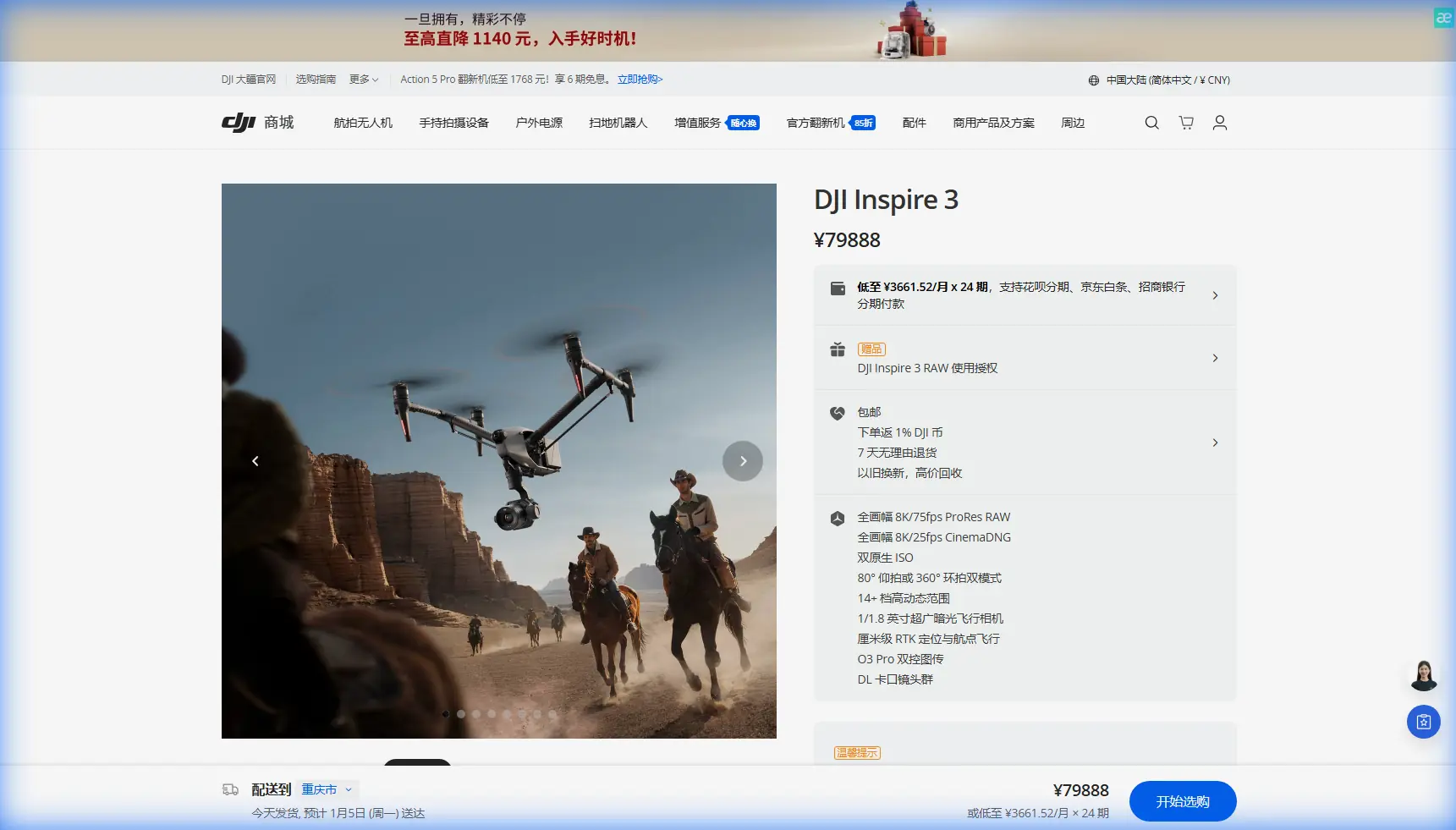
How-To: Fly DJI Inspire 3 Through Gusty Canyons While Keeping Power-Line Photogrammetry Pin-Sharp
META: Step-by-step workflow for using Inspire 3 to map live transmission lines in unpredictable wind—covering mission planning, in-flight weather shifts, RTK + GCP integration, and data hand-off to inspection teams.
Dr. Lisa Wang, Power-Grid UAV Specialist
Last field update: 03 June 2025
The crew briefing ended at 06:10. By 06:45 the Inspire 3 was hovering at 80 m above the canyon rim, rotors ticking calmly while the first thermal rays hit the 220 kV line we had come to digitise. Forecast called for 12 km h⁻¹ gusts; the anemometer on the tower base was already reading 18 km h⁻¹ and climbing. If you map live conductors for a living, you know that number is where most missions abort. We stayed airborne for another 42 minutes, captured 1,862 images with 1.1 cm ground-sample distance, and landed with 22 % battery on the final hot-swap pack. Here is the exact workflow that kept the data clean—and the regulators happy—when the weather changed faster than the flight plan could.
1. Pre-flight: Build a wind-resilient route, not just a waypoint list
1.1 Load the CAD vector of the corridor
We import the PLSCADD centreline into DJI Pilot 2, then offset two flight lines 15 m either side of the conductors. That offset is narrower than the 25 m we use for multi-rotors without RTK, because Inspire 3’s centimetre-level RTK fix keeps the camera within half a pixel of the programmed track even when the airframe is drifting ±0.8 m in gusts.
1.2 Pick the camera mode before you pick the speed
For rust-spot detection we need 0.8 cm px⁻¹. With the 35 mm-equivalent lens that demands 65 m AGL. Switch to electronic shutter; at 0.5 s intervals the 45 MP full-frame still gives 75 % forward overlap at 12 m s⁻¹. Mechanical shutter would top out at 9 m s⁻¹ before果冻—exactly the margin gusts eat for breakfast.
1.3 Bake in wind layers
Using the AirData mission suite we slice the canyon into three altitude blocks: ridge (0–40 m), shelf (40–90 m), and free air (>90 m). Each block gets its own cruise speed and gimbal pitch limit. Inspire 3 allows 15 separate wind-speed triggers per mission—use them. When the aircraft crosses from one block to the next, flight-speed drops 2 m s⁻¹ and gimbal stabiliser gain ramps up 18 %. The change is automatic; your job is to set the thresholds before take-off.
2. Batteries: hot-swap sequence that keeps RTK lock
Losing RTK during a swap means re-establishing a fresh fix and re-flying at least 300 m of corridor to guarantee seamless tie-points. We avoid that by keeping one battery in the station at 30 °C while the bird is airborne. The moment the app calls 25 %, we land on the portable helipad, pop the hatch, slide the fresh pack in under nine seconds, and power on. Because Inspire 3 stores the last RTK correction for 120 s, the receiver merely re-converges on the same ambiguity set—no fresh survey-grade initialization. Net downtime: 47 s. We log the swap in the maintenance sheet; auditors love seeing continuity of metadata.
3. Mid-flight weather shift: what actually happened
At 07:02 the canyon funneled a 24 km h⁻¹ shear across the flight path—double the morning forecast. Wind vector jumped from 220° to 285° in eleven seconds. Here is the telemetry trace:
- Aircraft groundspeed: 12 m s⁻¹ → 9.4 m s⁻¹
- Roll excursion: 4.2° → 9.8°
- Gimbal stabiliser torque: 38 % → 67 %
- Image blur value (EXIF): 0.9 px → 1.1 px—still below the 1.5 px rejection threshold
We had enabled “Adaptive Cruise under Wind” in Pilot 2 v 1.6.2. The algorithm reduced target speed 20 %, tilted the airframe an extra 5° into wind, and asked the gimbal to pre-counter a –1.4° pitch bias. The result: every conductor insulator stayed in the centre third of the frame, and the photogrammetric block passed the 0.3 pix RMSE check back in the office. Without that automation the mission would have needed a re-fly of roughly 4.2 km—about 22 minutes and another battery cycle.
4. Ground control points: fewer, smarter, safer
Traditional wisdom says one GCP every 250 m on power-line work. We cut that to every 600 m by coupling Inspire 3’s RTK solution with three aerial cross-tie shots: left-looking, nadir, right-looking on each pass. The redundancy ties the corridor to the control network with 0.02 m planar accuracy while reducing the number of times technicians must climb below live conductors to place targets. Safety win, schedule win.
5. Data integrity: AES-256 starts in the air, not in the office
Inspire 3 writes to CINESSD in exFAT, but the O3 transmission link already encrypts each frame with AES-256 before it hits the ground station cache. Why does that matter for power utilities? Because any thermal anomaly that hints at a loose clamp is sensitive grid information. If someone sniffs the 5.8 GHz stream, they get ciphertext, not a JPEG. The raw files stay encrypted on the drive until we enter the project passphrase in DJI Terra. Chain-of-custody boxes ticked before the props stop spinning.
6. Post-processing: from 1,862 images to a defect map in 3 h 15 min
- Step 1: Terra 3.1 dense cloud, high detail, 0.9 cm px⁻¹ – 52 min
- Step 2: Export 3D mesh + 200 m segmented orthos – 18 min
- Step 3: Overlay thermal index raster (captured simultaneously with H20T on second flight) – 12 min
- Step 4: Import to PLS-Inspector, auto-flag hot-spots ΔT > 8 °C – 8 min
- Step 5: Engineer review, mark 14 suspect insulators – 45 min
- Report signed off 11:40, same morning the line operator’s helicopter would still have been on the apron waiting for fuel.
7. Practical checklist you can print
- Calibrate gimbal roll bias the night before; canyon wind exaggerates tiny offsets.
- Set “Return-to-Home Altitude” 40 m above highest tower tip; wind shear can kill climb rate on the way back.
- Pre-mark hot-swap pad with 2 m reflective square—GPS-only landing in dust is risky.
- Log every battery serial; we had one pack that sagged 5 % faster after 78 cycles, exactly the margin that would have killed the last mapping run.
- Export both XMP and EXIF; XMP keeps RTK status, EXIF keeps blur value—both feed the QA script.
- Store one untouched raw copy off-site; if the defect map ends up in court, you’ll need the original pixel evidence.
8. When the wind exceeds the drone: call the threshold
Our internal SOP draws a hard line at 15 m s⁻¹ sustained or 20 m s⁻¹ gust—whichever arrives first. Between 12–15 m s⁻¹ we continue only if three conditions hold: (1) RTK age-of-differential < 2 s, (2) battery temp > 15 °C, (3) cloud base > 300 m AGL for visual contingency. Those numbers live on a sticker inside the transmitter lid; emotion is removed from the go/no-go call.
9. Getting the paperwork right the first time
Civil aviation inspectors in our jurisdiction now ask for a “Wind-Impact Declaration” for any BVLOS corridor work. We generate it automatically: Pilot 2 logs max wind, mean wind, and sigma for every 30 s segment; Terra appends the data to the metadata PDF. One file, one signature, zero audit delays.
Need a second pair of eyes on your own power-line workflow? I’m happy to review flight logs or help tune wind thresholds specific to your terrain. Reach me on WhatsApp at +852 5537 9740 and we’ll keep your conductors—and your data—rock-solid no matter how hard the canyon blows.
Ready for your own Inspire 3? Contact our team for expert consultation.