
Inspire 3 Delivery Tips for Solar Farms in Low Light
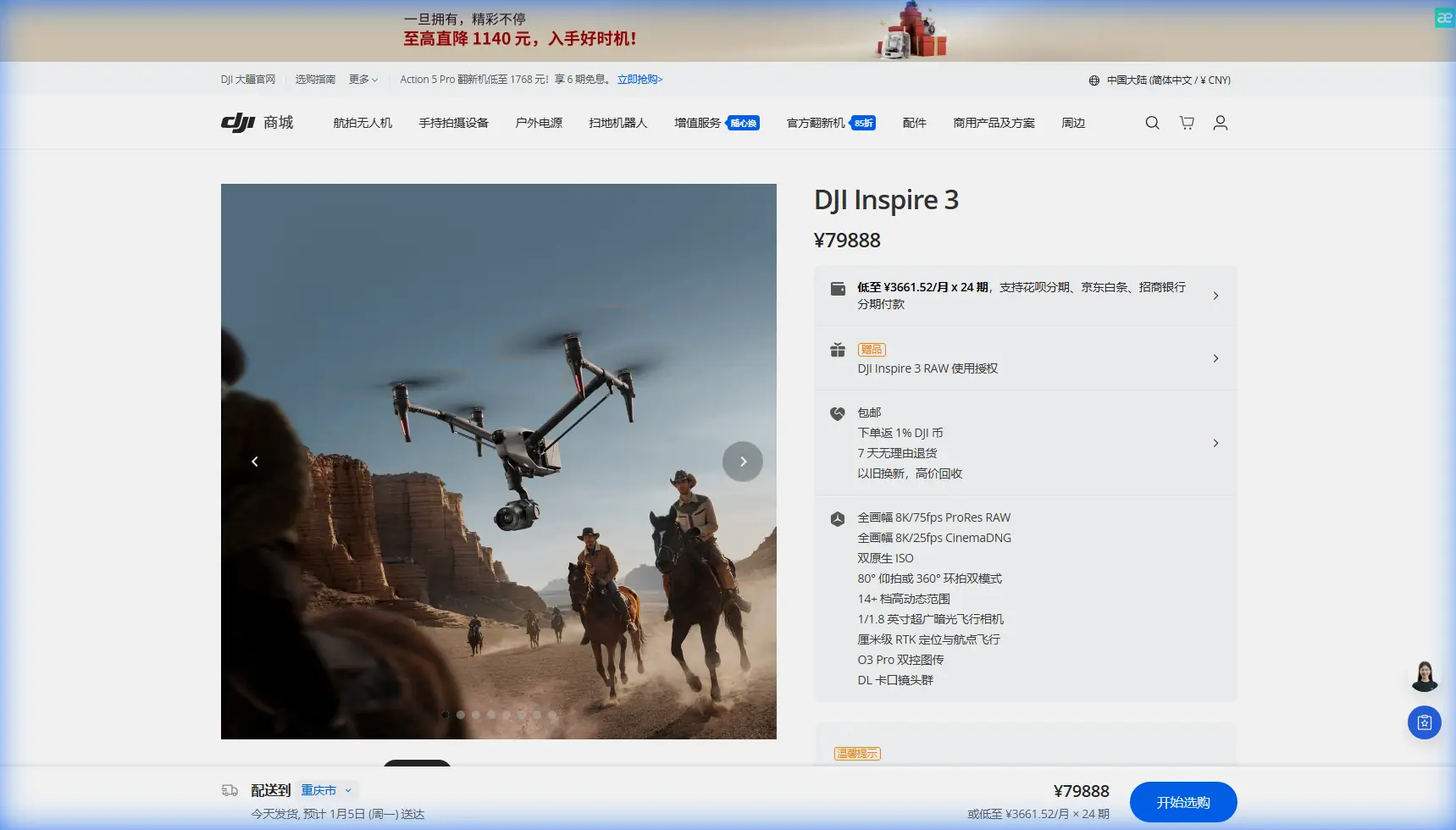
Inspire 3 Delivery Tips for Solar Farms in Low Light: A Field Method That Actually Holds Up
META: Practical Inspire 3 low-light workflow for solar farm delivery and inspection missions, covering thermal signature control, hot-swap battery discipline, O3 transmission reliability, GCP strategy, and secure data handling.
Low-light work over solar farms exposes every weak habit a flight team has.
You notice it first in the handoff between planning and execution. Mission geometry looked clean on the laptop. Weather seemed cooperative. The route spacing made sense for the sensor package. Then dusk settles in, panel rows begin reflecting stray ambient light in uneven bands, contrast drops, and the aircraft crew suddenly has to make small operational decisions that determine whether the data is usable or whether the entire sortie becomes an expensive rehearsal.
For teams using the DJI Inspire 3 in this environment, the aircraft can be a strong platform, but only if it is managed like a production tool rather than flown like a general-purpose camera drone. Solar sites are repetitive, high-glare, and often large enough that link quality, battery timing, and geospatial consistency matter as much as raw image quality. Add low light, and those factors stop being secondary.
This guide is built around a practical question I hear often from operators delivering solar farm datasets at dawn, dusk, or under poor ambient conditions: how do you get consistent results with the Inspire 3 when visibility is falling but the job still has to be completed?
My answer is simple. You do not “push through” low light. You tighten the whole workflow around it.
Start with the mission objective, not the aircraft
A solar farm mission in low light usually falls into one of two categories.
The first is visual or cinematic delivery: progress documentation, client reporting, stakeholder presentations, or construction tracking where the goal is legible, stable footage that communicates site status. The second is technical capture: photogrammetry, thermal-adjacent coordination, defect localization support, or mixed datasets that must align with existing maps and inspection records.
Those are different jobs. Operators get into trouble when they try to fly them the same way.
If the output needs mapping value, then the Inspire 3 should be treated as one element in a larger geospatial workflow. In that case, flight line consistency, overlap discipline, and GCP placement matter more than trying to rescue dark frames later. If the output is delivery footage for project teams, then the priorities shift toward repeatable camera movement, transmission integrity, and battery swaps that do not interrupt your lighting window.
That distinction sounds obvious, but on real sites it is often blurred. Low light punishes that confusion.
Why low light over solar arrays is uniquely difficult
Solar farms are not just “large open areas.” They are structured reflective environments with repeating geometry. In practical terms, that creates three specific challenges for the Inspire 3 crew.
First, autofocus and visual contrast cues can become unreliable when panel rows lose edge separation. Even a highly capable camera platform cannot invent contrast that the scene is no longer offering. If your capture plan relies on spontaneous framing decisions in fading light, image consistency will suffer.
Second, the rows themselves can mask developing hazards. Utility corridors, fencing, uneven terrain, and service roads become harder to read from the pilot’s perspective, especially during lateral repositioning.
Third, low light often overlaps with the exact time thermal differences begin to matter most to the site team. That creates pressure to keep flying when ambient visibility is getting worse. If your operation combines Inspire 3 visual capture with a separate thermal workflow, you need tighter sequencing than you would in midday conditions.
This is where the term thermal signature becomes operationally significant. At dusk and dawn, temperature contrast across modules and electrical components can reveal useful patterns, but the visual platform supporting that workflow must hold accurate position references and scene continuity. If your Inspire 3 data cannot be matched confidently to the thermal observations because the capture path drifted or the framing varied too much, the value of both datasets drops.
Build your low-light plan around transmission confidence
The Inspire 3’s O3 transmission system is one of the most useful features for large-site work, and on solar farms that matters for more than pilot comfort.
O3 gives crews a robust control and video link that helps maintain situational awareness when the aircraft is working across long rows and near repeating metal-and-glass structures. That does not mean you should treat the site as transmission-proof. Solar infrastructure can create orientation challenges and signal ambiguity simply because so much of the environment looks similar from the air.
The operational takeaway is this: use O3 to preserve decision quality, not to justify overextension.
For low-light delivery work, I recommend defining a conservative link margin before takeoff. If the site layout or terrain suggests likely weak areas, identify them in advance and assign a visual waypoint or repositioning point for the pilot team. Do not wait until the image gets muddy or the horizon disappears into blue-gray light. By then, cognitive load is already rising.
If your project involves secure site documentation, the Inspire 3 workflow also benefits from disciplined data handling. The mention of AES-256 matters here because many energy-sector clients care about who can access mission files, route data, and media after the aircraft lands. Encryption is not a marketing footnote. On utility projects, it can be part of keeping operationally sensitive site details protected from capture through archive.
The battery management tip that saves low-light sorties
Here is the field lesson I wish more crews learned earlier: on dusk operations, never judge your battery readiness by charge percentage alone.
With the Inspire 3, hot-swap batteries are a major advantage. They let crews keep the aircraft powered during battery changes, preserving efficiency when the light window is narrow. Used properly, that can be the difference between completing a planned sequence and missing the most useful part of the evening.
But hot-swapping does not remove battery discipline. It increases the need for it.
My standard practice on solar farm work is to pair batteries as mission partners and keep those pairs together for the entire shift. I do not mix them casually between aircraft cycles, especially once ambient temperature starts dropping. Why? Because low-light missions often happen when temperatures are changing fastest, and mismatched battery behavior can produce uneven discharge patterns just when the crew is trying to finish a final pass or hold a stable route over a distant string of panels.
A practical rule: if one battery in a pair has been exposed longer on the ground, or came off a charger at a meaningfully different temperature than its partner, I treat that pair as suspect for the next critical leg. Not unusable. Just not ideal for the segment that matters most.
The most expensive battery mistake on these jobs is not a forced landing. It is launching a precision pass with a pair you do not fully trust, then cutting the route short as voltage behavior diverges and the pilot loses confidence. The aircraft returns safely, but the dataset now has a gap exactly where lighting and thermal conditions were most informative.
So the tip is straightforward: for low-light Inspire 3 work, manage battery pairs by thermal condition and mission role, not just by state of charge. Save your most stable matched pair for the most data-sensitive pass.
Use GCPs only when they improve the final product
Ground control points are often brought into solar farm discussions as if their value is automatic. It is not.
For photogrammetry, GCPs can be essential for tightening positional accuracy and aligning imagery with existing site records. On large solar assets, that matters when teams need to compare outputs across phases, verify as-built conditions, or localize anomalies for ground crews. If the Inspire 3 is being used to produce mapping-grade visual context, a disciplined GCP plan can make the difference between a beautiful map and a truly useful one.
But low light changes the threshold for success.
Poorly visible markers, rushed placement, or inconsistent capture of GCPs in dim conditions can create false confidence rather than better data. If your light level is dropping and the crew cannot reliably confirm marker visibility throughout the mission area, forcing a full GCP-dependent workflow may be counterproductive. In those cases, it is often better to narrow the area, improve capture quality, and preserve consistency than to cover the whole site with weak control.
This is especially true when the project goal is hybrid: visual delivery now, detailed analysis later. Do not ask one rushed low-light sortie to carry every burden.
Sequence thermal and visual operations intelligently
If your team is also collecting thermal information on the site, the Inspire 3 can still play a valuable supporting role even without being the thermal platform itself.
The key is synchronization of purpose. Use the Inspire 3 to capture context that explains the thermal story: array section orientation, access path conditions, tracker positions, shadow patterns, nearby obstructions, and asset identifiers visible from the air. This contextual layer is often what allows an engineering team to move from “there is a hotspot” to “here is where it sits in the operational layout.”
That is why thermal signature should never be treated as a standalone buzzword in solar operations. A thermal anomaly without reliable spatial context can slow the maintenance response rather than accelerate it. Low-light Inspire 3 footage, if captured methodically, can provide that context.
If you need to compare workflow options for your next site campaign, send your mission outline through this direct planning chat and evaluate it against actual field constraints before flight day.
Do not overpromise BVLOS utility
BVLOS remains one of the most misunderstood terms in drone operations, especially on utility-scale energy sites.
Yes, large solar farms are natural candidates for beyond visual line of sight thinking because of their scale and repetitive layout. But for Inspire 3 crews working in low light, the operational question is not whether BVLOS sounds efficient. It is whether your mission design, approval basis, risk controls, and site procedures genuinely support it.
In many delivery scenarios, what teams actually need is not BVLOS at all. They need cleaner segmentation of the site into manageable visual-line-of-sight blocks, with faster transitions, tighter battery handling, and a route plan that respects fading ambient visibility. That approach often produces better results with less operational strain.
Treat BVLOS as a regulatory and risk-managed concept, not shorthand for “big site.”
Camera discipline matters more than camera ambition
Low light encourages operators to get creative. Usually too creative.
For Inspire 3 solar farm delivery missions, resist the urge to improvise dramatic movements late in the sortie. Repeating rows and reduced visual separation make ambitious lateral or descending shots harder to execute cleanly, and any instability becomes more obvious against the geometry of the site.
Instead, use a limited set of repeatable moves:
- high oblique establishing passes for row orientation
- straight tracking lines for construction progress
- controlled ascents for layout clarity
- measured reveals that preserve horizon reference
This is not about aesthetics alone. Consistent camera grammar helps downstream teams compare clips and stills from one mission to the next. On infrastructure projects, readability beats novelty.
The workflow I recommend on a real site
If I were deploying the Inspire 3 for a solar farm job in low light tomorrow, my sequence would look like this:
Arrive early enough to inspect access routes, identify reflective trouble spots, and confirm the pilot station location for the strongest transmission confidence. Build the mission around the best visibility period, not the whole evening. Assign battery pairs before the first launch and reserve the most stable set for the most precise segment. If photogrammetry is required, confirm GCP visibility before committing the area of coverage. Coordinate visual capture timing with any thermal team so the data products support each other instead of competing for the same window. Keep flight paths simple. End the mission while the aircraft is still operating inside comfortable margins, not after the site has already become ambiguous.
That last point matters. Low-light discipline is mostly the art of stopping one pass earlier than your ego wants to.
What makes the Inspire 3 useful here
The Inspire 3 is effective on solar farm delivery work not because it erases the difficulty of low light, but because it gives skilled crews the tools to manage that difficulty intelligently. O3 transmission supports confident site coverage. Hot-swap batteries help preserve continuity in narrow lighting windows. Secure handling considerations, including AES-256-level protection in the workflow, align with the operational sensitivity of energy-sector projects. And when used with proper GCP strategy and realistic expectations around photogrammetry, the platform can contribute more than just attractive footage.
That is the real opportunity.
Not flashy flying. Not stretching the mission until the picture falls apart. Just a disciplined, site-aware method that turns a short, difficult lighting window into useful deliverables.
On solar farms, that is what separates a flight from a result.
Ready for your own Inspire 3? Contact our team for expert consultation.