
Inspire 3 for Low-Light Solar Farm Delivery
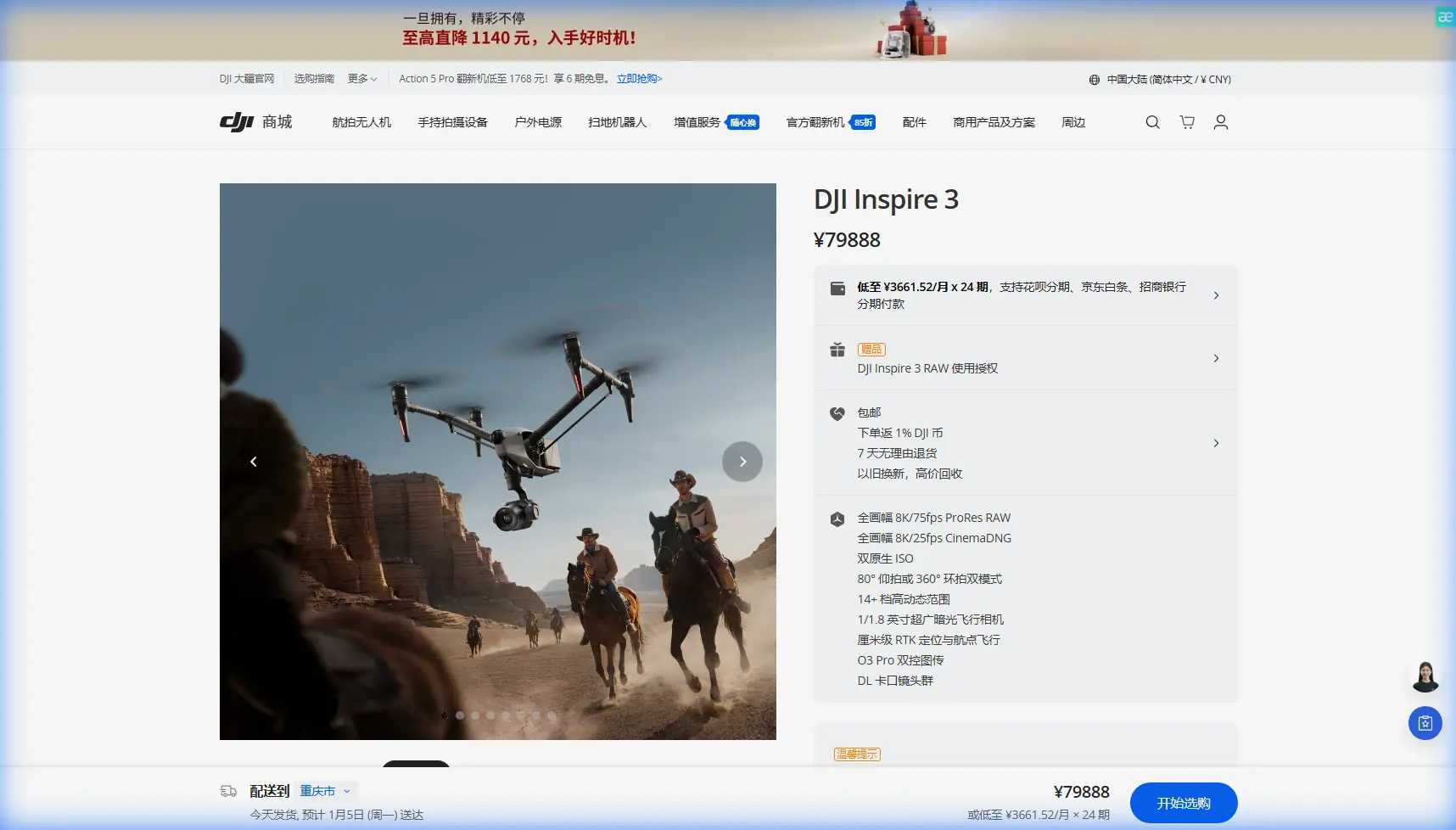
Inspire 3 for Low-Light Solar Farm Delivery: A Practical How-To from the Flight Line
META: A field-focused guide to using DJI Inspire 3 in low light for solar farm delivery support, covering pre-flight cleaning, O3 transmission, hot-swap batteries, georeferencing workflow, and operational risk control.
Solar farms look simple from the perimeter. They are not. Once you are inside a live site at dawn, dusk, or under flat overcast light, every weakness in planning shows up fast: repetitive panel rows confuse depth perception, access roads blend into service lanes, and small obstacles disappear into shadow. That is where the DJI Inspire 3 earns its place—not as a general-purpose camera drone, but as a dependable aerial platform when visibility is compromised and the cost of a missed detail is operational delay.
I approach this from a specialist field perspective. If your mission involves delivering tools, small components, or time-sensitive visual confirmation across a solar installation in low light, the airframe is only part of the answer. The real result comes from how you prepare the aircraft, how you protect navigation and sensing performance, and how you build a workflow around transmission stability, battery continuity, and accurate site reference.
This guide is written for crews using Inspire 3 in civilian energy operations, especially where low-light conditions compress the margin for error.
Why low-light solar work changes the rules
Solar sites are visually repetitive by design. Thousands of aligned panels create a scene with limited contrast and plenty of reflective surfaces. In good daylight, that mostly challenges camera settings and route discipline. In low light, it affects much more than image quality.
Obstacle awareness becomes less forgiving. Horizon cues weaken. Dust on sensors or lenses matters more because the available light is already limited. If your aircraft is supporting a delivery workflow—moving a lightweight item between staging points, carrying a visual verification task tied to that handoff, or documenting route clearance before ground crews move—you need consistency, not improvisation.
That is why two technical details matter immediately for Inspire 3 operators in this scenario:
O3transmission matters because control confidence and live-view stability are not optional when the site itself offers poor visual contrast. A stable downlink is what lets the remote crew distinguish glare from an actual obstruction or identify whether a drop zone is clear.Hot-swap batteriesmatter because low-light windows are short. Dawn and dusk often provide the exact operating period needed to avoid midday heat stress, glare, or production interference on site. Swapping packs without fully powering down the aircraft helps preserve rhythm, shortens turnaround, and keeps the mission inside that narrow window.
Neither detail sounds dramatic on paper. Both are mission-shaping in the field.
Step 1: Start with a cleaning routine, not a power-up
The most overlooked safety step on low-light operations is also the cheapest: clean the aircraft before you turn it on.
On solar farms, airborne dust is normal. Fine particulates settle on forward-facing sensors, landing gear components, camera glass, and battery contacts. If the previous mission ended near gravel roads or inverter pads, contamination is even more likely. In low light, that grime does more than make footage look soft. It can interfere with visual safety systems, reduce contrast at the lens, and create false confidence because the display feed still appears usable until a critical moment.
My preferred sequence is simple and deliberate:
- Wipe the camera lens and any optical covers with approved lens-safe materials.
- Inspect obstacle-sensing surfaces for dust, smears, or insect residue.
- Check landing gear articulation areas for grit buildup.
- Inspect battery terminals and seating surfaces before insertion.
- Confirm the airframe belly is free of debris that could affect ground clearance during takeoff or landing.
This cleaning step is not cosmetic. It protects the exact systems you lean on most heavily in poor light. If your sensing surfaces are compromised before launch, every decision that follows starts from degraded data.
For solar crews that rotate aircraft between inspection and delivery support, I recommend treating this as a documented pre-flight item rather than an informal habit. One checkbox on the operations sheet can prevent an expensive chain of assumptions.
Step 2: Build the route around site geometry, not straight-line convenience
Low-light delivery work at solar farms tempts teams into direct routing. The site looks open, so a straight path feels efficient. That assumption can be wrong.
A better method is to route around the geometry of the array field and its support infrastructure. Transformer pads, fencing transitions, cable trenches, maintenance vehicles, and temporary construction materials often sit exactly where a “simple” flight path would pass. Under low-angle light, these objects are harder to resolve from a distance.
The Inspire 3’s operational advantage here is not brute capability. It is how well it supports deliberate flying when the pilot needs clean situational awareness. O3 transmission plays a central role because image breakup or lag during low-light operations is more than an annoyance; it directly affects the quality of go/no-go judgments.
For practical route planning:
- Use service corridors and established maintenance lanes as aerial references.
- Avoid crossing reflective panel sections at the lowest usable altitude if glare is building from remaining ambient light.
- Maintain conservative separation from structures that visually merge into the background.
- Identify at least two alternate landing areas before takeoff.
If your team is coordinating with a site supervisor and wants to sanity-check route planning before mobilization, a quick field coordination note through our operations chat can save time and prevent avoidable repositioning on site.
Step 3: Treat georeferencing as an operations tool, not just a mapping exercise
Many crews hear terms like Photogrammetry and GCP and assume they belong only to survey departments. That is too narrow, especially on large solar assets.
Even if the immediate mission is a low-light delivery support task, accurate georeferencing can sharpen the entire workflow. Known reference points help pilots and visual observers confirm exact handoff zones, document delivery completion, and align imagery with maintenance records later. On large sites where one inverter block resembles the next, that matters.
GCP, or ground control point, discipline has operational significance because it reduces ambiguity. If the delivery target is associated with a specific combiner box row or service access node, reference-backed imagery makes post-flight confirmation much cleaner. It also helps when the mission includes a follow-up visual check tied to warranty, maintenance, or contractor accountability.
Photogrammetry is not always the main objective in this scenario, but the mindset behind it—repeatable positioning, known references, and structured capture—improves low-light missions dramatically. Crews who borrow that discipline tend to make fewer location errors.
A practical approach is to maintain a current site basemap with fixed references and use it before every launch briefing. Inspire 3 then becomes part of a broader spatial workflow rather than an isolated aircraft task.
Step 4: Manage batteries around the light window
Low-light operations are defined by time pressure. You are racing changing illumination, site activity, and often weather movement. Battery management cannot be casual.
This is where hot-swap batteries become more than a convenience feature. They let experienced teams keep the aircraft in a ready state during rapid turnaround, which is valuable when the site conditions are good for only a brief period. On a solar farm, dawn may provide the best combination of cooler temperatures, reduced glare, and lower traffic. At dusk, you may be working against fast-fading ambient detail.
The tactical benefit is continuity. Instead of resetting your whole rhythm between sorties, you preserve momentum and reduce dead time. That helps in three ways:
- The pilot remains mentally inside the mission flow.
- The crew can adapt quickly if the first route requires revision.
- The site contact does not lose confidence waiting through unnecessary downtime.
That said, speed should never outrun battery discipline. Always verify pack pairing, physical seating, charge state, and thermal condition before relaunch. A rushed swap defeats the point.
Step 5: Protect transmission and data like they matter—because they do
Low-light energy work is not only about flight safety. It is also about operational trust. Solar asset owners, EPC contractors, and maintenance providers often expect their site imagery and mission data to be handled carefully. Inspire 3’s AES-256 capability is worth mentioning in that context.
Why does AES-256 matter on a solar farm mission? Because even routine delivery support can generate sensitive operational visibility: equipment locations, service timing, infrastructure layout, and maintenance status. Strong encryption helps support a more secure workflow when transmitting or handling mission-relevant data. For energy clients, that strengthens confidence without changing the pace of the operation.
Pair that with O3 transmission, and you have a practical combination: dependable live-view performance for the crew and stronger protection around the data environment. One supports control quality in the moment. The other supports client trust after the flight.
These are not abstract specifications. They affect whether the aircraft fits comfortably into a professional energy operations framework.
Step 6: Know what not to expect from “thermal signature” talk
The phrase Thermal signature comes up often around solar work, and for good reason. Temperature variation can reveal panel faults, connection issues, or abnormal conditions. But in an Inspire 3 discussion, use the term carefully and honestly.
The operational value here is not to imply capabilities that are not configured for the aircraft in front of you. Instead, think of thermal signature as part of the broader site assessment language your team may already use. If the mission is low-light delivery support, you may be flying before or after a separate thermal inspection window, or you may be coordinating with another platform dedicated to thermal capture.
That matters because teams often try to stack too many goals into one sortie. A better approach is to let Inspire 3 do what it does well in this workflow: provide high-confidence visual situational awareness, precise route execution, and clean documentation support while integrating into a larger maintenance program that may include thermal tools elsewhere.
In short, do not blur mission roles. Clear role separation improves safety and results.
Step 7: Be realistic about BVLOS discussions
BVLOS is another term that gets pulled into every serious drone conversation. On vast solar sites, the concept is easy to understand: infrastructure stretches beyond a comfortable visual envelope, and operations teams naturally want broader coverage with fewer launch points.
Still, low-light delivery work is exactly where discipline matters most. If your organization is evaluating BVLOS pathways under the applicable regulatory framework, that should sit inside a formal program with approved procedures, communication protocols, and risk controls. It is not something to improvise because the site is large and the task seems routine.
The operational takeaway for Inspire 3 crews today is straightforward: fly within your approved framework, but plan with BVLOS-grade discipline even when you are not using BVLOS authority. That means strong route design, communication clarity, alternate landing planning, and a documented contingency process. Teams that work this way tend to scale more smoothly later.
Step 8: Use the aircraft to support the site team, not just the mission brief
The best Inspire 3 low-light operations on solar farms are collaborative. The aircraft is there to help the site function better, not just to satisfy a flight objective.
That changes how you brief. Ask the ground team where shadows form first. Ask which access lanes are active. Ask whether cleaning crews, electricians, or maintenance carts are moving during your intended window. Ask which staging point creates the least disruption if a second sortie is needed.
A drone team that treats these details as secondary usually ends up working harder for a weaker outcome. A team that integrates with the site rhythm uses the aircraft more intelligently.
That is also why low-light delivery support often succeeds or fails before takeoff. The Inspire 3 can give you strong transmission performance, rapid battery turnaround, and a platform suitable for disciplined professional use. But it cannot compensate for a careless route, dirty sensors, vague handoff points, or a crew that has not aligned with site operations.
The field-tested takeaway
If I had to reduce this entire workflow to one principle, it would be this: on a low-light solar farm mission, clarity beats speed.
Clean the aircraft before startup so the safety systems and optics are working with full available contrast. Use O3 transmission as a real operational asset, not a spec-sheet talking point. Leverage hot-swap batteries to stay inside narrow dawn or dusk windows without sacrificing pre-launch checks. Bring GCP and photogrammetry-style discipline into your planning so delivery points and post-flight records stay unambiguous. Respect the role of AES-256 because secure handling matters in energy infrastructure work. And if BVLOS is on your roadmap, let it improve your planning standards now, even before it changes your approval envelope.
The Inspire 3 is at its best when flown by crews who understand that low-light work is less about dramatic flying and more about reducing uncertainty. On solar farms, that mindset is what keeps operations safe, efficient, and credible.
Ready for your own Inspire 3? Contact our team for expert consultation.