
Delivering at Altitude With the Inspire 3
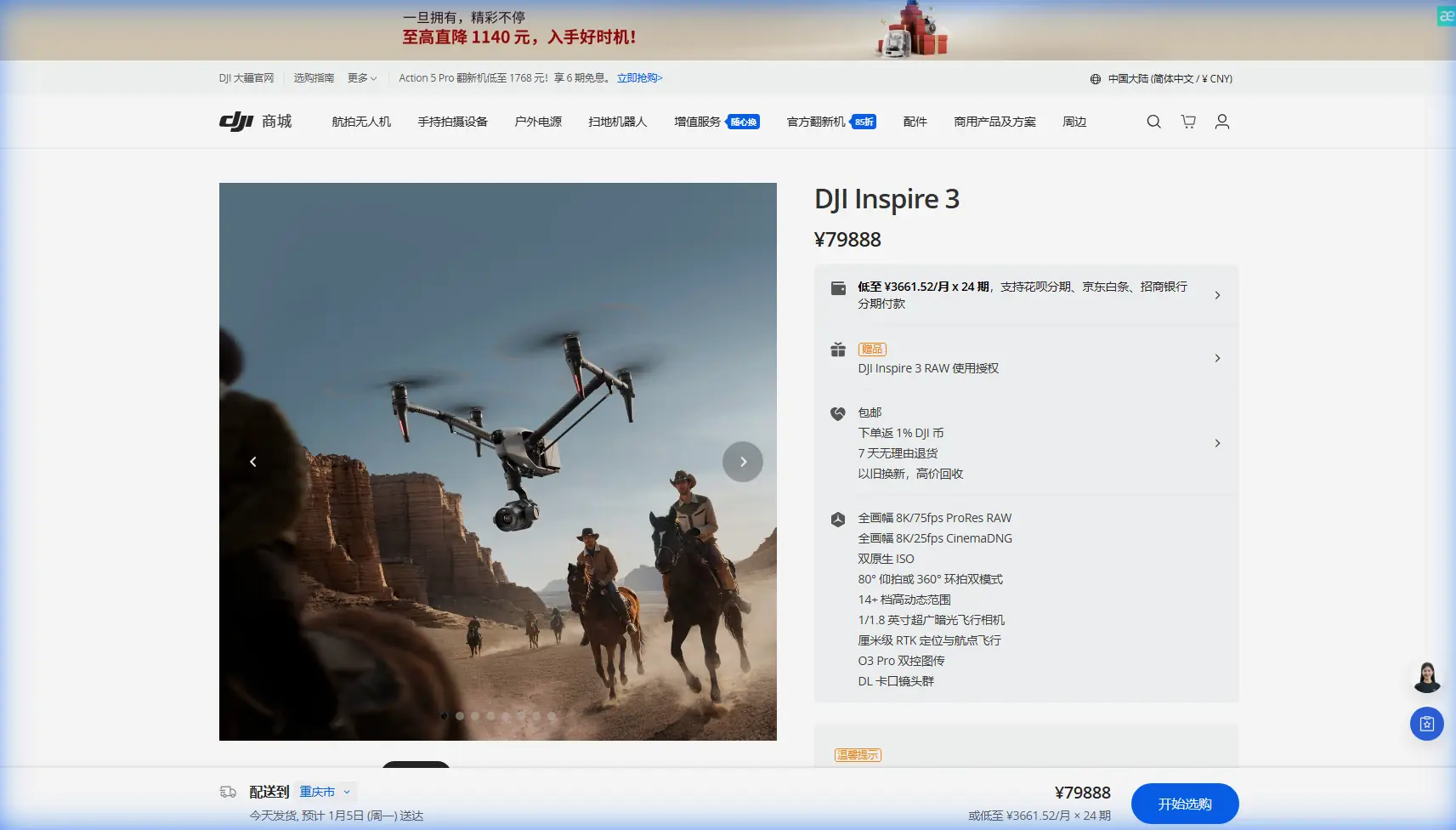
Delivering at Altitude With the Inspire 3: A Practical Field Tutorial for Vineyard Operations
META: Expert tutorial on using the DJI Inspire 3 for high-altitude vineyard delivery support, flight planning, battery management, transmission reliability, and safe commercial workflow design.
High-altitude vineyard work exposes every weakness in a drone operation. Thin air shortens performance margins. Sloped terrain complicates route planning. Patchy line of sight makes transmission discipline non-negotiable. And if you are moving small, time-sensitive payloads between blocks, battery timing becomes less of a convenience issue and more of an operational backbone.
That is why the Inspire 3 deserves a closer look in this niche. Not as a generic “pro drone,” but as a platform that can support demanding commercial workflows when the operator understands the systems thinking behind it.
I want to frame this tutorial around a simple reality from the field: the aircraft matters, but system coordination matters more.
That lesson is echoed in aircraft design literature. One technical reference on cockpit lighting stresses that when an electro-optical display is installed, its lighting has to be evaluated together with instrument, panel, and cockpit lighting as a compatible whole. Another section explains that even a light-guide panel design must account for material change from temperature, humidity, vibration, and dimensional tolerance buildup, because small deviations can affect whether components fit and function properly. Those are aviation details, not drone brochure talking points. But they map directly onto how serious Inspire 3 operators should think about high-altitude vineyard delivery support: not as isolated features, but as interacting subsystems under environmental stress.
Why the Inspire 3 Fits This Job Better Than a Casual Setup
Vineyard delivery support is rarely about brute lifting. Most of the time, the real value is movement speed, repeatability, and information continuity. You may be sending samples, tools, sensors, irrigation parts, or documentation between steep blocks where foot access is slow and vehicle access is inefficient. At altitude, every minute saved matters.
The Inspire 3’s strength in this kind of work is not just airframe capability. It is the combination of stable flight control, professional transmission, disciplined power management, and the ability to document the route and terrain with production-grade imaging. That last point is often underrated. A drone that supports both operational movement and photogrammetry-informed site awareness can become part of a smarter vineyard logistics loop, not just a flying courier.
If you are operating across terraced rows or ridgelines, photogrammetry can help you build a usable terrain model for route rehearsal. Add GCP-backed validation where precision matters, and you gain a better understanding of obstacle clearance, likely signal shadows, and the safest handoff points. The delivery mission becomes less improvised.
Start With Terrain, Not With the Aircraft
Before the first takeoff, map the vineyard’s vertical profile.
High-altitude vineyards often create a false sense of simplicity because the rows look organized from the ground. Once airborne, you discover wind shear near ridges, uneven return paths, and dead zones where the pilot’s visual orientation degrades. A clean route on a flat farm can become a high-workload route on a mountain-facing slope.
My recommendation is to divide the property into operational bands:
Launch and recovery zones
These need consistent footing, predictable wind exposure, and enough room for visual recovery if GNSS quality or obstacle perception is compromised.Transit corridors
Choose paths that minimize abrupt terrain crossings. A route hugging contour lines often produces more consistent control feel than one that repeatedly climbs and drops across rows.Handoff nodes
These are the places where staff receive or load small items. They should be selected for radio visibility and safe approach geometry, not simply proximity.Emergency descent areas
In vineyards, these are not always obvious. Irrigation hardware, support wires, and trellis structures can turn a rushed descent into a bad one.
This is where Inspire 3 operators can make intelligent use of its imaging capacity. Even if the mission is delivery-adjacent rather than formal mapping, capturing route corridors for photogrammetric review gives you something better than memory. It gives you an operational reference.
Transmission Discipline Is a Real Safety Tool
On steep agricultural terrain, O3 transmission is not just a convenience feature. It is part of your risk control stack.
A strong link helps you maintain situational confidence when rows, trees, and terrain break up the pilot’s visual continuity. For vineyard logistics teams operating across multiple blocks, transmission quality directly affects how confidently you can hold a route, inspect a landing spot, or verify that a handoff area is clear.
But here is the operational point: good transmission does not excuse bad route geometry.
I have seen crews assume that because the control link is robust, they can route behind terrain features that would be a poor choice in any manned aviation mindset. That is backwards. Another aircraft-design reference in your source material discusses how modern rotorcraft integrate automatic flight control systems with mechanical control systems, and how travel-limiting devices are positioned so a servo fault does not change the total pitch range. The engineering lesson is elegant: system integration must preserve controllability even when something goes wrong.
Applied to Inspire 3 vineyard operations, the equivalent is this: build routes that remain manageable even if your margin shrinks. Don’t rely on signal strength alone. Keep your corridor recoverable.
For teams planning extended estate coverage, that means:
- maintaining line-of-sight-friendly launch points where possible,
- avoiding blind ridge crossings without a visual observer plan,
- rehearsing return paths in the same light and wind window you expect to work in,
- and protecting mission data and communications with the security settings available, including AES-256 where your workflow requires secure handling of imagery or location-sensitive agricultural records.
A Battery Management Tip That Actually Saves Missions
Here is the field habit that has helped me most at altitude: treat battery swaps as a thermal timing exercise, not just a percentage exercise.
Everyone watches remaining charge. Fewer people pay close enough attention to how battery behavior changes after repeated short legs in cool, elevated conditions. In vineyards at altitude, especially early morning, you can get caught by a misleading rhythm: short flights, modest payload, acceptable return percentage. Then one climb into a headwind exposes the fact that the pack temperature and discharge profile are no longer where you want them.
The practical fix is simple.
Use the Inspire 3’s hot-swap battery workflow to your advantage, but do not rush it blindly. Build a rotation plan where each pair has a recorded sequence, recovery interval, and intended mission type. I usually separate battery sets into:
- first-launch reconnaissance pairs,
- mid-session transport pairs,
- reserve pairs for unplanned repeats or weather shifts.
If a route includes a sustained climb from a lower block to a higher ridge handoff point, I assign a fresher pair even if another set still looks mathematically sufficient.
That sounds conservative. It is. And it works.
The difference between finishing cleanly and landing with a thin margin is often not total route length. It is the combination of air density, wind exposure, thermal condition, and ascent demand. High-altitude work punishes casual battery assumptions.
If you need help pressure-testing a vineyard battery rotation plan, it is often easier to talk through the route profile and workflow details directly over WhatsApp with our drone team.
Payload Thinking: Keep the Mission Small and Repeatable
For vineyard support, the temptation is to stretch the mission scope. Resist it.
The best Inspire 3 delivery-style workflows involve compact, repeatable movements:
- lab samples,
- lightweight field sensors,
- SD cards or documentation,
- small repair items,
- urgent agronomy tools.
Once the mission becomes irregular, heavier, or aerodynamically awkward, your gains disappear into handling complexity and battery inefficiency.
A smart operator designs around repeatability. Use standardized containers. Fix loading orientation. Mark staff positions for handoff. Define abort criteria before takeoff. Every one of those steps reduces cockpit workload.
This is another place where the aircraft-design references offer a useful mental model. The lighting-system handbook mentions that even a 4 mm design detail in panel construction sits inside broader performance requirements: illumination quality, electrical behavior, resistance to environment, coating durability, and exposure to solvents and liquids. The exact subject there is a light-guide panel, but the principle is universal. Small physical details create operational consequences.
For Inspire 3 vineyard work, the drone-side version is:
- secure attachment geometry,
- predictable center of gravity,
- clean access to battery changes,
- and landing gear or ground handling that does not invite rushed mistakes on uneven surfaces.
Use Imaging as Operational Insurance
A lot of vineyard teams think in terms of “delivery flight” versus “mapping flight.” In practice, the line is blurry.
If you are already deploying the Inspire 3 into complex terrain, use its imaging capability to strengthen the whole operation. A short pre-shift capture can reveal:
- blocked access rows,
- worker activity near intended handoff points,
- changes in canopy density affecting approach visibility,
- erosion or equipment placement near launch areas.
For larger estates, building periodic photogrammetry datasets anchored by GCP checks helps you compare seasonal changes that affect routing. A path that was simple before canopy growth can become a poor choice later. Terrain remains the same; visibility and margin do not.
Thermal signature work can also support non-delivery tasks around the same operational envelope if your broader fleet includes thermal-equipped assets for infrastructure checks, irrigation review, or equipment diagnostics. I would not force that into the Inspire 3 mission if the payload strategy does not fit. But conceptually, it matters: a mature vineyard drone program is not about single flights. It is about layered aerial utility.
Pilot Workload: The Quiet Limiting Factor
Most failed vineyard missions are not caused by a dramatic technical failure. They unravel because pilot workload climbs faster than expected.
You are monitoring terrain, battery state, route geometry, staff positioning, wind behavior, link quality, and landing precision, often while operating from a narrow launch point. That is why I pay attention to lessons from helicopter control design. One of your source references explains how modern rotorcraft use augmentation systems and autopilot integration to reduce pilot burden, and how control-force characteristics are matched so the aircraft remains manageable in both manual and assisted modes.
The Inspire 3 is not a helicopter, but the operational lesson stands: if the system helps, use that help to reduce workload, not to extend risk.
That means:
- use automated support features where they genuinely simplify the job,
- avoid overloading the pilot with ad hoc tasking mid-flight,
- keep communication with vineyard staff standardized,
- and assign a visual observer whenever terrain or operations justify it.
The right question is not “Can the drone do this?”
It is “Can the crew do this repeatedly without cognitive drift?”
A Suggested Inspire 3 Vineyard Delivery Workflow
Here is the workflow I would use for a high-altitude estate:
1. Pre-site model
Create a terrain-aware route plan using recent imagery. If precision matters, validate key handoff areas with GCP-supported reference points.
2. Weather and density-altitude check
Do not stop at wind speed. Evaluate expected climb performance and reserve margin relative to route elevation changes.
3. Battery pairing plan
Assign hot-swap battery sets by mission profile, not by convenience. Record usage order.
4. Corridor rehearsal
Fly the route unloaded first. Confirm signal behavior, visual landmarks, and alternate recovery points.
5. Staff briefing
Mark loading and receiving positions. Standardize approach cues and abort signals.
6. Secure data settings
If the mission includes imaging of proprietary agricultural layouts or records, configure the appropriate data-security measures, including AES-256-supported workflow protections where applicable.
7. Operational launch
Keep payloads compact. Favor multiple clean sorties over one overstretched run.
8. Post-flight review
Log battery behavior, wind changes, and any transmission anomalies by route segment. That becomes your real operating manual.
The Bottom Line
The Inspire 3 can support high-altitude vineyard delivery operations well, but only if you treat it as part of an integrated flight system rather than a fast camera drone doing a side job.
That means coordinating route design, transmission strategy, battery rotation, pilot workload, and terrain awareness into one workflow. The aviation references behind this discussion may seem distant from vineyard work at first glance. They are not. Their core message is that compatibility, tolerance, and control integration determine whether a system works reliably in the real world.
That is exactly the mindset that separates a clean agricultural drone operation from a fragile one.
Ready for your own Inspire 3? Contact our team for expert consultation.