
Inspire 3 Field Report: Filming High Coastlines Without
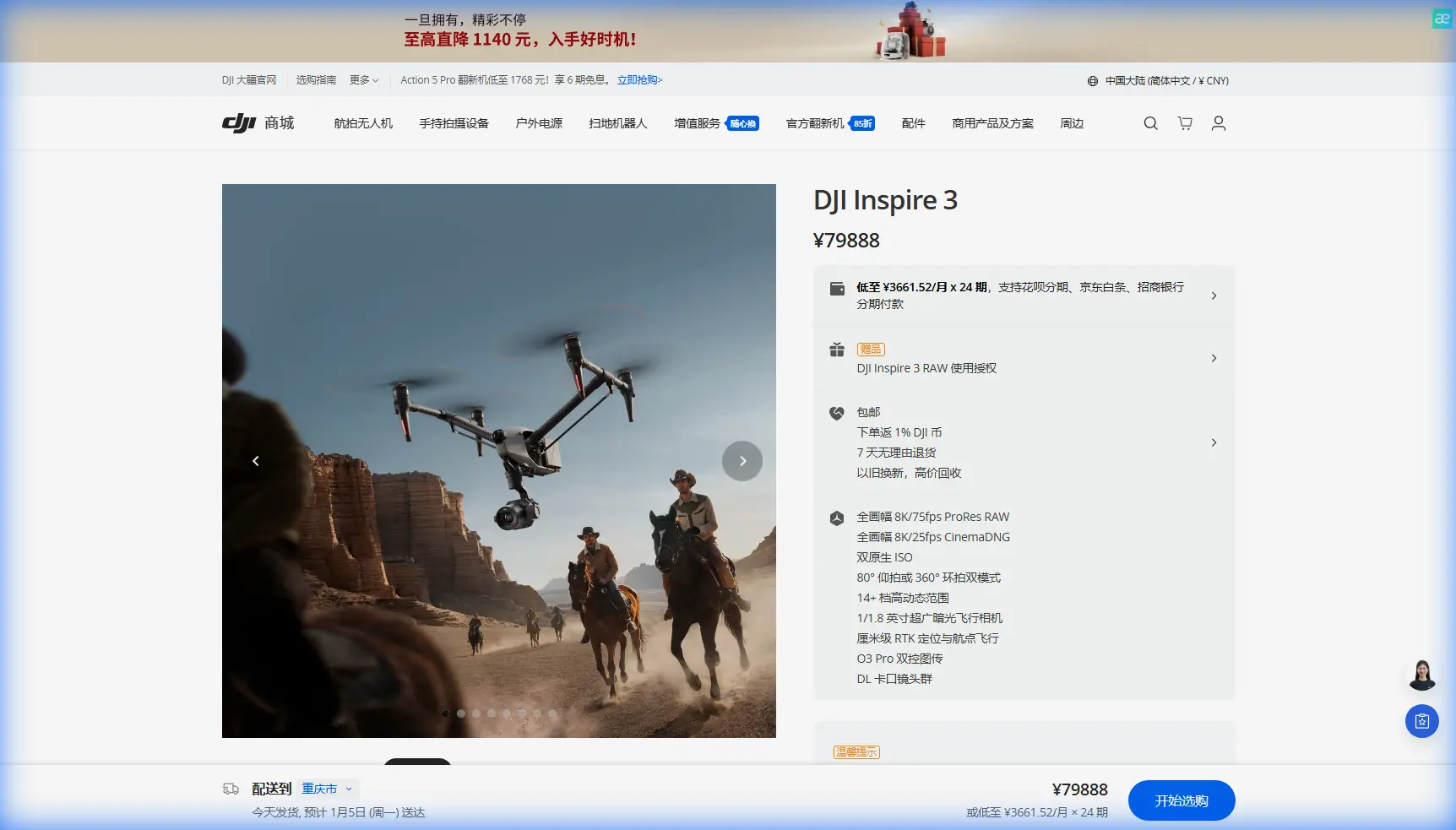
Inspire 3 Field Report: Filming High Coastlines Without Losing Link or Light
META: Specialist field report on using the DJI Inspire 3 for high-altitude coastline filming, with practical advice on O3 transmission, antenna positioning, hot-swap batteries, AES-256 security, and mission planning.
When crews talk about filming coastlines from altitude, they usually focus on the obvious variables first: wind, glare, salt haze, and the speed at which the light changes over water. Those are real constraints. But on the Inspire 3, the difference between a smooth aerial sequence and a frustrating reset often comes down to something less cinematic and more technical: how well you manage link integrity, power continuity, and shot discipline when the aircraft is working against terrain and sea-reflected interference.
I have been asked more than once whether the Inspire 3 is really suited to high coastline work, especially when the mission asks for both cinematic motion and repeatable data capture. My answer is yes, with a qualifier. The aircraft is exceptionally capable, but coastal altitude work punishes sloppy setup. If you want reliable results, you need to fly it like a camera platform and a communications system at the same time.
That distinction matters.
The Inspire 3 gives operators a serious advantage because it combines a professional airframe with O3 transmission, a practical hot-swap battery workflow, and link security built around AES-256. Those are not brochure details. On a cliffline shoot, each one has direct operational value.
Take O3 transmission first. When you are filming coastlines from elevation, your signal path is rarely as clean as it looks from the launch point. Pilots often assume that standing high on a headland guarantees a strong connection over open water. In reality, coastlines create a messy RF environment. The sea surface can reflect signal energy. Rock faces can interfere with clean propagation. If you dip below the visual contour of a ridge to track surf or a vessel near the base of a cliff, the aircraft can move from excellent line-of-sight to a compromised geometry far faster than many operators expect.
This is where antenna positioning stops being a small detail and becomes mission-critical.
For maximum range with the Inspire 3, do not point the controller antennas directly at the aircraft like laser pointers. That is one of the most common field errors I still see. The strongest radiation pattern typically comes off the sides of the antennas, not the tips. For a high-altitude coastline profile, I advise operators to square their shoulders to the flight corridor and orient the antenna faces so the broad side of the pattern meets the aircraft’s likely path. If the aircraft is climbing along a shoreline escarpment, raise your own stance if possible and keep the controller chest-high rather than low at the waist. Your body itself can attenuate the link. A small adjustment in how you hold the controller can preserve a cleaner path when the drone is yawing and translating over irregular terrain.
Equally important is where you stand. On coastal jobs, the best launch spot is not always the most visually dramatic overlook. You want a location with the widest uninterrupted view of the expected aircraft track, minimal foot traffic, and enough setback from metallic guardrails, parked vehicles, and tourist infrastructure that can complicate signal behavior. If I have to choose between a postcard launch point and a technically cleaner one 30 meters away, I choose the cleaner one every time.
That decision often extends the useful margin of O3 transmission more than people expect.
The security side is also worth mentioning. Inspire 3’s AES-256 encryption is easy to ignore in a creative workflow, but for commercial coastline projects it matters. Sensitive filming locations, infrastructure surveys, private estate boundaries, and pre-release production footage are all increasingly subject to tighter client handling requirements. A secure transmission chain is not just a compliance talking point. It reduces unnecessary exposure when you are moving high-value footage from aircraft to operator in environments where multiple wireless systems may be active nearby. For documentary crews, branded productions, and industrial inspection teams working the same coast on different days, that extra layer of transmission protection is a practical risk-control feature.
Now let’s talk power, because coastline shoots have a habit of stretching beyond the neat assumptions made during planning.
The Inspire 3 hot-swap battery design changes the rhythm of field operations in a very useful way. On a coastline set, you are often waiting for a wave cycle, a boat pass, a moving bank of cloud, or the exact angle of low sun against cliff texture. If every battery change forced a cold restart and full system interruption, you would lose more than time. You would lose continuity. Hot-swap capability lets you keep the aircraft workflow moving with less disruption, which is especially valuable when the crew is trying to maintain momentum through narrow light windows.
That said, hot-swap convenience should not encourage lazy energy management. Over water and near cliffs, reserve discipline needs to be tighter than it would be over a flat inland site. A retreat path that looked simple outbound can demand a stronger climb and more corrective input on return if the wind shifts or rotor wash becomes awkward near terrain. I recommend defining a harder personal return threshold for high coastline work than you might use on benign open ground. It is not fear. It is arithmetic.
There is another layer here that many cinematographers are now exploring: hybrid missions where the same flight block serves both visual storytelling and mapping support. This is where terms like photogrammetry and GCP start to enter a conversation that used to be purely about movement and composition.
Inspire 3 is not commonly framed as a classic survey platform first, but on certain projects it can support location intelligence extremely well when flown with discipline. If a production needs a repeatable model of a cliff section, a beach access route, or a heritage structure near the coast, photogrammetry planning becomes highly relevant. Ground control points, or GCPs, can help anchor the dataset when vertical relief and repetitive textures make reconstruction harder. Coastal rock, white surf, and reflective wet surfaces can all confuse a model if capture geometry is weak. Even if the day’s primary objective is a cinematic pass, collecting supplementary overlaps from controlled angles can save a location department or environmental team a second site visit.
That operational overlap is becoming more common. Creative and technical objectives are no longer neatly separated.
Thermal signature is another topic that deserves careful framing. The Inspire 3 is not defined by thermal payload work in the way some enterprise platforms are, but thermal thinking still has a place in coastline operations. Early morning launches from cold cliff tops over warmer water, or the reverse later in the day, can produce subtle atmospheric behavior that affects image stability and visual clarity. Pilots who understand how temperature differentials shape local air movement generally make better decisions about timing, lens strategy, and flight path. If your subject includes wildlife, vessels, or structures radiating heat differently than the surrounding environment, that awareness can also improve how you interpret the scene and protect the integrity of the shot plan.
And yes, if your operation sits near the edge of what clients loosely describe as BVLOS-style expectations, discipline has to increase again. I am not suggesting anyone bypass regulatory requirements. Quite the opposite. Coastline missions often tempt crews into stretching distance because the scene feels open and empty. But “empty” water is not operationally simple airspace. You need clear legal authority, a robust lost-link plan, observer coordination where required, and a route structure that respects terrain shielding. The Inspire 3 can carry demanding work with confidence, but it does not erase the obligations that come with longer, more complex missions.
From a filmmaking standpoint, the aircraft shines when you build the flight around the coast rather than trying to force the coast to fit a pre-visualized move. One of my preferred methods is to break a cliffline sequence into three mission types.
First, the establishing pass. This is flown higher than many directors initially ask for. The purpose is not intimacy. It is geography. Let the audience understand the contour of the shoreline, the spacing of the rock stacks, and the relationship between the sea state and the landform. High altitude is useful here because it gives the viewer structure instead of just spectacle.
Second, the compression pass. Now you descend and use the coastline’s verticality. Track laterally with measured speed, keeping enough offset that the parallax from foreground rock to distant horizon reads cleanly. This is usually where link management gets harder, because the aircraft may spend more time near terrain edges and changing relief.
Third, the texture pass. This is the flight many people rush toward first, but it belongs later. Water impact zones, ledges, access paths, vegetation shear, and wave recirculation all become more legible once you already have the wider material. On Inspire 3, this sequencing helps not only the edit but also the operation itself. By the time you go lower, you have already learned how the wind behaves along that stretch and how your transmission margin responds to the terrain.
A few practical controller habits make an outsized difference in these moments. Keep the aircraft roughly in front of your strongest antenna orientation whenever feasible. Avoid unnecessary body turns while tracking the screen. If the move demands rotation, pivot with your feet rather than twisting the controller independently. Re-check antenna angle before the critical take, not after you notice signal degradation. And if the coastline bends sharply, relocate the pilot station instead of forcing a compromised arc from one fixed point.
These are simple habits. They are also the habits that protect your best footage.
For teams building a repeatable coastline workflow around the Inspire 3, I suggest treating every mission as three connected systems: aircraft performance, transmission geometry, and scene logic. Most failures happen when one of those is planned in isolation. A pilot thinks about range but not sun angle. A camera operator thinks about framing but not ridge shielding. A producer thinks about turnaround time but not what the hot-swap rhythm means for keeping batteries conditioned and rotations organized.
When those systems are aligned, Inspire 3 becomes an unusually elegant coastline tool. It can move from disciplined cinematic capture to technically useful site documentation without feeling compromised in either role. Its O3 transmission gives you a strong communications backbone. AES-256 supports secure professional operations. Hot-swap batteries keep the day moving when the light is fleeting. And if you respect antenna positioning rather than treating it as an afterthought, you can preserve range and control quality in places where geography tries to take both away.
If you are planning a demanding coastal shoot and want a second set of eyes on route design, observer placement, or transmission setup, you can message me directly through this field support channel: https://wa.me/example
That kind of preparation is rarely glamorous. It is also what separates the flight that merely survives from the flight that delivers footage the first time.
The Inspire 3 rewards operators who think beyond the frame. On high coastlines, that is exactly the mindset you need.
Ready for your own Inspire 3? Contact our team for expert consultation.