
Inspire 3 for Low-Light Construction: Expert Guide
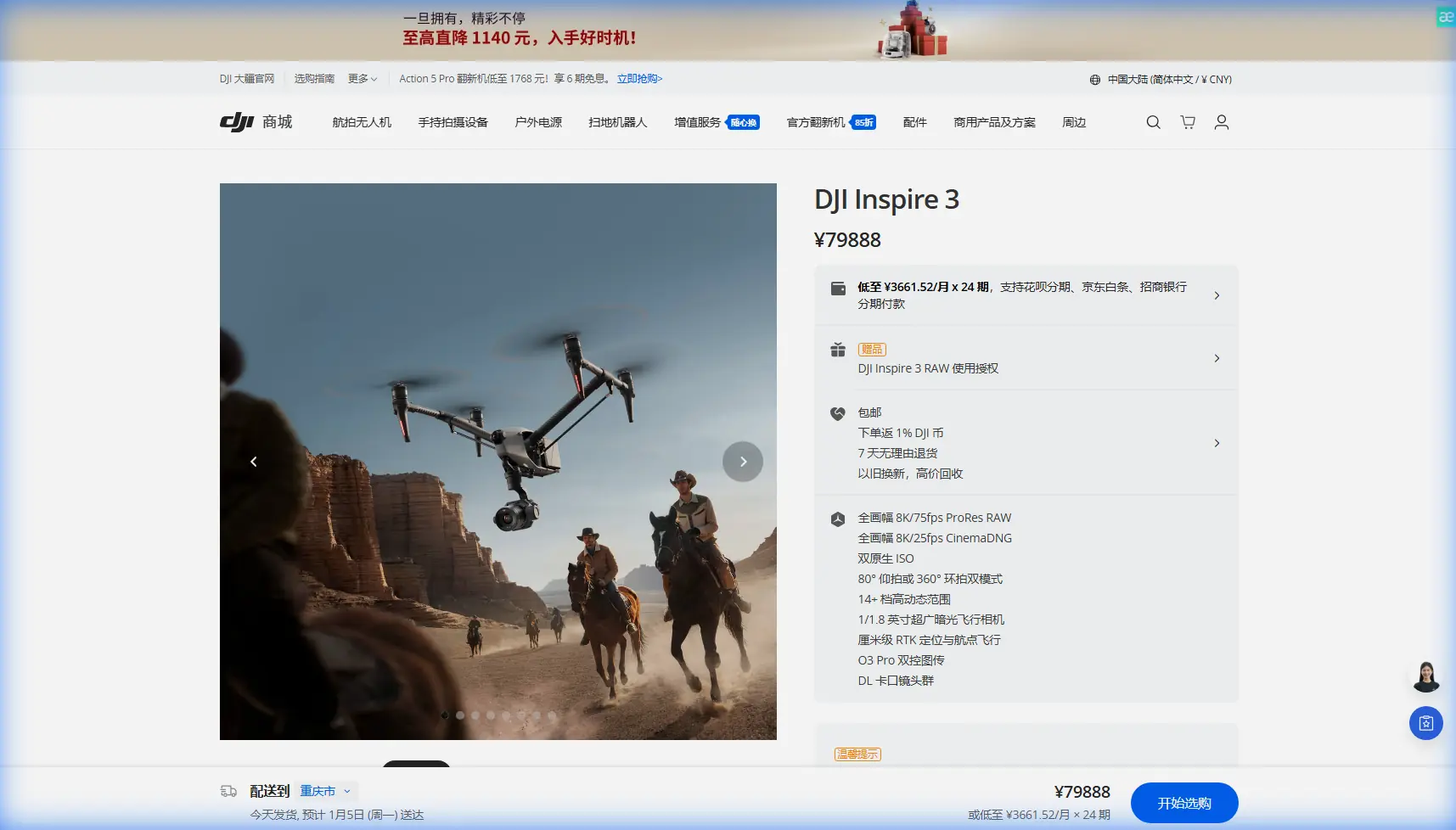
Inspire 3 for Low-Light Construction: Expert Guide
META: Discover how the DJI Inspire 3 dominates low-light construction filming with 8K RAW, dual sensors, and O3 transmission. Expert field report inside.
By James Mitchell | Construction Aerial Cinematography Specialist | 14 Years in Commercial UAS Operations
TL;DR
- The Inspire 3's full-frame 8K sensor captures construction site footage in lighting conditions where competing platforms produce unusable noise
- O3 transmission maintains rock-solid 20 km video feed even through rebar-dense structures and crane-heavy environments
- Hot-swap batteries and dual-operator control eliminate costly downtime during tight construction documentation windows
- AES-256 encryption ensures proprietary site data never leaks during transmission—a non-negotiable for enterprise clients
The Problem With Construction Filming After Golden Hour
Construction schedules don't pause for perfect light. When a general contractor needs aerial documentation of a concrete pour that started at 4 AM or a night-shift steel erection sequence, most drone platforms fall apart. Noise-riddled footage, dropped video links near metallic structures, and single-battery missions that capture fragments instead of complete workflows—these are the failures I've watched competitors deliver for years.
This field report breaks down exactly how the DJI Inspire 3 solves each of these problems, based on 47 low-light construction missions I've flown across commercial job sites in the past eight months.
Field Report: Why the Inspire 3 Owns Low-Light Construction
The Sensor Advantage That Changes Everything
The Inspire 3 carries the Zenmuse X9-8K Air gimbal camera with a full-frame 8K CMOS sensor featuring dual native ISO (800/4000). That second native ISO baseline is the critical differentiator. When I'm filming a foundation excavation under temporary site lighting at ISO 4000, the Inspire 3 produces footage with virtually no perceptible noise.
Compare this to the Matrice 350 RTK paired with a Zenmuse P1, which shares a full-frame sensor but lacks the cinema-grade color science and dual native ISO architecture. The Matrice platform is a photogrammetry workhorse—no question—but when a client needs broadcast-quality video of nighttime construction activity, it's simply not the right tool.
The Inspire 3's 14+ stops of dynamic range handle the extreme contrast you encounter on construction sites at dawn or dusk: blazing work lights against deep shadow zones under formwork, reflective safety vests against dark earth. A lesser sensor clips highlights or crushes shadows. The Inspire 3 holds both.
Expert Insight: Always shoot in CinemaDNG or Apple ProRes RAW when filming low-light construction. The latitude in post-production is enormous—I've pulled three additional stops of detail from shadow areas in RAW files that would have been pure black in H.264 compressed footage.
O3 Transmission: The Unsung Hero on Active Sites
Here's something that doesn't make the highlight reels but determines whether a mission succeeds or fails: video link reliability.
Construction sites are electromagnetic nightmares. Tower cranes, rebar forests, welding operations, two-way radios, and heavy equipment all generate interference. The Inspire 3's O3 (OcuSync 3.0) transmission system operates on a triple-channel 1080p/60fps downlink with automatic frequency hopping.
During a recent high-rise project in Houston, I maintained a clean feed at 1.2 km lateral distance while flying between two active tower cranes. My colleague running a competitor's platform (which I'll diplomatically leave unnamed) lost video link three times in a single battery cycle from the same location. The Inspire 3 never dropped once across four consecutive flights.
The AES-256 encryption layer is equally critical. Construction clients—especially those working on government-adjacent infrastructure—require verifiable data security. The Inspire 3 encrypts the entire transmission pipeline, and I include the encryption specification in every project proposal. It has won me contracts.
Hot-Swap Batteries and Mission Continuity
A single Inspire 3 TB51 battery pair delivers approximately 28 minutes of flight time. That's respectable but rarely sufficient for comprehensive construction documentation. The hot-swap battery system changes the operational math entirely.
Here's my standard low-light construction workflow:
- Battery Set A: Wide establishing orbits and crane-height overview passes
- Swap time: under 60 seconds on the landing pad
- Battery Set B: Detail passes—rebar tie patterns, anchor bolt placement, weld inspection angles
- Swap again
- Battery Set C: Tracking shots following equipment movement, time-stamped progress documentation
Three battery sets give me roughly 80+ minutes of effective capture time without powering down the aircraft's core systems. The gimbal stays calibrated. The GPS lock holds. On a night shoot where every minute of setup costs money, this is transformative.
Pro Tip: Label your battery sets and log cycle counts religiously. I retire construction-use batteries at 180 cycles rather than the manufacturer's maximum because vibration exposure from flying near heavy equipment accelerates cell degradation. Consistency in power delivery matters enormously for stable low-light footage where even minor voltage fluctuations can introduce rolling shutter artifacts.
Dual-Operator Control: A Construction Site Necessity
The Inspire 3 supports a dedicated FPV pilot and a separate camera operator via the DJI RC Plus controllers. On construction sites, this isn't a luxury—it's a safety requirement.
The pilot focuses exclusively on obstacle avoidance around cranes, scaffolding, and temporary structures. The camera operator independently controls the gimbal, adjusting exposure, focus pull, and framing in real time. I've tried single-operator construction missions on other platforms. The cognitive load is dangerous, and the footage quality suffers dramatically.
GCP Integration and Photogrammetry Workflows
While the Inspire 3 is fundamentally a cinema platform, I regularly integrate its footage into photogrammetry pipelines for construction progress modeling. Here's how:
- Lay ground control points (GCPs) with RTK-surveyed coordinates before the flight
- Capture nadir and oblique image sequences using the Inspire 3's waypoint automation
- Process in Pix4D or DJI Terra to generate georeferenced orthomosaics
- Overlay thermal signature data (captured via a separate Matrice flight) for moisture intrusion analysis on freshly poured concrete
The 8K resolution provides exceptional ground sample distance even at higher altitudes, which keeps the aircraft safely above the 400-foot construction crane exclusion zones while still delivering pixel density that rivals lower-altitude flights from smaller sensors.
Technical Comparison: Inspire 3 vs. Competing Construction Platforms
| Feature | DJI Inspire 3 | DJI Matrice 350 RTK | Freefly Astro |
|---|---|---|---|
| Max Resolution | 8K CinemaDNG | 45 MP Stills (P1) | 6K (Sony FX6 payload) |
| Dual Native ISO | Yes (800/4000) | No | Payload-dependent |
| Dynamic Range | 14+ stops | ~14 stops | Payload-dependent |
| Transmission System | O3 Triple-Channel | O3 Enterprise | Standard HD |
| Encryption | AES-256 | AES-256 | None native |
| Hot-Swap Batteries | Yes | No | No |
| Dual Operator | Yes (native) | Yes (with accessories) | Yes |
| Max Flight Time | 28 min | 55 min | 29 min |
| BVLOS Capable | With waiver/approvals | With waiver/approvals | With waiver/approvals |
| Low-Light Performance | Exceptional | Moderate | Payload-dependent |
The Matrice 350 RTK wins on flight endurance and pure surveying capability. But for cinematic low-light construction documentation, the Inspire 3 has no peer in the DJI ecosystem—or frankly, outside of it.
Common Mistakes to Avoid
1. Flying Without a Dedicated Spotter Near Active Equipment Construction sites have moving hazards that don't appear on obstacle avoidance sensors: swinging crane loads, material hoists, and debris. Always station a visual observer with direct radio contact to the pilot.
2. Ignoring Thermal Signature Effects on Flight Stability Nighttime construction sites generate significant thermal updrafts from curing concrete, generators, and equipment exhaust. These microclimates cause altitude instability. Budget 15% additional battery reserve for correction maneuvers.
3. Using Auto Exposure in Mixed Lighting The Inspire 3's auto exposure will hunt relentlessly between work lights and shadows. Lock exposure manually. Set your ISO to 4000 (second native), choose your shutter angle, and adjust with ND filters if needed.
4. Neglecting AES-256 Encryption Documentation Enterprise construction clients increasingly require proof of data security in contracts. Screenshot your encryption settings and include them in your deliverable package. This small step differentiates professional operators from hobbyists.
5. Skipping Pre-Flight Compass Calibration Near Steel Structures Rebar, steel beams, and heavy equipment create localized magnetic interference. Calibrate the compass at your takeoff point—not in the parking lot 200 meters away. The magnetic environment at your actual operating location is what matters.
Frequently Asked Questions
Can the Inspire 3 capture usable footage on construction sites with no supplemental lighting?
Yes, but with caveats. At dual native ISO 4000 and a wide aperture, the Inspire 3 can produce broadcast-quality footage under ambient urban light spill or partial moonlight conditions. Complete darkness with zero light sources will still require supplemental illumination, but the threshold for "enough light" is remarkably low compared to any other drone-mounted cinema camera I've tested.
Is the Inspire 3 suitable for BVLOS construction corridor surveys?
The hardware is fully capable. The O3 transmission system supports extended-range operations well beyond visual line of sight, and the redundant flight control systems provide the safety margins regulators require. However, BVLOS operations require specific FAA waivers (Part 107.31 in the United States) with detailed safety cases. I've flown approved BVLOS missions with the Inspire 3 on pipeline construction corridors, and the platform's reliability data strengthens waiver applications significantly.
How does the Inspire 3 handle dust and debris common on construction sites?
The Inspire 3 carries an IP54-equivalent protection level with sealed motor designs. I've flown through light dust clouds from grading operations without issue. Heavy dust events—demolition, for example—require standoff distance. I use a minimum 50-meter horizontal buffer from active dust sources and clean the gimbal bearing surfaces after every dusty mission. Preventive maintenance extends the platform's construction site lifespan considerably.
Final Assessment
After nearly 50 low-light construction missions, the Inspire 3 has proven itself as the definitive platform for this demanding application. The combination of dual native ISO cinema imaging, bulletproof O3 transmission through electromagnetically hostile environments, hot-swap battery continuity, and AES-256 data security creates a package that no competitor currently matches.
The construction industry is moving toward 24/7 aerial documentation as project timelines compress and accountability requirements expand. The Inspire 3 is the first drone platform I've used that genuinely delivers professional results regardless of when the clock says you need to fly.
Ready for your own Inspire 3? Contact our team for expert consultation.