
Inspire 3 on Dusty Construction Sites: A Technical Review
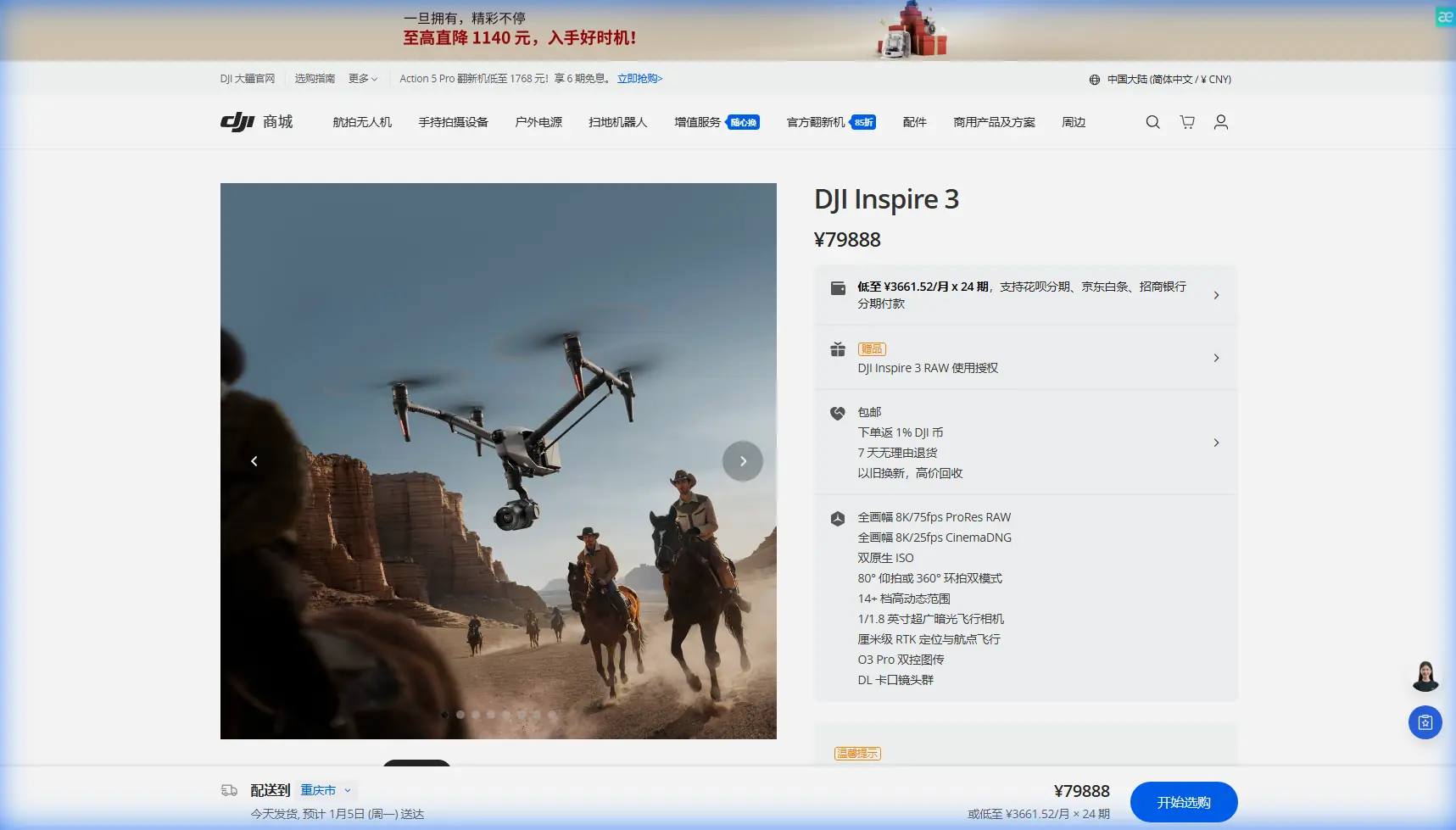
Inspire 3 on Dusty Construction Sites: A Technical Review from the Field
META: Expert review of using DJI Inspire 3 for dusty construction filming, with practical insights on transmission reliability, sensor awareness, hot-swap workflow, and why aerospace signal and structural principles still matter on real job sites.
Most Inspire 3 reviews stay in studio conditions. Clean launch pads. Controlled light. No grit in the air, no vibrating generators, no steel skeleton half-built beside the takeoff zone.
That is not how construction work happens.
If you are filming active sites with the Inspire 3, especially in dry, dusty environments, the aircraft’s value is not just image quality. It is whether the whole platform keeps behaving predictably when the location is messy, RF conditions are imperfect, turnaround time is tight, and every flight has to coexist with cranes, survey crews, haul roads, and wildlife that did not get the production memo.
I have spent years around UAV operations, site documentation workflows, and aircraft systems thinking. What stands out about the Inspire 3 is not a single headline feature. It is the way professional aerial cinema tools intersect with operational discipline. On a construction site, that distinction matters more than spec-sheet excitement.
Dust changes the job before the props even spin
Construction dust is not only a housekeeping problem. It changes visibility near the ground, degrades confidence during low-altitude maneuvers, and can interrupt the rhythm of repeated takes. On large civil sites, dust plumes often move in uneven layers, especially near graded roads and stockpiles. That means the pilot and camera operator are constantly managing visual reference, timing, and route spacing.
The Inspire 3 is well suited to this kind of environment when the crew treats it like a professional aircraft rather than a casual camera drone. Fast battery turnarounds, stable transmission, and precise route discipline become the backbone of a productive day.
This is where hot-swap batteries stop being a convenience and become an operational advantage. On an active site, the best light can disappear behind a dust plume, then return two minutes later. If the aircraft has to sit idle during a long power cycle, you lose continuity and often lose the shot. Hot-swap workflow preserves tempo. That makes a difference when documenting concrete pours, steel lifts, or staged progress sequences that cannot be repeated on demand.
Why transmission quality is more than a comfort feature
Readers looking at the Inspire 3 for site filming often focus on image pipeline first. Fair enough. But on commercial job sites, transmission reliability is often what determines whether the mission feels professional.
O3 transmission is a major part of that equation. In practical terms, it gives the crew the confidence to hold cleaner positions around partial obstructions, moving machinery, and broad work zones without turning every pass into a nervous exercise. Construction sites are full of reflective surfaces, intermittent signal clutter, and awkward staging areas. A robust transmission system helps preserve aircraft control awareness and camera confidence when the environment is less than ideal.
Security also deserves more attention than it usually gets in drone media. Many commercial sites involve sensitive infrastructure, phased developments, or clients who care deeply about information handling. AES-256 matters here because it supports a more defensible data security posture during transmission. That is not abstract. If you are filming a logistics hub, energy project, or private industrial build, secure links are part of professional risk management.
A lesson from aerospace signal discipline that still applies on the ground
One of the more interesting reference points behind this discussion comes from classical aircraft systems documentation on ATCRBS and DABS signal behavior. At first glance, that sounds far removed from an Inspire 3 on a construction shoot. It is not.
The source describes tightly defined pulse timing and data behavior, including interrogation pulse spacing such as 8 microseconds for one mode and 21 microseconds for another, plus a DABS data transmission rate of 4 Mbps and a standardized 56- or 112-bit data block format. Those are not trivia points. They reflect a design culture where timing precision, signal clarity, and predictable interface behavior are non-negotiable.
Why does that matter to an Inspire 3 operator?
Because the same engineering mindset is what separates dependable aviation-grade systems from hobby-grade behavior. On a dusty build site, you are not working in the abstract. You are relying on clean command paths, stable telemetry flow, and consistent system responses under pressure. The aerospace reference reminds us that high-performance airborne systems are built around strict input-output discipline. When your drone is weaving between a concrete batch plant, a tower crane exclusion zone, and a changing RF environment, that philosophy shows up as smoother control confidence and fewer surprises.
The reference also mentions a “standard information interface” running at 1 Mbps on a synchronized bus with a separate clock line, as well as ARINC 429-formatted data exchange. Again, the operational significance is bigger than the raw numbers. Standardized interfaces reduce ambiguity between subsystems. For drone crews, the takeaway is simple: reliability is rarely about one hero component. It comes from systems that speak clearly to each other. On the Inspire 3, that systems coherence is part of why it feels at home on serious productions rather than only in promotional demos.
Dusty sites demand structural respect, not just sensor confidence
A second reference, from an aircraft structures handbook, looks at skin stability under service loads, stiffened panels, bending capacity of reinforcing members, and multi-wall, multi-strut structural applications. That may sound deep in the weeds. It is also directly relevant to how you should think about operating the Inspire 3 around construction assets.
The structural document highlights a key principle: under load, surfaces and supporting members must remain stable, not merely strong in a static sense. That distinction is useful on site shoots. Construction environments create gust channels between unfinished walls, heat shimmer over slabs, and recirculating turbulence near facades and retaining structures. The drone is not only “flying.” It is continuously correcting through disturbed air.
For crews filming repetitive progress footage or photogrammetry-adjacent passes, this matters. Stability in disturbed conditions affects framing repeatability, edge alignment, and overlap quality. If you are capturing oblique sequences intended to support visual progress records alongside survey-grade ground control points, you need the aircraft to hold composure when airflow gets ugly near structures. The structural reference’s focus on service-load stability is a useful mental model: the platform must remain behaviorally stable while doing real work, not just look good in ideal conditions.
That is one reason I advise construction teams to treat flight planning around buildings with the same seriousness that site engineers apply to load paths. Airflow wraps around incomplete structures in ways that punish casual piloting. The Inspire 3 is capable, but capability rewards discipline.
The day a bird changed our route plan
One site still stands out. We were filming a large industrial expansion on the edge of scrubland during a dry spell. Dust was already hanging low by mid-morning from dump traffic. On the second setup, just as we were preparing a lateral pass along a steel frame, a large bird moved across the work zone perimeter and settled near the graded access road. Not dramatic. Just enough to force a rethink.
This is where crews get tested. Not by crisis, but by whether they can make good decisions without forcing the shot.
The Inspire 3’s sensor awareness helped us maintain separation while we adjusted the route and altitude profile. We abandoned the tighter line, widened the arc, and delayed one low segment until the bird had moved on. If you want a polished phrase, call it intelligent risk management. In real life, it was simply respecting the environment and trusting the aircraft’s situational feedback instead of pushing through.
That moment also underscored something broader: construction-site flying is never only about the subject. You are operating in a layered ecosystem of machinery, people, dust, signal traffic, and wildlife. Good sensors do not replace judgment, but they give good judgment more room to work.
Thermal signature and site storytelling
The Inspire 3 is not a thermal platform in the traditional inspection sense, but the idea of thermal signature still matters in construction filmmaking. Early morning and late afternoon flights often reveal how a site is functioning through atmospheric behavior, heat shimmer, reflective contrast, and dust movement. Experienced operators read those patterns because they influence route selection, focus confidence, and timing.
On roofing, paving, utilities, and industrial works, understanding where heat is building can improve both visuals and flight smoothness. Hot surfaces can produce visible distortion and unstable-looking background motion at lower altitudes. If you are trying to deliver clean cinematic documentation while also feeding progress teams useful footage, that awareness can save a sortie.
For teams also running mapping programs, the Inspire 3 is not a replacement for a dedicated photogrammetry aircraft. Still, there are cases where a well-planned visual mission complements survey deliverables. With established GCP layouts and a clear separation between cinematic and measurement objectives, you can create footage that helps stakeholders interpret site geometry, haul routes, structural sequencing, and staging constraints in a way orthomosaics alone do not.
That is the practical sweet spot: not pretending the Inspire 3 is every tool, but using it where its strengths sharpen the broader workflow.
BVLOS talk should stay grounded in real operational limits
BVLOS is one of those terms that gets thrown around too casually. For construction readers, the better question is not whether the Inspire 3 belongs in speculative beyond-visual-line-of-sight conversations. The better question is how much operational efficiency you can gain while staying disciplined inside your actual regulatory and site constraints.
On large developments, thoughtful launch placement, relay positioning for crew communication, and route segmentation often solve the problem that people try to solve with buzzwords. The Inspire 3’s transmission and control ecosystem can support confident coverage across broad work zones, but the professional move is to build procedures around the mission you are authorized to fly, not the mission you wish the rules allowed.
What separates a strong Inspire 3 construction crew from an average one
The difference is rarely stick skill alone.
Strong crews manage dust at takeoff and landing with deliberate pad placement and rotor wash awareness. They monitor changing RF conditions instead of assuming the site is electronically quiet. They use hot-swap batteries to preserve shot continuity rather than rushing unsafe turnarounds. They understand that secure transmission, including AES-256, can matter to the client as much as image fidelity. They know when a cinematic pass should yield to site activity, wildlife movement, or crew safety.
They also think like system operators.
That is why those aerospace references are worth more than a passing nod. The ATCRBS/DABS material, with its fixed pulse intervals, 4 Mbps signaling, and standardized interfaces, reflects the discipline of reliable airborne communication. The structural reference, with its attention to load stability and multi-member behavior, reflects the discipline of maintaining composure under real operating conditions. Both ideas carry directly into Inspire 3 field practice: clear systems, stable behavior, no guesswork.
If your team is building a repeatable construction filming program around the Inspire 3, those are the habits that produce better footage and fewer avoidable disruptions.
And if you are trying to sort out an Inspire 3 workflow for a dusty site, a complex industrial build, or a mixed filming-and-documentation brief, you can message our flight team here with the project context and operating conditions.
The Inspire 3 is a serious aircraft. On construction sites, that only becomes obvious when the environment stops being easy. Dust, airflow, signal clutter, and unpredictable activity expose weak setups quickly. They also reveal what the platform does well: stable professional operation, efficient power management, secure transmission, and the kind of systems coherence that earns trust over a long shooting day.
That is the real test. Not whether the drone looks advanced, but whether it keeps delivering when the site does what sites always do—change by the minute.
Ready for your own Inspire 3? Contact our team for expert consultation.