
Inspire 3 for Urban Construction Site Filming: Altitude
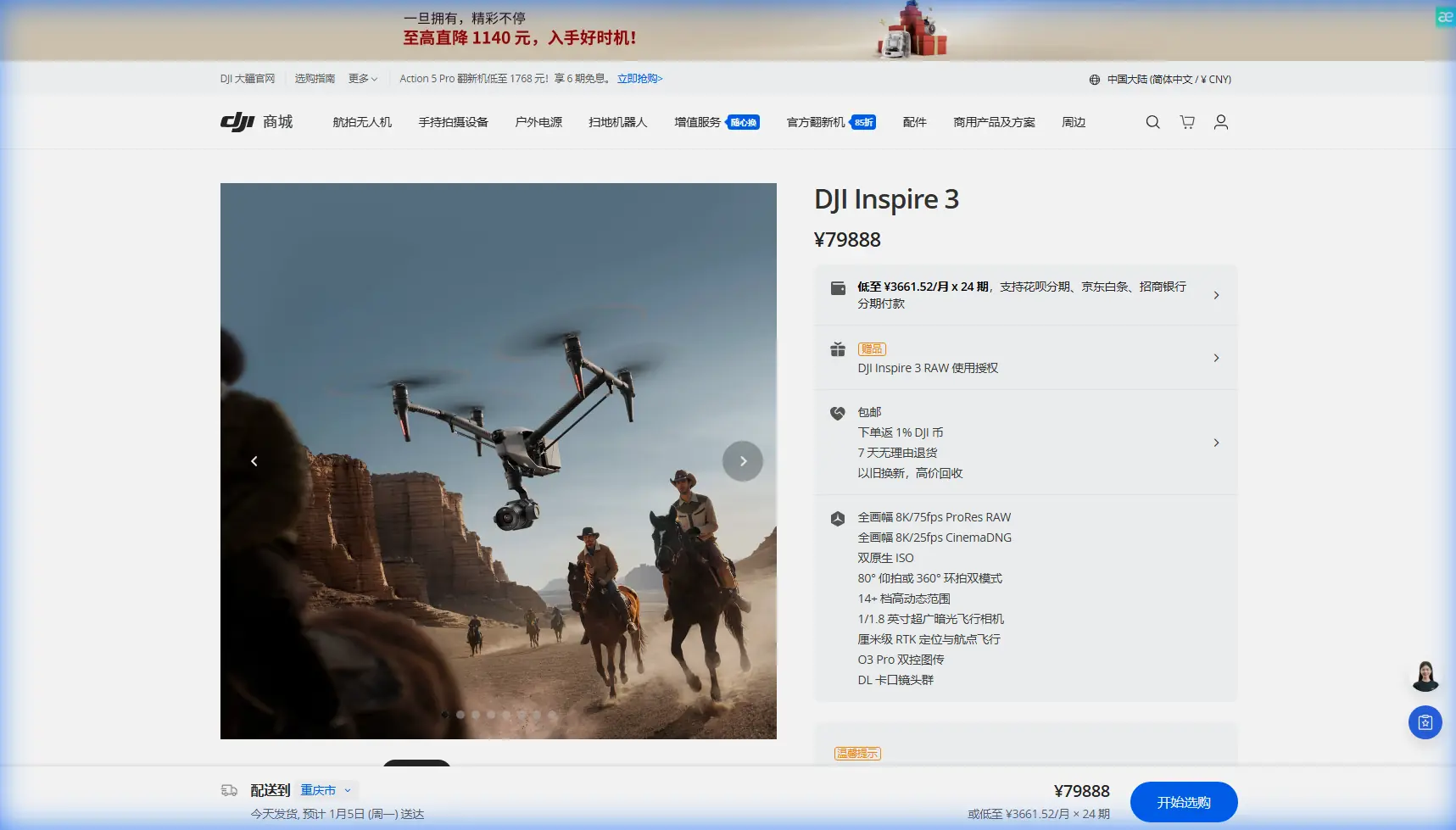
Inspire 3 for Urban Construction Site Filming: Altitude, Stability, and Weather Awareness
META: Expert tutorial on using DJI Inspire 3 for urban construction site filming, including optimal flight altitude, transmission reliability, safety logic, and weather-aware planning for precise visual documentation.
Urban construction filming looks straightforward until the site starts fighting back.
Steel frames distort signal paths. Concrete throws back heat. Tower cranes create moving obstacles and unpredictable airflow. Add nearby buildings, tight launch zones, and the pressure to deliver footage that is both cinematic and useful for stakeholders, and the aircraft setup matters far more than the shot list.
For operators considering the Inspire 3 for this work, the real question is not whether it can produce beautiful footage. It can. The harder question is how to use that capability in a way that is repeatable, safe, and operationally intelligent on dense urban sites.
I approach this as a systems problem. Not just camera choice, but flight envelope discipline, transmission integrity, battery workflow, weather judgment, and altitude strategy. That last point deserves special attention, because for construction documentation in cities, altitude is where most teams either gain consistency or lose control of the mission.
Why altitude is the first decision, not the last
Many pilots treat altitude as a creative setting. For urban construction, it is closer to a structural variable.
Too low, and the Inspire 3 spends the entire mission fighting local turbulence from buildings, cranes, façade edges, and heat plumes rising from concrete and roofing materials. Too high, and the imagery starts losing contextual value for progress tracking, façade inspection support, and stakeholder review. The sweet spot depends on the job, but for most urban construction filming, I advise starting with a working band around 45 to 70 meters above the active subject area, then adjusting based on obstacle density, surrounding roofline, and the story the footage needs to tell.
Why that range?
At roughly this altitude band, you can usually do three things at once:
- Stay clear of the most chaotic rotor-disrupting airflow close to structures.
- Preserve enough angle separation to read site logistics, access roads, crane positions, and floor-by-floor progress.
- Maintain strong visual coherence for edited updates without flattening the project into an abstract overhead map.
If the goal shifts toward photogrammetry support, GCP-referenced progress mapping, or geometry capture for modeling, I often separate that from the cinematic mission entirely. Inspire 3 is exceptionally capable, but construction teams get better outcomes when they do not force one flight profile to satisfy every objective.
Urban air is not neutral
This is where older aeronautical design principles are unexpectedly useful.
One of the reference materials highlights the need to validate aircraft behavior across the flight envelope for vibration, buffeting, recovery characteristics, and stability under abnormal conditions. That is manned-aircraft language, but the operational lesson transfers cleanly to high-end UAV work in construction environments: stable footage is not just a camera problem. It is an airframe-in-disturbed-air problem.
Around urban job sites, vibration and buffeting are not theoretical. They show up when the aircraft crosses building corners, descends beside exposed structural frames, or passes through thermal gradients generated by sun-heated surfaces. Even when the Inspire 3 remains fully controllable, these disturbances affect micro-smoothness, operator confidence, and repeatability of camera moves.
Operational significance: this is exactly why I recommend test passes at your intended working altitude before committing to hero shots. Fly one lateral line, one orbit segment, and one controlled ascent. Watch not only the recorded image but also how much correction the aircraft is making. If the aircraft is constantly absorbing disturbances, climb slightly. A small altitude increase often improves footage quality more than any gimbal setting tweak.
Tornado research sounds unrelated. It isn’t.
The news reference about researchers at four universities exploring drones to improve tornado forecasting carries a lesson construction operators should not ignore. Forecasters still struggle to predict exactly when and where a tornado will touch down, and despite advances in detection, dangerous weather can still seem to arrive with little warning.
You are not chasing storms on a construction site, nor should you be. But the operational significance is clear: drone missions in the real world should be planned around uncertainty, not assumptions.
On urban builds, weather risk usually appears in less dramatic forms than tornadoes:
- sudden gust fronts ahead of a storm cell
- convective turbulence on hot afternoons
- rapid wind shifts channeling between buildings
- visibility and contrast changes that alter both safety margins and image quality
The Inspire 3 rewards disciplined weather timing. If you are filming recurring progress updates, avoid treating “same day every week” as a fixed rule. Mid-morning often produces more stable urban air than late afternoon, especially on sites surrounded by reflective glass or large thermal mass. If a storm system is building regionally, reschedule early. The point is not caution for its own sake. It is consistency. Clients notice when update videos are calm, readable, and structurally comparable from one week to the next.
Best practice: build two altitude layers into every mission
For most urban construction filming with Inspire 3, I suggest structuring the sortie into two distinct altitude layers rather than improvising throughout.
Layer 1: Context pass
Fly at the upper end of your planned range, often 60 to 70 meters above the active site, assuming local rules and site geometry allow it.
Purpose:
- establish the relationship between the build, the street network, and surrounding structures
- reveal crane reach, access routes, staging areas, and overall massing
- capture smooth opening shots that orient investors, project managers, and remote stakeholders
This layer benefits from the cleaner airflow generally found slightly above the strongest building-edge turbulence. It also reduces the need for abrupt lateral corrections.
Layer 2: Detail pass
Drop to around 45 to 55 meters, or lower if the environment is open and your obstacle picture is clean.
Purpose:
- show floor progress
- isolate façade work
- capture material movement patterns
- emphasize sequencing details without losing situational context
This is where the Inspire 3’s control precision becomes valuable, but it is also where urban airflow can become less forgiving. If the aircraft starts working too hard, the mission is telling you something. Accept it and adjust altitude rather than forcing the move.
O3 transmission in the city: trust, but verify
Urban construction sites are brutal on signal reliability.
Multipath reflections, partial occlusion from reinforced concrete, moving metal assets, and electromagnetic clutter can all degrade the practical experience of even a robust link. That is why the mention of O3 transmission matters in this scenario. It is not just a marketing spec. On a city site, transmission resilience directly affects framing accuracy, timing, and the confidence needed to execute slow precision shots near complex geometry.
Operational significance: never assume your best signal will be at the launch point. Before the main flight, evaluate the control position itself. A few meters of relocation can materially improve line-of-sight and reduce structural masking from temporary site offices, perimeter hoarding, or parked equipment.
If your workflow involves sensitive project documentation, the AES-256 angle matters too. Construction imagery can reveal scheduling status, material staging, contractor sequence, and access arrangements. That may not be publicly sensitive in a national-security sense, but it is often commercially sensitive. Secure transmission and disciplined file handling are part of professional practice, especially on urban developments with multiple stakeholders.
Thermal signature: useful, but don’t force it into every mission
The phrase thermal signature appears in your scenario hints, and there is a legitimate place for it on construction projects. Roof moisture issues, façade anomalies, HVAC commissioning checks, and envelope performance reviews can all benefit from thermal work. But do not confuse a thermal task with a standard site-filming task.
Thermal operations have different timing logic. Surface heating, shade transitions, and ambient wind can radically alter what the sensor reveals. If your primary mission is visual progress capture with Inspire 3, keep thermal objectives separate unless the client clearly understands the limitations and timing requirements. Combining both into one “do everything” sortie usually produces mediocre results in both.
Hot-swap batteries change how you schedule site windows
Urban construction access is often constrained. You may have only a narrow period between lifts, deliveries, crew concentration, or changing light. That makes hot-swap batteries more than a convenience feature.
Their real value is continuity.
Instead of rushing through key shots before a battery threshold forces a full interruption, you can preserve aircraft readiness and keep the production rhythm intact. On active sites, that reduces the chance that your carefully planned sequence gets broken by a crane movement, a vehicle convoy, or a temporary exclusion request from the site manager.
My recommendation is simple: storyboard the mission around one battery cycle for context shots and one for detail passes, then treat any extra time as bonus capacity. This keeps the operation disciplined and avoids the common mistake of burning early flight time on exploratory wandering.
Photogrammetry and GCP discipline
Even when the assignment is “filming,” many project teams quietly want more than video. They want usable records. They want progress validation. They want images that can support engineering conversation later.
This is where photogrammetry and GCP thinking can improve your Inspire 3 workflow, even if the deliverable is not a formal survey.
A repeatable camera path, consistent altitude, and stable overlap logic make progress footage more analytically useful. Ground control points remain essential for true mapping-grade alignment, but the mindset matters beyond mapping itself: fly with repeatability in mind. If the same building face is captured every two weeks from the same approximate geometry, stakeholders can compare sequence and workmanship far more effectively.
The mistake I see often is treating construction filming as pure cinematic expression. For commercial site work, beauty helps. Repeatability pays.
What about BVLOS?
For dense urban construction filming, BVLOS is usually not the starting point. Most jobs are better handled within a tightly managed visual envelope because obstacles, public interfaces, and changing site conditions demand immediate situational awareness. If a project eventually expands into corridor work, logistics tracing, or larger-area infrastructure documentation, BVLOS may become relevant under the proper regulatory and operational framework. But for city construction, the discipline to stay close, deliberate, and geometry-aware is usually the higher-value skill.
A practical Inspire 3 mission template for urban sites
Here is the framework I give crews:
1. Pre-brief the site by airflow, not just by map
Identify:
- crane booms
- tower edges
- narrow corridors between structures
- likely gust channels
- reflective façades
- heated surfaces that may produce rising turbulence
2. Start with altitude, not camera settings
Pick an initial operating band:
- 60 to 70 meters for context
- 45 to 55 meters for detail Then refine after test passes.
3. Fly a stability check lap
Look for signs of repeated correction, drift compensation, or image inconsistency caused by local air disturbance.
4. Lock repeatable lines
For recurring updates, establish standard orbits, push-ins, and side profiles that can be duplicated over time.
5. Protect the link
Choose the controller position for cleanest practical line-of-sight to support O3 performance. Do not anchor yourself to a bad control spot out of habit.
6. Segment thermal and visual tasks
If thermal signature data is required, plan a separate sortie window with proper environmental timing.
7. Use battery continuity strategically
Build your shot list around hot-swap efficiency so key sequences are not lost to downtime.
If your team wants a site-specific flight template, you can message our Inspire operations desk here: https://wa.me/85255379740 and describe the building height, surrounding streets, and filming objective.
The deeper lesson from the reference material
The two most valuable reference threads here are not obviously connected, yet together they say something useful.
The tornado research reminds us that atmospheric behavior can outrun human prediction, even with modern tools. The aircraft design material stresses the importance of verifying vibration, stability, and recovery characteristics across operating conditions. Put those ideas together, and you get the right mindset for Inspire 3 construction work: do not rely on assumptions about air, signal, or aircraft behavior just because the mission looks routine.
Urban site filming rewards crews who treat every flight as a controlled test of environment plus platform.
That is how you get footage that is not only attractive, but dependable. More to the point, that is how you build a repeatable operating standard around the Inspire 3 instead of just hoping a premium aircraft will smooth over weak planning.
And if you only remember one altitude rule from this guide, make it this: begin high enough to escape the worst of structure-induced turbulence, but low enough to preserve construction meaning. On most urban sites, that starts around 45 to 70 meters, then gets refined by what the air and the site are actually doing that day.
Ready for your own Inspire 3? Contact our team for expert consultation.