
Inspire 3 Field Report: Filming Fields in Broken Terrain
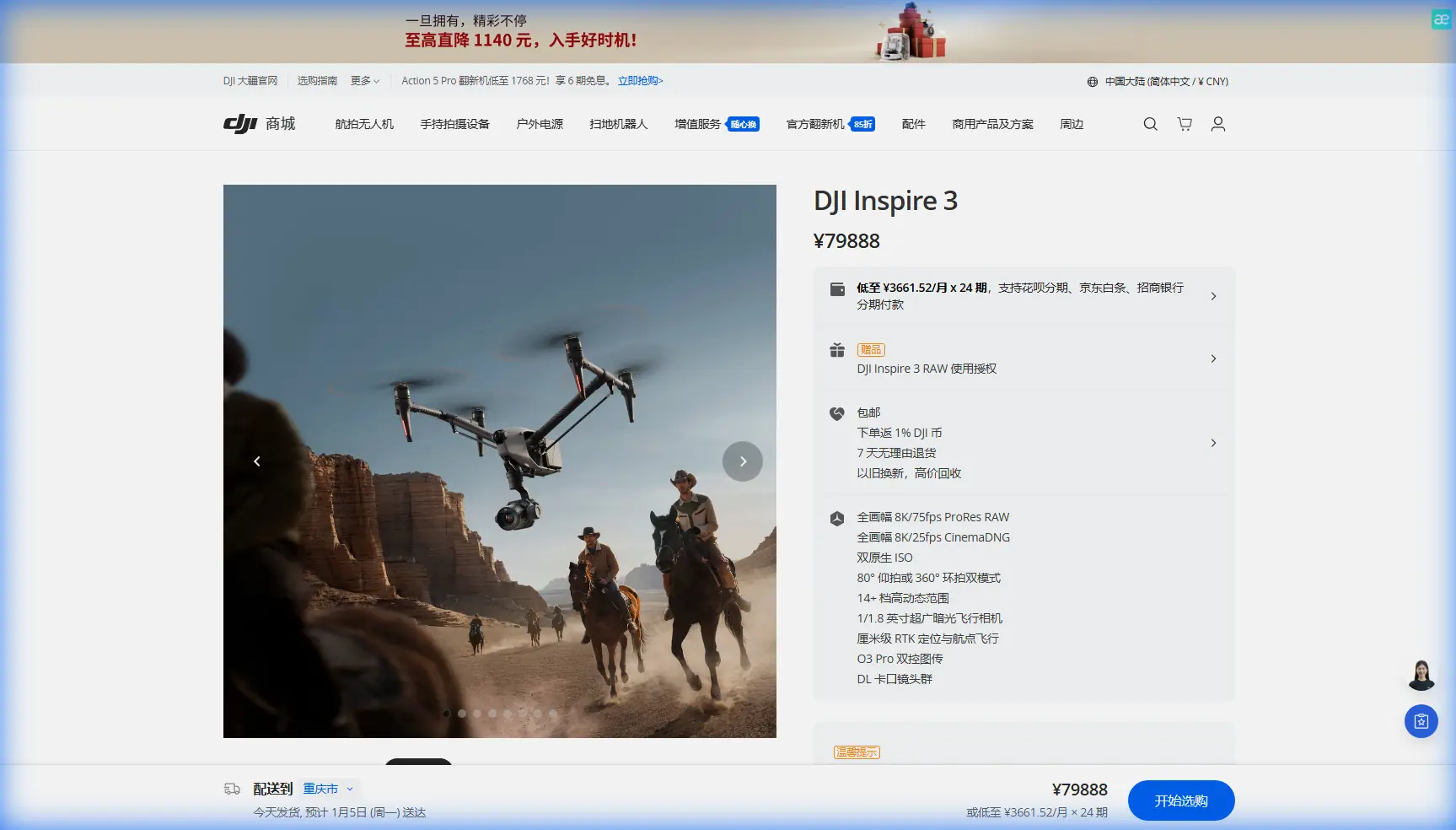
Inspire 3 Field Report: Filming Fields in Broken Terrain Without Losing the Shot
META: Expert field report on using DJI Inspire 3 for filming fields in complex terrain, with practical insights on O3 transmission, hot-swap batteries, AES-256 security, and workflow decisions in demanding agricultural environments.
Dawn was still hanging low over the ridge when the first problem showed itself. From the launch point, the fields looked simple enough: long green strips, irrigation lines, a hedgerow, then a sharp drop into a folded valley. On a map, it was neat. In the air, it was anything but. The terrain kept stealing line of sight, the light changed every few minutes, and the subject was not just the land. We were filming movement through it—farm tracks, water flow, crop texture, and the kind of subtle topography that only starts to read when the camera is moving with intent.
That is exactly where the Inspire 3 earns its place.
Plenty of drones can capture a pretty pass over farmland. That is not the same as building a reliable field production workflow in complex terrain. Broken ground introduces a stack of operational problems all at once: transmission stability, battery timing, flight path continuity, security of captured media, and the hard fact that fields are never empty in the way people imagine. Livestock moves. Workers appear. Birds react. Weather rolls over ridgelines faster than your checklist would prefer.
On this particular job, the most memorable interruption came just after sunrise. We were running a lateral move along the edge of a barley field where the land dropped into a scrub-lined drainage cut. A roe deer broke cover from the grass and crossed the planned line beneath the aircraft, followed seconds later by two pheasants lifting hard out of the brush. That moment mattered for two reasons. First, it changed the shot; the field was no longer a static landscape but an active ecosystem. Second, it was a live reminder that complex terrain is not just about contours and obstacles on a screen. It is about sensing an environment that shifts without notice.
The Inspire 3 is strong in those conditions because it supports disciplined flying, not just cinematic ambition.
The first operational advantage is the link. In field work, O3 transmission is not some abstract spec-sheet line. It determines whether the aircraft remains a precise imaging platform when terrain starts masking sections of your route. Over open, level ground, almost any modern system feels capable. Add rolling banks, tree lines, utility poles, and fragmented elevation, and the difference becomes obvious. A stable transmission link gives the pilot and camera operator the confidence to continue a deliberate move rather than overcorrecting every time the landscape interrupts the geometry.
That matters when you are filming fields in broken country because agricultural land often looks uniform from altitude while behaving like a maze at working height. One ridgeline can block your view of a tractor access road. A stand of poplars can interfere with situational awareness on the edge of a planned arc. An irrigation reservoir can produce glare that disguises the horizon. O3 transmission, in practical terms, helps keep decision-making clean when the environment is trying to muddy it. You are not just preserving control; you are preserving the quality of judgment.
Security is the other detail that tends to be overlooked until the job actually matters. Inspire 3’s AES-256 support is relevant in more field scenarios than people admit. Agricultural filming today is not always simple promotional content. It can involve private estates, research plots, infrastructure bordering crop land, or pre-publication survey work tied to land management. Once you are handling sensitive location imagery, yield-related visuals, or operational footage from restricted property, secure transmission stops being a luxury feature and starts looking like standard professional hygiene. The value here is not theoretical. It means producers and land managers can move footage through a more defensible workflow without treating the drone as the weak point in the chain.
Battery management, meanwhile, is where field production either feels professional or starts to fray.
The Inspire 3’s hot-swap batteries change the tempo of the day. Anyone who has filmed fields over uneven ground knows the real enemy is often continuity, not endurance. The sun shifts. Wind direction turns. Dust increases once vehicle traffic begins. If you need to shut the aircraft down completely during every battery change, you break rhythm at exactly the wrong time. With hot-swap support, the turnaround is faster, cleaner, and better suited to repeatable passes over a changing landscape. That may sound minor in an office conversation. It is not minor when you are trying to re-run a tracking shot while the low-angle light still reveals the texture of planted rows.
And texture is everything in agricultural cinematography. A field shot from directly overhead can document layout, but a field shot flown with thought can explain land use, drainage, labor patterns, and crop condition. The difference comes from angle, timing, and consistency. When batteries can be changed without collapsing the workflow, the crew spends more time refining movement and less time rebuilding the mission from scratch.
There is another point that deserves more attention: the overlap between cinematic flight and data-conscious flight. The Inspire 3 is not marketed as a dedicated photogrammetry platform, yet many field operators now work in hybrid environments where visual storytelling and mapping logic increasingly touch each other. A producer may want a hero sequence for a landowner and, in the same session, reference terrain features that will later be compared against survey outputs. That is where concepts like GCP placement and photogrammetry awareness start influencing how you film, even if the final deliverable is not a stitched orthomosaic.
For example, when filming fields in terraces or irregular valley systems, understanding where ground control points would sit can sharpen your sense of scale and positional consistency. It changes how you think about repeat passes, oblique angles, and landmark retention within the frame. You stop chasing random beauty shots and start building footage that remains interpretable. That is especially useful when clients want the finished video to do more than look good. They may need it to support planning meetings, explain erosion patterns, or communicate access issues to people who have never stood on the site.
This is also where thermal signature enters the conversation, even if not every Inspire 3 assignment is thermal in nature. In complex terrain, operators benefit from thinking like sensor specialists. Moist areas retain temperature differently. Tree lines shelter wildlife movement. Ditches and field margins can indicate drainage stress before they stand out visually in standard imagery. Even when the Inspire 3 is being used for conventional filming, understanding thermal behavior can influence when and where to fly. You begin to anticipate the living and environmental patterns that affect the scene. The wildlife encounter that morning was not random luck. It happened along a sheltered edge with residual cool cover and a movement corridor leading toward water. Recognizing that kind of environmental logic makes a flight safer and the footage better.
There is also the unavoidable regulatory layer. Many operators eye large rural sites and assume distance equals simplicity. It does not. Filming across extensive farm blocks can nudge operations toward BVLOS-style thinking even when the mission remains firmly within legal visual-line constraints. That distinction matters. The Inspire 3 encourages ambitious shot design because it is capable enough to make long, elegant movements feel easy. The discipline lies in remembering that capability does not erase operational boundaries. In complex terrain, especially where valleys and ridges interrupt visibility, you need route design that respects both the aircraft’s strengths and the physical limits of the site.
That is why the best Inspire 3 field work often looks calm from the outside. The crew has already solved the hard questions. Where does the terrain steal line of sight? Which field edges are likely to hold birds or deer at first light? Where can the pilot reposition without contaminating the audio environment for ground pickups? When should the team prioritize a low pass for texture, and when should they climb for spatial context? None of those decisions are glamorous, but together they determine whether the aircraft functions like a cinema tool or just an expensive camera in the sky.
If you are planning a similar production and want a second opinion on route design, sensor strategy, or field logistics, you can message the operations desk here.
One thing I appreciate about the Inspire 3 in agricultural environments is that it does not force a false choice between image quality and operational control. That balance is harder to achieve than most spec comparisons suggest. In complex fields, image quality is not just resolution or color depth. It is the ability to hold a movement through changing terrain without introducing uncertainty. It is the confidence to maintain a planned reveal over a ridge because the link remains trustworthy. It is the ability to pause, reassess, swap batteries quickly, and launch again before the atmosphere that made the shot worthwhile disappears.
That morning, after the deer crossed and the pheasants broke upward, we held position, reset the path, and flew the line again with a slightly wider offset from the drainage edge. The revised move was better. It preserved the contour of the valley, kept the hedgerow readable, and reduced disturbance in the wildlife corridor. That small adjustment sums up what serious Inspire 3 work in the field actually looks like. Not brute forcing the original plan. Not pretending the site will bend to the storyboard. Reading the ground, adapting the route, and using the aircraft’s strengths—O3 transmission, hot-swap battery continuity, secure AES-256 workflow—to stay precise under pressure.
For operators filming fields in complex terrain, that is the real story. The Inspire 3 is not simply a platform for dramatic aerials. It is a tool for making better decisions in dynamic landscapes. When the land folds, the signal path gets tricky, wildlife enters the frame, and the light starts to slip, capability only matters if it improves judgment. In that respect, the aircraft proves itself not in the easy passes over flat acreage, but in the difficult sections where the terrain pushes back.
And that is where the footage starts to feel honest.
Ready for your own Inspire 3? Contact our team for expert consultation.