
Inspire 3 in Mountain Forests: A Field Report on Flight
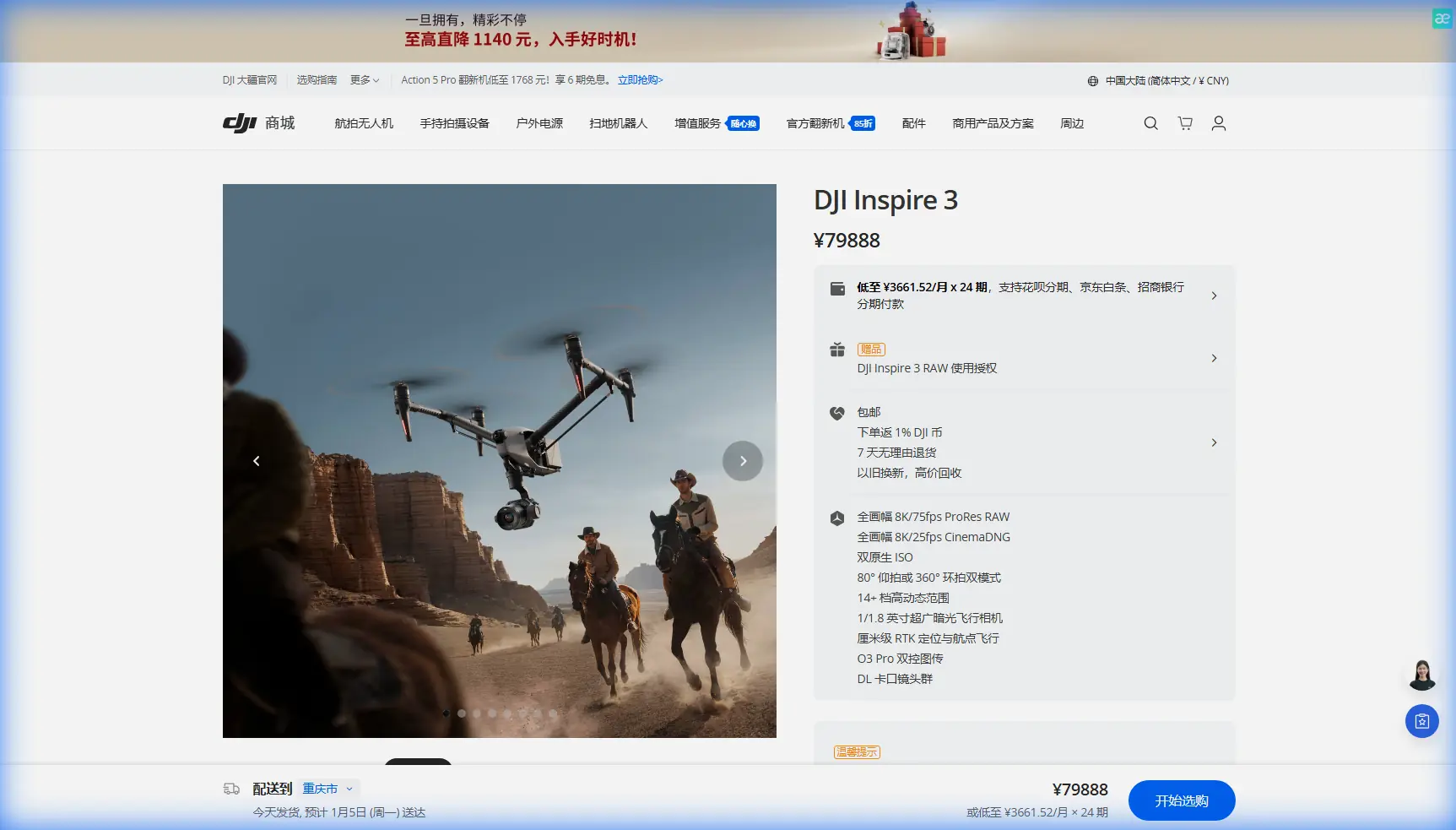
Inspire 3 in Mountain Forests: A Field Report on Flight Discipline, Weight Thinking, and Better Shot Planning
META: Expert field report on using DJI Inspire 3 for filming forests in mountain terrain, with practical altitude strategy, payload discipline, transmission planning, and operational insights for professional crews.
Mountain forest work exposes every lazy assumption a drone team can carry into the field. Signal paths collapse behind ridgelines. Light changes by the minute. Cold air pulls battery behavior in one direction while steep terrain distorts depth judgment in another. When the platform is an Inspire 3, the margin for spectacular footage is real, but so is the penalty for poor planning.
I’ve spent enough time around aerial production teams to know that the biggest errors rarely come from the obvious things. Pilots usually think about exposure, route, wind, return path, and battery reserve. They should. Yet some of the most useful lessons come from outside the drone category entirely. Two of the source references behind this piece come from civil aircraft design manuals, and they point to something that matters directly to Inspire 3 crews in mountain forests: reliable operations come from disciplined design logic, not from improvisation after launch.
One reference discusses interior aircraft structures and mentions a specific load requirement: a support element should tolerate a 77.2 kg (170 lb) person standing on it without damage. It also notes that when a tray is damaged under load, the remaining structure should not leave sharp edges or protrusions that could injure someone. On the surface, that has nothing to do with an Inspire 3. In the field, it has everything to do with it.
Why? Because mountain filming punishes weak accessory choices. Monitor mounts, controller rigs, vehicle staging tables, payload cases, lens organization trays, battery stands, even temporary launch surfaces all become load-bearing systems once crews are moving on uneven ground. If your support equipment flexes, loosens, or fails after repeated use, the problem is not just inconvenience. It creates handling risk, slows battery changes, and increases the chance of a rushed setup before a narrow weather window closes. The civil aviation mindset is simple: if a component can fail, assume it will fail at the worst possible moment, then design the workflow so failure does not create a secondary hazard.
That matters with Inspire 3 more than many operators admit. This aircraft is often deployed with a cinema mindset, which means more moving parts around the flight line. Extra media, lens swaps, calibration tools, high-bright monitors, remote handoff procedures, and vehicle-to-takeoff relays all raise the complexity level. In mountain forests, complexity multiplies because you are rarely working on clean, flat ground. Wet needles, loose rock, and cramped clearings force crews to set down equipment wherever they can. The practical takeaway is blunt: the best Inspire 3 team is not the one carrying the most gear. It is the one carrying gear that stays stable, locks cleanly, and does not introduce wobble into the operation.
That word—wobble—shows up in spirit in the seating manual too. The text notes that an insertable tray connection should be easy to engage but should not show obvious looseness in use. That is a surprisingly good standard for mountain drone crews. Any field component that connects “well enough” is suspect. If your tablet bracket has play, if your antenna mount shifts after a few steps uphill, if your landing pad pegs work loose in wind, you are injecting uncertainty into a workflow that already has too many variables. Inspire 3 rewards clean systems. Mountain locations punish sloppy interfaces.
The second reference, from a civil aircraft design manual focused on overall design, is even more relevant. It describes how weight engineers work one-to-one with design engineers, staying close to drawings, dimensions, component choices, and repeated-use hardware like fasteners. It emphasizes early reporting of weight trends, careful documentation, and oversight of suppliers so the aircraft does not gradually get heavier through small decisions.
Again, this sounds far removed from a drone shoot in a forested valley. It is not. For Inspire 3 work, weight creep is one of the quiet killers of efficiency.
Not the aircraft’s certified airframe weight alone. I mean the total operational weight of the mission system: lenses, controllers, monitors, battery count, charging hardware, backup communication devices, weather tools, GCP kits for terrain reference if the project blends film and photogrammetry, plus all the support gear the crew carries from vehicle to launch point. Every extra item might appear reasonable in isolation. Together they slow deployment, reduce mobility, and push crews toward compromised takeoff positions simply because they do not want to carry the system another 300 meters uphill.
That is where the aircraft-design lesson lands hard. Review repeated-use items first. In the manual, the example is fasteners. In a mountain Inspire 3 workflow, the equivalents are mounts, cables, power adapters, lens cases, and redundant accessories that accumulate because “someone might need them.” Small parts become large inefficiencies when repeated across every pack and every transfer.
For this specific reader scenario—filming forests in mountain terrain—my strongest operational advice is to choose your flight altitude based on canopy geometry and slope breaks, not on a fixed number copied from flat-land habits.
A practical starting point for Inspire 3 in this environment is to work roughly 30 to 60 meters above the local canopy, then adjust according to the shot objective and terrain relief. That range often gives the best balance between three competing needs:
- preserving enough parallax to reveal layers in the forest,
- keeping the aircraft high enough to avoid sudden tree-height surprises on rising slopes,
- and maintaining a cleaner signal path for O3 transmission when the aircraft starts to drift behind terrain features.
Below that range, the footage can look immersive, but your margin shrinks fast. Tall conifers on ascending ridges can erase your obstacle assumptions in seconds. Signal reliability also gets worse when the aircraft drops into the visual clutter of trunks and branches. Above that range, the scene often flattens. The mountain loses its dimensionality, and the forest turns into texture rather than structure.
The key phrase there is local canopy. In mountain work, absolute altitude means less than relative altitude. If you launch from a ridge shoulder and descend visually into a valley bowl, your screen can trick you into thinking you have plenty of separation because the aircraft still looks “high.” It may not be high relative to the next tree line. I tell crews to build altitude decisions around terrain segments: ridge edge, mid-slope, drainage cut, opposite wall. Fly each segment relative to what is directly beneath and immediately ahead, not relative to your launch point.
This also affects thermal behavior and visual storytelling. If your project includes thermal signature collection alongside cinema capture—common in environmental documentation, forestry analysis, or infrastructure assessment near wooded mountain corridors—you need to separate the goals. The altitude that gives the best cinematic reveal is not always the altitude that gives useful thermal contrast. Morning inversions, shaded ravines, and sunlit ridgelines can create mixed readings. Don’t try to solve both missions in one generic flight profile. Plan separate passes.
There is another reason altitude discipline matters with Inspire 3 in the mountains: battery rhythm. Crews love the convenience of hot-swap batteries, and they should. The feature keeps momentum high, especially when weather gaps are short. But hot-swap convenience can hide poor route design. If every flight comes back with a thin reserve because the aircraft had to climb repeatedly to recover line of sight, the issue is not battery management. It is path geometry.
Good mountain route design uses altitude proactively. Gain enough vertical separation early, before the aircraft drifts toward terrain masking. That usually creates more stable O3 transmission behavior and reduces the need for emergency climbs later in the run. It also gives the camera team a calmer platform for speed control and framing changes. The more you can avoid abrupt pilot corrections, the more the Inspire 3 behaves like the precision cinema tool it is supposed to be.
For crews working on sensitive commercial productions, data handling deserves equal attention. A mountain set often means ad hoc communication: one team at the launch point, one spotter on a trail bend, one vehicle lower on the access road. If the project involves protected footage, route plans, or site documentation, the conversation around transmission security should be deliberate. This is where AES-256 comes into the planning layer. Security features are useful only when the crew builds procedures around them. Know who has access to feeds, who stores media, and how route information is shared between devices when the field team is stretched across uneven terrain.
The same disciplined thinking applies if your mountain forest job mixes cinema acquisition with survey logic. Some productions now want beauty footage and terrain reconstruction from the same deployment window. That is possible, but only if expectations are realistic. Photogrammetry wants repeatability. Cinema wants freedom. If you need measurable outputs, your GCP strategy, flight consistency, and camera geometry have to be planned before anyone starts chasing a dramatic reveal through the trees. The aircraft can do many things well, but the mission fails when the crew tries to improvise two incompatible workflows into one battery cycle.
This is also the point where supplier and subsystem discipline, another idea from the weight-control reference, becomes surprisingly useful. The manual stresses that contractors and equipment providers should be supervised and required to provide real weight data. Translate that to Inspire 3 field operations and the message is obvious: trust documented specs, not assumptions. Verify what your cases actually weigh. Verify how long your team actually takes to relocate from one takeoff point to another. Verify the real mass and handling burden of every “essential” accessory. Mountain operations punish guesswork because every carry, setup, and reset costs time and energy.
I’ve seen crews transform their results not by changing aircraft, but by auditing their own mission architecture. They remove one monitor, standardize one cable type, pre-assign battery lanes, cut duplicate tools, and choose two launch positions instead of five mediocre ones. Footage improves because the team is less rushed. Safety improves because there is less clutter around takeoff and landing. Endurance improves because people are not burning themselves out before the best light arrives.
If you are planning a mountain forest shoot with Inspire 3, here is the condensed field logic I would actually use:
Start by scouting terrain masking, not just scenery. Pick launch points that protect your recovery options. Build your shot plan around 30–60 meters above local canopy as a baseline, then adjust for slope transitions and desired parallax. Treat every accessory interface as a possible failure point; if something has play, replace or simplify it. Audit operational weight the way an aircraft engineer audits repeated hardware. Separate cinema, thermal, and photogrammetry objectives unless the mission design truly supports all three. Use hot-swap capability to maintain tempo, not to excuse poor route planning. And if the project requires remote coordination for mountain access or crew setup, send the field details through this direct production line so the team can align before anyone hikes gear uphill.
The larger lesson from those civil aircraft references is not about seats or tray tables. It is about standards. Strong structures, clean interfaces, documented weight control, early trend reporting, and supplier accountability are not abstract engineering habits. They are exactly the traits that separate a smooth Inspire 3 mountain shoot from a frustrating one.
Forests in mountain terrain reward precision. The aircraft can deliver beautiful work there. The operation around it has to deserve that result.
Ready for your own Inspire 3? Contact our team for expert consultation.