
Inspire 3 in Windy Forests: The Design Logic Behind Cleaner
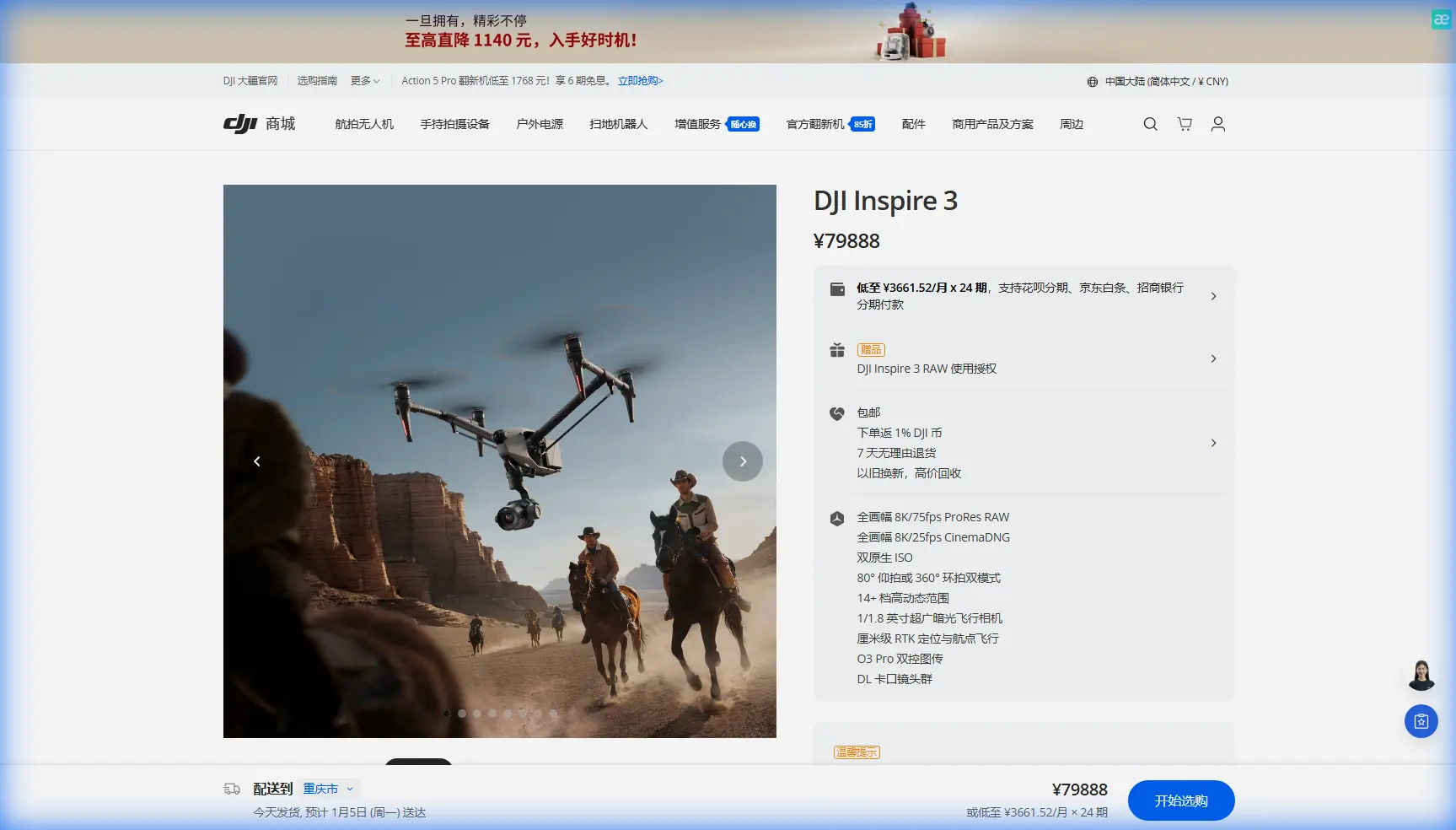
Inspire 3 in Windy Forests: The Design Logic Behind Cleaner, Safer Flight
META: Expert field guide to using Inspire 3 for filming forests in wind, with practical setup advice, operational insights, and design lessons borrowed from manned aircraft engineering.
The hardest forest shoots are rarely about image quality. They are about margins.
Margins between branches and prop arcs. Margins between a smooth tracking move and a sudden gust rolling through a tree line. Margins between a quick battery swap and a missed light window. I learned that the hard way on a mountain forestry project where the brief sounded simple: follow a vehicle under canopy breaks, then climb above the treetops for a reveal. On paper, easy. In practice, the wind sheared across the ridge, the GPS picture shifted as we dropped near taller stands, and every reposition demanded more concentration than the shot list suggested.
That kind of work is where the Inspire 3 starts to make sense—not as a spec-sheet trophy, but as a tool that reduces operational friction when the environment keeps changing.
What’s interesting is that some of the best ways to think about the Inspire 3 in forests come from older aircraft design principles. Not because a cinema drone is a small airplane. It isn’t. But because the same engineering disciplines still matter: surface continuity, motion-path validation, interference checking, and clear part identification. Those ideas show up in classical civil aircraft design references, and they map surprisingly well to how you should plan a forest shoot with the Inspire 3.
Wind in forests is not “just wind”
Pilots who mostly work in open spaces often underestimate woodland turbulence. Forest wind is layered. At canopy height, the air can be fast and chaotic. A few meters lower, it may feel calmer—until a gap in the trees channels a sudden lateral push. Near ridgelines, the transitions get sharper.
This matters because cinematic drone work is built on predictable movement. If the aircraft is constantly correcting, you see it in the frame. The move loses its confidence.
With Inspire 3, the practical advantage is not simply that it can fly in difficult conditions. It’s that the platform gives you a more disciplined workflow around those conditions. That starts before takeoff.
Why aircraft-style design thinking helps Inspire 3 operators
One of the reference materials behind this discussion comes from a civil aircraft overall design manual that states aerodynamic surface connections should satisfy different levels of continuity—0th, 1st, or 2nd derivative continuity—depending on design requirements. That sounds abstract, but the operational meaning is concrete: smooth transitions matter. Not only in shape, but in behavior.
For an Inspire 3 crew filming forests, that principle translates directly into flight path design. If your route has abrupt control inputs, uneven speed changes, or poorly planned yaw transitions, the aircraft may still complete the move, but the shot will feel discontinuous. In windy tree environments, that discontinuity gets amplified. A smooth arc through a canopy opening is easier for the aircraft to hold than a late, aggressive correction after you discover a branch line drifting into frame.
The same source also highlights interference checking between regular and irregular geometries, including minimum and maximum clearances and collision range. Again, this is classic aircraft design language, but in forest cinematography it becomes mission planning doctrine. Trees are irregular geometries. So are deadfall protrusions, half-broken limbs, cable runs near logging access roads, and the unseen crown spread of wet conifers.
A safe Inspire 3 forest workflow should treat every intended shot like a clearance study:
- What is the true lateral margin between the aircraft and the nearest branch envelope?
- Where does that margin shrink when the aircraft yaws?
- How does a gust alter your effective path width?
- What happens if the pilot needs to arrest forward motion while the camera op holds composition?
That is interference checking in the field, even if no one calls it that on set.
The branch problem is really a path problem
On one timberland shoot, we had a planned side-tracking move that looked clean on the map. Once airborne, it became obvious that the actual obstacle field was not the trunks—it was the invisible volume around the crowns. The opening narrowed as the aircraft advanced, and the wind pushed unpredictably from the right. We could have forced the move and hoped the stabilization cleaned it up. Instead, we rebuilt the route.
That decision came down to motion-trajectory thinking, another point reflected in the civil aircraft design text. The reference notes that geometric coordination software should include motion mechanism design, freedom-of-motion checks, trajectory simulation, and motion limits. For an Inspire 3 operator, this is more than engineering trivia. It is a reminder that a shot path should be tested like a moving mechanism, not imagined as a static line.
In forests, I recommend building every key move in three layers:
- Nominal path: the route you want in ideal conditions.
- Disturbed path: the route if wind pushes the aircraft off line by a small but realistic amount.
- Abort path: the cleanest escape route if the shot degrades.
That third layer is the one crews skip. They assume they will stop and climb. In a forest, climb is not always your safest immediate option. Sometimes the cleaner exit is backward drift into known open air, or a shallow lateral peel toward a previously surveyed pocket.
What older landing-gear data teaches us about field pragmatism
The second reference is a table from a takeoff and landing systems design handbook listing tire sizes used on manned aircraft. At first glance, it seems far removed from Inspire 3. But look closer at what those entries reveal: design is grounded in physical contact with imperfect surfaces. For example, one Beechcraft Baron entry shows a 6.50-8 tire size, while another larger aircraft entry lists 19.5 x 6.75-8 10TL. Different aircraft, different loads, different operating needs.
Why does that matter to a drone crew in the woods? Because forest production is full of “small” ground-handling errors that undermine the whole mission. Launch zones are damp, sloped, cluttered, and often temporary. Cases sit on roots. Props get mounted while one person is balancing on uneven rock. Battery changes happen under time pressure. The lesson from manned-aircraft landing system design is simple: don’t treat the ground segment casually.
With Inspire 3, the field system matters as much as the aircraft. Build your takeoff area deliberately. Use a stable staging layout. Keep your battery rotation disciplined. Hot-swap batteries are valuable here not because the phrase sounds advanced, but because forests often give you short weather windows. If cloud breaks for eight minutes and the wind settles just enough, you cannot waste three of those minutes rebuilding the aircraft from a messy reset.
O3 transmission matters more under canopy edges than people admit
Most crews talk about transmission quality in terms of range. In forests, that’s incomplete. The more relevant issue is signal resilience during changing line-of-sight geometry. You may not be flying far, but the relationship between aircraft, pilot position, trunks, terrain, and canopy edges can deteriorate quickly.
This is where O3 transmission has real field value. Not as a marketing bullet, but as an operational buffer. When you work from a forest road, a clearing, or a ridge break, your signal environment is dynamic. Reliable transmission helps preserve decision quality. It means the crew sees changes early enough to respond with calm inputs rather than rushed corrections.
If you’re capturing sensitive commercial footage—private estates, infrastructure adjacent to woodland, environmental surveys, or location recce material—secure links also matter. AES-256 is not something most cinematographers dwell on mid-shoot, but clients in industrial, utility, or land-management work increasingly care about how footage and command links are handled. In those environments, transmission integrity is part of professionalism.
Thermal signature and photogrammetry are not just side topics
Even when the mission is cinematic, forest operations often overlap with technical capture. A production team may want beauty shots in the morning and terrain reference in the afternoon. Or a land client may ask for visual storytelling plus site context for planning.
That is where the broader Inspire 3 conversation intersects with thermal signature awareness, photogrammetry discipline, GCP planning, and even future BVLOS-adjacent workflows, where legally permitted and properly managed. Not because Inspire 3 is your default mapping aircraft—it usually isn’t—but because complex woodland jobs often blend creative and technical requirements.
Photogrammetry in forest margins is notoriously sensitive to control quality. If you are collecting supplementary data, GCP placement becomes harder under canopy and along irregular clearings. Wind also changes vegetation consistency between passes, which can degrade model quality. The practical takeaway is that your cinematic flight plan should not contaminate your survey logic, and vice versa. Separate the objectives. Build dedicated windows for each.
Thermal signature considerations come up in a different way. Forest sites warm and cool unevenly. If your project includes thermal-adjacent inspection support or environmental observation by another platform, those microclimate shifts can affect interpretation. The Inspire 3 crew does not need to become thermal specialists overnight, but understanding the site’s changing heat behavior can help you coordinate with the wider capture team and avoid contradictory assumptions about what the landscape is doing.
Clear identifiers prevent expensive confusion
One of the most overlooked details in the aircraft design reference is the insistence that element identifiers should carry clear meaning, be easy to locate, and be visually distinct. That sounds administrative until you’ve watched a forest crew lose momentum because naming conventions were sloppy.
On demanding Inspire 3 jobs, label everything clearly:
- battery sets by cycle and pair
- lens and filter combinations
- waypoint or rehearsal versions
- takeoff zones and fallback zones
- card sets and backup sequence
- mission variants for wind direction changes
In the design manual, the idea is to avoid ambiguity in complex models. In the field, the same idea prevents operational drag. When a gust front starts arriving and the AD says, “Run the B-line from clearing two,” nobody should ask what that means.
My practical setup for windy forest shooting with Inspire 3
When conditions are unstable, I strip the workflow down to what actually protects the shot.
1. Scout for air, not scenery
A beautiful corridor is useless if the airflow through it is dirty. I want to know where gusts compress, where canopy gaps funnel crosswind, and where terrain creates lift or sink.
2. Build shots around smooth derivatives
That phrase comes straight out of the aircraft design logic. Your flight path should flow. Avoid sudden vector changes near obstacles. If a move needs a dramatic pivot, place it where the aircraft has open margin.
3. Treat trees as interference volumes
Not trunks. Volumes. Include crown spread, branch flex, and pilot reaction space.
4. Create a motion-limit brief
Before launch, define what invalidates the shot: maximum acceptable drift, yaw correction, speed deviation, or control aggression.
5. Protect the turnaround
The most dangerous part of many forest shots is the reset. After the reveal, after the hero pass, when attention drops. Plan the return path as carefully as the take.
6. Keep the ground station clean
If your launch area looks disorganized, the air operation soon will too. Old aircraft handbooks obsess over physical systems for a reason.
7. Use short communication loops
Pilot and camera operator should speak in direct, pre-agreed prompts. Forest work punishes vague language.
If you need a field-tested workflow discussion for this kind of shoot, I usually suggest starting with a direct message rather than a long gear debate: message our flight planning desk.
Why Inspire 3 changed this for me
Years ago, windy forest shoots felt like a constant compromise between ambition and caution. We either simplified the move until it lost its character, or we attempted something more dynamic and accepted too much stress in the execution.
The Inspire 3 did not remove the environment. Nothing does. What it changed was the quality of the operating envelope around the shot. Better transmission confidence, faster battery turnaround, and a more disciplined professional workflow let the crew spend less mental bandwidth fighting the platform and more on reading the site.
That is the difference that matters in forests. Not whether a drone can technically fly there, but whether it leaves enough cognitive space for good judgment.
And if you pull one lasting lesson from the old civil-aircraft references, let it be this: elegant results come from controlling transitions and respecting clearances. A smooth surface connection in a design model, a checked motion trajectory, a verified interference gap, a clearly labeled element—these are all versions of the same principle. Precision upstream creates calm downstream.
In forest cinematography with Inspire 3, calm is what gets you the shot.
Ready for your own Inspire 3? Contact our team for expert consultation.