
Inspire 3 for Dusty Venue Filming: How to Stay Efficient
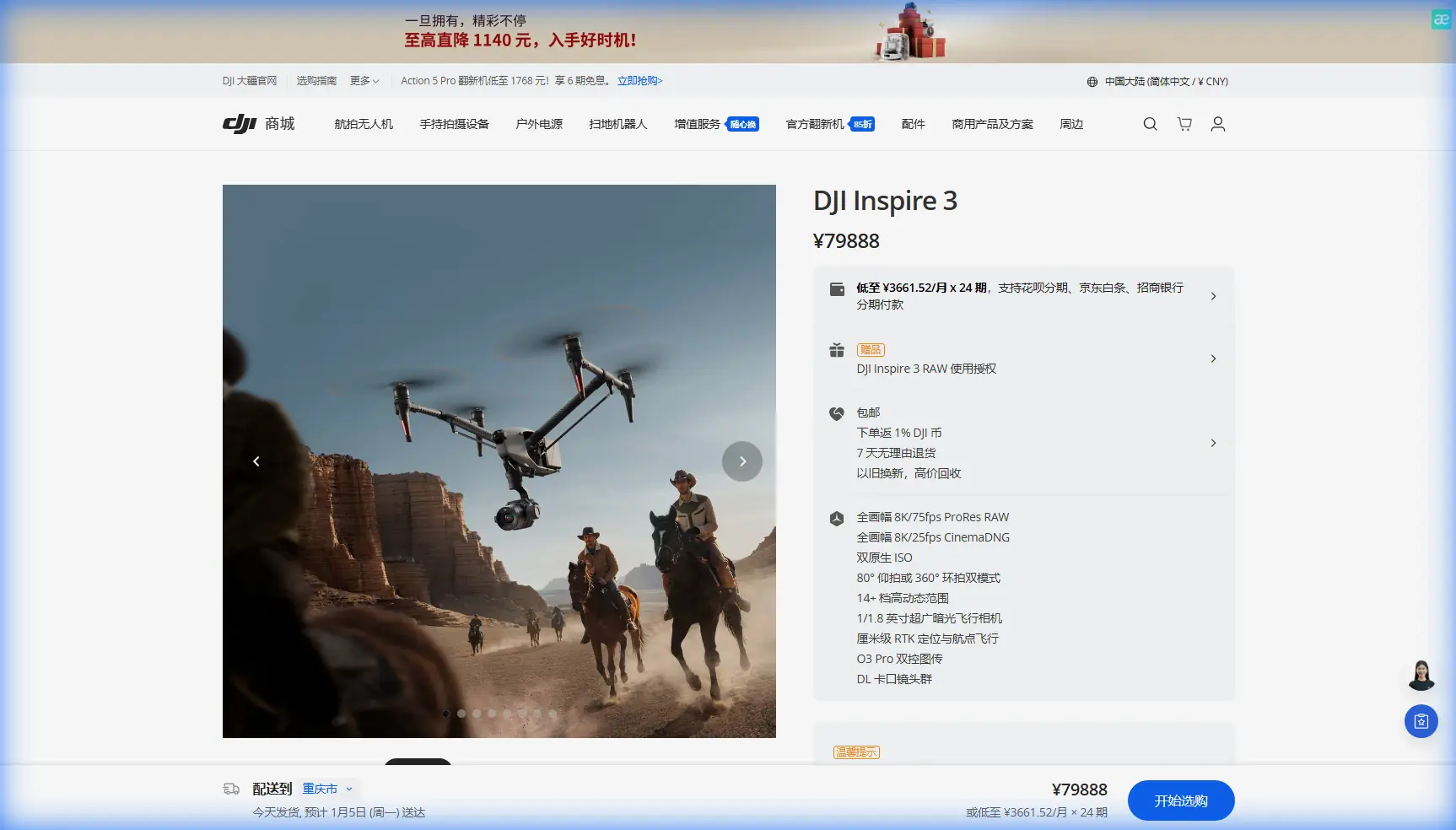
Inspire 3 for Dusty Venue Filming: How to Stay Efficient While the FAA Tightens Drone Enforcement
META: A practical Inspire 3 guide for filming dusty venues, with workflow advice on compliance, transmission security, battery strategy, and why the FAA’s new DETER program raises the stakes for professional operators.
Dust changes everything.
It gets into prop hubs, settles on lenses, turns quick battery swaps into contamination risks, and makes a polished filming day feel like a field repair exercise. If your work involves large venues in dry, gritty conditions—motorsport grounds, outdoor event complexes, rodeo arenas, desert-edge performance sites, construction-backed festival spaces—you already know that the aircraft is only part of the job. The real challenge is maintaining image reliability, crew rhythm, and legal discipline at the same time.
That last part matters more now than many crews realize.
On April 16, 2026, DroneLife reported that the FAA introduced a new enforcement effort called DETER, designed to speed up penalties for drone operators who break rules. The key shift is not that authorities suddenly learned how to spot drones. According to the report, they can already detect unauthorized drone activity in real time at places such as stadiums and federal facilities. The problem has been the lag between detection and consequences. DETER is meant to close that gap.
For Inspire 3 crews, especially those filming venues, that changes the operating environment in a very practical way. It means the old assumption—“we’ll be fine if we stay discreet”—is weaker than ever. Real-time detection plus faster enforcement creates a new standard: if your paperwork, airspace understanding, and on-site discipline are sloppy, the margin for error is shrinking.
I learned this lesson the hard way on a dusty venue shoot years before Inspire 3 entered my standard kit. The aircraft we were using at the time was capable enough on paper, but our process was fragile. We spent too much time shielding batteries from windblown grit, too much time rechecking signal quality around event infrastructure, and too much mental energy on workarounds instead of cinematography. The footage was good. The day was not.
Inspire 3 changed that equation for me—not because it removes the need for professional rigor, but because it makes a disciplined workflow easier to sustain under pressure.
Why the FAA’s DETER program matters to venue filmmakers
A lot of pilots still think enforcement is mostly a post-event issue. Something happens, someone files a report, and maybe months later a letter appears. The DETER story points in a different direction. If authorities can identify unauthorized drone activity in real time near sensitive or managed areas, and the FAA is explicitly trying to accelerate penalties, venue operators need to plan as if visibility is immediate and accountability is closer behind.
That has direct operational significance for Inspire 3 users.
Venue filming often happens near layered restrictions: temporary event rules, controlled access zones, spectator safety buffers, contracted vendor protocols, and sometimes proximity to infrastructure that attracts scrutiny. In a dusty environment, crews are already fighting cognitive load. Dust contamination, lens cleaning, battery handling, and visual checks all consume attention. That is exactly when procedural shortcuts creep in.
DETER raises the cost of those shortcuts.
So the first takeaway is simple: Inspire 3 is a premium imaging platform, but in 2026 and beyond, premium equipment does not protect you from enforcement exposure. The better your aircraft, the more visible your operation may become from a professionalism standpoint. That means the flight plan, authorizations, launch location, crew brief, and contingency zones need to be as polished as the footage.
The Inspire 3 advantage in dusty venues is workflow resilience
Most discussions about Inspire 3 start with image quality, and fairly so. But on difficult venue days, I care just as much about workflow resilience. Dusty sites punish hesitation. Every extra minute with the aircraft open to the environment is another chance for contamination or delay.
This is where hot-swap batteries matter.
That phrase sounds minor until you are on a venue schedule with moving talent, timed lighting, and a wind pattern that keeps dragging particulate across your setup area. Hot-swap battery capability helps reduce dead time between flights and limits the amount of chaotic handling during critical turnaround windows. Operationally, that means you can preserve aircraft readiness while minimizing the number of rushed interventions on the ground. In dust, less fumbling is not just convenient. It directly supports cleaner maintenance habits and steadier sortie pacing.
The same logic applies to transmission confidence. Inspire 3’s O3 transmission matters in venue work because event locations often create difficult RF conditions: temporary structures, production gear, audience devices, steel infrastructure, and reflective surfaces. In dusty settings, pilots are sometimes forced into less-than-ideal staging positions simply to keep equipment protected. Robust transmission gives the crew more flexibility in where they stand and how they organize the set. That can be the difference between operating from a clean, controlled position and improvising from an exposed patch of dirt beside a service road.
And when sensitive footage is involved—pre-release performances, branded events, private client productions—the mention of AES-256 is not just a spec-sheet flourish. Secure transmission has operational significance because venue stakeholders increasingly care about data pathways, not just final deliverables. If your aircraft is part of a closed-set production environment, encryption helps support trust with producers and site managers who want fewer loose ends.
How I approach dusty venue shoots with Inspire 3 now
My process is much stricter than it used to be. That came partly from experience and partly from the broader environment signaled by changes like DETER. If authorities can detect unauthorized drone activity in real time, then professional crews need to operate as if every flight will be scrutinized both technically and procedurally.
Here is the working method I use.
1. Start with the venue, not the aircraft
Before I think about lenses, moves, or timing, I map the venue’s control structure. Who manages the site? Is there a production office, facilities lead, event safety coordinator, or property representative? Dusty venues often have multiple operational layers—grounds maintenance, temporary construction, security, and event logistics. Those layers affect where you can safely stage, where dust plumes are worst, and where your launch and recovery site should sit.
This also helps with compliance discipline. DETER exists because detection has moved faster than enforcement. That means the operational question is no longer just “Can I fly here?” but “Can I demonstrate that this flight is authorized, intentional, and professionally managed if challenged?”
2. Build a clean zone before first power-on
In dusty environments, contamination control is part of flight safety. I designate a clean prep area, even if it is improvised inside a vehicle bay, under a tent wall, or on elevated protective flooring. Aircraft assembly, lens changes, media handling, and battery staging happen there, not in the open whenever possible.
Inspire 3 helps because a faster, more organized turnaround reduces the temptation to expose the aircraft unnecessarily. Hot-swap batteries are valuable here again. The less time the aircraft sits opened up in airborne dust, the better.
3. Treat transmission planning as a location department task
Crews often leave signal planning to the pilot alone. I do not. O3 transmission performance is strongest when the whole team supports it. We identify line-of-sight positions, backup standing points, and crew movement boundaries before takeoff. At venues, especially large ones, a production assistant or spotter drifting into the wrong place can block visibility, force repositioning, or create unnecessary confusion.
This is one of those less glamorous details that saves shoots.
4. Use short sortie logic
Dusty venues reward concise flights. Instead of stretching each take cycle, I break missions into shorter, intentional sorties with focused objectives: establishing pass, hero move, crowd-safe perimeter angle, structure reveal, tracking line, then reset. Shorter flights simplify battery planning, reduce airborne exposure to variable conditions, and keep post-flight inspection manageable.
5. Inspect for dust like you expect to find it
Because you usually will.
After each landing, I check landing surfaces, motor areas, payload interfaces, and exposed glass. Even when no issue is obvious, I assume fine particulate has reached places I would prefer it had not. A disciplined aircraft like Inspire 3 deserves a disciplined inspection rhythm.
Where thermal thinking and photogrammetry mindset can actually help filmmakers
This may sound unusual in a cinema-focused discussion, but crews who borrow habits from industrial drone work often perform better at difficult venues.
Take thermal signature awareness. I am not suggesting you are doing thermal imaging with Inspire 3 for a standard venue shoot. I am saying that thinking in terms of heat, airflow, and environmental load changes how you manage the aircraft. In dusty sites, ground heat, vehicle traffic, stage generators, and reflective hardscape can create turbulent local conditions. Pilots who pay attention to thermal behavior tend to stage more intelligently and avoid the kind of lazy launch placement that turns into a dust ingestion problem.
The same goes for photogrammetry discipline. Mapping crews obsess over repeatability, reference accuracy, and ground conditions. That mindset is useful for filmmakers too. If I am filming a large venue with repeat passes across multiple time blocks, I often mark consistent launch and framing reference points the way a mapping team might think about GCP logic—stable, repeatable control points, even if I am not actually building a survey model. The benefit is continuity. Dust, wind, and event pressure make visual consistency harder; structured ground references make it easier.
The compliance layer is no longer optional background noise
This is where the FAA development should sit front and center in every professional conversation.
DroneLife’s reporting made two facts clear: authorities can detect unauthorized drone activity in real time in places like stadiums and federal facilities, and the FAA’s DETER program is specifically meant to close the gap between identifying unauthorized operators and penalizing them. That is not abstract policy chatter. For venue filmmakers, it changes how risk should be priced into planning.
If you are filming near a managed event environment, your compliance posture should be something you can explain clearly to a venue representative, a client, and a regulator without changing your language for each audience. That means consistency. It means records. It means not assuming that because a flight appears technically easy, it is operationally low-risk.
The irony is that Inspire 3 makes this easier if you let it. A stable professional platform reduces the number of distractions competing for your attention, so you can devote more bandwidth to planning and crew coordination.
A note on advanced operations and overreach
There is a lot of loose talk in the industry about pushing farther, operating more aggressively, or treating high-end aircraft as permission to normalize edge-case behavior. Resist that instinct. Terms like BVLOS get thrown around casually, often by crews who really mean extended-distance confidence rather than an actual approved operating framework. Those are not the same thing.
With DETER now in the picture, casual ambiguity becomes a poor operating habit. Be precise. Know what your operation is. Stay inside the permissions and conditions that actually apply.
What changed for me after moving to Inspire 3
I spend less time fighting the platform and more time managing the production environment. That is the real benefit.
At dusty venues, that shift is huge. Better turnaround from hot-swap batteries. Stronger confidence in O3 transmission around complex infrastructure. Secure handling with AES-256 when production sensitivity matters. More headspace for launch discipline, compliance checks, and environmental control. None of that is glamorous, but all of it shows up in the final result.
And in the current FAA climate, clean operations are not just a matter of professionalism. They are a form of protection.
If you are planning an Inspire 3 workflow for venue filming and want a second set of eyes on staging, transmission setup, or dust-management strategy, you can message me here.
The aircraft can handle serious work. The real question is whether your process is ready for the world around it—dust, deadlines, venue complexity, and now faster enforcement.
That is the standard I would build for.
Ready for your own Inspire 3? Contact our team for expert consultation.