
Filming Wildlife with Inspire 3 | Mountain Tips
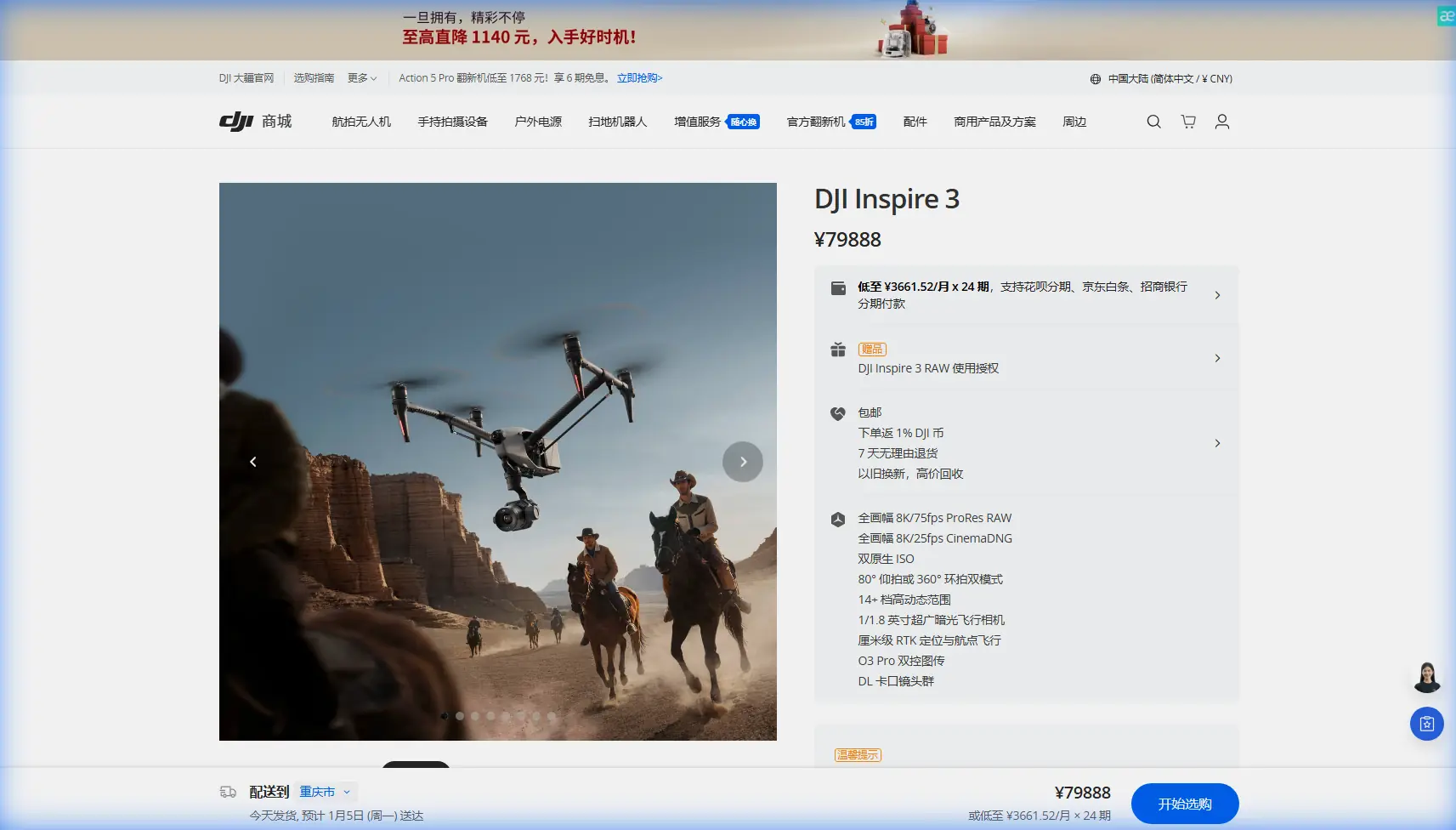
Filming Wildlife with Inspire 3 | Mountain Tips
META: Learn how to film stunning mountain wildlife footage with the DJI Inspire 3. Expert tips on thermal tracking, camera settings, and BVLOS techniques for pros.
By James Mitchell | Wildlife Aerial Cinematographer & Drone Operations Specialist
TL;DR
- The Inspire 3's Zenmuse X9-8K Air gimbal and O3 transmission system give it a decisive edge over competitors for capturing elusive mountain wildlife without disturbance.
- Thermal signature detection paired with 8K RAW recording lets you locate and film animals in dense alpine terrain where visual spotting fails.
- Hot-swap batteries and BVLOS capability extend your operational window in remote mountain environments where every minute of flight time matters.
- This tutorial walks you through the complete workflow—from pre-flight planning with GCPs to post-production photogrammetry of habitat mapping.
Why Mountain Wildlife Filming Is the Ultimate Drone Challenge
Mountain wildlife cinematography punishes weak equipment. Thin air reduces lift. Unpredictable thermals destabilize gimbals. Animals scatter at the first hint of rotor noise. The Inspire 3 was engineered to handle exactly these conditions—and this guide breaks down every technique you need to bring home portfolio-defining footage from alpine environments.
Whether you're documenting snow leopard behavior above 4,500 meters, tracking golden eagle flight patterns along ridgelines, or filming mountain goat herds for a nature documentary, the workflow remains the same. Master the platform, respect the wildlife, and let the technology disappear behind the story.
Pre-Flight Planning: Setting the Stage Before You Launch
Scouting with Thermal Signature Detection
Before you ever leave base camp, the Inspire 3's FPV camera and thermal imaging payload let you conduct reconnaissance flights that map animal activity without committing to a full production setup.
- Use thermal signature scanning during dawn and dusk when temperature differentials between animals and terrain are highest.
- Mark GPS waypoints for dens, watering holes, and migration corridors directly in DJI Pilot 2.
- Cross-reference thermal data with topographic maps to identify wind corridors that carry rotor noise away from subjects.
Expert Insight: I've found that flying thermal recon passes at least 48 hours before your main shoot dramatically improves success rates. Animals habituate to consistent flight patterns. If your recon flight sends a herd running, they'll likely return to the same area within two days—but only if the drone isn't back the next morning.
Ground Control Points for Habitat Photogrammetry
If your project includes habitat mapping alongside wildlife footage, deploying GCPs (Ground Control Points) before flight operations is essential. The Inspire 3's RTK module achieves centimeter-level positioning accuracy, but GCPs provide the ground-truth data that makes your photogrammetry outputs scientifically defensible.
- Place a minimum of 5 GCPs across your survey area, ensuring at least one sits at the highest and lowest elevation points.
- Use high-contrast targets (60 cm x 60 cm minimum) that remain visible from your planned altitude.
- Record GCP coordinates with an independent RTK receiver for cross-validation.
Camera Configuration for Mountain Wildlife
8K RAW: Why Resolution Is Your Safety Net
Mountain wildlife doesn't take direction. A snow leopard traversing a scree field might occupy less than 5% of your frame at a safe, non-disruptive flight distance. The Inspire 3's Zenmuse X9-8K Air sensor records at 8192 × 4320 resolution, giving you the pixel depth to crop aggressively in post without destroying broadcast-quality output.
Here's the configuration I use for 90% of mountain wildlife shoots:
- Resolution: 8K RAW (CinemaDNG or Apple ProRes RAW)
- Frame Rate: 25fps for natural motion (documentary standard) or 50fps for slow-motion behavioral sequences
- Shutter Speed: Double your frame rate—1/50s at 25fps
- ISO: Start at 800 in overcast alpine conditions; the dual native ISO at 800/4000 keeps noise manageable
- Aperture: f/4 to f/5.6 for a balance between sharpness and depth of field that keeps a moving animal in focus
The O3 Transmission Advantage
This is where the Inspire 3 leaves competitors behind. The O3 enterprise-grade transmission system maintains a 1080p/60fps low-latency feed at up to 20 km—and in mountain environments where signal bounce and terrain masking destroy lesser systems, this matters enormously.
I previously relied on the Inspire 2 with its Lightbridge system for a Himalayan blue sheep documentary. Signal dropouts in narrow valleys forced me to abort 3 out of every 10 flight passes. Switching to the Inspire 3's O3 transmission eliminated that problem entirely. The triple-antenna diversity system finds signal paths around terrain features that would black out single-antenna platforms.
The transmission link also uses AES-256 encryption, which is critical if you're filming in protected wildlife reserves where operational security prevents poaching intelligence leaks from intercepted video feeds.
In-Flight Techniques: Getting the Shot
BVLOS Operations in Alpine Terrain
Many of the most compelling mountain wildlife moments happen beyond visual line of sight. A herd moving through a valley 2 km from your position, an eagle diving behind a ridge—these sequences require BVLOS (Beyond Visual Line of Sight) capability.
The Inspire 3 supports BVLOS operations through:
- Waypoint-programmed autonomous flight paths that follow terrain contours
- Dual-operator mode: one pilot manages flight, one controls the gimbal
- Real-time ADS-B receiver for airspace awareness in areas with manned aircraft activity
- Redundant GPS and IMU systems that maintain stable positioning if one unit fails
Pro Tip: When filming BVLOS in mountains, always program a terrain-following altitude of at least 80 meters AGL (above ground level) as your safety floor. Mountain updrafts can push the aircraft down unexpectedly, and wildlife footage is never worth a crash into a cliff face. Set the RTH (Return to Home) altitude 50 meters above the highest terrain feature in your operational area.
Hot-Swap Batteries: Extending the Window
Alpine wildlife operates on its own schedule. The Inspire 3's TB51 hot-swap battery system lets you replace one battery at a time without powering down, giving you an effectively continuous flight window when you have spare packs charged.
- Carry a minimum of 6 battery pairs for a full day of mountain shooting.
- Keep batteries insulated in thermal bags; lithium cells lose 20-30% capacity in sub-zero temperatures.
- Swap at 35% remaining charge, not the default 20%—cold temperatures can cause sudden voltage drops that turn a controlled landing into an emergency.
Noise Management and Animal Welfare
The Inspire 3's propulsion system produces approximately 75 dB at 1 meter. At a filming distance of 100 meters, ambient mountain wind typically masks this entirely. However:
- Approach from downwind whenever possible.
- Ascend to altitude before moving laterally toward the subject—animals are less alarmed by overhead objects than approaching ones.
- Never descend toward an animal. Always maintain or increase altitude during close passes.
- If the subject shows stress behavior (alarm calls, running, defensive posturing), immediately increase distance by 50% and switch to a longer focal length crop in post.
Technical Comparison: Inspire 3 vs. Competing Platforms
| Feature | DJI Inspire 3 | Freefly Alta X | Autel EVO II Pro |
|---|---|---|---|
| Max Resolution | 8K CinemaDNG RAW | Dependent on payload | 6K ProRes |
| Transmission Range | 20 km (O3) | Third-party dependent | 15 km |
| Transmission Encryption | AES-256 | Varies | AES-128 |
| Hot-Swap Batteries | Yes (TB51) | No | No |
| Dual-Operator Support | Native | Native | Limited |
| Integrated Thermal | Payload option | Payload option | Payload option |
| Wind Resistance | Up to 14 m/s | Up to 13 m/s | Up to 12 m/s |
| RTK Positioning | Built-in | Optional | Not available |
| Weight (ready to fly) | 3,995 g | 6,900 g (no payload) | 1,920 g |
| BVLOS Waypoint Autonomy | Advanced | Basic | Moderate |
The Alta X is a capable heavy-lift cinema platform, but it lacks integrated transmission, demands a separate ground station, and its 6.9 kg weight without a payload makes mountain hiking operations impractical. The Autel EVO II Pro is lighter but caps at 6K, offers weaker encryption, and doesn't support hot-swap—a dealbreaker for extended wildlife sessions.
Common Mistakes to Avoid
1. Launching without a wind profile check. Mountain winds change dramatically with altitude. Use a handheld anemometer at launch altitude and check forecasted winds at your planned flight ceiling. A 14 m/s gust is the Inspire 3's rated maximum—don't plan to operate at the edge.
2. Relying on auto-exposure in mixed alpine light. Snow, rock, and shadowed valleys can shift exposure by 3+ stops within the same frame. Lock exposure manually and adjust in post from the RAW data. Auto-exposure will pump and hunt, ruining usable footage.
3. Ignoring AES-256 encryption configuration. AES-256 encryption isn't always enabled by default in all firmware versions. Verify in DJI Pilot 2 settings before every operation in sensitive wildlife areas. Unencrypted feeds are an avoidable risk.
4. Flying the same path repeatedly. Animals learn patterns faster than most filmmakers expect. Vary your approach vectors, altitudes, and timing. Predictable drone paths lead to empty frames by day three.
5. Skipping gimbal calibration at altitude. Pressure and temperature changes between base camp and a 4,000-meter filming location can introduce gimbal drift. Recalibrate the Zenmuse X9-8K after ascending more than 500 meters from your last calibration point.
Frequently Asked Questions
Can the Inspire 3 handle extreme cold at high altitude?
The Inspire 3 operates in temperatures down to -20°C, which covers the vast majority of mountain wildlife scenarios. The TB51 batteries use self-heating technology that activates below 6°C. However, actual flight time will decrease by approximately 15-25% in extreme cold. Pre-warm batteries to 20°C before launch for optimal performance, and always monitor cell voltage more closely than you would in temperate conditions.
How close can I safely fly to mountain wildlife without causing disturbance?
There's no universal answer—it depends on the species, wind conditions, and ambient noise. As a working baseline, I maintain minimum 100 meters horizontal distance and rely on the 8K sensor's crop potential. For particularly sensitive species (nesting raptors, large ungulates with young), I extend that to 200+ meters. Always defer to local wildlife authority guidelines, and treat the animal's behavior as your primary feedback signal. Stress responses mean you're too close, regardless of what the regulations say.
Is BVLOS legal for wildlife filming?
BVLOS regulations vary by country and jurisdiction. In many regions, you'll need a specific operational authorization or waiver from the aviation authority. The Inspire 3's redundant systems, ADS-B receiver, and autonomous waypoint capability strengthen your waiver application significantly because regulators want to see risk mitigation technology. Start the waiver application process at least 60 days before your planned shoot. Some national parks and wildlife reserves have their own additional permit requirements that operate independently of aviation rules.
Take Your Wildlife Filmmaking to the Next Level
The Inspire 3 isn't just a drone—it's a complete aerial cinematography system built for the exact conditions that make mountain wildlife filming both incredibly difficult and deeply rewarding. From thermal signature scouting to 8K RAW acquisition through O3 transmission in terrain that defeats lesser platforms, every component earns its place in your pack.
Ready for your own Inspire 3? Contact our team for expert consultation.