
How I’d Use the Inspire 3 to Inspect High
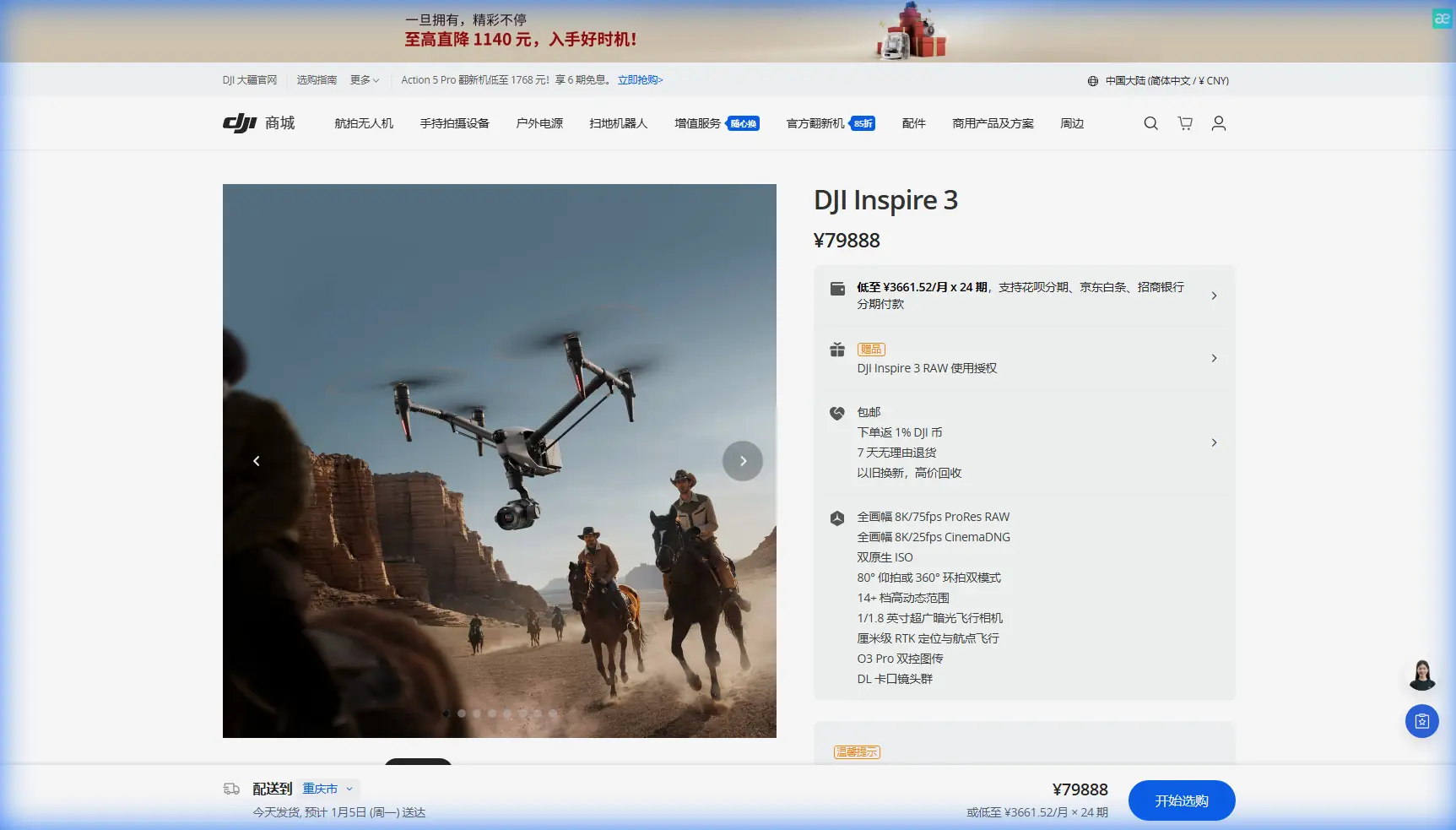
How I’d Use the Inspire 3 to Inspect High-Altitude Construction Sites
META: A practical expert guide to using the DJI Inspire 3 for high-altitude construction inspection, covering battery strategy, O3 transmission, photogrammetry workflow, GCP planning, and cold-weather field reliability.
High-altitude construction inspection looks straightforward on paper. Fly, capture, review, report. In the field, it becomes something else entirely.
Wind behaves differently around unfinished towers. Battery performance changes faster than many teams expect. Signal paths that look clean from the ground get blocked by concrete cores, steel framing, cranes, and terrain. Add low temperatures and tight inspection windows, and the margin for sloppy workflow disappears.
That is where the Inspire 3 earns attention. Not because it solves every site problem automatically, but because its design aligns unusually well with the realities of professional aerial inspection. If I were advising a construction team working at elevation, I would not frame the Inspire 3 as a general-purpose drone. I would frame it as a tool for controlled data capture when conditions are less forgiving than most marketing photos suggest.
I’m Dr. Lisa Wang, and when I look at high-altitude site operations, I start with the central problem: consistency. Construction stakeholders do not just need footage. They need repeatable, defensible visual records that can support engineering review, progress verification, and safer planning. That means the drone platform, the battery discipline, the transmission system, and the mapping method all matter together.
The real problem at high altitude: not flying, but finishing the mission cleanly
Most inspection failures do not begin with a crash. They begin with compromise.
A pilot trims the route because battery reserve is shrinking faster than expected. A section of facade gets missed because the aircraft was repositioned for signal stability. Thermal signature review becomes less useful because the timing of the flight changed and surface temperatures shifted. A photogrammetry set looks complete in the field, then later reveals inconsistent overlap on one side of the structure. None of these errors feels dramatic in the moment. They become expensive after the aircraft is packed away.
High-altitude construction sites amplify those small compromises. Air density, temperature, and wind all pressure the flight envelope. Vertical subjects also create a documentation challenge that is different from standard top-down mapping. You are not just collecting broad site context. You are often trying to resolve installation quality, water intrusion clues, envelope defects, concrete condition, roof interfaces, and MEP placement across multiple elevations.
The Inspire 3 is well suited to this kind of work because it supports high-end imaging, robust control links, and an operational rhythm built around fast turnaround in the field. Two details matter immediately for construction inspection: the O3 transmission system and hot-swap batteries.
Why O3 transmission matters on construction sites more than people think
Many crews treat transmission specs as a comfort feature. On a high-altitude build, they are operational infrastructure.
O3 transmission is valuable because construction inspection is rarely done in open, unobstructed airspace. You are often flying near structures that interrupt line-of-sight, reflect signals, and force constant orientation changes. A stable link is not just about pilot confidence. It affects how precisely the crew can execute inspection lines, hold framing, and react when the aircraft transitions from one side of a structure to another.
If you are documenting exterior conditions on a partially completed tower, you may need to move from broad oblique coverage into tighter, slower passes around facade transitions or rooftop mechanical areas. A weak or unstable link encourages conservative flying and early aborts. A stronger, more reliable transmission workflow gives the pilot room to maintain the capture standard the engineering team actually needs.
The mention of AES-256 also matters in a practical way. On commercial construction sites, image data can reveal schedule status, subcontractor sequencing, material staging, and site vulnerabilities. Secure transmission is not a theoretical checkbox when you are working around sensitive project information. It is part of professional handling. For firms that care about client confidentiality, encrypted transmission helps align drone operations with broader site data governance.
Battery management is where experienced crews separate themselves
Here is the field tip I give almost every team working at altitude: stop thinking of batteries as interchangeable blocks of flight time. At high-altitude construction sites, think in terms of battery temperature behavior and mission segmentation.
The Inspire 3’s hot-swap batteries are not merely convenient. They change how you structure the day. Instead of squeezing extra minutes out of a pack pair, you can build shorter, cleaner capture cycles and keep the aircraft moving without a full reboot-and-reset routine. That matters when weather windows are narrow or when you need to maintain the pace of a structured inspection plan.
My practical rule is simple: assign each battery set to a mission role before takeoff. One set for broad site context. One for vertical facade lines. One reserved for verification passes and missing-shot recovery. This sounds almost too basic, but it prevents a common field mistake: using the freshest batteries on the least demanding portion of the work, then entering the most precision-sensitive phase with packs that are already cooling off and dropping voltage faster under load.
At altitude, especially in cold morning conditions, I prefer to avoid launching directly into aggressive vertical climbs on a battery set that has not been properly managed for temperature. Even when the packs look adequate on paper, the aircraft can feel different once you start repeated climbs, braking, and hover adjustments beside a structure. Keep battery sets warm before launch, rotate them deliberately, and use the hot-swap capability to preserve workflow continuity rather than to encourage overextension.
That is the difference. Hot-swap batteries are not there to make you fly longer without thinking. They are there to help you think more clearly and interrupt the mission less.
Photogrammetry at altitude: accuracy depends on planning, not just camera quality
Construction teams often ask whether the Inspire 3 can support photogrammetry on complex sites. The better question is whether the operator understands what kind of photogrammetry the site actually requires.
A mountain or plateau construction project usually presents two mapping problems at once. First, you need broad geographic context: access roads, laydown areas, slope conditions, drainage paths, and the relationship between structures and terrain. Second, you need near-structure data for progress tracking or condition assessment. Those are not the same mission.
For broad mapping, consistent overlap and stable flight geometry are still the foundation. For structure-specific modeling, the challenge becomes perspective control. Tall structures demand carefully designed oblique capture, not just overhead grids. The Inspire 3 has the image quality and flight precision to support this, but field success still depends on GCP placement and realistic expectations.
GCPs are one of the most neglected parts of high-altitude construction drone work. Teams will spend heavily on aircraft and optics, then rush the control network. That is backwards. If your deliverable needs to align with survey-grade site records or support measurable progress claims, GCP discipline is what keeps your model anchored in the real world. At altitude, terrain and access limitations can make GCP distribution uneven, so you need to plan them before the aircraft ever leaves the case.
Operationally, this matters because an elegant-looking 3D model with poor control is not reliable evidence. It may impress in a progress meeting but fail when someone asks for dimensional confidence around grading, retaining systems, or structural placement.
Where thermal signature work fits, and where it doesn’t
The phrase thermal signature gets thrown around too loosely in construction conversations. Thermal imaging can be useful, but only when paired with the right timing and a clear inspection question.
On high-altitude sites, thermal review may help identify insulation discontinuities, moisture-related anomalies, roof membrane issues, or unusual heat patterns around electrical infrastructure. But thermal data is highly sensitive to environmental conditions. Strong wind, changing cloud cover, cold-soaked materials, and uneven sun exposure can all distort interpretation.
The operational takeaway is this: if you are using the Inspire 3 as part of a wider inspection workflow that includes thermal signature analysis from another platform or coordinated sensor package, schedule thermal flights as a separate mission objective. Do not bolt thermal thinking onto a visual inspection flight and assume the results will hold up. Capture timing, surface condition, and contextual notes matter as much as the imagery itself.
Site safety and data quality improve when the workflow is boring
That may sound odd, but the best professional drone inspections are uneventful. The crew knows the sequence. Batteries are staged. GCPs are already laid out. Communications are standardized. The observer understands likely signal shadows. The pilot knows which facades will generate the roughest airflow. The image review process starts before the aircraft lands.
The Inspire 3 supports this kind of disciplined operation well. It is capable enough that a skilled team can build reliable procedures around it rather than improvising every sortie. On high-altitude projects, that is exactly what you want.
A common workflow I recommend is:
- Start with a short environmental reconnaissance flight.
- Confirm wind behavior at working height, not just at launch point.
- Capture broad context while batteries are at peak condition.
- Shift into structured facade or roofline passes.
- Land early if the battery trend is drifting faster than planned.
- Use hot-swap turnaround to review frames immediately before the next launch.
- Finish with targeted re-capture rather than hoping post-processing will fix missed geometry.
Nothing about that sequence is glamorous. It works.
What about BVLOS?
BVLOS enters the conversation on large or terrain-separated construction projects, especially where access roads, ridge lines, or distributed infrastructure stretch beyond simple visual coverage. But for most active construction inspections, the smarter lens is not “Can the drone do BVLOS?” It is “Does the site, the regulation, and the mission profile justify it?”
The Inspire 3’s control and imaging strengths make it attractive for more advanced operational planning, but high-altitude construction environments are still full of obstacles, signal reflections, moving equipment, and changing work zones. In practice, many teams get better results by refining segmented visual-line operations than by fixating on expanded distance. The work usually demands precision and accountability more than range.
When Inspire 3 is the right fit
I would choose the Inspire 3 for high-altitude construction inspection when the client needs more than casual site photos. It is especially compelling when the mission combines cinematic-quality visual documentation, repeatable inspection passes, secure transmission, and fast battery turnover on a live project with a narrow weather window.
Its strengths become more obvious as the site becomes more demanding. Not dangerous in a dramatic sense. Demanding in the ordinary, professional sense: cold mornings, hard deadlines, interrupted sightlines, changing winds, multiple stakeholders, and zero appetite for incomplete data.
If you are building a workflow around it, build the battery plan first. Then the communications plan. Then the capture geometry. Aircraft capability matters, but field reliability starts with procedure.
If your team is planning an Inspire 3 inspection workflow for a mountain, plateau, or tower project and wants a practical discussion rather than a brochure recital, you can message our field team here.
The Inspire 3 is not valuable because it is advanced. It is valuable because, in trained hands, it helps make high-altitude inspection less fragile. On construction sites, that difference shows up in cleaner datasets, fewer return visits, and reports that stand up when someone asks the hard follow-up questions.
Ready for your own Inspire 3? Contact our team for expert consultation.