
Inspire 3 in Forest Inspection: A Technical Review
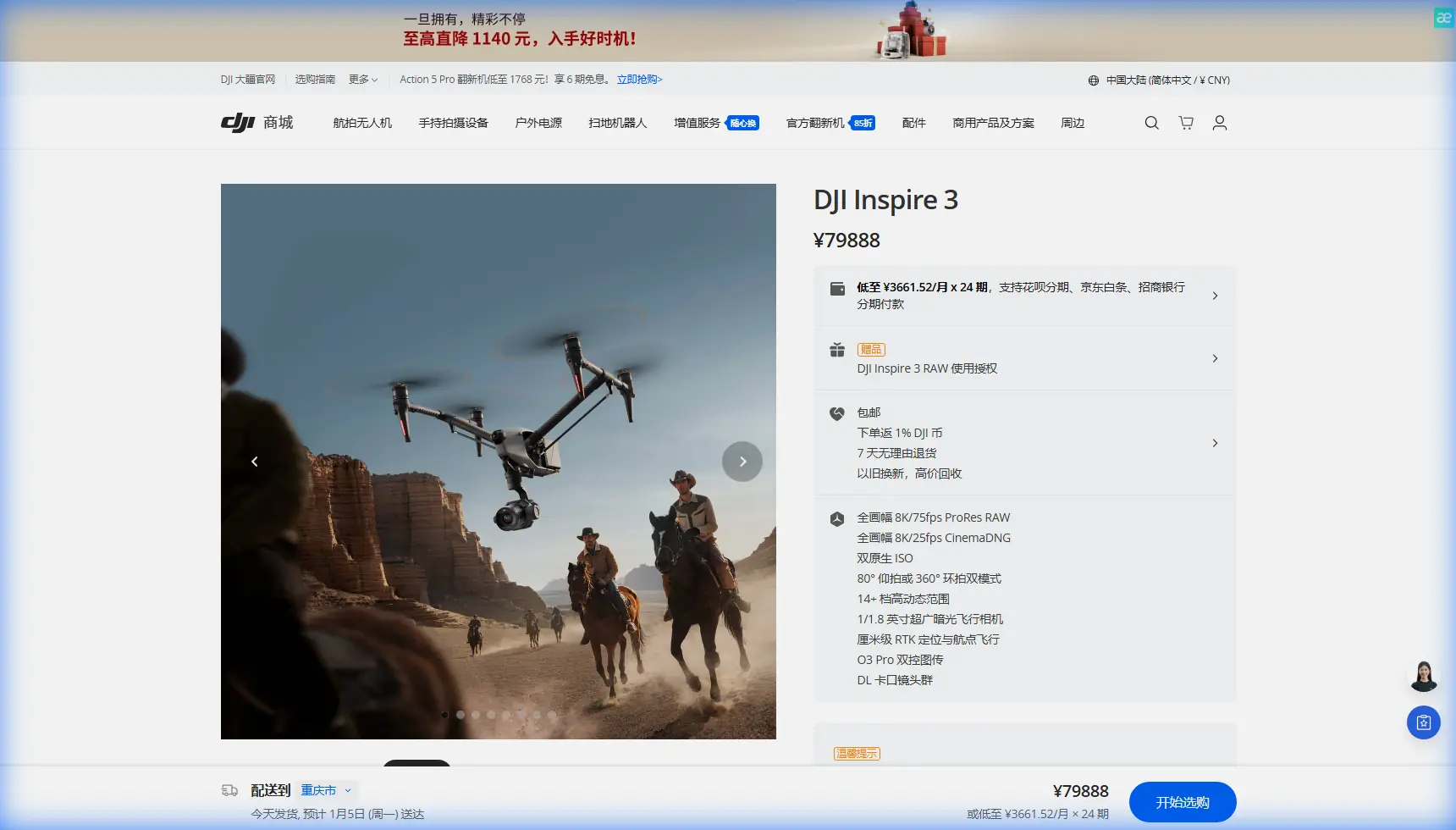
Inspire 3 in Forest Inspection: A Technical Review for Complex Terrain Operations
META: Expert review of the Inspire 3 for forest inspection in complex terrain, covering thermal stress logic, flight discipline, antenna handling under interference, transmission reliability, and practical operational workflow.
Forest inspection is unforgiving work for any UAV platform. Dense canopy breaks sightlines. Valleys distort signal behavior. Slopes compress depth perception and make even simple flight paths harder to judge. In that environment, the Inspire 3 is not just being asked to fly beautifully. It has to stay predictable when terrain, temperature variation, and electromagnetic noise all start pushing against the mission.
That is why a serious evaluation of the Inspire 3 for forest inspection should not begin with image specs alone. It should begin with stability: structural, procedural, and operational.
As a specialist looking at the Inspire 3 through the lens of civilian fieldwork, I find two old aviation truths especially relevant here. The first comes from aircraft structural design: temperature gradients create internal stress, and hotter regions tend toward compressive stress while cooler regions tend toward tensile stress. The second comes from flight training: consistent results come from repeatable control patterns, not from improvising every correction in the air. Put those two ideas together and you get a much more useful way to think about drone inspection in mountainous forests.
Why thermal behavior matters in real forest missions
Forest inspection often sounds like a pure sensing job. In practice, it is also a thermal management job.
The reference material on aircraft structure explains that heat stress appears when different parts of a structure experience different temperatures, or when connected materials expand at different rates. Operationally, that matters because a UAV working above dark canopy, exposed rock, shaded ravines, and open sun patches is constantly moving through microclimates. Even when the temperature swings are nowhere near the handbook’s cited aircraft figures of around 150 for general structural areas and below 350C near engine zones, the underlying engineering principle still applies: uneven heating changes stress distribution, and that can alter stiffness and deformation behavior.
For the Inspire 3 operator, this is not an academic footnote. It affects three practical things.
First, flight consistency. If heat changes stiffness, even subtly, it can influence how precisely the aircraft maintains attitude under prolonged workload. In forest inspection, you feel that most when flying repeated lateral passes along tree lines or contour-following routes above uneven terrain. Small deviations can become reconstruction errors in photogrammetry and interpretation errors in thermal signature review.
Second, sensor trust. When the aircraft moves from shaded valleys into bright clearings, thermal contrast in the scene changes quickly. Pilots and data crews need to separate environmental thermal variation from platform-induced instability. A clean hover and disciplined track help the inspection team decide whether a heat anomaly belongs to vegetation stress, ground moisture variation, or simply a bad acquisition moment.
Third, fatigue planning. The source text notes that thermal effects can produce added bending or twisting deformation and reduce structural stiffness. For civilian drone operations, the takeaway is simple: long forest sorties should be planned as thermal exposure cycles, not just battery cycles. Hot-swap batteries are useful here not only because they keep the mission moving, but because they support controlled inspection blocks rather than encouraging one sprawling, thermally messy session.
The hidden skill that makes Inspire 3 better in forest terrain
Most unsuccessful forest inspection flights are not failures of hardware. They are failures of control philosophy.
The training reference is blunt on this point. Stable flying comes from building a fixed pattern for turns and straight segments. It even states that in base-leg style alignment, the operator should adjust the turn entry point rather than the turn action itself. That is excellent advice for Inspire 3 work in wooded terrain.
In a forest corridor or ridgeline inspection, many operators start “chasing” the aircraft after they notice drift or misalignment. They tighten the stick inputs, alter bank response mid-turn, and end up creating a sawtooth flight path. The result is ugly data. Tree crowns warp in overlap zones. GCP alignment becomes harder to validate. Thermal mosaics lose confidence at the edges.
A better Inspire 3 workflow is to standardize the geometry of flight. If the aircraft is not lining up correctly after a turn, fix where the turn begins on the next pass. Do not keep redesigning the turn itself while airborne.
That concept sounds simple, but its operational value is enormous in forest inspection because terrain already introduces enough uncertainty. Removing pilot-generated variability is one of the easiest quality gains available.
The same training material also highlights a very specific control idea: apply the same magnitude of opposite aileron to roll out as was used to enter the bank, with smooth input and a quick return to center. Translated into modern UAV practice, that means exits from inspection arcs should be deliberate and symmetrical. For Inspire 3 users gathering overlapping imaging data, smooth entry and clean exit matter more than aggressive correction. The aircraft does not need theatrical inputs. It needs disciplined ones.
Handling electromagnetic interference with antenna adjustment
Now to the issue that decides whether the mission proceeds calmly or turns into a recovery exercise: signal integrity.
Forests in complex terrain create a strange RF environment. The problem is rarely just distance. It is masking, reflection, and partial obstruction. Add nearby utility infrastructure, ridge bounce, or communication equipment at elevated sites, and you can get intermittent electromagnetic interference that feels random if you are not reading the geometry correctly.
This is where the Inspire 3’s O3 transmission system earns attention, but transmission capability alone is not the whole story. Antenna handling still matters.
When interference begins to show up, many pilots focus on the display first. They watch bars drop and start making flight decisions based on the symptom rather than the cause. In hilly forests, a smarter response is to think in spatial terms:
- Has the aircraft moved behind a slope shoulder?
- Has canopy moisture thickened the obstruction path?
- Is the controller antenna orientation mismatched to the aircraft position after a heading change?
- Did the aircraft descend into a corridor where reflected signal is arriving irregularly?
The practical correction is often not a dramatic repositioning of the drone. It is a small adjustment of pilot stance and controller antenna orientation, combined with a modest altitude or lateral shift that restores cleaner geometry between controller and aircraft. In other words, you treat the link path as part of the route design.
That mindset fits the flight-training principle from the source material: control the path of the whole aircraft rather than becoming distracted by every invisible airflow variable. Here, substitute “RF clutter” for airflow. If the link degrades, do not overreact with abrupt stick inputs. Re-establish clean aircraft positioning, optimize antenna alignment, and let the system recover.
For teams operating in sensitive commercial environments, AES-256 also matters because forest inspection data may include proprietary land-use information, infrastructure adjacency, or environmental assessment records. Secure transmission is not a headline feature in the field until someone asks where the data traveled and how it was protected. Then it becomes very relevant very quickly.
Inspire 3 and the inspection stack: thermal signature, photogrammetry, and GCP discipline
The Inspire 3 becomes especially effective when the mission is treated as a data stack rather than a simple flight.
In forest inspection, thermal signature analysis can reveal moisture stress, disease patterns, drainage anomalies, or localized heating around support assets and service corridors. Photogrammetry, by contrast, gives structure: canopy volume, slope context, access routes, erosion behavior, and change over time. One without the other is often incomplete.
The challenge in complex terrain is keeping those layers spatially trustworthy. That is where GCP discipline still has value. Even with a highly capable aircraft, difficult terrain can distort perspective and reduce confidence in edge zones, especially around steep slopes or mixed canopy height. Properly placed control points give the dataset a reality check. They tell you whether the elegant model on the screen actually aligns with the land.
The Inspire 3’s advantage is not that it eliminates the need for field rigor. Its advantage is that, when flown properly, it preserves the quality of that rigor. Stable pathing, robust transmission, and efficient battery swaps all support cleaner capture windows. If you want forestry outputs that stand up in planning meetings or technical reviews, this matters more than headline specs.
Battery strategy is mission strategy
Hot-swap batteries are often discussed as a convenience feature. In forest inspection, they are better understood as a risk-control tool.
Complex terrain encourages overextension. The site looks manageable on the map, but each valley adds a signal wrinkle, each ridge changes wind exposure, and each inspection objective tempts the crew to “grab one more pass.” Hot-swap capability helps keep momentum without normalizing poor segmentation. The right habit is to use battery transitions to reassess thermal conditions, route fidelity, antenna positioning, and data sufficiency.
This is also where BVLOS planning discussions need restraint and professionalism. In civilian commercial work, any beyond visual line of sight concept must be built around local regulation, risk assessment, terrain masking, communication reliability, and observer or procedural support where required. Forests make all of that harder, not easier. The Inspire 3 can support sophisticated operations, but responsible teams do not let aircraft capability outrun operational discipline.
The pilot technique that separates clean datasets from messy ones
There is one line in the training reference that I wish more inspection crews absorbed: experienced operators know how to control the route in a way that reduces the need for corrections.
That is the entire game in forest inspection.
The best Inspire 3 pilots in this environment do not look busy. They are constantly making decisions, but the aircraft appears calm because those decisions happen early. They let the aircraft fly far enough before initiating the turn. They judge where it is going before correcting where it should go. They avoid pinball-style stick work. They think in paths, not reactions.
This style pays off downstream. The analyst gets steadier frames. The survey specialist gets more reliable overlap. The client gets outputs that require less apologizing.
If your team is refining this kind of workflow for terrain-heavy inspections, it can help to compare route design, antenna practices, and capture sequencing with an experienced operator through a quick field-ops discussion on WhatsApp.
Final assessment: where Inspire 3 fits in forest inspection
The Inspire 3 makes sense for forest inspection when the mission requires disciplined flight in terrain that punishes inconsistency. Its value shows up in how well it supports a structured operator, not just in how impressive it looks on a spec sheet.
The deeper lesson from the reference materials is that both aircraft and pilot performance are shaped by stress. In the structural sense, temperature gradients create internal loads and can change stiffness. In the operational sense, terrain and interference create pressure on the pilot to overcorrect. The winning approach in both cases is controlled management of variables.
So if you are evaluating the Inspire 3 for forestry work, do not ask only whether it can carry the mission. Ask whether your workflow respects what the aircraft needs to stay precise: repeatable turns, measured control inputs, thoughtful antenna adjustment, secure transmission, disciplined GCP use, and battery segmentation that treats thermal exposure as a planning factor.
That is how the platform earns trust in the field. Not by being pushed harder, but by being flown smarter.
Ready for your own Inspire 3? Contact our team for expert consultation.