
Inspire 3 Forest Inspection Tips: A Field
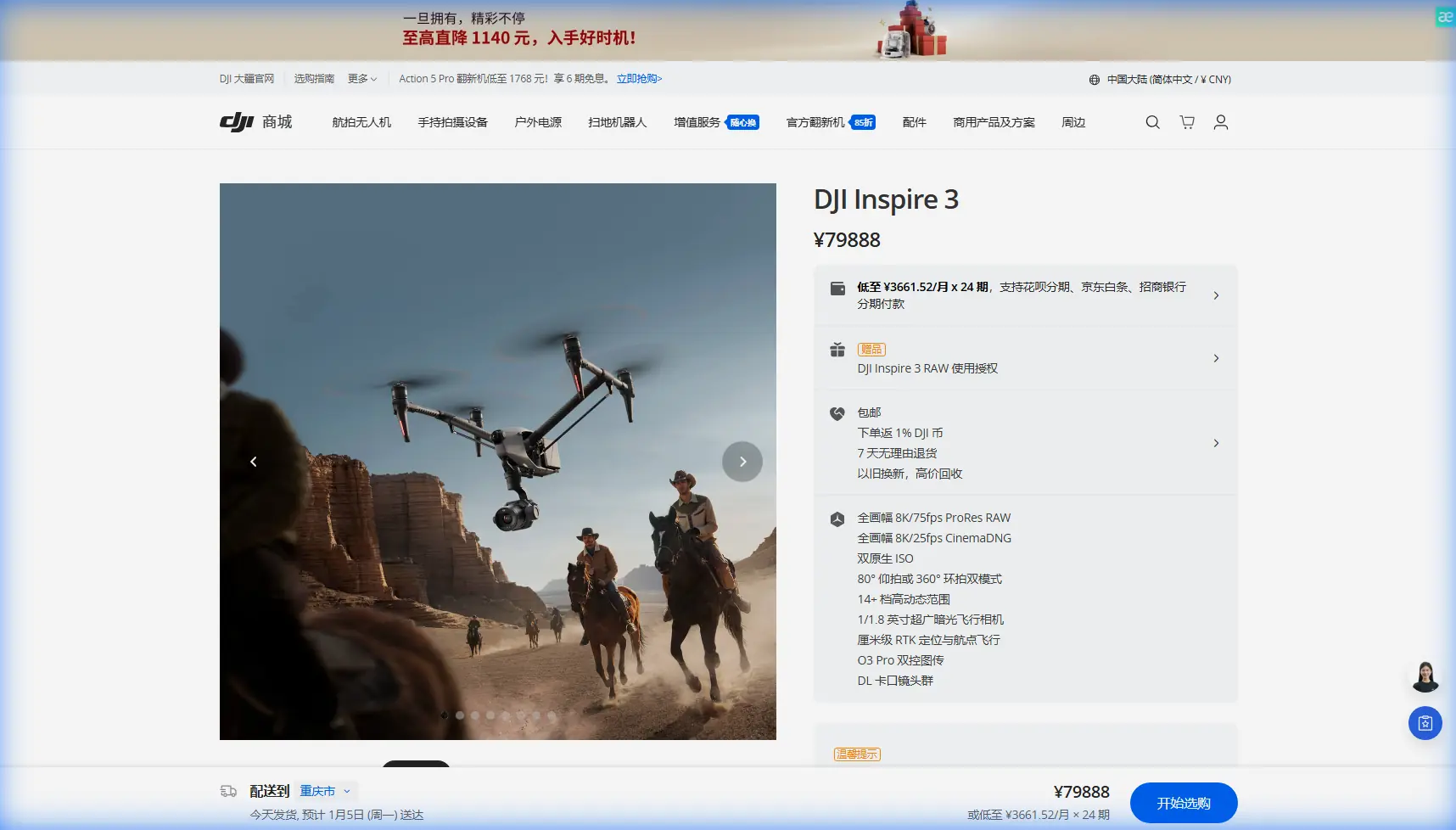
Inspire 3 Forest Inspection Tips: A Field-Ready Workflow for Remote Missions
META: Expert Inspire 3 forest inspection tips for remote operations, with practical advice on access, maintenance logic, thermal signature capture, photogrammetry planning, battery handling, and safer field efficiency.
Remote forest inspection looks simple from a distance. Launch, fly a route, collect images, go home. On the ground, it rarely works that cleanly.
Forests create a very specific kind of pressure on a drone team. Access is limited. Terrain is uneven. Moisture changes everything. Light shifts fast under canopy edges. Small delays compound, especially when your launch area is a rough clearing instead of a paved site. That is exactly why the Inspire 3 deserves a different kind of discussion—not just camera specs or flight modes, but how its mission value changes when you think like an aircraft maintainer as much as a pilot.
I’ve seen experienced crews lose valuable survey windows because of one avoidable issue: they built a beautiful flight plan, but a clumsy field workflow. For remote woodland inspection, the Inspire 3 performs best when every repeated action—battery swaps, lens changes, preflight checks, media handling, cooling pauses, and post-landing inspection—is designed to reduce unnecessary movement and unnecessary exposure.
That sounds obvious. It isn’t. Good remote operations are usually built on small design principles, not flashy decisions.
Why forest inspection punishes inefficient workflows
In a remote forest mission, the bottleneck is often not air time. It is serviceability in the field.
A useful principle comes from aircraft maintainability design: frequent inspection points, test points, and servicing points should be placed where they are easy to reach, and parts that are commonly replaced in the field should be removable without forcing crews to disturb neighboring components. That logic matters for Inspire 3 operators because the forest environment amplifies every awkward step. If a battery compartment, media workflow, payload handling routine, or prop inspection sequence forces extra body movement, extra unpacking, or repeated repositioning on unstable ground, you are burning time and increasing error risk.
For woodland work, that translates into a simple rule: arrange your field setup so the Inspire 3 can be checked, turned around, and relaunched with minimal rehandling.
If your team is inspecting tree health, storm damage, access roads, powerline corridors through forest, or replanting zones, the mission usually involves repetitive short cycles. Fly, land, review edge cases, swap power, relaunch. The crew that wins is not always the crew with the most aggressive route plan. It is often the crew that can repeat those cycles cleanly for hours.
Build your Inspire 3 ground station like a maintenance bay
Before the first takeoff, create a layout that mirrors good aircraft access design.
Another maintainability principle from aircraft engineering is that related assemblies should be grouped together, ideally in a single-layer layout, to avoid cross-operations and repeated disassembly. In practical Inspire 3 terms, don’t scatter your workflow across the forest floor or the back of two vehicles.
I recommend dividing the site into four small zones:
- Aircraft zone for preflight, landing, prop checks, and sensor cleaning
- Power zone for hot-swap batteries, battery temperature review, and charging rotation
- Data zone for media verification, photogrammetry spot checks, and file notes
- Safety zone for takeoff perimeter, observer position, and route brief updates
That separation cuts down on one of the most common forest-site failures: crew overlap. People walk through each other’s jobs, battery sets get mixed, used packs return to the wrong case, and lens caps disappear into leaf litter.
The old aircraft design advice about giving technicians enough working space is especially relevant here. Forest inspections are often done in heavy clothing, gloves, and boots on uneven ground. The source material specifically emphasizes that maintenance channel design must account for the worker’s clothing, body access angle, required visual tasks, and tool size. That matters more than it first appears. If your Inspire 3 battery exchange routine only works when a crew member kneels in mud beside a hard case with no elbow room, that routine is broken.
The battery management tip that saves real missions
Here is the field habit I push hardest with remote Inspire 3 teams: never let hot-swap convenience turn into battery confusion.
Hot-swap batteries are one of the biggest operational advantages on the Inspire 3 for remote inspection. They let you keep the aircraft active with much less downtime between sorties. But in forests, crews often make the same mistake—they focus on speed and stop tracking battery pairing behavior closely enough.
My rule is simple: keep battery pairs married for the day unless there is a documented reason to split them. Mark them physically and track them as a set from first launch to final shutdown. When one pair comes off the aircraft, place it in the same orientation every time in your power case: left pack forward, right pack rear, or any system you choose. Do not improvise on sortie six.
Why does this matter? Because forest work usually involves repeated medium-duration flights in changing ambient temperatures, sometimes with shade-cooled gear on the ground and warmer packs coming off the aircraft. When crews mix packs casually, they lose the ability to notice if one battery is consistently lagging in temperature behavior, discharge performance, or charging recovery. That is exactly the kind of subtle pattern that can ruin the final missions of the day.
I learned this the hard way on a remote vegetation assessment where the aircraft itself was fine, the route planning was fine, and the data need was clear. The slowdown came from indecision at the battery table. Packs had been rotated too freely, and by late afternoon the team was spending more time validating what was ready than actually flying. We didn’t have a battery problem. We had a battery organization problem.
Hot-swap capability is only powerful when the handoff is disciplined.
Use thermal signature intelligently, not as a default crutch
Forest clients often ask for thermal because they assume it reveals everything hidden by the environment. It does not.
Thermal signature analysis in woodland inspection is strongest when you define the target clearly before launch. Tree stress, wildlife-adjacent exclusion analysis, moisture anomalies, heat from damaged infrastructure in forest corridors, or post-fire edge review all produce different reading conditions. The Inspire 3 workflow should therefore begin with one question: are you trying to detect contrast, measure geometry, or document visible condition?
If the mission is primarily structural or terrain-based, photogrammetry may produce more actionable outputs than thermal alone. If the mission is anomaly-based, thermal can guide follow-up passes, but only if your crew times the collection window correctly. Midday forest heating can flatten useful thermal contrast in some scenarios, while early or late periods can exaggerate differences that need visual confirmation.
In practical terms: thermal is a layer, not a substitute for a workflow.
Photogrammetry in forests: accept the canopy problem early
A lot of weak Inspire 3 mapping jobs happen because the operator pretends dense canopy behaves like open terrain. It doesn’t.
Photogrammetry in forested areas becomes much more reliable when you define what is realistically mappable: canopy surface, road cut-throughs, creek exposures, storm gaps, logging paths, firebreaks, and perimeter changes. If the end user expects ground truth below dense cover, set expectations before flight and support the model with GCP strategy where accessible.
GCP placement in forests is not glamorous, but it often decides whether a dataset becomes operationally useful. In remote work, I prefer fewer well-chosen control points with clean sky visibility over a larger number of marginal points half-obscured by branches. The goal is not just accuracy on paper. It is confidence during downstream interpretation.
This is where Inspire 3 teams should think again like maintainability engineers. The source material stresses that access openings and work passages must be designed based on task frequency, tool dimensions, line-of-sight demands, and the time required for the work. Field mapping has an equivalent lesson: don’t choose GCP locations simply because they are theoretically ideal on a map. Choose locations your team can reach repeatedly, verify visually, and work around safely without wasting half the mission on access friction.
O3 transmission and AES-256 matter more in forests than open fields
Remote forests are not always RF nightmares, but they are rarely forgiving. Terrain undulation, vegetation mass, and the temptation to tuck the pilot station into a convenient low spot can all degrade link quality.
O3 transmission gives the Inspire 3 a meaningful advantage for maintaining stable situational awareness during inspection flights where line quality changes as the aircraft moves along ridges, over clearings, and near canopy transitions. The key is not blind confidence in the link. It is site discipline: elevate the controller position when possible, avoid parking the team against dense obstruction, and brief route segments that are most likely to stress signal continuity.
AES-256 also has practical relevance here, especially for forestry concessions, environmental compliance work, utility corridors, and commercial land assessments where imagery sensitivity is not theoretical. Data protection is part of the service, not an add-on. Clients increasingly expect that aerial collection, transmission, and handling are treated as operational assets.
Make maintenance access part of your flight planning mindset
One of the smartest ideas in the aircraft reference material is that frequently opened covers should use quick-release logic, include retention features, and carry clear identification so they are not incorrectly installed. There is also a warning that opened access covers should not create hazards for maintenance staff and should not interfere with other opened panels or external moving parts.
You do not need to be designing the Inspire 3 hardware for that guidance to help you. Apply the same thinking to your field process.
Every item you repeatedly touch during a forest inspection should be:
- easy to identify
- hard to misplace
- difficult to reinstall incorrectly
- positioned so it does not interfere with another task
That means labeled battery pairs, numbered media cards, dedicated prop bags, one lens-cleaning kit only, and a fixed order for post-landing checks. It also means avoiding the classic “open-case chaos” where every compartment is exposed at once. Open one access layer at a time. On forest sites, dropped items disappear fast. The source specifically mentions a design concern for upper fuselage openings: when opened, there should be measures to prevent parts from falling in, or allow smooth retrieval if they do. On a drone job, the equivalent is obvious. Small accessories dropped into grass, mud, brush, or vehicle gaps are mission thieves.
A practical sortie sequence for remote Inspire 3 forest work
Here is a compact workflow I use for teams inspecting forests in remote areas:
1. Define the data priority before powering up
Decide whether the primary output is visual documentation, thermal signature review, photogrammetry, or change detection. One aircraft can support several goals, but one sortie should have one main purpose.
2. Build the launch site around turnaround speed
Keep aircraft, batteries, tools, and review station separated but close. No overlapping foot traffic.
3. Conduct a repeatable preflight
Inspect props, landing area, payload surfaces, battery seating, transmission environment, and route hazards in the same order every time.
4. Fly shorter first sorties
Use the first mission to validate actual canopy behavior, route visibility, wind, and link quality rather than trying to maximize coverage immediately.
5. Review edge data on-site
Don’t wait until base to discover that canopy shadow killed your overlap or that thermal contrast was weaker than expected.
6. Swap batteries by pair discipline
Use hot-swap batteries, but maintain strict pair identity and rotation notes.
7. Reconfirm mission intent after every landing
Forests change by the hour. Light, haze, and temperature drift can turn a mapping mission into a visual inspection mission or the reverse.
8. End the day with a maintenance-style closeout
Wipe down the aircraft, inspect contact areas, log any abnormal behavior, and flag consumables for replacement before transport.
If you need a second set of eyes on your forest inspection setup, route design, or Inspire 3 field workflow, you can message our UAV team directly here.
When BVLOS planning enters the conversation
BVLOS interest is common in remote forest projects because coverage areas are large and access roads are limited. But even where regulations and approvals make that discussion possible, the operational foundation remains the same: disciplined maintenance logic, robust site setup, clean battery control, and realistic route design.
Too many teams jump straight to range and corridor ambition. The better approach is to prove repeatable quality on constrained segments first. If your Inspire 3 workflow struggles with battery handling, access organization, or data verification inside a visual-range mission, expanding the mission profile will not solve it.
What separates a strong Inspire 3 forest team
Not style. Not bravado. Not a stack of accessories.
The best teams operate as if the aircraft, the crew, and the data pipeline are one system. That is why the old aircraft maintainability principles are still useful here. They remind us that access matters, labeling matters, opening direction matters, interference matters, workspace matters, and field-replaceable components should never force unnecessary disassembly.
Those are not abstract engineering notes. They are exactly the difference between a smooth day in the forest and a compromised one.
For Inspire 3 forest inspections, the winning habit is simple: reduce friction everywhere you can. In remote environments, every saved motion becomes more battery, more attention, and better data.
Ready for your own Inspire 3? Contact our team for expert consultation.