
Inspire 3 in Complex Terrain: A Field Case Study on Power
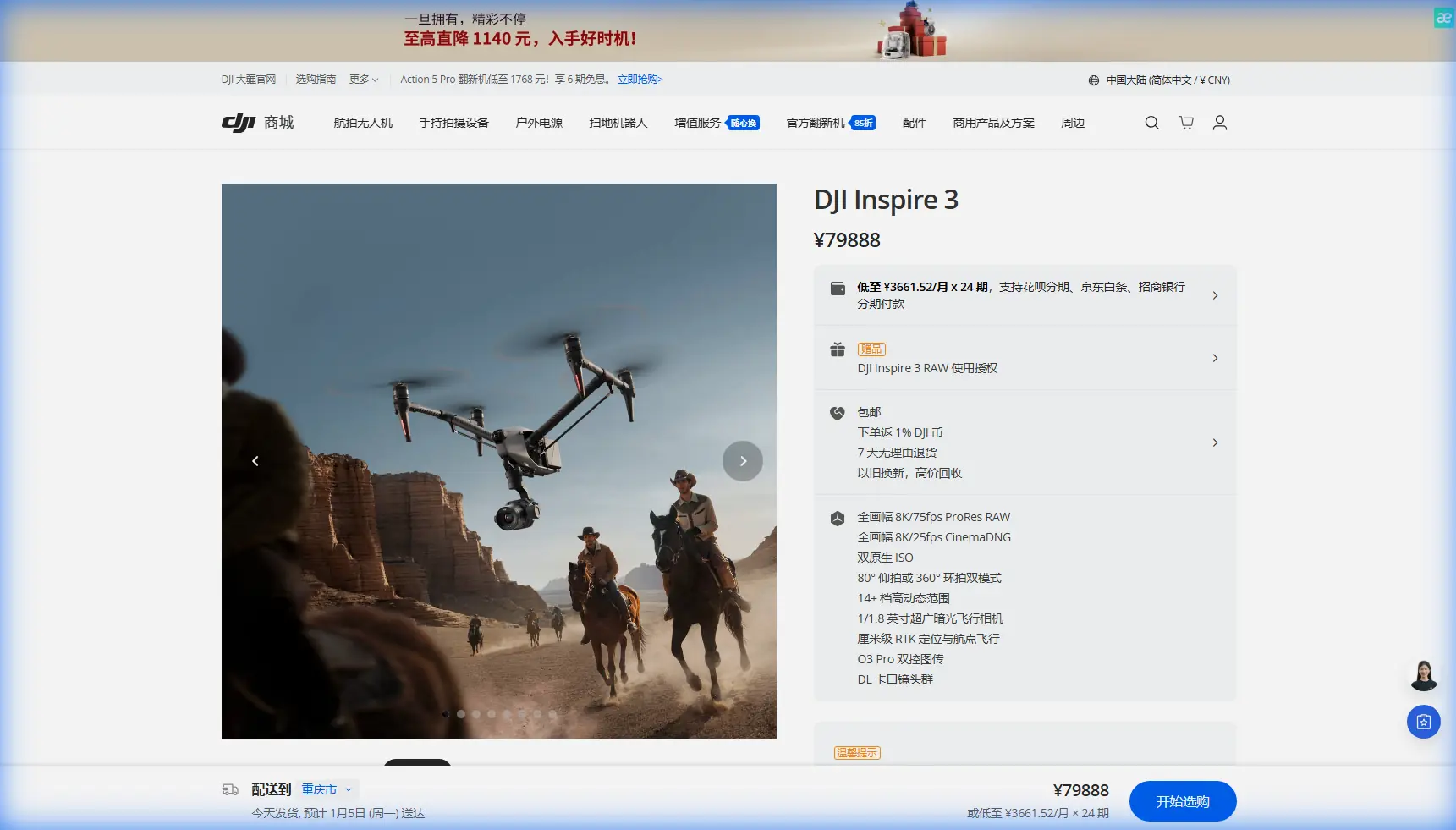
Inspire 3 in Complex Terrain: A Field Case Study on Power Line Inspection
META: A practical Inspire 3 case study for power line inspection in complex terrain, covering humidity control, roll response, transmission reliability, thermal workflow, and battery management in the field.
By Dr. Lisa Wang, Specialist
Mountain power line inspection has a habit of exposing weak assumptions. A route that looks straightforward on a map can become a chain of microclimates, wind shear pockets, reflective surfaces, and signal-blocking ridgelines once the aircraft is in the air. That is exactly where the Inspire 3 starts to separate itself—not because it erases field risk, but because it gives a skilled crew more control over variables that actually matter.
This case study centers on a civilian utility inspection scenario: transmission infrastructure running through complex terrain, with mixed elevations, changing humidity, and short windows for safe capture. The mission objective was twofold. First, document visible conductor, insulator, and tower conditions with clean, repeatable imagery suitable for engineering review. Second, capture thermal signature anomalies without compromising flight stability near terrain-induced turbulence.
What made this job difficult was not simply distance. It was the combination of terrain geometry and atmospheric behavior. In valley sections, the aircraft moved from cool shade into warmer exposed spans in minutes. On ridge shoulders, crosswinds accelerated abruptly. Near dawn, moisture sat in the air long enough to create lens and sensor-management concerns the crew could not ignore.
Why environmental control matters more than many crews admit
Power line operators usually think first about camera payloads, transmission reliability, and route planning. Those are obvious priorities. Less obvious is how moisture management can quietly degrade inspection quality before a pilot notices it.
A useful reference from aircraft environmental control design discusses why dehumidification matters: preventing fogging on transparent surfaces and limiting excess condensation that can damage electronics, electrical equipment, and insulation materials. That is not an abstract aerospace concern. In drone inspection work, the operational meaning is immediate. If humid air condenses around optical interfaces or inside compartments during repeated altitude and temperature transitions, image quality suffers first, then reliability.
The same source describes how tiny condensed water particles downstream of a turbine—on the order of 1 to 2 microns—must first be gathered into larger droplets before a water separator can remove them effectively. The exact hardware architecture differs from a drone, of course, but the principle translates well to Inspire 3 field practice: microscopic moisture problems do not announce themselves dramatically. They accumulate. They haze surfaces, dull contrast, and increase the odds of unstable performance in damp early-morning operations.
For this mission, that translated into a simple discipline. We did not rush the first launch. The aircraft, optics, and batteries were allowed to stabilize thermally after transport from an air-conditioned vehicle into a humid mountain environment. That single choice reduced the risk of subtle fogging and prevented a common mistake: launching quickly because the weather looks calm, then discovering that image consistency is compromised on the first critical span.
Humidity also affects thermal work in ways crews often underestimate. When the goal is to identify abnormal heat patterns on connectors or hardware, you need confidence that what you are seeing is a true thermal signature and not a side effect of atmospheric interference, mixed surface moisture, or degraded optical clarity. Stable environmental handling is not glamorous, but it supports better interpretation later.
Roll behavior is not academic when you are inspecting wires on a slope
The second reference point comes from aerodynamic design analysis, specifically a discussion of roll motion. It notes that roll behavior is often much faster than changes in aircraft speed, which is why engineers can sometimes treat speed as approximately constant and analyze the aircraft with reduced equations of motion. It also highlights the practical importance of checking the time required to reach a specified roll angle and understanding maximum roll rate under available control input.
That matters directly in complex-terrain utility inspection.
When an Inspire 3 tracks laterally across a mountainside alignment, the crew is constantly managing small but consequential roll corrections. The aircraft is not just flying forward. It is resisting side gusts, reframing structures, and preserving camera geometry while remaining clear of wires, vegetation, and uneven topography. In these moments, the aircraft’s response to control inputs—especially how quickly and predictably it rolls—has operational significance far beyond “handling feel.”
A sluggish roll response can stretch a correction too long and push the aircraft off the ideal imaging line. An overly abrupt correction can make framing inconsistent, reduce photogrammetry usefulness, and complicate thermal interpretation if capture timing is tied to a specific angle. The aerodynamic source frames this in engineering terms through roll-angle and roll-rate transfer functions; in the field, the takeaway is simpler: if your platform cannot deliver stable, predictable roll behavior under changing lateral loads, your inspection data becomes harder to trust.
With Inspire 3, we structured each segment around that reality. On exposed ridge sections, we avoided aggressive diagonal approaches and instead flew shorter, cleaner passes with deliberate reposition windows. The aircraft’s control authority helped, but the real gain came from respecting the roll environment. Good inspection teams do not fight terrain theatrically. They break it into manageable geometry.
The mission profile: visible, thermal, and mapping-grade context
This particular route required more than beauty shots of transmission towers. The client needed three layers of usable output:
- Close visual documentation for maintenance review
- Thermal observations on suspected problem points
- Spatial context for planning follow-up ground access
That is where workflow discipline matters as much as aircraft capability. Inspire 3 can support a high-end imaging workflow, but power line inspection in complex terrain benefits from pairing cinematic-grade capture discipline with survey habits. That means consistent overlap where terrain allows, careful angle control, and rigorous note-keeping on each anomaly.
Where broader corridor context was needed, we treated selected segments almost like compact photogrammetry blocks rather than simple inspection fly-bys. In steep terrain, that does not mean forcing a textbook mapping grid where it does not belong. It means identifying portions of the route where repeatable geometry is possible, then capturing enough structure to support engineering interpretation later. If the client intends to compare changes over time, well-placed GCP support on accessible ground can dramatically improve the usefulness of those models. Even when a full survey product is not the goal, geospatial consistency makes subsequent maintenance planning easier.
Thermal work followed a different rhythm. Rather than trying to collect every possible heat reading in one continuous run, we used a staged logic: broad identification first, then targeted revisits on features worth validating. In mountains, thermal signatures can shift visually with sun angle, background reflectivity, and local airflow. A two-pass mindset helps separate true anomalies from distracting artifacts.
O3 transmission and encrypted workflow in difficult terrain
Terrain is a signal editor. It blocks, reflects, and attenuates without warning. For utility inspections around ridgelines and cut slopes, transmission reliability is not a convenience feature; it is a safety and productivity variable.
This is where O3 transmission earns its place in the conversation. In broken terrain, the value is not just headline range. It is the ability to maintain a dependable control and video link while the aircraft moves through complex line-of-sight conditions. A stable downlink allows the pilot and sensor operator to make smaller, better decisions. That usually means fewer unnecessary repositionings and more confidence in whether a structure has truly been inspected well enough to move on.
The same mission also involved infrastructure imagery that the asset owner considered sensitive. That made AES-256 relevant not as a buzzword, but as part of a real data-handling protocol. Utility operators are increasingly aware that inspection media can reveal network layouts, access routes, and equipment conditions. Strong encryption is one more layer that helps align flight operations with responsible infrastructure documentation.
I would still caution against assuming transmission technology solves everything. In mountainous power line work, route design should remain conservative. True BVLOS ambitions must be treated within the operator’s regulatory framework, terrain study, and communications plan—not as a checkbox created by good hardware. Even where the rules permit advanced operations, terrain can create enough uncertainty that a segmented, observer-supported strategy is often the better choice.
A battery management tip that has saved missions for me
Here is the field lesson I wish more crews learned early: do not use hot-swap capability as an excuse to stay mentally “in the air” between flights.
Yes, Hot-swap batteries are extremely useful on the Inspire 3. On utility work, they shorten turnaround and preserve momentum on time-sensitive routes. But the best crews use every battery exchange as a forced decision point. We ask three questions before the next launch: Did the previous leg drift from the planned image geometry? Did humidity, wind, or thermal contrast change enough to alter capture priorities? Do we still need the same camera behavior on the next section?
That pause matters because terrain missions evolve quickly. Battery swaps are not just energy events. They are quality-control checkpoints.
One practical tip from experience: in humid mountain operations, keep replacement batteries protected from direct sun and from abrupt temperature transitions as much as possible. Batteries that sit baking on a tailgate while the aircraft comes down from a cool, shaded slope can create inconsistent performance expectations across sorties. I prefer rotating packs in a shaded, organized staging pattern and logging not just cycle order, but environmental exposure. It sounds obsessive until you are on sortie six, the wind is building, and you need the aircraft to feel exactly as expected during a close structural pass.
That discipline also improves crew coordination. The pilot knows the next leg’s energy margin. The camera operator knows whether there is time for a verification pass. The visual observer knows whether the route segment should be shortened because afternoon convective activity is starting to affect stability.
What the Inspire 3 did well on this route
The strongest aspect of the Inspire 3 in this case was not one isolated specification. It was the way several capabilities supported each other under pressure.
Its stable flight characteristics made precise inspection lines more repeatable on uneven terrain. Reliable transmission supported better real-time judgment. Efficient battery workflow kept the mission moving without forcing rushed decisions. High-quality imaging helped bridge the gap between immediate field assessment and detailed office review.
But the aircraft only delivered those advantages because the crew built the mission around environmental realities. We treated humidity as a data-quality factor, not a comfort issue. We respected roll response as a route-planning variable, not just a pilot skill variable. We used thermal capture intentionally instead of opportunistically. We broke the corridor into terrain-shaped tasks.
That is the real lesson from this job. The Inspire 3 is at its best when the operation is engineered around what the environment is trying to do to your aircraft, your optics, and your interpretation.
Final take for utility teams considering Inspire 3 for complex terrain
If your inspection program involves mountain corridors, steep access limitations, and mixed visual-thermal deliverables, the Inspire 3 is a serious platform. Not because it makes difficult terrain easy. It does not. What it offers is control: control over image consistency, control over aircraft behavior in demanding lateral corrections, control over mission tempo through efficient battery handling, and control over data flow through secure transmission practices.
The two technical ideas drawn from the reference material—moisture management and roll-response analysis—may seem far removed from day-to-day drone deployment. They are not. Moisture can quietly erode image quality and threaten sensitive systems. Roll dynamics shape whether the aircraft can hold the line you need when terrain starts pushing back. Both are deeply practical when inspecting power lines in the real world.
If you are building or refining an Inspire 3 inspection workflow and want to compare notes on corridor planning, thermal verification, or battery rotation strategy, you can message me here for a field-oriented discussion.
Ready for your own Inspire 3? Contact our team for expert consultation.