
Inspecting Mountain Vineyards With Inspire 3
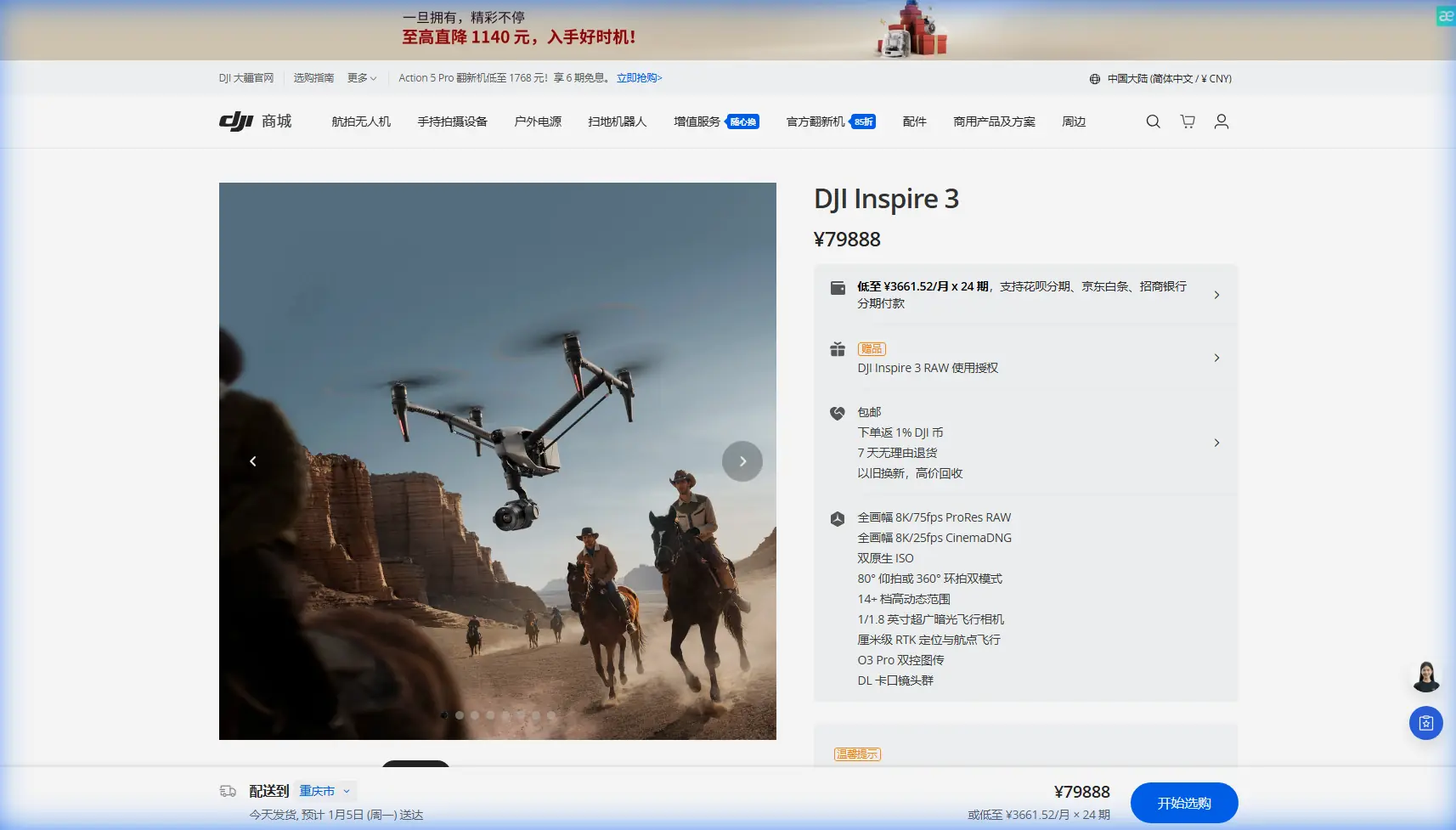
Inspecting Mountain Vineyards With Inspire 3: A Field Case Study on Stability, Control, and Data Confidence
META: A practical Inspire 3 vineyard inspection case study covering mountain operations, flight tuning logic, photogrammetry workflow, transmission reliability, battery strategy, and accessory-driven performance gains.
Mountain vineyards expose every weakness in an aerial workflow. Sloping terrain distorts visual judgment. Wind rolls over ridgelines in pulses rather than a steady stream. GNSS quality can vary by row and elevation. Even simple battery planning changes when every climb costs extra energy and every return leg has to clear a contour line safely.
That is why Inspire 3 is not just interesting in this setting. It is revealing.
I recently mapped and inspected a steep vineyard block with an Inspire 3-centered workflow, and what stood out was not a single headline feature. It was the way aircraft behavior, sensor confidence, and operator decisions stacked together under real terrain pressure. For mountain viticulture, that stack matters more than any spec sheet summary.
The operation had two goals. First, generate usable photogrammetry outputs for row-by-row terrain and canopy assessment. Second, identify heat-related stress patterns before they became obvious from the ground. The site included narrow access roads, uneven launch areas, and long strips of vines broken by elevation changes. In that environment, smooth control and dependable attitude estimation are not luxuries. They directly affect overlap quality, thermal consistency, and pilot workload.
Why mountain vineyards punish weak flight discipline
A vineyard on flat land lets you get away with more. A mountain vineyard does not.
On steep parcels, the aircraft is constantly dealing with changing relative height above crop canopy. That shifts perspective and can disrupt image uniformity if speed or attitude fluctuates. If your platform hunts in pitch and roll while crossing wind seams, the data penalty arrives quickly: inconsistent overlap, blurred frames, messy edge reconstruction, and thermal sets that become harder to compare.
This is where a more technical understanding of multirotor control becomes useful, even for a cinema-class aircraft like Inspire 3.
One of the reference materials behind this discussion, a BLHeli control manual, explains a principle that remains highly relevant in rotorcraft performance: in closed loop mode, throttle can correspond directly to a motor RPM target, and in its high range, 0% to 100% throttle maps linearly from 0 to 200,000 electrical RPM. That sounds like a bench-level ESC detail, but the operational meaning is simple. Stable RPM targeting contributes to more predictable thrust delivery when the aircraft needs to resist rapid disturbance. On a mountain slope, where gusts hit unevenly as the drone crosses terraces and wind shadows, predictable motor response helps preserve camera geometry and flight path accuracy.
The same source also notes that closed loop P gain determines how strongly the system reacts to speed error, while I gain governs response to error accumulated over time. Translate that into field language and you get this: if a propulsion system responds too lazily, the aircraft drifts off its intended motion envelope; if it overreacts, it can become twitchy. For vineyard inspection, especially when collecting photogrammetry, the sweet spot is measured correction. You want the drone to hold its line, not argue with the air.
Inspire 3 users are rarely tuning raw ESC parameters directly in the way experimental builders might, but understanding this control logic still matters. It explains why some aircraft feel composed in turbulent terrain and others make pilots fight for every clean pass.
The inspection mission profile
Our mission was split into three layers.
The first layer was a visual structure pass over the full vineyard block to understand row continuity, irrigation layout, erosion channels, and access paths. The second was a lower, slower data capture sequence for photogrammetry, using planned overlap and terrain-aware routing. The third was a thermal signature review focused on irrigation anomalies and canopy stress zones.
Thermal work in vineyards is often misunderstood. People expect it to diagnose everything. It does not. What it does very well is reveal pattern deviation. A row segment running hotter than adjacent rows under similar solar exposure deserves attention. So does a repeated cool patch indicating standing moisture or irrigation leakage. In mountain vineyards, those patterns are often shaped by slope orientation and drainage behavior, which is why thermal data without topographic context can mislead. The Inspire 3 workflow became far more valuable when thermal interpretation was paired with photogrammetry and GCP-backed spatial alignment.
Ground control points were not optional on this site. Elevation change and irregular terrain edges can exaggerate small registration errors. With GCPs distributed across upper and lower sections of the parcel, we were able to anchor the model and reduce the kind of drift that makes a vineyard manager question whether a hotspot is actually tied to a specific row. In practical terms, that meant field crews could walk to the right place the first time.
Transmission reliability is not a brochure detail on a mountainside
The next issue was command and video reliability.
Mountain vineyards often have partial occlusion from topography, vegetation breaks, service structures, and even parked machinery near terraces. This is where O3 transmission earns respect. A robust link is not only about preserving image feed quality; it reduces cognitive load. When a pilot trusts the link, more mental bandwidth can go toward terrain separation, line planning, and payload interpretation.
There is also a security angle that commercial operators should not dismiss. If your inspection data includes sensitive operational layouts, proprietary cultivation methods, or traceability records linked to plot performance, encrypted transmission matters. AES-256 is operationally significant here because it helps protect data moving between aircraft and control point. For a vineyard group managing multiple estates or contract growers, that level of communication security is not abstract IT language. It is part of responsible asset management.
I would not frame this as a reason to fly beyond your authorization or outside local rules. But for teams planning compliant extended-range observation or future BVLOS pathways where regulations permit, stable encrypted transmission becomes a foundational capability rather than a nice extra.
What the old APM parameter logic still teaches us about modern vineyard operations
Another reference document, an ArduCopter parameter sheet, looks older and more open-system in nature, yet it contains several lessons that still map cleanly to Inspire 3 field practice.
One example is the GPS minimum satellite threshold. The sheet specifies a default of 6 satellites before GPS data is allowed to influence the AHRS solution. That number matters because attitude and positional trust should never be assumed blindly in broken terrain. In mountain vineyards, retaining skepticism about navigation quality is healthy. Ridges, trees, and terrain masking can create moments where satellite geometry degrades even when the drone appears to be flying normally.
The same reference notes AHRS trim values for roll and pitch compensation, including examples like AHRS_TRIM_X at 0.01 degrees and AHRS_TRIM_Y at -0.005 degrees. These are tiny numbers, but their significance is large. Small mounting or alignment discrepancies can become visible in data products when repeated over hundreds of frames. In a photogrammetry mission, a slight persistent bias is not just a flight feel issue; it can propagate into reconstruction quality. The lesson for Inspire 3 operators is clear: check physical alignment, gimbal behavior, and calibration discipline before assuming software can rescue everything later.
Another parameter from that document is ANGLE_MAX at 4500, used to limit maximum tilt angle, alongside ANGLE_RATE_MAX at 18000 to limit tilt rate. Even if you never touch an APM interface, the principle is universal. In data capture over vineyards, excessive tilt or abrupt angular transitions damage consistency. For cinematic flying, aggressive attitude might be acceptable. For mapping and crop diagnostics, restraint wins. You are not trying to impress the sky. You are trying to return data that can survive scrutiny.
Finally, ARMING_CHECK is listed as a pre-arm self-check setting. That may sound basic, but mountain sites are where routine checks save the day. Compass sanity, IMU health, battery state, payload security, and return logic should all be treated as mission data quality controls, not just safety items. A flawed takeoff contaminates everything that follows.
The accessory that changed the mission
The biggest practical improvement on this job did not come from the airframe itself. It came from a third-party RTK/GCP field workflow kit that simplified control-point logging and target placement on steep ground.
That accessory package was not glamorous. It was efficient.
On terraces where foot access was awkward, being able to deploy visible targets quickly and confirm coordinates without repeated setup saved time and reduced crew fatigue. More importantly, it tightened confidence in the photogrammetry model. In a vineyard, model trust is the bridge between aerial observation and field action. If the map says a stressed zone sits between rows 17 and 19 but the coordinates drift downslope, the agronomy team wastes time and starts doubting the system. Once that trust erodes, even good data loses influence.
This is why I often tell operators that the best Inspire 3 accessory is not always optical. Sometimes it is the tool that improves spatial truth.
Battery strategy on steep terrain
Hot-swap batteries proved genuinely useful on this site, not because they sound advanced, but because they protect workflow continuity.
In a mountain vineyard, resetting too often introduces friction: walking back to a safe launch point, reloading mission logic, re-establishing timing relative to sun angle, and rechecking wind behavior that may have shifted. Hot-swap capability helps maintain tempo between sorties. That is especially valuable when thermal signature collection must stay within a narrow environmental window to preserve comparison quality across blocks.
It also reduces the temptation to stretch a battery deeper than you should. That temptation appears quickly when the far side of a slope still needs one more pass. A professional battery workflow should remove the psychology of “just finish this row.” Hot-swap supports that discipline.
What the imagery actually revealed
The final outputs showed three high-value findings.
First, a set of warmer canopy streaks aligned with an irrigation inconsistency along an upper terrace. Ground checks later confirmed restricted flow in part of the line. Second, the 3D surface model revealed minor erosion development near a service track crossing that had not been obvious from eye level. Third, several rows on a shaded slope segment displayed growth variation that correlated more with terrain drainage than with vine age, which helped the farm team prioritize follow-up sampling.
None of these discoveries came from one feature alone. They came from a chain: stable flight behavior, clean overlap, trustworthy orientation, disciplined control-point use, and a secure, reliable link throughout the operation.
That is the real story with Inspire 3 in mountain vineyard inspection. The aircraft is capable, yes. But capability only matters when translated into repeatable field decisions.
A human-centered takeaway for Inspire 3 operators
If you are planning to use Inspire 3 for vineyard work in mountainous terrain, do not start with camera excitement. Start with control integrity.
Think about how rotor response affects track holding in gust gradients. Think about how AHRS confidence can change when terrain interferes with satellite geometry. Think about whether your angular behavior supports measurement rather than drama. And think about whether your accessory choices strengthen the final dataset, not just the aircraft.
If you want to compare notes on field setup, payload choices, or how to adapt this workflow to your own estate conditions, you can reach out through this direct project chat: https://wa.me/85255379740
The operators who get the best results from Inspire 3 in agriculture are not the ones who chase features in isolation. They are the ones who understand how flight control, transmission, geometry, and ground truth reinforce each other.
On a mountain vineyard, that difference shows up in the map. It also shows up in the decisions made after landing.
Ready for your own Inspire 3? Contact our team for expert consultation.