
Inspire 3 in Remote Vineyards: A Field Report on What
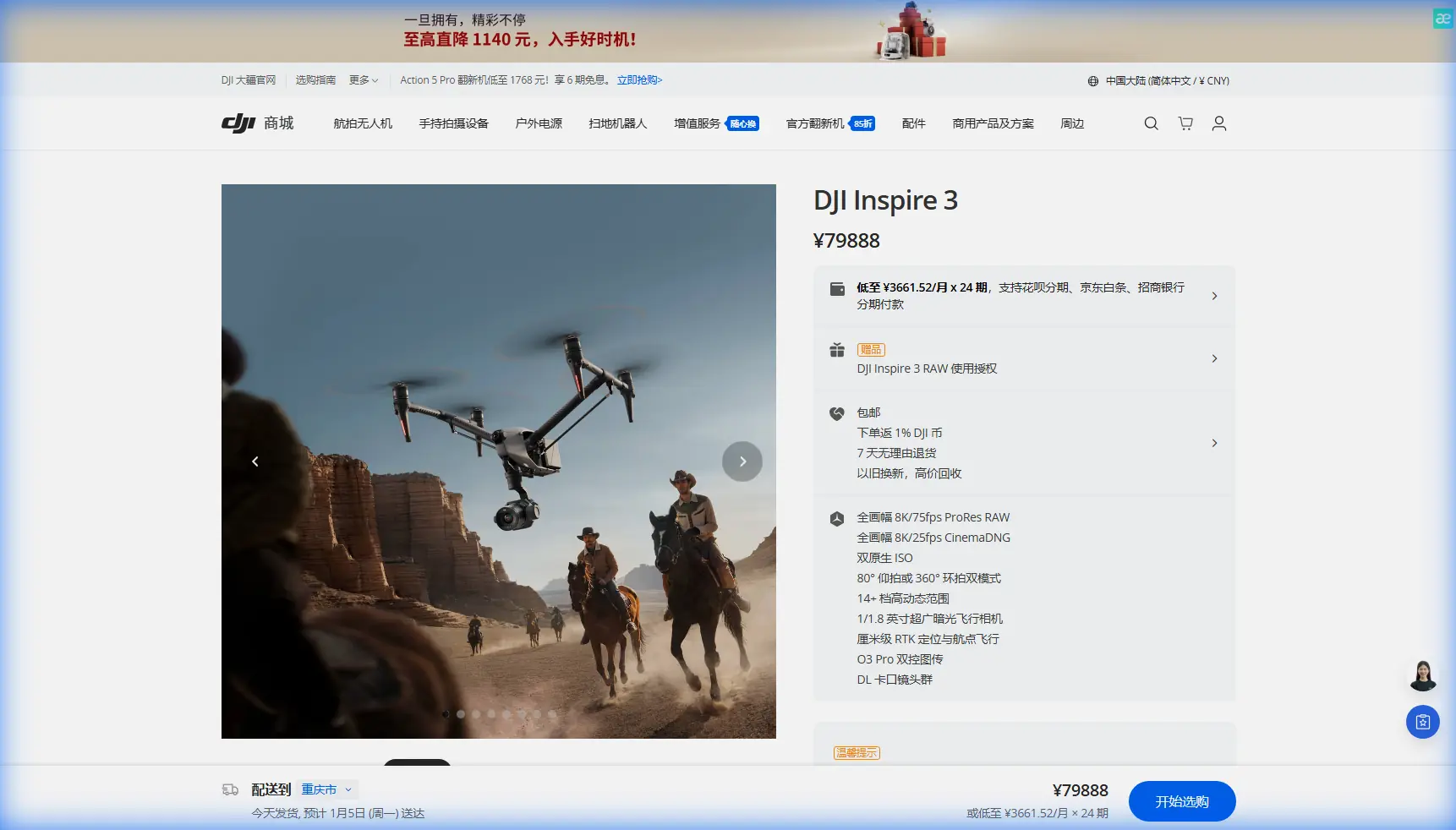
Inspire 3 in Remote Vineyards: A Field Report on What Actually Matters
META: A field-based expert analysis of Inspire 3 for remote vineyard inspection, with practical insight on flight behavior, control discipline, transmission reliability, and why restart logic and channel mapping details matter in the real world.
Remote vineyard work exposes every weak point in an aircraft system.
It is not the glamorous side of drone operations. You are often dealing with long rows, uneven terrain, wind moving across slopes, patchy signal conditions, and a workday that depends on repeating precise flight patterns without surprises. In that setting, the Inspire 3 stands out not because of headline specs alone, but because of how well a professional platform supports disciplined, low-drama operations when the environment is less forgiving.
I have spent enough time around commercial UAV workflows to know that vineyard inspection is rarely about a single payload or a single feature. It is about the chain. Transmission stability. Predictable control response. Restart behavior after a pause. Battery management. Data confidence after landing. If one link behaves unpredictably, the whole mission becomes slower and less reliable.
That is where the deeper technical details become useful, even when they seem far removed from a polished aircraft like the Inspire 3.
Why remote vineyards are a serious test for any aircraft
A vineyard inspection mission usually asks one aircraft to do several jobs in one day. First, broad visual reconnaissance across blocks. Then closer looks at stress patterns, irrigation anomalies, canopy inconsistency, or access-road issues. In some cases, thermal signature review helps identify uneven plant vigor or water distribution patterns before the human eye catches it. If the operator is also building photogrammetry outputs, the aircraft must hold repeatable lines and overlap while maintaining link quality over terrain that can easily interrupt line of sight.
That is where the Inspire 3 has a clear edge over lighter, less integrated platforms. Its professional flight envelope, robust O3 transmission architecture, and operational features such as hot-swap batteries make it better suited to long agricultural days than systems that feel optimized for short, isolated flights. In remote blocks, that difference is not abstract. It shows up as fewer interruptions, cleaner datasets, and less time standing in the dirt waiting for the aircraft to become ready again.
Competitor aircraft can deliver acceptable imagery. The Inspire 3 is stronger at preserving workflow continuity.
The hidden value of predictable restart behavior
One of the most overlooked parts of any professional flight operation is what happens after a stop.
That may sound like a niche concern until you are halfway through a remote inspection route, pause a sequence, and need the aircraft to resume safely and predictably. The reference material here includes a telling technical detail from motor-control logic: in a stepped startup method, there is a 3 second delay from the moment zero throttle initiates a motor stop until a new start can begin. It also notes that spool-up is handled in three phases, specifically to keep the aircraft from moving too abruptly before adequate stabilizing authority is available. With auto bailout armed, spool-up can reach full power in about 2 seconds.
Those are helicopter ESC details on paper, not Inspire 3 marketing points. But operationally, the lesson transfers directly: restart logic matters because abrupt re-engagement is the enemy of stable, professional flying. In a vineyard, you may stop or hover low near trellis lines, poles, windbreaks, or uneven embankments. A platform designed around smooth, deliberate power recovery is inherently better for this kind of close, methodical work than one that feels twitchy or inconsistent after a flight state change.
The Inspire 3 excels here in practical terms. Its overall control behavior feels engineered for continuity rather than improvisation. That gives the pilot more confidence during interrupted workflows such as repositioning between vine rows, resetting a pass for photogrammetry overlap, or making a second look at a suspected irrigation issue. When competitors feel merely “responsive,” Inspire 3 feels settled. For agricultural inspection, settled wins.
Soft spool-up is not a trivial detail in field operations
The same source also describes a soft spool-up that can take roughly 3 to 10 seconds to reach full power, divided into phases that gradually relax power limits. Why does that matter to someone flying an Inspire 3 over vines?
Because professional airframes are not judged only by top speed or climb rate. They are judged by how safely and cleanly they transition between states. Any aircraft used around valuable crops and narrow service corridors needs to avoid sudden, sloppy power application. A soft and staged power build is a sign of engineering that prioritizes control authority and aircraft composure.
For a vineyard team, that translates to fewer unstable moments near delicate infrastructure. It also reduces pilot workload. You spend less mental energy anticipating how the aircraft will “jump” when power comes back in, and more attention on canopy patterns, row gaps, or thermal anomalies.
This is one of the reasons Inspire 3 belongs in serious commercial conversations. It is not just capable of capturing premium imagery. It supports the kind of measured aircraft behavior that helps operators do repeatable work all day.
Transmission reliability matters more than brochure range
Remote vineyards are notorious for frustrating signal conditions. Tree lines, rolling topography, storage structures, and long row geometry can all interfere with a clean operating picture. In this environment, O3 transmission is not a luxury item. It is part of the safety and productivity equation.
A stable link means better framing decisions, cleaner inspection notes, and fewer aborted runs. It also helps when coordinating with spotters or agronomy staff who need to verify what the pilot is seeing in real time. Add AES-256 protection into that conversation, and you have a stronger answer for growers and estate managers who care about operational privacy, proprietary crop data, and site confidentiality.
This is another area where Inspire 3 tends to separate itself from less mature alternatives. Some competing systems can still gather useful data, but they often feel less resilient when missions stretch into real working conditions. Once you are several blocks away from your takeoff point and trying to preserve consistency across multiple passes, transmission confidence stops being a comfort feature. It becomes a mission requirement.
Channel discipline and why advanced operators still care about RC mapping
The second reference set points to something many pilots skip over until it causes a problem: radio channel configuration and scheduler visibility. We see examples such as RC6_MAX 2022 ms, RC6_MIN 1014 ms, RC6_REV for channel reversal, and serial settings including SERIAL3_BAUD 57, corresponding to 57600. There are also scheduler diagnostics that can display warnings when tasks overrun their expected execution time or when “slips” occur because CPU load delays a scheduled task.
Again, these are not Inspire 3 brochure items. They are infrastructure clues. They remind us that reliable field aviation depends on correctly mapped inputs, healthy telemetry pathways, and an onboard ecosystem that does not quietly fall behind under processing load.
For remote vineyard work, this has direct operational significance.
If auxiliary controls are not configured cleanly, payload behavior and aircraft responses can become inconsistent at exactly the wrong time. If scheduler overruns or slips emerge in a flight stack, time-sensitive tasks may lag, affecting confidence during complex mission profiles. If serial communication settings are mismatched, accessories or data links may not behave as expected. On lower-tier systems or heavily customized builds, these issues are common enough to be part of normal preflight anxiety.
The Inspire 3’s advantage is that it arrives as a tightly integrated professional platform. That integration reduces the number of loose ends an operator must chase before heading into a remote agricultural site. It is not that advanced users stop caring about PWM ranges or channel logic. Quite the opposite. They appreciate a platform that makes such failures less likely to surface in the field.
Thermal signature work: where a stable platform pays off twice
Thermal signature analysis in vineyards is only useful when the image data is dependable and context-rich. You are looking for meaningful variation, not random noise introduced by weak positioning, inconsistent flight lines, or unstable hover behavior.
An Inspire 3 workflow built around repeatable flight paths and disciplined aircraft control gives agronomy teams a stronger baseline for comparing one section of a block against another. If you are checking for irrigation irregularities, heat retention differences, or signs of stress spreading along rows, stability in flight and link integrity both matter. The better the aircraft holds its behavior, the more trustworthy the patterns become.
This also affects follow-up missions. Returning to the same area after several days or after a watering adjustment is far easier when the aircraft platform supports consistent routing and camera handling. In practical field terms, this is where a premium airframe often outperforms “good enough” competitors by a wide margin.
Photogrammetry over vines is less forgiving than many pilots expect
Vineyards may look orderly from the ground, but from a mapping perspective they create repetitive visual patterns, changes in elevation, and sections with limited unique reference texture. That can challenge reconstruction quality if your flight geometry and overlap are not well managed.
The Inspire 3 is a strong fit here because it supports a more deliberate acquisition workflow. Pair it with solid GCP discipline where required, and the result is a more dependable photogrammetry output for row analysis, drainage review, access planning, and estate documentation. In hilly vineyards, that consistency becomes even more valuable. Operators need a platform that holds course accurately, transitions smoothly, and minimizes interruptions caused by batteries, transmission instability, or awkward re-engagement after a pause.
Hot-swap batteries deserve special mention. On remote inspection days, they are not just convenient. They preserve rhythm. The aircraft stays in the operational groove, and the team does not lose time rebuilding momentum between sorties. Across a full day, that translates into more completed blocks and fewer rushed decisions late in the schedule.
A note on BVLOS thinking, even when operations stay conservative
Many vineyard operators are increasingly interested in BVLOS-style efficiencies, even if their current missions remain within stricter visual operating frameworks. What they really want is not legal theory. They want route confidence, link confidence, and enough platform maturity to scale operations responsibly as regulations and approvals allow.
The Inspire 3 gives them a better starting point than improvised systems because it combines high-end flight behavior, strong transmission, secure data handling, and professional workflow design. Even when every mission remains fully supervised and conservative, those same qualities help teams work more like an enterprise operation and less like a hobby crew adapting on the fly.
Where Inspire 3 genuinely excels against competitors
The usual comparison trap is to reduce everything to camera quality. That misses the point.
For remote vineyard inspection, Inspire 3 excels because it brings together the parts that determine whether a mission feels controlled from takeoff to data handoff:
- stable and composed flight behavior during low-speed, close-structure work
- professional transmission performance through challenging terrain
- secure handling expectations via AES-256
- hot-swap battery workflow for sustained field productivity
- a more integrated architecture that avoids the channel-mapping and task-scheduling fragility seen in more modular or budget-oriented setups
That last point deserves emphasis. The reference data on RC channel limits, reversal, serial baud settings, and scheduler overruns highlights the kinds of technical housekeeping that can undermine a day’s work. Advanced operators understand this immediately. The aircraft that asks fewer of those questions in the field is usually the aircraft that delivers better commercial results.
If you are planning an Inspire 3 deployment for vineyard inspection and want to talk through mission design, payload strategy, or communications setup, this is a useful place to start: message an Inspire 3 field specialist.
The real takeaway from the field
Remote vineyard inspection rewards aircraft that behave predictably, recover smoothly, and stay connected when the landscape starts working against you.
The reference material may seem technical and unrelated at first glance: a 3 second restart delay in one startup mode, a three-phase spool-up profile, a faster 2 second full-power recovery under bailout logic, RC channel values around 1014 ms to 2022 ms, and scheduler warnings tied to task overruns or CPU slips. But together they underline a core truth of professional UAV work. Precision is not just about the camera. It is about the invisible behaviors underneath the mission.
That is why Inspire 3 makes sense for serious vineyard operations. It gives professionals an aircraft that feels built for repeatability, not improvisation. In difficult agricultural environments, that difference shows up in safety margin, data quality, and the simple fact that the day runs more smoothly.
Ready for your own Inspire 3? Contact our team for expert consultation.