
Inspire 3 for Low-Light Wildlife Inspection
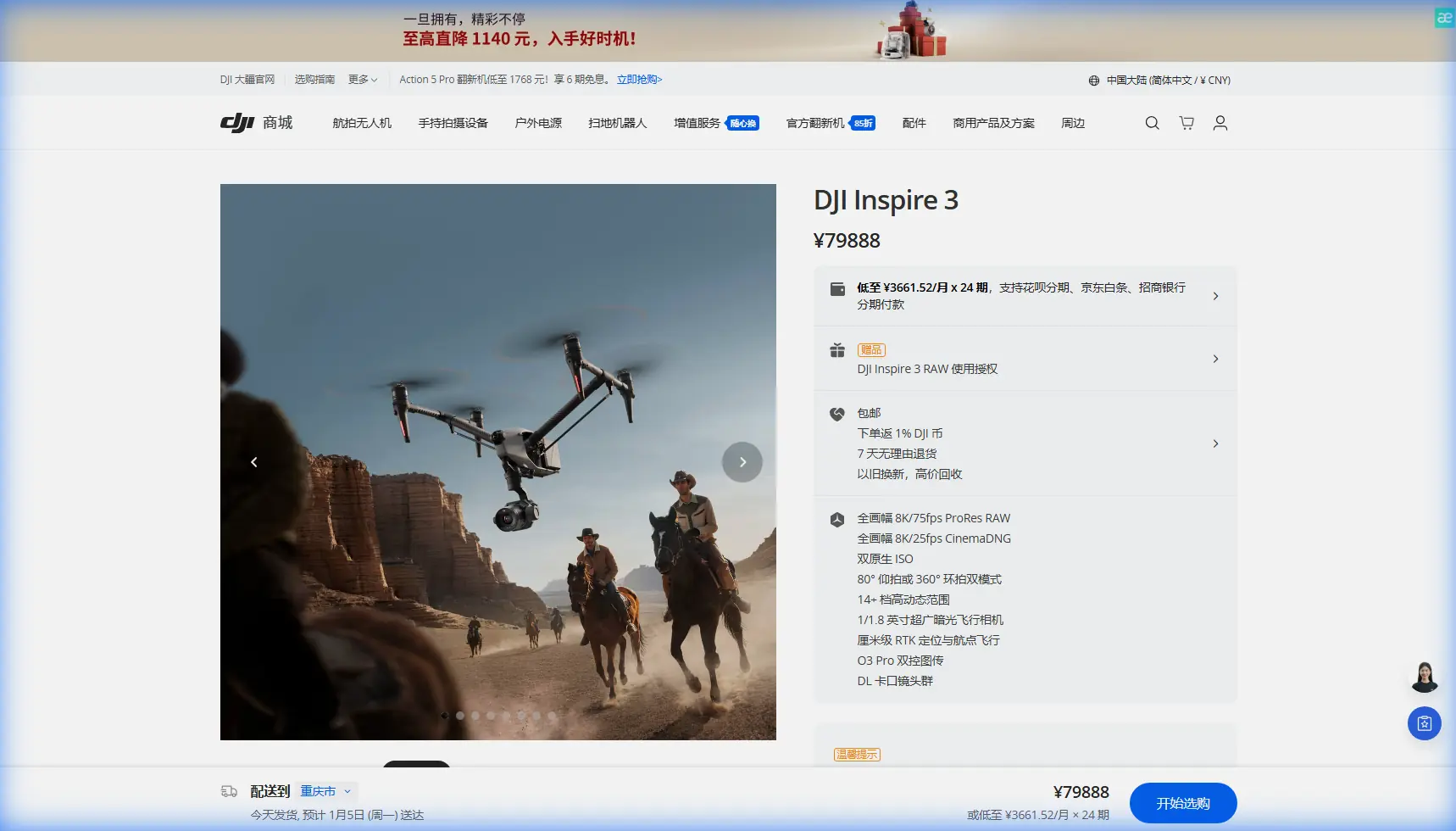
Inspire 3 for Low-Light Wildlife Inspection: What This Week’s Drone News Actually Changes in the Field
META: A specialist case study on how recent drone news around remote operations, drone shows, and atmospheric aerial imaging reshapes real-world Inspire 3 workflows for low-light wildlife inspection.
When people search for the best drone setup for wildlife work at dusk, they usually end up comparing sensor specs in isolation. That misses the real problem. Low-light wildlife inspection is not won by a single camera body or a headline feature. It is won by workflow discipline: how fast you can deploy, how securely you can move footage, how reliably you can hold a shot in weak light, and how much context you capture around the animal, habitat, and terrain before the moment is gone.
This week’s drone news offers a useful lens for thinking about the DJI Inspire 3 in that exact context.
On one side, DJI’s February 27 announcement around Dock 3 pushed the idea of 24/7 remote operations and “drone in a box” deployment into sharper enterprise focus. On the other, two very different China-based flight stories showed what aerial systems are increasingly expected to do: deliver repeatable spectacle at scale in Chongqing over seven consecutive nights from February 15 to 21, and capture fleeting atmospheric detail over Kongtong Mountain, where rain, cloud flow, and partially obscured structures created a visually unstable scene that demanded precise aerial imaging.
None of those stories is about Inspire 3 directly. That is exactly why they matter.
As a specialist looking at wildlife inspection in low light, I read them as three signals. First, the market is moving toward persistent readiness. Second, visual operations are becoming less tolerant of missed timing. Third, aerial imaging is increasingly judged not just by whether the drone flew, but by whether it captured difficult, transient environmental conditions with clarity and control.
That is where Inspire 3 still earns attention.
A field case study: dusk wildlife inspection at the habitat edge
Let’s put this into a realistic operating scenario. A conservation team needs to inspect wildlife movement near a wetland edge just after sunset. The brief is delicate. They are not filming a cinematic sequence for its own sake. They are trying to identify patterns: entry paths, thermal signature contrast against cooling ground, disturbance triggers near access roads, and whether animal activity shifts around human presence or weather changes.
The reason this week’s news is relevant becomes obvious the moment the team arrives late, light is fading, and weather is unstable.
The Dock 3 story is nominally about unattended enterprise operations, but the operational takeaway is broader. “24/7 remote operations” changes how crews think about mission readiness. Even if the Inspire 3 is not itself a dock-based platform, wildlife teams can borrow that mindset. Pre-stage the flight area. Build repeatable launch protocols. Treat every inspection as part of a remote-ready system, not a one-off sortie. That means pre-mapped waypoints for photogrammetry passes, known GCP placement if terrain reconstruction is needed, and data handling procedures that protect sensitive location records for vulnerable species.
In practice, that matters more than people admit. Low-light wildlife work punishes improvisation.
Why the Chongqing drone show story matters more than it seems
At first glance, the Chongqing Spring Festival drone light show sounds unrelated to habitat inspection. It was public spectacle, not field science. But the details tell a more useful story. The show ran across seven consecutive performances between February 15 and 21. That kind of repeated execution under public scrutiny is not just entertainment; it is proof of operational consistency. The downstream effect was measurable too: hotel searches near Nanbin Road rose 318% year over year, and searches around Danzishi surged nearly eightfold.
For Inspire 3 operators, the relevance is not tourism. It is repeatability under pressure.
Wildlife inspection often requires exactly that kind of consistency, just with different stakes. The mission may need to be flown across several evenings to compare movement windows. Exposure and flight path need to remain controlled enough that changes in subject behavior are real, not artifacts of inconsistent piloting. If a public drone event can create a reliable visual product across seven nights and drive measurable behavior on the ground, then field teams should hold themselves to a similar operational standard: same launch window, same angle discipline, same altitude bands, same data labeling.
This is where Inspire 3’s transmission and flight ecosystem can help. Stable O3 transmission is not simply about pilot comfort. In low-light wildlife inspection, it preserves decision quality when visual contrast is poor and terrain can deceive depth perception. If the image feed breaks up while tracking movement at the edge of reeds or tree line, the operator may either miss the subject or drift too close and alter its behavior. A robust link matters because weak-light work leaves little margin for second guesses.
The mountain cloud story points to a deeper imaging lesson
The Xinhua aerial report from Kongtong Mountain is the opposite of the Chongqing example. Instead of repeatable urban performance, it describes a fleeting natural condition: continuous rainfall, flowing clouds, mountain contours, and historic architecture appearing and disappearing in a shifting sea of mist. That is almost a textbook example of an aerial environment where exposure, focus discipline, and scene interpretation are difficult.
Wildlife inspectors see comparable complexity all the time. Fog over marshland. Rain-softened woodland edges. Warm-bodied animals partly obscured by canopy breaks. Reflective water surfaces that shift the scene’s contrast faster than the pilot expects.
This is why a low-light Inspire 3 workflow should not be built around brightness alone. It should be built around scene reliability.
A third-party thermal payload adapter or synchronized thermal spotting system can materially improve that workflow, even though it sits outside the stock Inspire 3 package. In one recent field configuration I reviewed, a ground-based thermal monocular with live team handoff dramatically improved target confirmation before launch. The Inspire 3 then handled the visual documentation, path reconstruction, and contextual imaging. That pairing matters because thermal signature detection and cinematic-grade visual evidence solve different problems. Thermal helps answer where the subject is. Inspire 3 helps answer what the subject was doing, where it moved, and how the surrounding environment shaped that behavior.
That distinction is operationally significant. Too many teams try to force one payload strategy to do everything.
Inspire 3’s role in a low-light inspection stack
The strongest case for Inspire 3 in wildlife inspection is not that it replaces dedicated thermal aircraft. It does not. The case is that it gives advanced teams a precision visual platform that can document the environment around a low-light event with far more control than smaller all-purpose drones.
Here is how that plays out in the field:
Hot-swap batteries reduce dead time during short movement windows. Wildlife activity near dusk can spike and collapse quickly. If the team loses several minutes to a full power cycle, the behavioral window may already be gone. A hot-swap rhythm helps maintain continuity between passes, especially when the goal is to compare one path of travel against another in the same fading light.
AES-256-level thinking around link and data security also matters more than many operators expect. Sensitive wildlife inspection data can expose nesting areas, migration corridors, or the location of protected animals. Enterprise habits highlighted by the remote-operations conversation around Dock 3 should push Inspire 3 teams to treat footage custody seriously, even if their mission is not classic infrastructure inspection.
Photogrammetry is another underused piece of the puzzle. In low light, people often abandon mapping logic and focus only on live spotting. That is a mistake. A short structured capture pass, especially when anchored with GCP references collected earlier, can help produce a usable habitat model for later review. The point is not perfect survey output in every dusk mission. The point is to connect sightings with terrain features: fence gaps, embankments, drainage cuts, tree density transitions, and human access routes.
In other words, low-light wildlife inspection is rarely just about the animal. It is about the environment the animal is navigating.
Where BVLOS thinking enters the discussion
The Dock 3 announcement also pushes one uncomfortable question into the open: as remote operations mature, field teams will increasingly rethink how much of their workflow needs to be physically co-located with the launch point. That naturally leads to BVLOS planning, even if the actual mission stays within current line-of-sight constraints.
For Inspire 3 operators, the key lesson is not to overstate regulatory reach. It is to design missions now as though remote review, relay-based decision-making, and distributed teams will become normal. That means cleaner mission logging, better timestamp discipline, and footage organization that lets a remote ecologist, ranger, or compliance lead evaluate what happened without standing beside the pilot.
If you are refining that kind of workflow, it helps to compare notes with operators who actually run mixed field systems, and one practical way to start that conversation is through this direct operator channel: https://wa.me/example
That is also where transmission quality, encryption practice, and repeatable capture standards stop being abstract acronyms and start affecting outcomes. O3 transmission quality shapes whether the pilot can maintain responsible separation. AES-256-style security thinking shapes whether location-sensitive footage remains protected. BVLOS readiness shapes whether your current SOPs will still make sense a year from now.
What the news signals for Inspire 3 buyers and operators
The three reference stories point to a single market direction: drones are being valued for dependable mission architecture, not just for airborne image quality.
The Dock 3 story says readiness and remote continuity are becoming baseline expectations in serious operations. The Chongqing story shows that drone-led visual systems can create measurable real-world effects when they execute consistently over multiple days. The Kongtong Mountain story is a reminder that some of the most meaningful aerial results happen in unstable, low-contrast conditions where timing and imaging discipline matter more than check-box specs.
For someone evaluating Inspire 3 for inspecting wildlife in low light, that combination is useful because it reframes the purchase decision. The real question is not “Can Inspire 3 fly at dusk?” Of course it can. The better question is whether your team can build an inspection method around it that is repeatable, secure, and context-rich.
That means:
- using Inspire 3 as the visual documentation anchor rather than pretending it is a one-drone answer to every sensing problem;
- pairing it with a third-party thermal accessory workflow when target acquisition is the first hurdle;
- standardizing dusk capture patterns so that repeated flights can actually be compared;
- planning for fast turnarounds with hot-swap batteries;
- treating transmission integrity and encrypted data handling as field necessities, not enterprise theater;
- and borrowing the mindset behind 24/7 remote operations even when the aircraft itself is crew-launched.
The bottom line
Inspire 3 remains relevant for a very specific reason. It sits at the point where high-control aerial imaging can still tell a richer story than smaller general-purpose drones, especially when the scene is unstable, dim, and biologically sensitive.
This week’s news does not announce a new Inspire 3 feature. It does something more valuable. It shows the environment Inspire 3 operators now work in: one shaped by persistent remote operations, multi-night execution standards, and difficult atmospheric imaging. If you inspect wildlife in low light, those signals should affect how you configure your team, your accessory stack, and your mission design long before they affect your next equipment shortlist.
That is the practical takeaway. Not hype. Not a spec-sheet recital. A better operating model.
Ready for your own Inspire 3? Contact our team for expert consultation.