
Inspire 3 in Low Light: A Field Mapping Case Study
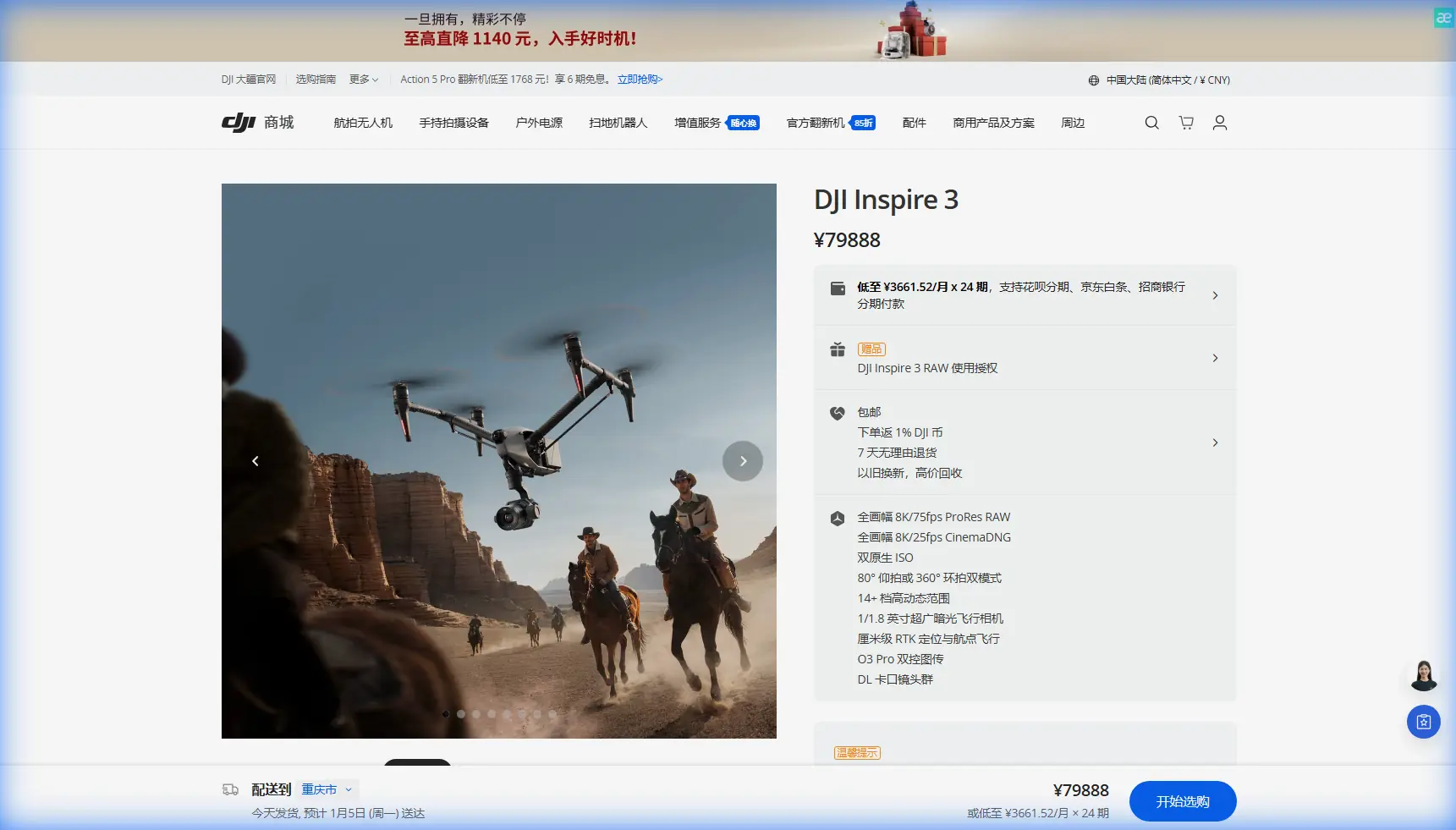
Inspire 3 in Low Light: A Field Mapping Case Study on Signal Discipline, Documentation, and Repeatable Accuracy
META: A practical Inspire 3 case study for low-light mapping, covering EMI mitigation, antenna adjustment, data integrity, hot-swap workflow, O3 transmission, AES-256 security, and why disciplined design logic matters in photogrammetry.
I have spent enough time around survey crews to know that “low light” means very different things depending on the job. For a vineyard manager checking drainage before sunrise, it means getting airborne before wind builds. For a utility corridor team, it may mean working the narrow window between dusk and a site shutdown. For agricultural mapping crews, it often means capturing stable, repeatable data before glare and thermal loading start changing the scene.
That is the frame for this Inspire 3 story.
Not as a cinema machine borrowed for industrial work, but as a platform that can be made surprisingly disciplined in a low-light mapping environment when the crew treats the mission like an aircraft system, not just a camera flight. That distinction matters more than people think. In the field, the weak points are rarely the headline specs. They are the interfaces: signal quality, battery choreography, metadata hygiene, transmission resilience, and the operator’s ability to keep the aircraft predictable when the environment starts pushing back.
On one recent mapping-style operation, the challenge was simple on paper: fly a set of agricultural plots in low light, capture overlap cleanly for photogrammetry, preserve geospatial consistency with GCP verification, and avoid signal interruptions near a bank of metal irrigation infrastructure and power equipment that had already caused intermittent electromagnetic interference for another team on site.
The Inspire 3 handled the mission well, but not because we treated it casually.
The real problem was not darkness
Low light changes the visual environment, but it does not automatically make mapping harder. In many agricultural scenarios, early and late windows can actually help by reducing harsh contrast and glare. The more consequential issue is that low light tends to compress your operational margin. You have less time for visual confirmation, less tolerance for repositioning, and less appetite for repeating lines because some part of the chain became unstable.
That is why I tend to think about these flights through an airframe-design lens.
One technical reference I often come back to, although it comes from manned civil aircraft design rather than UAV product literature, emphasizes that external form, intake geometry, exhaust flow path, and reversing systems cannot be designed in isolation. The text even notes that nacelle shape must be considered together with the intake, thrust-reverser arrangement, and internal/external duct geometry as one unified problem. That principle carries over cleanly to Inspire 3 operations. In drone work, payload, propulsion, transmission, batteries, and mission planning are often discussed as separate features. In reality, for mapping quality, they behave as one system.
The same source lists a surprisingly long chain of geometry and performance inputs needed even for an initial nacelle concept: fan tip diameter, casing length, total engine length, nozzle dimensions, mounting locations, internal maximum diameter, structural height, cruise Mach number, cruise altitude, actual flow, thrust targets, and more. The lesson is not about copying jet-airliner methods onto a multirotor. The lesson is operational humility. Reliable aircraft performance comes from respecting interdependence.
That mindset shaped the Inspire 3 setup on this mission.
Building the mission around repeatability
We laid out GCPs the day before and verified visibility under reduced ambient light. That sounds trivial until you try identifying low-contrast targets from altitude at dawn. Marker selection, edge contrast, and placement relative to crop rows affect downstream confidence in the photogrammetry model. If your GCPs disappear into the scene, the dataset may still stitch, but confidence in scale and alignment starts leaning too heavily on onboard data.
The flight plan itself was conservative. Higher overlap than the minimum. Straightforward grid geometry. Stable speed profile. No improvisation. If low light introduces uncertainty, consistency becomes your friend.
This is also where the Inspire 3’s hot-swap batteries stop being a convenience feature and become a mapping tool. Battery changes are a hidden source of inconsistency in survey operations. Every cold restart, every rushed reboot, every gap in mission continuity creates opportunities for metadata confusion, drift in environmental conditions, or simple human error. Being able to swap power quickly and keep the operation flowing reduces the chance that one field block is captured under one effective workflow and the next under another.
People often frame hot-swap capability as time savings. In mapping, I frame it as workflow preservation.
Electromagnetic interference: the small adjustment that saved the sortie
The site had a known EMI pocket near one edge of the property. Metal pipe runs, electrified equipment, and a cluster of structures created enough signal ugliness that the crew had already flagged the area as a likely trouble spot. This is where pilots sometimes overcomplicate things. They chase the issue in software, blame the environment in broad terms, or continue the mission with degraded link quality because the aircraft is technically still flyable.
What worked here was more basic.
We paused the run, repositioned the pilot station slightly off-axis from the interference source, and adjusted the ground antenna orientation for a cleaner O3 transmission path. That was the turning point. Not dramatic. Just disciplined RF handling.
When people hear “antenna adjustment,” they imagine a crude last resort. It is not. It is one of the most professional things you can do when the environment changes. Transmission systems are physical systems. Line of sight, reflective clutter, polarization mismatch, and obstacle geometry all matter. In the EMI zone, the aircraft itself was not the only variable. The relationship between controller, aircraft, and site hardware was the real issue.
Once we cleaned up the orientation and shifted position, link stability improved immediately. Video confidence returned, command latency normalized, and we could continue the grid without introducing a broken segment into the mapping block.
That matters operationally for two reasons.
First, unstable transmission during a mapping run tempts pilots into manual corrections that can affect line discipline and image consistency. Second, any interruption that forces a restart creates a seam in the dataset. Seams are where survey confidence goes to die.
If your mission area has EMI risk, plan antenna strategy before takeoff, not after the first warning. And if you want to talk through a site-specific setup, I usually suggest teams message the field workflow desk here before they mobilize.
Why aircraft documentation culture actually matters to drone crews
Another reference from civil aircraft design, this one focused on flight-control and hydraulic-system documentation, makes a point that drone operators should steal outright: the value of standardization in specifications, installation design, training manuals, and system descriptions. It notes that detailed aircraft documentation commonly follows ATA 100 structure, and it pairs that with recurring priorities such as safety, reliability, maintainability, acceptance testing, and technical data control.
That sounds remote from an Inspire 3 field mission until you watch what happens on a real crew day.
The teams that produce dependable mapping outputs are almost always the teams that document like system engineers. They note battery rotation. They record GCP IDs and conditions. They tag flights by field segment. They log EMI events. They preserve settings. They maintain acceptance habits, even if informally: check transmission quality, compass environment, image review, overlap confirmation, and storage integrity before committing to the next block.
This is especially relevant if you are planning repeat agricultural surveys, low-light progress checks, or pre-harvest comparison work. A drone dataset is only useful if it can be trusted next week and compared next month. That is not just a sensor issue. It is a documentation issue.
The aircraft-design reference also highlights formal concerns such as safety, reliability, and maintenance support. For Inspire 3 operators, the practical translation is simple: do not separate flight performance from maintenance discipline. Prop condition, battery health, connector cleanliness, antenna condition, and storage handling all show up in data quality eventually.
Low light, thermal signature, and what the scene is really telling you
The user scenario here includes thermal signature, which is worth treating carefully. In agricultural and industrial inspection contexts, low light can create opportunities to observe contrast that midday conditions tend to flatten or obscure. Surface cooling rates, retained heat in infrastructure, irrigation anomalies, and material transitions may stand out differently. But this does not mean every low-light mapping mission becomes a thermal mission.
For Inspire 3 crews, the practical point is to understand the scene, not romanticize it. If you are collecting visual data for photogrammetry, low light may help with glare control while simultaneously making target recognition harder. If you are pairing visual observations with thermal interpretation from another workflow, the timing of the sortie can improve context. Either way, define the deliverable before the aircraft leaves the ground.
On this mission, low light helped maintain more even scene characteristics across the agricultural plots. The orthomosaic benefited from reduced specular reflection off damp surfaces. At the same time, GCP recognition required extra care because the markers were less visually assertive than they would have been under stronger daylight. The net result was positive, but only because the team accounted for both effects.
Security and transmission are not side notes
O3 transmission and AES-256 tend to get mentioned as bullet points. In actual commercial operations, they shape trust.
The transmission side is obvious. If your downlink is unstable, the pilot’s confidence drops, and the mission becomes reactive. In low light, that confidence penalty hits faster because the visual environment already gives you less margin. O3 is valuable not just because it extends communication capability, but because it supports steadier decision-making when site conditions are imperfect.
AES-256 matters for a different reason. Agricultural clients, infrastructure owners, and industrial operators increasingly care about who sees what, where data moves, and how mission media is handled. Even when the job is “just mapping fields,” location data, crop condition patterns, irrigation layouts, and asset adjacency can be sensitive. Security is not abstract when you are operating over private land with commercially meaningful imagery.
A professional Inspire 3 workflow should treat secure transmission and controlled data handling as part of mission planning, not legal fine print.
BVLOS talk should stay grounded in reality
BVLOS comes up often in conversations about large-area mapping. The temptation is to leap from transmission confidence to operational ambition. That is a mistake.
For Inspire 3 field work, especially in low light, the mature approach is to treat BVLOS as a regulatory and operational framework question, not a casual extension of strong link performance. The aircraft, the site, the crew, the documentation standard, and the approvals all need to line up. Strong O3 performance and disciplined antenna management can support a more robust operation, but they do not replace the need for compliant planning.
In most civilian mapping scenarios, the smartest move is still to optimize the mission geometry, crew positioning, and battery flow so the required area can be captured cleanly within the rules and with high confidence.
What this case really says about Inspire 3
The easiest way to misunderstand the Inspire 3 is to evaluate it only through headline capability. The better way is to watch how it behaves when a professional crew asks it to deliver repeatable output under mild pressure.
This field operation was not extraordinary. That is exactly why it matters.
We had low light. We had EMI risk. We had geospatial accuracy expectations. We had continuity requirements across multiple flight blocks. We had the usual need to balance speed with discipline. The aircraft delivered because the team respected system integration: GCP planning, antenna adjustment, hot-swap continuity, secure handling, and consistent documentation.
That sounds less glamorous than talking about pure flight performance. It is also more honest.
The airframe-design source I mentioned earlier includes one small but telling aerodynamic detail: a pylon or mounting structure is best based on a low-drag symmetrical airfoil form, with its dimensions chosen to reduce interference drag between nacelle, pylon, and airframe. Again, this is transport-aircraft language, not drone marketing. But the operational significance is universal. Good aircraft behavior comes from minimizing interference between connected parts.
That is the right way to think about Inspire 3 mapping in low light. Your limiting factor is often not one component failing. It is interference between components, processes, and conditions. Signal path interfering with control confidence. Battery transitions interfering with continuity. Weak documentation interfering with repeatability. Poor GCP visibility interfering with model trust.
Solve those points of interference, and the platform becomes much more capable than the spec sheet alone suggests.
For teams mapping fields at dawn or dusk, that is the practical takeaway. The Inspire 3 is most useful when flown like a disciplined system: RF-aware, data-aware, battery-aware, and boring in all the right ways. That is how you turn a difficult light window into a clean deliverable.
Ready for your own Inspire 3? Contact our team for expert consultation.