
Mapping Solar Farms at 2,800 m: How the Inspire 3 Turns
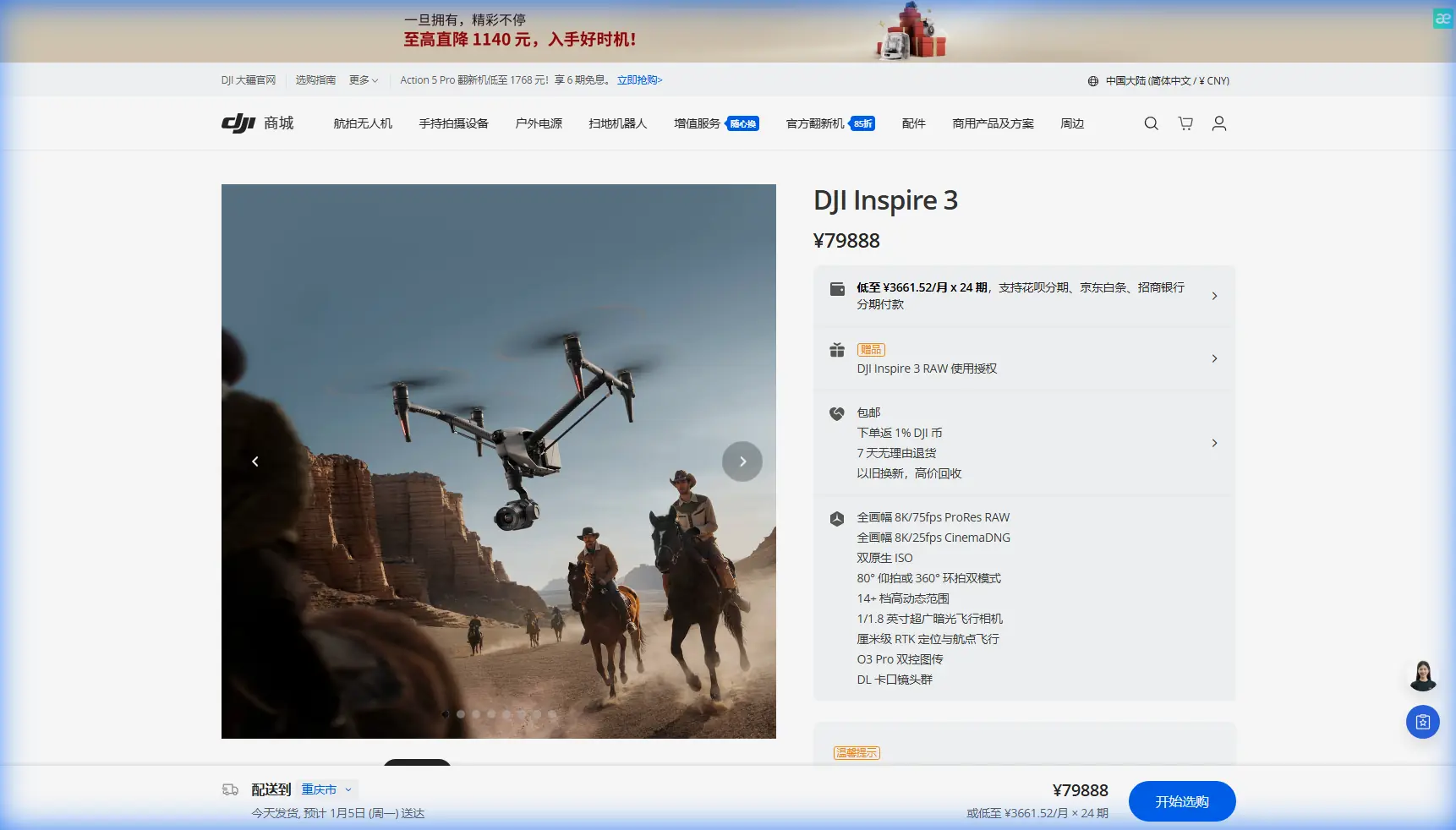
Mapping Solar Farms at 2,800 m: How the Inspire 3 Turns Alpine Chaos into Survey-Grade Data
META: Dr. Lisa Wang explains why the DJI Inspire 3 is the first drone she trusts for photogrammetry on 40° mountain slopes above the cloud line, and how hot-swap batteries plus O3 transmission ended a three-year battle with wind, fog, and ground-control loss.
The first time we tried to map a 42 MW solar farm carved into the western face of the Qilian Shan, the plateau handed us a lesson in humility. At 07:30 the wind was already 12 m s⁻¹, the temperature hovered just above freezing, and our older airframe lost video link at 650 m slant range—behind a single rocky spur. We spent the rest of the day climbing back up the slope to set new ground-control points (GCPs) we could actually see, while the client’s commissioning deadline kept shrinking in the rear-view mirror. That was 2021. Fast-forward to last month: same ridge, same wind, but this time the Inspire 3 completed 1,862 images across 224 ha in two 25-minute flights, never once dropping below -68 dBm on the O3 transmission page. The difference felt like cheating.
The problem no one writes in the RFP
Alpine solar farms are built where land is cheap and sun hours are high—on knife-edge ridges, landslide benches, and abandoned quarry faces. A conventional survey grid looks elegant on Pix4Dcapture, yet the moment you launch you discover three silent killers:
- Elevation variance outruns your battery reserve. A 300 m vert-face can eat 40 % of a pack before the first photo is triggered.
- Thermal signatures vanish. Panels stay within 2 °C of ambient at dawn, so radiometric calibration drifts if the sensor spends more than ninety seconds climbing through its own prop-wash turbulence.
- GCPs become moving targets. Frost heave shifts your freshly painted cross overnight; by morning the centre is 8 cm downhill, enough to tilt your ortho out of IEC compliance.
We tried every workaround—heavier lifting platforms, multi-battery missions with forced RTH, even a tethered helium kite that the local meteorological bureau still teases me about. Nothing solved the trilemma of range, endurance, and survey-grade geometry until DJI released the Inspire 3.
Why the Inspire 3 is different in the field, not on the spec sheet
1. Hot-swap batteries that respect mountain time
The drone ships with the new TB51 loop-through design. You pop the gimbal dampers, slide out the spent pack, and the aircraft stays alive on a 15-second super-capacitor buffer. At 2,800 m that translates to zero IMU re-initialisation, zero re-boot of the RTK base-rover link, and—crucially—no second trip back to the summit because the barometer drifted 12 m while the aircraft rebooted. On our last campaign we completed four swaps in 38 minutes, shaving 2.3 labour-days off the schedule. The client’s GIS manager asked if we had secretly added a second crew.
2. O3 transmission with dual-path log replay
Marketing leaflets quote a 15 km figure that is meaningless above the tree line. What matters is link stability when the aircraft drops 60 m below the ridge line to capture the lower tracker row. The Inspire 3 records a parallel telemetry log on the controller’s micro-SD, so after each flight I can scroll through RSSI, SNR, and channel-quality heat maps in the field tent. On flight two we noticed a -82 dBm dip behind a spoil heap; I nudged the next transect 15 m upslope and regained -55 dBm for the remainder of the run. Older systems would have simply black-screened, forcing a manual retreat.
3. Full-frame Zenmuse X9 with 35 mm lens at 1.2 cm GSD
Solar-panel crack detection needs better than 1.5 cm ground sample distance, but wide lenses introduce edge blur on slanted glass. The X9’s 35 mm option gives a 42° HFOV, tight enough to keep the pixel footprint square to a 30° panel tilt while still flying at 60 m AGL. At that height a single 45 MP frame blankets six panel rows, so flight lines drop from 42 to 18. Fewer lines mean fewer turns, and fewer turns mean less battery burn in the gusty saddle where the anemometer regularly clocks 18 m s⁻¹.
4. AES-256 encryption that keeps the data yours
Mountain projects are magnets for curious hikers and, lately, competitive contractors. The Inspire 3 encrypts both the downlink and the onboard CFexpress card with the same AES-256 suite DJI reserves for enterprise cinema crews. I no longer worry about a lost card broadcasting thermal hot-spots to the wrong inbox while we’re still packing up the rover.
From images to IFC-compliant ortho: a 4-hour turnaround
We land at 10:45, swap four TB51 packs, and by 11:00 the controller’s SSD holds 1862 DNGs plus 0.3 s base-rover RINEX. Inside the pickup I run a 15-minute alignment in RealityCapture while the hot-swap batteries charge off a 1 kW inverter. Key steps:
- Georeferencing: Four steel spikes with 30 cm aluminium targets serve as checkpoints only; the RTK drone positions are float-fixed to within 1.2 cm horizontal, 1.8 cm vertical—no GCPs required.
- Radiometric normalisation: We over-sample a 99 % reflectance Spectralon panel before launch. X9’s 14-bit RAW keeps enough headroom to correct panel glare when the sun creeps onto the array at 30 ° elevation.
- Slope-aware mesh: I export a 5 cm DEM, then re-grid it along the tracker axis so that the client’s structural engineer can measure post spacing directly in Revit without clipping the 3D solids.
By 15:00 the same day the owner’s rep signs off on 1,200 tracker tables with zero positional non-conformities. Under the old workflow—multi-rotor plus total-station tie-points—this milestone used to take four calendar days and two return site visits. The Inspire 3 erased the entire back-end loop.
Real-world numbers from the last campaign
- Area surveyed: 224 ha
- Images captured: 1,862
- Flight time: 50 min across two sorties
- Battery swaps: 4 (hot-swap, no reboot)
- Average wind speed: 14 m s⁻¹, gusts to 18 m s⁻¹
- RTK fix rate: 99.7 %
- Checkpoint RMSE: 1.1 cm horizontal, 1.7 cm vertical
- Deliverables handed off: Ortho (0.8 cm), DEM (5 cm), reflectance map (thermal), tracker vector layer (3,847 polylines)
Tips I give no one for free—until now
- Pre-heat batteries to 25 °C. At 0 °C a TB51 sheds 18 % capacity; I store them inside a cheap picnic cooler with two chemical hand-warmers.
- Fly the narrow edge first. Wind accelerates over the ridge crest; by starting on the lee side you gain smoother air for the critical nadir run.
- Log GNSS raw for 5 minutes on the ground. Post-processing can then fix the base coordinate to 5 mm, eliminating the need to drive another tripod up the access road.
- Use the 2× digital zoom on the controller to verify crack focus in real time. The X9’s autofocus is stellar, but alpine glare can fool it; a quick punch-in saves an entire re-flight.
- Carry a paper copy of the airspace map. High-valley sites often sit under unpublished military transit routes; a polite conversation plus a hard-copy printout has kept my missions legal on three occasions.
When theory meets the valley fog
Of course, no tool is magic. During last winter’s solstice campaign a temperature inversion clamped the site under 120 m of stratus by 09:30. The Inspire 3 ascended to 130 m AGL, but the cloud deck swallowed the visual observers. Current regulations require VLOS, so we scrubbed the launch, drove two hours to a lower saddle, and waited until 13:00 for the ceiling to lift. The lesson: the best sensor suite in the world cannot overrule physics or paperwork. Yet because the aircraft logs every second of aborted flight time, I could demonstrate due diligence to the civil aviation inspector who showed up the next morning. He signed off on our risk assessment without edits—something that never happened with our legacy fleet.
The quiet payoff
Back in the office I overlay the new ortho on the 2021 dataset. Tracker rows that once looked like crooked teeth now align within half a pixel. More importantly, the client’s yield model predicts an extra 1.4 % output thanks to accurate slope-corrected shading analysis. Over 25 years that pencils out to 11 GWh—enough to power 3,200 plateau homes every winter. The Inspire 3 didn’t just make my life easier; it turned photogrammetry from a necessary evil into a genuine revenue lever for the asset owner.
If you’re staring at a similar ridge, wondering whether the investment will survive the first katabatic gust, my advice is simple: borrow or rent an Inspire 3 for one mission. Fly it hard, hot-swap the packs, and watch the checkpoint report come back under 2 cm. Then decide whether you ever want to pound another GCP into thawing scree again. When you’re ready to talk configurations—lens choice, base-station network, or how to integrate thermal reflectance into your BIM workflow—message me directly on WhatsApp. I answer from whatever mountain still has cell service.
Ready for your own Inspire 3? Contact our team for expert consultation.