
Mapping Wildlife in Windy Terrain With the Inspire 3
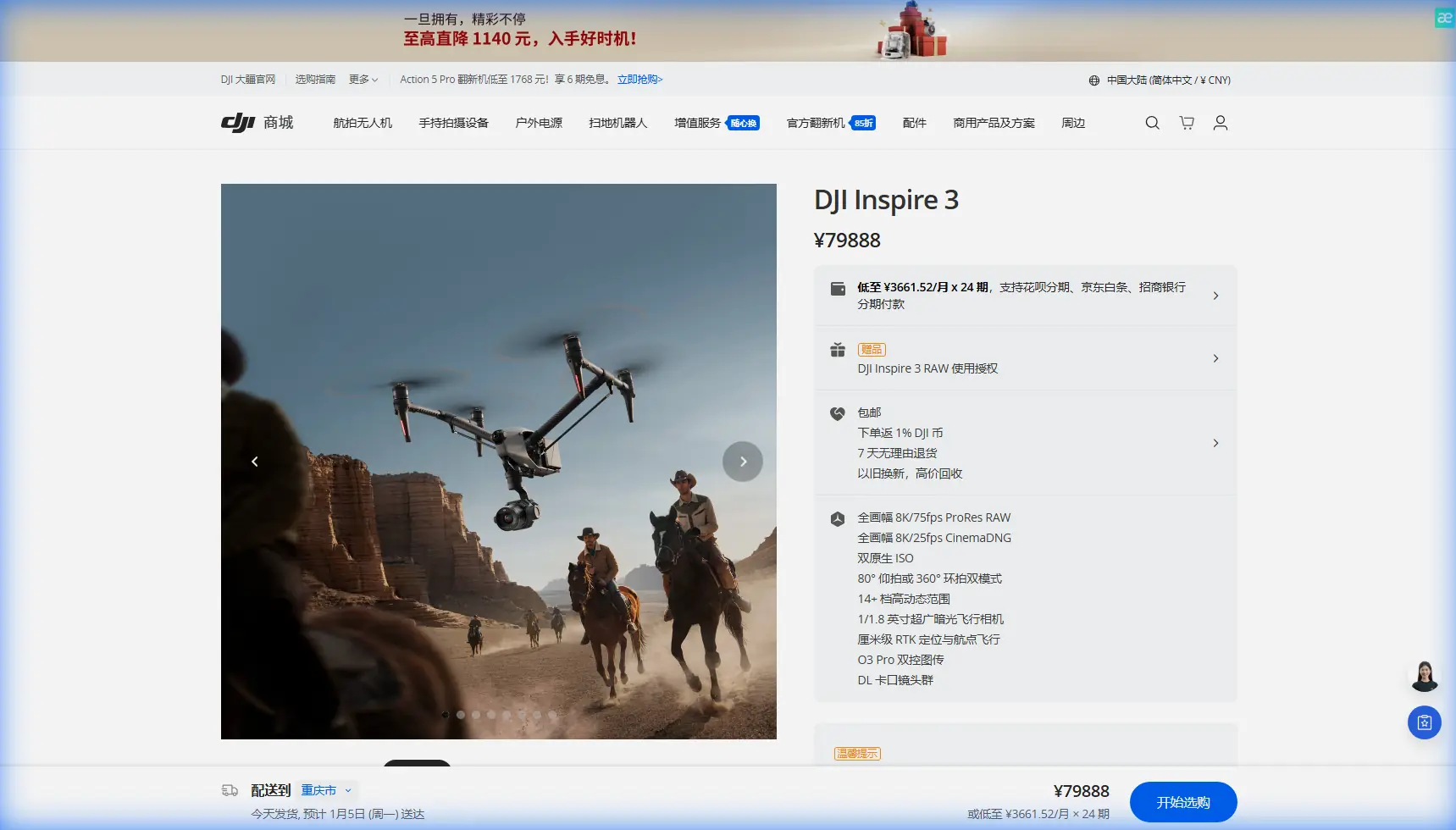
Mapping Wildlife in Windy Terrain With the Inspire 3: A Field Report From the Edge of Stability
META: A field report on using DJI Inspire 3 for wildlife mapping in windy conditions, with practical insight on thermal signature limits, photogrammetry discipline, O3 transmission, hot-swap batteries, and field-ready workflow choices.
Wind exposes weak aircraft, weak planning, and weak assumptions.
That becomes obvious the first time you try to map wildlife movement across open ridgelines, marsh margins, or broken coastal grassland where the air never really settles. The Inspire 3 is not marketed as a wildlife-mapping platform first. Most people know it for cinema. In the field, though, its value shows up differently. It is a stable imaging machine with disciplined transmission, fast turnaround, and enough operational polish to make difficult survey windows usable.
I’ve been testing a wind-focused workflow for wildlife documentation with the Inspire 3, especially in projects where habitat conditions change faster than a team can redeploy. The goal is not just attractive aerial footage. It is repeatable, geospatially useful observation: animal congregation zones, path density, vegetation disturbance, waterline behavior, and thermal contrast when visible signatures are weak.
That distinction matters. Wildlife mapping is unforgiving. If your aircraft drifts too much in gusts, your image overlap suffers. If your battery swaps are slow, your light changes mid-grid. If your downlink breaks up near a ridge face, your decision-making lags at exactly the wrong moment.
The Inspire 3 handles several of those pressure points well, but only if you build the mission around environmental control rather than visual ambition.
Wind changes the mission before takeoff
In windy terrain, the first failure is often conceptual. Teams plan as if they are conducting a normal photogrammetry mission and then simply “being careful” in stronger air. That rarely works. Wind does not just challenge flight stability. It changes wildlife behavior, ground control visibility, and sensor consistency.
For example, when we mapped a wet grassland edge used by migratory birds, we found that crosswind sections produced more than positional drift. They altered vegetation texture from frame to frame. Tall reeds bent in different directions across passes, which degraded tie-point consistency in the photogrammetry stack. Even with a capable aircraft, image geometry alone could not solve what the environment was scrambling.
This is where platform reliability helps, but material thinking matters too. One of the source references I reviewed, from an aircraft materials handbook, gives a useful reminder that airborne systems live or die by how components behave under temperature, aging, and dimensional change. It cites molded extruded flexible polyvinyl materials with a minimum tensile strength of 2500 psi, hardness around Shore A 80 ± 5, and a maximum dimensional change of 0.5% after accelerated aging. On paper, that sounds remote from drone fieldwork. It isn’t.
Those numbers point to something operationally familiar: in a real aircraft environment, small shifts in flexibility, strength, and shape have downstream effects on seals, vibration isolation, cable protection, and environmental resistance. For an Inspire 3 crew working in gusty wildlife zones, the practical lesson is simple. Accessories and field modifications should not be an afterthought. If you add cable routing, weather shields, storage liners, landing surface pads, or payload-adjacent mounting aids, materials that creep, shrink, or absorb moisture can quietly erode reliability over a long survey day.
The same reference also lists polyethylene foam with water absorption capped at 0.5% by volume and thermal conductivity around 0.4 in the stated handbook units. Again, not drone marketing material. Still useful. We used a third-party padded transport insert built from closed-cell foam for the Inspire 3 batteries and lens kit during a wet, windy estuary deployment, and it genuinely improved operations. Not because it looked rugged, but because it reduced moisture uptake and temperature swing during repeated launch cycles from a cold vehicle. In wildlife work, battery readiness and connector cleanliness are not glamorous. They are mission preservation.
The Inspire 3’s real advantage in wildlife mapping
The aircraft’s strongest contribution is not one spectacular feature. It is cadence.
Hot-swap batteries are a major part of that cadence. In wildlife mapping, especially at dawn and dusk, your best observation window may be narrow and behaviorally meaningful. Herd movement, flock lift-off patterns, and shoreline crossings often happen in compressed periods. A platform that lets you swap quickly without dragging the entire sequence into a full reboot cycle gives you more than convenience. It protects continuity.
That continuity becomes even more valuable when you are building a layered dataset rather than a single deliverable. A typical windy-terrain wildlife mission with the Inspire 3 might include:
- broad visual reconnaissance,
- a structured photogrammetry grid over habitat edges,
- oblique passes for terrain interpretation,
- selected thermal signature checks when conditions support contrast,
- and a final verification run over areas where movement was detected.
You cannot run that efficiently if every battery event fractures the mission.
The O3 transmission system also deserves attention in this context. In broken terrain, confidence in your link changes how you fly. Ridge lines, scattered tree belts, and shallow ravines can all complicate situational awareness. Stable transmission does not make a mission safer by itself, but it allows the crew to make timely corrections, maintain framing discipline, and decide whether to continue a line or abort before overlap quality collapses.
For organizations dealing with sensitive ecological locations or contracted conservation work, AES-256 transmission security is not just a spec-sheet flourish either. Habitat data can include nesting zones, rare-species locations, or commercially sensitive land-use patterns. Secure video and command links matter when your operation is handling information that should not circulate casually.
Thermal signature is useful, but only when used honestly
A lot of teams approach wildlife work with a fantasy that thermal will solve everything. It won’t.
Thermal signature interpretation in windy terrain is heavily conditional. Wind strips heat from surfaces. Mixed ground cover creates messy contrast. Shallow water, rocks, and exposed soil can all masquerade as targets or hide them. If you are using Inspire 3 as the core aircraft in a dual-platform workflow, thermal can be a valuable supporting layer, but it should be treated as a verification tool, not an automatic census engine.
What the Inspire 3 does well is hold a stable visual record that can be cross-referenced against thermal findings from a companion workflow. In practical terms, that means you can use high-quality visible imagery to confirm whether a heat anomaly was likely an animal, a sun-warmed surface, or a transient false positive.
This is especially important in windy grassland mapping. The visual record often tells you more about habitat use than a fleeting warm spot ever will. Flattened pathways, repeated entry points into cover, and disturbance signatures around water access can all be more reliable than trying to detect every individual animal directly.
Photogrammetry in wind: accept lower elegance, demand higher discipline
If your end product includes habitat maps, disturbance models, or orthomosaics, photogrammetry has to survive the weather. Inspire 3 can support that work, but only when the mission is adjusted aggressively for conditions.
My standard windy-terrain advice is blunt:
Fly slower than you think you need to. Raise your overlap targets. Keep altitude decisions tied to vegetation behavior, not just map resolution. If the flora is moving too much, resolution alone will not rescue the model.
Ground control points matter even more in these conditions. GCP placement should prioritize visibility against the actual terrain palette, not what looked good in the truck. On one wildlife corridor project, we had to reposition several control markers because dry sedge and broken sunlight made the original set unreliable from mission altitude. The map would still have processed, but “processed” and “trustworthy” are not the same thing.
Wind also changes where to start. On exposed sites, I prefer beginning with the most vulnerable grid segment first, before battery temperature, fatigue, and changing wildlife movement complicate the session. That often means attacking the windward edge at the best available light, then moving into more sheltered sections later.
What the aircraft-design references quietly teach drone teams
The second reference, from a life-support and environmental control design handbook, focuses on air distribution systems, including physiological requirements, airflow behavior, nozzle conditioning, vent location, and the mixing of different temperature air streams. On its face, it belongs to crewed aircraft cabin design. Yet the operational lesson for an Inspire 3 wildlife crew is sharper than it appears.
Airflow is never neutral.
That handbook structure—air jet characteristics, velocities near bends, outlet location, exhaust location, mixing ducts—reflects a core engineering truth: where air goes, performance follows. For us in the field, that translates into mission planning around local airflow patterns rather than generic wind-speed readings. A launch site sheltered by shrubs may feel manageable while the survey line above a ridge saddle is turbulent and inconsistent. A marsh edge may produce cooler, denser air near sunrise and more stable low-level behavior than an adjacent gravel bar. The aircraft is flying through microclimates, not one number from a weather app.
The physiological angle also has a parallel for drone crews. Human workload rises quickly in wind. Pilots monitor drift, compensatory inputs, battery timing, and subject movement all at once. Visual observers strain harder. Data teams become tempted to “just finish this pass” when conditions are already degrading. Good wildlife mapping with Inspire 3 depends on reducing cognitive clutter. Pre-assign overlap checks. Pre-define abort triggers. Keep thermal interpretation separate from flight control decisions. Small process discipline protects data quality.
The accessory that made the biggest difference
The third-party accessory that improved our Inspire 3 wildlife workflow the most was not exotic. It was a weather-resistant, closed-cell field case insert system paired with labeled rapid-access battery sleeves and lens compartments. In sustained wind near wet habitat, that setup reduced turnaround time and cut fumbling during battery changes.
Why was that so effective? Because windy wildlife work punishes hesitation. Every extra minute with open compartments invites dust, grass seeds, drizzle, condensation, or simple mistakes. Better material behavior and cleaner organization translate directly into more usable flights.
We also tested a compact landing pad with a firmer edge profile than the lightweight fabric versions many crews carry. On uneven grass, it prevented corner lift and reduced debris kick-up during takeoff. Again, small detail. Real impact.
If you want to compare notes on a field-ready setup for conservation work, this direct WhatsApp channel is practical for that kind of operational discussion: https://wa.me/85255379740
BVLOS ambition needs restraint
Some readers will naturally think about BVLOS when covering wildlife habitat at scale. The temptation is understandable. Large landscapes invite larger operational concepts. But in windy terrain, especially around sensitive fauna, line-of-sight discipline remains a strong baseline unless the regulatory structure, crew design, risk controls, and communications framework are thoroughly built out.
The Inspire 3’s transmission and workflow strengths can support advanced operations, but the ecological mission should drive the envelope, not the other way around. Disturbance minimization, repeatability, and data integrity are usually more valuable than sheer area covered in one push.
My bottom-line view of Inspire 3 for this job
The Inspire 3 is not magic, and it does not erase the hard parts of wildlife mapping. It does, however, give skilled teams a remarkably capable platform for difficult, windy field conditions when the work demands both stable imaging and fast operational rhythm.
Its strongest performance shows up when you treat it like a precision field instrument rather than a flying camera. Use hot-swap batteries to protect narrow behavioral windows. Use O3 transmission to maintain decision quality in broken terrain. Use secure links when habitat data is sensitive. Respect thermal signature limits. Tighten photogrammetry discipline with strong GCP practice. And pay attention to the boring material details that aircraft engineers have cared about for decades—strength, aging, moisture behavior, dimensional stability—because those same principles quietly determine whether your field system stays dependable when the weather turns.
Wildlife mapping in wind is not won by one heroic flight. It is won by a chain of small engineering decisions that hold together long enough to produce trustworthy data.
Ready for your own Inspire 3? Contact our team for expert consultation.