
Inspire 3 for Windy Wildlife Mapping: A Reliability
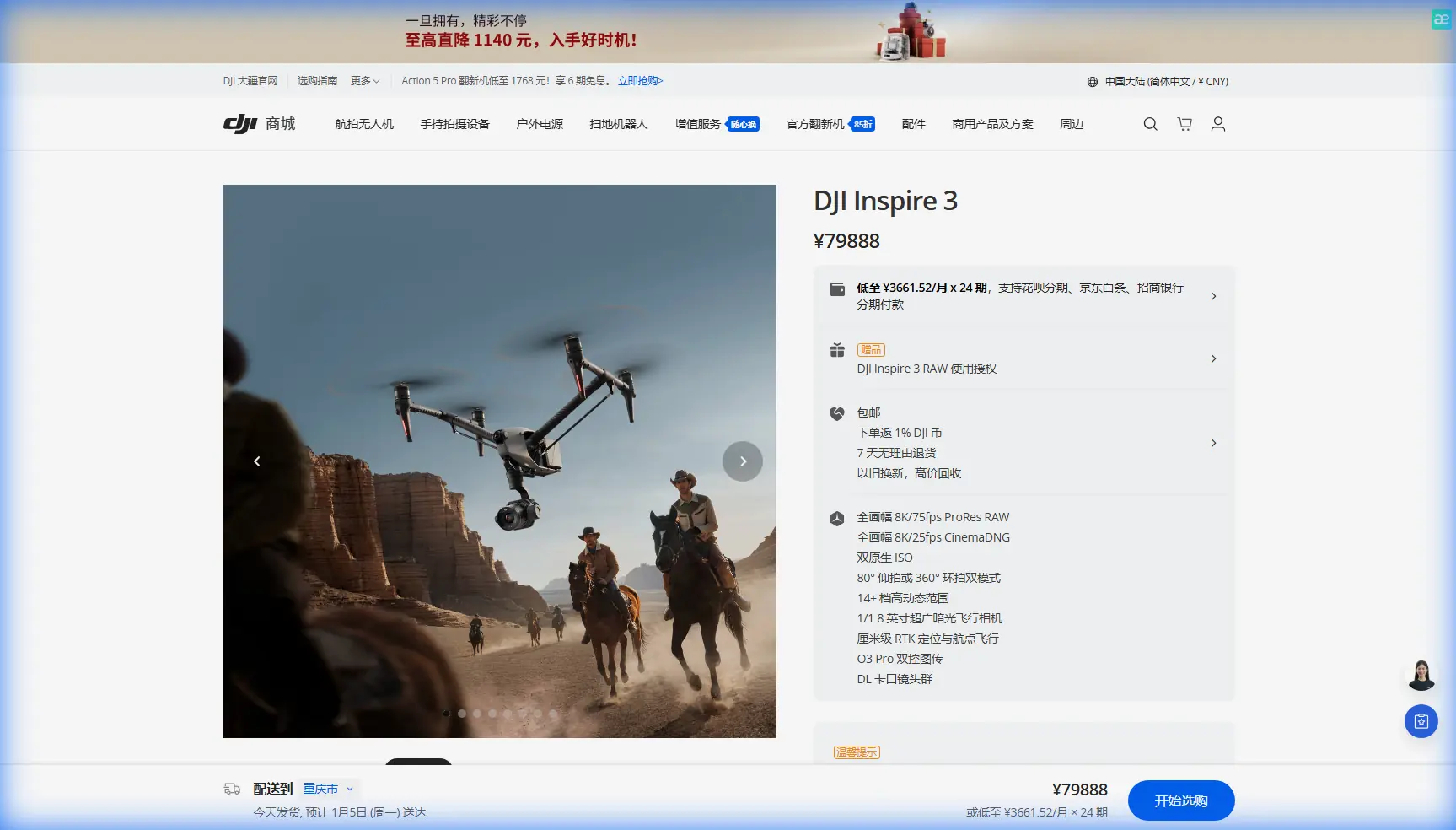
Inspire 3 for Windy Wildlife Mapping: A Reliability-First Technical Review
META: A technical review of using DJI Inspire 3 for wildlife mapping in windy conditions, with focus on reliability design, electromagnetic interference, transmission stability, hot-swap workflow, and field-grade data capture.
When people discuss the Inspire 3, the conversation usually drifts toward image quality and flight performance. That misses the harder question. In real wildlife mapping work, especially in windy terrain, the aircraft is only as useful as its ability to keep collecting clean, repeatable data when the environment becomes unfriendly.
That is where a reliability mindset matters.
For teams mapping wildlife corridors, coastal nesting grounds, upland grasslands, or exposed wetland edges, the challenge is not simply getting the drone airborne. The real task is preserving survey continuity while wind, terrain reflections, signal noise, battery swaps, and long operational days all work against consistency. The Inspire 3 enters this kind of work as a high-end imaging platform, but its practical value is best understood through the lens of aircraft reliability, maintainability, and data assurance.
As Dr. Lisa Wang would put it, a serious mapping platform should not be judged by a single successful flight. It should be judged by how well it handles transitions between normal and abnormal states without compromising the mission.
Why windy wildlife mapping is a different kind of test
Wildlife mapping often forces pilots into operational margins that look manageable on paper but become messy in the field. Wind can distort planned track spacing, alter ground speed, and reduce overlap if the pilot or automated route is not carefully tuned. If the objective includes photogrammetry, that matters immediately. Any inconsistency in image geometry can ripple through reconstruction, reducing model integrity and making GCP alignment more labor-intensive than it should be.
If the objective includes thermal signature work, the margin tightens further. Wind changes the thermal behavior of surfaces and animals, and it also adds more urgency to stable positioning and efficient pass planning. The aircraft must hold composure while the sensor team works quickly through changing conditions.
This is where Inspire 3’s broader ecosystem becomes more relevant than a specification sheet alone. O3 transmission, AES-256-secured links, and hot-swap battery workflow are not isolated features. In a windy wildlife mission, they contribute to one thing: preserving a usable chain of operation from launch to handoff of data.
The reliability framework that field teams should actually borrow
One of the most useful ideas from classical aircraft design is fault tree analysis, paired with FMEA. The reference material states that fault-tree style methods identify the logical relationships between a given failure state and the initiating failures, other events, or combinations behind it. It also notes that after the fault tree is built, FMEA is commonly used as a source document to verify those initiating failures and related events.
That sounds abstract until you apply it to an Inspire 3 wildlife mapping sortie.
Imagine the field complaint: “Transmission became unstable over the ridge line during a crosswind leg, and overlap dropped before the team noticed.” If you think like a reliability engineer, that is not one problem. It is a failure state with several possible parents:
- antenna orientation degraded by pilot body position or controller angle
- terrain masking during a low-angle leg
- local electromagnetic interference from nearby infrastructure or equipment
- wind-driven aircraft attitude changes altering signal geometry
- workload saturation during simultaneous framing, navigation, and observation tasks
This matters operationally because it changes how teams prepare. Instead of blaming “bad signal,” the crew can build a simple mission fault tree and assign mitigations before takeoff. On an Inspire 3 job, that often means defining controller stance, testing antenna angles on the ground, validating route geometry against terrain, and setting abort thresholds for link quality before overlap is affected.
The same source also highlights a second concept that deserves more attention in drone operations: common-cause analysis. It warns that designers often assume failures are independent when they may not be, and that common-cause failures frequently come from shared hardware, shared software, functional interdependence, or systems installed in the same area where they can be exposed to the same electromagnetic, mechanical, or environmental hazard.
That observation is highly relevant to Inspire 3 field use.
In wildlife mapping, signal instability, image timing issues, and pilot workload are often treated as separate concerns. In reality, wind can tie them together. A gusty environment can increase aircraft correction activity, raise pilot monitoring burden, expose suboptimal antenna positioning, and amplify the effects of local interference. What appears to be a transmission issue may actually be a layered common-cause problem involving route design, environment, and crew procedure.
Handling electromagnetic interference with antenna adjustment
The context for this article specifically points to electromagnetic interference and antenna adjustment, and that is not a trivial detail. It is one of those field habits that separates smooth missions from frustrating ones.
With Inspire 3, O3 transmission is a major advantage for maintaining a robust link in demanding environments, but no digital transmission system is immune to poor operator setup. In windy wildlife mapping, especially near metal observation towers, utility corridors, vehicles with active radios, or research camps filled with electronics, electromagnetic clutter can chip away at link quality. The pilot may first notice it as intermittent signal degradation, delayed response in the live feed, or unstable confidence in framing and route monitoring.
A practical response starts with body mechanics, not menu diving.
Keep the controller antennas aligned to the aircraft’s actual position in space rather than where the aircraft was ten seconds ago. When flying crosswind legs, pilots often rotate their torso to maintain visual orientation while forgetting that antenna geometry has changed. That can weaken the transmission path exactly when terrain and wind are already stressing the system. A small correction in antenna angle can restore margin immediately.
The reference material’s warning about systems installed in the same area being exposed to common electromagnetic interference translates well here. In field terms, do not stack your own interference sources. If the ground crew clusters around telemetry screens, vehicle radios, battery stations, and personal devices right next to the pilot position, they may be creating a poor RF environment for the very link they depend on. Spread the equipment out. Place the pilot in the cleanest practical line-of-sight location. Rehearse antenna orientation before launch, not after a warning appears on screen.
For teams developing repeatable standard operating procedures, this is low-cost, high-value discipline.
Why wiring and insulation details still matter in a modern drone discussion
At first glance, material data about aircraft wiring might seem far removed from an Inspire 3 used for mapping wildlife. It is not.
The second reference describes aerospace wire and cable characteristics such as a rated voltage of 600V, working temperature ranges reaching from -50°C to +250°C, and flame-resistant cable options rated up to +280°C in service, with some applications enduring extreme heat zones. It also notes durability testing details such as 125-cycle marking endurance, low-temperature bend performance at -65°C, and high-voltage insulation tests without breakdown.
You do not need to pretend Inspire 3 uses these exact aircraft cables to understand the operational lesson. Serious aerial systems live or die by the integrity of their electrical pathways and insulation discipline, especially where temperature variation, vibration, repeated handling, and electromagnetic exposure are part of normal work.
For Inspire 3 operators, the significance is direct:
- repeated battery changes and long field days make connector cleanliness and cable handling more critical than many crews assume
- cold dawn launches followed by warm midday conditions can reveal weak points in accessories, external monitors, charging setups, and field power distribution
- windy operations increase vibration exposure during takeoff, landing, and transport handling, which is exactly when cable strain and connector wear accumulate over time
The material handbook’s low-temperature bend and insulation-withstand details point to a larger truth: electrical reliability is not just about whether the aircraft powers on. It is about whether every supporting component continues to perform under environmental cycling and repeated use. In wildlife mapping, where one missed window can mean losing animal movement data for a day or a season, those “small” electrical details become mission-level details.
Hot-swap workflow is not just convenience
Hot-swap batteries are often described as a productivity feature. That is accurate, but incomplete.
In a windy wildlife survey, hot-swap capability protects continuity. If the team is running repeated mapping blocks over moving animal habitats or narrow weather windows, minimizing downtime between sorties keeps environmental conditions more consistent across the dataset. That improves comparability. Wind speed, light angle, surface temperature, and animal activity can all shift while a crew is grounded for a prolonged battery turnaround.
A shorter turnaround also reduces the chance of procedural drift. Teams are less likely to relocate casually, change antenna habits, or clutter the takeoff area with unnecessary gear when they know the aircraft is returning to the air quickly. Reliability is often a human-factors problem before it becomes a hardware problem.
This is where maintainability, one of the key elements embedded in the reliability reference, deserves more attention in the drone sector. A platform that allows efficient battery change, rapid preflight confirmation, and clean resumption of the mission is not simply faster. It is easier to keep within procedural control.
Inspire 3 as a mapping platform, not just a cinema aircraft
Some readers still think of Inspire 3 primarily as a camera ship. For wildlife mapping teams, that framing is too narrow.
Yes, the aircraft’s imaging performance is central. But in survey work the camera is only one link in a longer chain: route accuracy, overlap retention, transmission confidence, data integrity, thermal signature interpretation where relevant, GCP compatibility, and secure transfer of mission outputs. AES-256 matters here not as a buzzword, but as part of a professional data governance posture when sensitive ecological locations are involved. Nesting areas, endangered species habitats, and research coordinates are often not something teams want exposed casually through sloppy workflow.
Likewise, if your operations roadmap includes more complex permissions or eventual BVLOS planning within lawful civilian frameworks, then link reliability and crew discipline become even more foundational. You cannot build advanced operations on top of loose basic habits.
A practical workflow for windy habitat mapping with Inspire 3
For crews using Inspire 3 in exposed wildlife environments, the strongest field workflow usually looks like this:
Start with terrain and wind review before route generation. Build enough overlap margin for gust-driven speed variation. If photogrammetry is the goal, verify that the route geometry still protects reconstruction quality when the aircraft is slowed or tilted by crosswinds.
Set GCPs where they remain visible under the expected light conditions and where ground teams can access them without disturbing the habitat. The best control point is useless if it compromises the ecology you are there to document.
Choose the pilot station for line of sight and RF cleanliness, not comfort. If there is a choice between standing near the vehicle and standing twenty meters away with a clearer signal corridor, take the cleaner corridor.
Before launch, rehearse antenna orientation on the first outbound leg and the first crosswind turn. This should be deliberate. It is a basic but often neglected step.
During operations, monitor not just battery and position, but state transitions. The helicopter design reference’s discussion of Markov analysis is valuable here: systems move between working and non-working states, and the transitions are functions of failure and repair rates. In drone field language, crews should think in modes. Normal mapping mode, degraded transmission mode, manual recovery mode, battery-change mode, and abort mode. If each mode has pre-agreed actions, crews recover faster and with less confusion.
After landing, log any signal anomalies with exact location, aircraft heading, wind direction, and crew position. Over multiple missions, patterns emerge. Reliability grows from recorded evidence, not memory.
If your team is building these procedures and wants to compare field setups, a quick operations discussion can save a lot of trial and error: message our UAV specialists here.
The bigger takeaway
The most useful way to evaluate Inspire 3 for windy wildlife mapping is not to ask whether it can fly in wind. Of course it can. The better question is whether your operation can preserve data quality and mission continuity when wind interacts with transmission, crew behavior, and environmental interference.
That is where the old aerospace reliability concepts still earn their keep.
Fault tree thinking helps identify the true roots of degraded mapping performance. Common-cause analysis reminds you that failures rarely arrive one by one. Material and cable standards, with figures like 600V ratings, -50°C to +250°C working ranges, and -65°C bend-survival testing, reinforce a discipline of electrical robustness that modern drone teams should respect even if they never open an aircraft design handbook. And in the field, something as simple as correcting antenna alignment can be the difference between a clean wildlife dataset and a compromised one.
Inspire 3 is at its best when operated as a system, not admired as a product. For mapping professionals, that distinction changes everything.
Ready for your own Inspire 3? Contact our team for expert consultation.