
Inspire 3 in Dusty Field Operations: A Technical Review
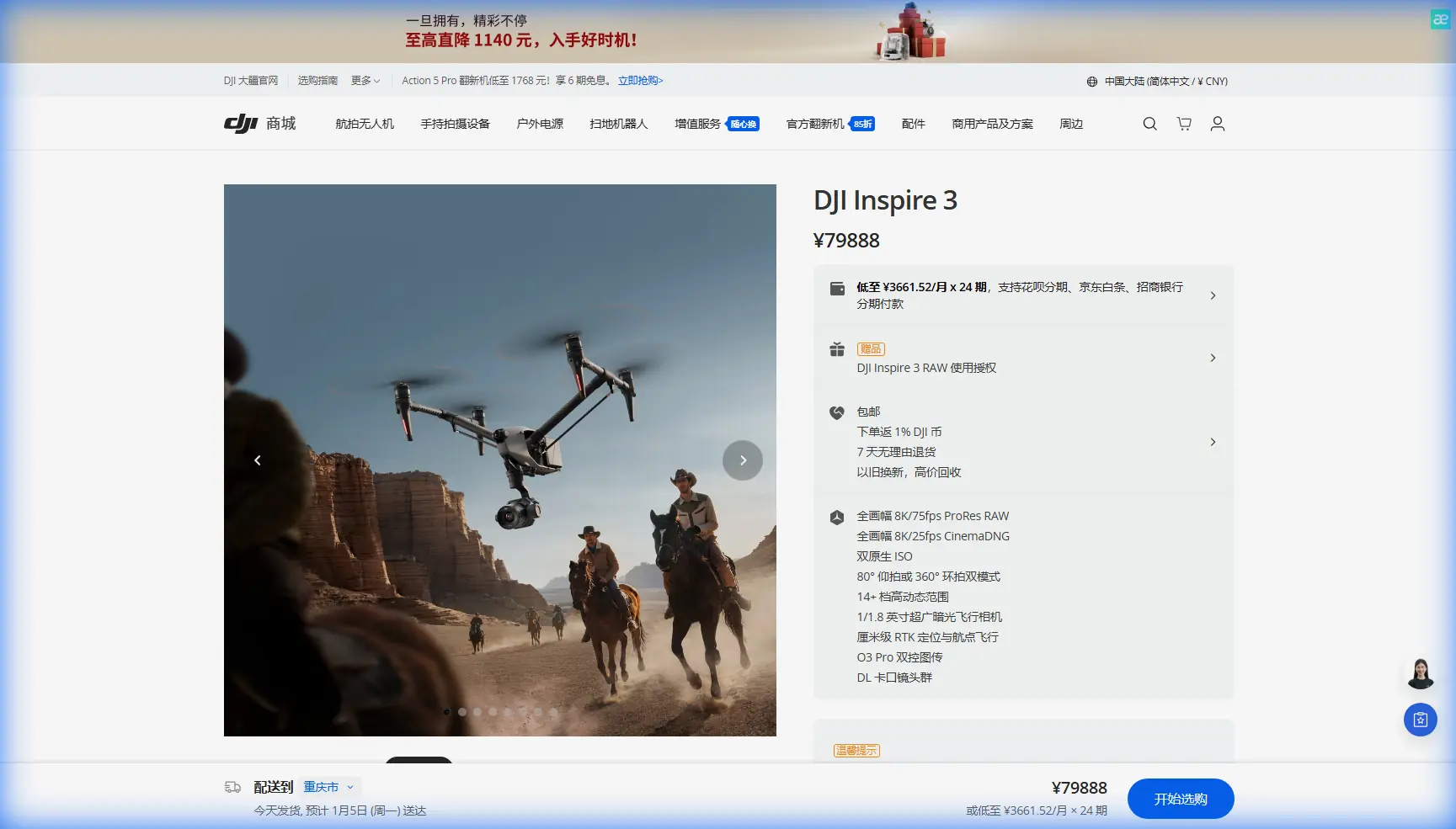
Inspire 3 in Dusty Field Operations: A Technical Review for Reliable Aerial Monitoring
META: Expert technical review of DJI Inspire 3 performance in dusty field monitoring, including battery strategy, O3 transmission, AES-256 security, and workflow tips for changing weather.
Dust changes everything.
It gets into landing gear, coats lenses, softens contrast, and turns a routine field monitoring flight into a test of preparation more than piloting. For crews using the Inspire 3 in agricultural blocks, dry construction corridors, mine-edge survey zones, or utility land inspections, the airframe is not just a camera platform. It becomes a moving data node that has to stay stable, transmit clearly, protect footage, and keep working when conditions stop being tidy.
That is why the Inspire 3 deserves a more specific conversation than the usual headline specs. On paper, it is known for cinema work. In real field operations, especially in dusty environments, its value comes from something less glamorous: consistency under friction. Not perfect conditions. Not controlled sets. Actual open-ground work, where heat shimmer builds over bare soil and weather can shift halfway through a sortie.
I recently reviewed the Inspire 3 from that operational angle, focusing on how it behaves when the mission is field monitoring rather than film production. The result is straightforward. This aircraft is highly capable, but only if the crew respects what it is good at, what it is not, and how dust and changing weather alter every decision from takeoff to battery rotation.
Why the Inspire 3 Still Makes Sense for Field Monitoring
At first glance, some operators will ask a fair question: why use an Inspire 3 in fields at all, especially when the mission may involve photogrammetry, thermal signature checks, perimeter documentation, or asset observation?
The answer depends on what kind of field monitoring you mean.
If the job is pure mapping at scale, there are more specialized platforms. But when the mission blends high-quality visual inspection, repeatable route capture, precise low-altitude observation, and secure transmission in remote environments, the Inspire 3 becomes a serious tool. It is especially useful where the operator needs to move between cinematic-grade contextual footage and technically disciplined visual documentation without swapping into an entirely different aircraft category.
Two details matter immediately here.
First, the Inspire 3 supports the O3 transmission system. In dusty, open terrain, that matters operationally because visual line-of-sight can remain deceptively clear while the signal environment degrades due to terrain undulation, equipment interference, or distance across broad fields. A strong transmission backbone is not a luxury. It is what keeps framing, control feedback, and flight confidence intact as the aircraft moves away from the launch point.
Second, AES-256 transmission security is not just a line on a spec sheet. If you are documenting sensitive infrastructure, agricultural research plots, restricted land development, or utility assets, encrypted transmission reduces the risk profile of the mission. That becomes even more relevant when crews are operating near public roads, contractor traffic, or third-party sites where footage and telemetry should not be casually exposed.
Those two features alone shift the Inspire 3 from “premium drone” territory into something more practical for professional field work.
Dust Is Not One Problem. It Is Five.
Operators often talk about “dusty conditions” as if that is one variable. It is not. Dust affects visibility, cooling, landing hygiene, moving components, and image reliability all at once.
The Inspire 3 handles airborne instability well, but dusty field missions expose the whole workflow, not just the airframe. Before launch, the real question is whether the crew has designed the operation to keep the aircraft clean enough to remain trustworthy.
The biggest weak point in dusty environments is usually not the flight itself. It is the takeoff and landing cycle. Rotors can throw loose particulate upward on departure and pull it into sensitive zones on landing. That means the most effective protection strategy starts on the ground: use a clean launch surface, elevate where possible, and avoid improvised dirt-edge takeoffs simply because the aircraft “can handle it.”
There is a second image-related issue that gets overlooked. Dust in the air changes perceived sharpness and contrast long before the operator notices it clearly on a monitor. For field monitoring, where the point may be to compare crop stress patterns, inspect erosion lines, or examine surface disturbances, that loss of clarity affects interpretation. This matters even more if the flight is supporting photogrammetry-style documentation or repeat-pass comparison work. The more atmospheric contamination between lens and subject, the lower the practical data quality, even if the footage still looks acceptable at a glance.
In other words, dusty work is not just hard on the drone. It can quietly lower the value of the mission output.
Mid-Flight Weather Shift: Where the Inspire 3 Proves Its Character
The most revealing field flights are the ones that stop behaving according to plan.
In one dusty monitoring scenario, the launch window looked manageable at first: dry ground, stable visibility, moderate light. Then conditions changed mid-flight. The wind built unevenly across the field, bringing a rougher cross-current and a suspended dust layer that had not been there at takeoff. This is the moment when aircraft personality shows up. Some drones begin to feel vague. Others remain flyable but force the pilot into a defensive mindset.
The Inspire 3 stayed composed.
That does not mean the changing weather became irrelevant. It means the aircraft gave the crew enough control confidence to adapt without rushing into poor decisions. The O3 link remained especially valuable here. As the atmosphere thickened and the flight environment became less visually forgiving, a reliable transmission path helped preserve situational awareness. That translated into smoother route correction, cleaner repositioning, and less temptation to continue farther than conditions justified.
This is exactly where experienced operators distinguish between “the drone survived” and “the drone supported the mission.” The Inspire 3 falls into the second category when flown properly. It gives enough platform confidence to handle a weather shift with discipline rather than drama.
Still, there is a non-negotiable lesson: when weather changes in dusty territory, land earlier than your optimism suggests. Dust plus rising wind does not degrade linearly. It stacks. Stability, visibility, lens cleanliness, and landing conditions can all worsen within minutes.
Battery Strategy Matters More Than Raw Endurance
In field work, battery conversations are often too simplistic. Operators ask how long the aircraft stays up. The better question is how efficiently the crew can sustain safe, repeatable sorties as the environment changes.
The Inspire 3’s hot-swap batteries are one of its most useful operational features in this setting. That detail has direct significance in dusty field monitoring because it reduces turnaround exposure. The aircraft can remain in a ready state during battery changes, which shortens reset time and helps crews preserve workflow continuity across inspection segments.
That matters for three reasons.
First, environmental consistency. If you are documenting a field section, erosion channel, or asset corridor and the weather is shifting, slower turnaround means your second sortie may no longer match the first in light, wind, or airborne dust density. Faster battery swaps help maintain continuity.
Second, contamination control. The less time the aircraft spends needlessly sitting in active dust, the better. Streamlined swap procedures reduce exposure.
Third, human factors. Dusty operations are physically tiring. Pilots and visual observers make better decisions when the workflow is efficient and predictable. Hot-swap capability sounds like a convenience feature until you use it during a long field block. Then it becomes part of mission discipline.
For practical field monitoring, I would rather have a well-managed hot-swap system and structured sortie planning than chase every last minute of airborne time on a single flight.
Can the Inspire 3 Support Thermal and Mapping Work?
This is where nuance matters.
The Inspire 3 is not defined by thermal operations. If your mission is entirely about thermal signature collection, you need to assess payload requirements honestly rather than forcing the aircraft into a role it was not built to dominate. But in mixed workflows, where thermal signature analysis is one layer of a broader field intelligence package, the Inspire 3 often fits into the mission architecture as the high-quality visual platform that complements thermal data gathered elsewhere.
That distinction is operationally useful. A crew might use one system to locate anomalies thermally, then deploy the Inspire 3 to collect sharper contextual imagery, low-altitude reference passes, and stakeholder-ready documentation. The result is a stronger inspection narrative, especially when conditions on the ground are dusty and the target area benefits from clear visual interpretation.
The same applies to photogrammetry. If you need high-rigor mapping, your process has to be disciplined. Use proper overlap, repeatable flight geometry, and GCP placement where accuracy matters. Ground control points are especially important in open, low-feature fields where drift in visual alignment can quietly affect outputs. The Inspire 3 can contribute useful image capture in structured missions, but only when the operator treats the workflow like survey work rather than casual aerial photography.
That is the recurring theme with this aircraft. It rewards professionalism.
BVLOS, Security, and the Reality of Professional Oversight
Some operators looking at broad-acre field work will naturally think ahead to BVLOS operations. That is understandable. Large tracts of land make every extra meter of operational reach feel valuable.
But BVLOS is not a feature you “turn on” because the field looks empty. It is a regulatory, procedural, and risk-managed operating framework. The Inspire 3’s strong transmission capability and AES-256 encrypted link make it more credible in serious operational planning, but they do not replace the legal and safety requirements that BVLOS flights demand.
That said, these capabilities still matter today, even inside standard line-of-sight operations. Secure data handling is increasingly important in land management, infrastructure inspection, and contract documentation. If your crew is collecting imagery with strategic, legal, or commercial implications, encrypted transmission helps support chain-of-custody confidence and responsible data stewardship.
For teams building mature UAV programs, that is not a side benefit. It is part of why certain aircraft remain viable long after the launch buzz fades.
Best Practices for Dusty Field Deployment
If the Inspire 3 is going into dusty field monitoring work, I would keep the operating approach tight:
Launch and recover from a controlled surface. This single choice does more to protect the aircraft and payload integrity than most post-flight cleaning routines.
Plan shorter, cleaner sorties instead of one long heroic pass. Dust accumulation and weather shifts rarely reward aggressive timing.
Watch the atmosphere, not just the aircraft telemetry. Suspended particulate changes image quality before it obviously changes flight comfort.
Build battery rotation around hot-swap efficiency. Keep the turnaround organized, sheltered, and deliberate.
If you are collecting repeatable visual data, use GCP-backed methodology where positional confidence matters. Casual field capture and rigorous photogrammetry are not the same thing.
Treat O3 transmission as an operational buffer, not permission to push farther. Strong link quality should support safer decisions, not encourage riskier ones.
Secure workflows matter. AES-256 is valuable when the mission involves sensitive land, proprietary operations, or regulated sites.
And if your crew needs a field-tested deployment workflow, inspection planning help, or mission-specific setup advice, you can reach an operations specialist through this direct field support channel.
Final Assessment
The Inspire 3 is not the obvious pick for every dusty field mission, and that is exactly why it deserves a serious review. Used carelessly, it becomes an expensive platform doing work that a more specialized system might handle more efficiently. Used intelligently, it becomes something far more interesting: a stable, secure, high-trust aircraft for field monitoring tasks that demand image quality, controlled operations, and resilience when conditions stop cooperating.
The most meaningful details are not flashy. O3 transmission helps maintain command confidence as field distances stretch and weather turns less friendly. AES-256 encryption supports professional-grade data protection. Hot-swap batteries keep sorties efficient and reduce needless exposure during dusty operations. Add disciplined planning, sensible landing hygiene, and realistic expectations around thermal and photogrammetry workflows, and the aircraft proves its worth.
That is the real story with the Inspire 3 in dusty monitoring environments. Not hype. Not brochure logic. Just a capable platform that performs best when the crew respects the mission, the weather, and the consequences of every shortcut.
Ready for your own Inspire 3? Contact our team for expert consultation.