
Inspire 3 for Coastal Venue Monitoring: A Practical Field
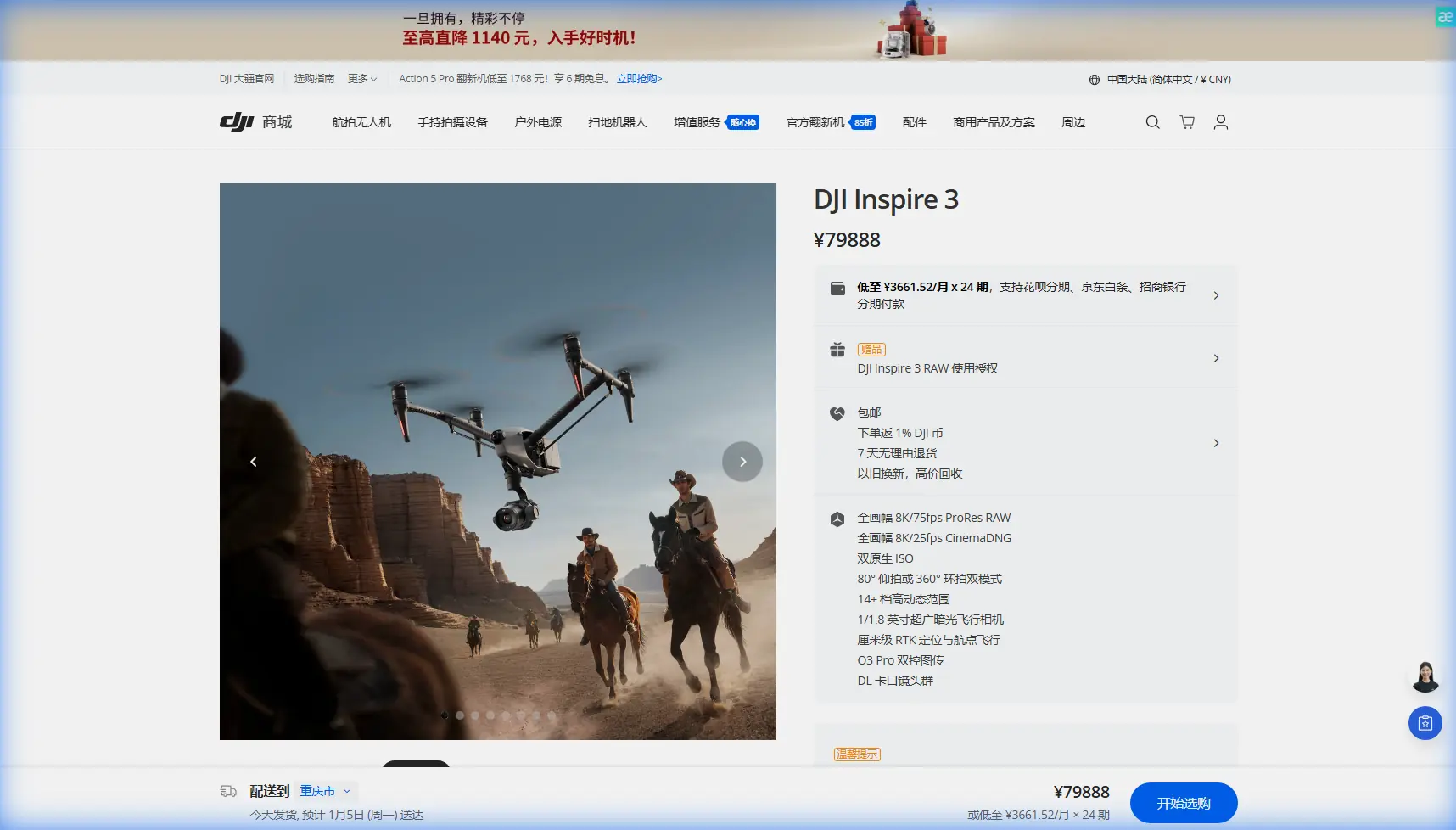
Inspire 3 for Coastal Venue Monitoring: A Practical Field Guide from Dr. Lisa Wang
META: Learn how the DJI Inspire 3 fits coastal venue monitoring with stable transmission, hot-swap battery workflow, precise flight planning, and production-grade imaging.
Coastal venues are difficult places to monitor well. That is exactly why the DJI Inspire 3 deserves a more serious look than it usually gets.
Most people associate the Inspire 3 with cinema work first. That makes sense. It is a high-end aerial platform built for image quality and controlled movement. But for venue monitoring in coastal environments, some of the same design choices that benefit film crews also solve practical operational problems for site managers, inspection teams, event planners, and infrastructure stakeholders. Salt air, fast-changing light, wind off the water, reflective surfaces, large open perimeters, and intermittent RF interference all put pressure on a drone workflow. The Inspire 3 handles many of those pressure points better than lighter prosumer aircraft, especially when the job demands consistency rather than occasional quick flights.
This matters when the venue is not a simple inland property. A marina complex, beachfront event site, coastal resort, waterfront stadium, or shoreline cultural venue creates a different set of monitoring demands. You may need repeatable perimeter checks at dawn, crowd-flow observation before opening, roof and façade review after a storm, drainage documentation, shoreline encroachment tracking, or high-resolution visual records for contractors and insurers. In those situations, the aircraft is not just a camera in the sky. It becomes part of an operational system.
Why Inspire 3 Makes Sense in Coastal Work
The Inspire 3 stands out because it combines production-grade stability with a workflow that suits long days in the field. That is the real differentiator.
Competitor aircraft in the same conversation often split into two camps. One side offers portability but compromises on endurance under demanding conditions or on payload sophistication. The other side supports advanced imaging but becomes cumbersome for quick deployment around active venues. Inspire 3 lands in a narrower, more useful middle zone for teams that need premium output without building an oversized operation around the aircraft.
Two details matter immediately in coastal monitoring.
First, hot-swap batteries reduce downtime. On a live site, waiting for a full shutdown-and-restart cycle is not a minor inconvenience. It creates gaps in visibility. If you are documenting a tide-related change, tracking a developing queue at a venue entrance, or trying to complete a roof survey between gusts, those interruptions add up. Hot-swapping helps the crew maintain continuity and preserve momentum across repeated flights. That feature is often discussed as a convenience. In the field, it is actually a scheduling advantage.
Second, O3 transmission has operational value beyond image preview. Coastal venues are often RF-tricky environments. You may be near hospitality infrastructure, marine communications, reinforced buildings, broadcast equipment, or event networks. A more robust transmission link improves command confidence and visual situational awareness, especially when flying across broad open water edges or around complex venue geometry. If your workflow includes detailed visual verification before maintenance decisions, stable transmission is not optional. It directly affects whether a flight produces usable information or forces a reflight.
Start with the Monitoring Objective, Not the Aircraft
A common mistake is to launch first and define the mission later. On coastal properties, that wastes battery cycles and often misses the most actionable data.
Before flying an Inspire 3, define which of these four objectives matters most:
Condition monitoring
Used for roofs, cladding, walkways, retaining walls, lighting poles, seawall elements, or outdoor structures exposed to salt and wind.Operational oversight
Used for traffic flow, staging logistics, temporary infrastructure placement, or daily visual checks before public access.Change detection
Used after storms, king tides, heavy rain, or construction activity affecting shore-adjacent terrain.Documentation and reporting
Used for insurers, contractors, venue owners, engineering consultants, or facilities teams who need a visual record with repeatable framing.
Each objective changes how you fly. A condition monitoring mission may prioritize slow, deliberate oblique passes. An operational oversight mission may prioritize broader top-down sweeps and rapid repositioning. Inspire 3 performs best when the imaging approach matches the decision the venue team actually needs to make.
Build a Coastal Workflow That Respects the Environment
Coastal air is hard on equipment. That is not dramatic. It is routine. Salt particles, moisture, glare, and wind can degrade both aircraft handling and post-flight reliability if the crew gets careless.
A disciplined Inspire 3 workflow should include the following field logic:
1. Fly during light windows that favor surface interpretation
Midday can be visually harsh along water-facing properties. Reflections blow out highlights and flatten critical texture on roofs, decks, and concrete. Early morning and late afternoon often produce better surface readability. For venue monitoring, this can matter more than cinematic aesthetics. Fine cracks, ponding patterns, corrosion staining, and material distortion reveal themselves more clearly when the sun angle works for inspection rather than against it.
2. Use repeatable launch positions
If the venue needs recurring monitoring, launch from the same positions whenever practical. This creates more consistent viewing geometry across flights. Over time, that improves comparison value for maintenance teams and engineers.
3. Keep battery rotation strict
Hot-swap capability only pays off when the battery workflow is organized. Label pairs, track usage evenly, and keep the handoff routine clean. In a coastal venue setting, this allows multiple short sorties tailored to specific structures instead of one overextended flight that tries to cover everything.
4. Plan for cleaning immediately after operations
Salt residue should never become tomorrow’s problem. A coastal monitoring team using Inspire 3 regularly needs a post-flight care routine built into the schedule, not treated as optional housekeeping.
Where High-End Imaging Actually Changes Outcomes
The Inspire 3’s real edge is not “better-looking footage.” It is better decision support.
For coastal venue operators, image quality matters when it reduces uncertainty. High-detail visual capture allows teams to inspect corrosion-prone fixtures, roofing seams, façade wear, drainage paths, and shoreline-adjacent structures without repeatedly sending personnel into difficult access zones. The aircraft’s stable platform also helps when the venue needs matched viewpoints across multiple inspections, which is valuable for tracking gradual deterioration rather than dramatic failures.
This is also where Inspire 3 can outperform some smaller alternatives. Compact aircraft are useful, but they can struggle when the assignment demands premium, repeatable imagery under mixed wind and light conditions. If your reporting standard is high, and especially if third parties such as contractors or consultants rely on the aerial record, the Inspire 3’s imaging ecosystem can justify itself through fewer ambiguities and fewer revisit flights.
What About Thermal Signature Work?
Thermal signature is one of the terms that often comes up in venue monitoring conversations, especially around roof moisture, electrical systems, or equipment anomalies. Here, expectations need to stay realistic.
The Inspire 3 is not defined by a thermal payload in the way some specialized industrial platforms are. For coastal venue teams, that means the aircraft is strongest when used for detailed visual intelligence, structured photo capture, and premium aerial documentation. If a project depends primarily on thermal interpretation, that usually points toward a different aircraft class.
Still, understanding thermal signature remains useful in planning. A venue manager may use Inspire 3 flights to identify visible conditions that justify a separate thermal survey, such as drainage failures, material discoloration, or persistent water pooling. In practice, visual evidence often drives the next diagnostic step.
Photogrammetry: Useful, but Only When the Brief Demands It
The Inspire 3 is not usually the first name mentioned for dedicated mapping fleets, yet photogrammetry still has a role in coastal venue monitoring. The key is choosing projects where the output justifies the workflow.
For example, after a shoreline event installation, a redevelopment phase, or storm-related terrain disturbance, a venue may need an accurate overhead record of open areas, temporary works, access routes, or boundary conditions. That is where structured image capture can support orthomosaic generation and comparative site analysis.
If the team is using GCPs, or ground control points, accuracy becomes more dependable. That detail matters because coastal spaces can be visually repetitive from the air: sand, paving, water edges, turf, and temporary structures can all confuse interpretation if the workflow is too casual. GCP-supported capture improves confidence when measurements or progress comparisons feed into contractor communication or planning decisions.
The operational significance is straightforward: photogrammetry without control can be visually impressive but limited in legal or engineering value. Photogrammetry with a disciplined GCP workflow becomes a documentation tool that management can actually use.
Transmission Security and Data Handling Matter More Than People Admit
Venue monitoring often involves sensitive footage even when the task is entirely civilian. You may be capturing back-of-house logistics areas, restricted maintenance zones, event setup layouts, or infrastructure vulnerabilities that should not circulate casually.
That is why references to AES-256 deserve attention. Secure transmission and data handling are not abstract IT concerns. They are operational safeguards. For a coastal resort, private club, or gated marina venue, the drone team may be working around reputationally sensitive environments. Secure workflows help protect client confidence while supporting internal reporting discipline.
This is one area where professional systems typically outclass ad hoc drone deployments. The aircraft is only part of the equation. The trustworthiness of the data chain matters too.
A Practical Mission Example
Imagine a coastal event venue preparing for a three-day public program after a week of rough weather.
The facilities team needs to assess roof drainage on service buildings, inspect temporary fencing lines, review shoreline-adjacent walkways, confirm clear access for vendors, and create a visual record before attendees arrive. A smaller drone could probably complete some of this. The Inspire 3 becomes the better choice when the client expects a polished, repeatable dataset that supports both immediate decisions and post-event accountability.
A sensible mission plan would look like this:
- Begin at first light for lower glare and cleaner surface contrast.
- Run a short perimeter orbit to identify obvious obstructions or wind anomalies.
- Fly targeted oblique passes over roof sections and elevated structures.
- Capture broad top-down frames of crowd-control routes and service access zones.
- Swap batteries quickly and continue with shoreline edges and exposed hardscape.
- Archive imagery in a secure structure for facilities, vendors, and management review.
That kind of workflow is where hot-swap batteries and reliable O3 transmission stop being brochure features and become practical time savers.
If your venue team is comparing deployment options and wants a field-oriented discussion rather than a generic spec sheet, this direct Inspire 3 planning channel can help: https://wa.me/85255379740
Is Inspire 3 the Best Fit for Every Coastal Venue?
No. That is exactly why it is worth recommending carefully.
If the venue only needs occasional simple overviews, a lighter aircraft may be enough. If the mission is dominated by thermal analysis or heavy industrial sensors, another platform makes more sense. If regulations require BVLOS operations, the aircraft’s capability still has to sit within the local legal and operational framework; the drone alone does not solve compliance.
But when the assignment sits at the intersection of high-quality visual documentation, repeated monitoring, complex site conditions, and professional stakeholder reporting, Inspire 3 becomes unusually compelling. It excels where the deliverable must be trustworthy, not merely visible.
That distinction is what separates a serious coastal monitoring operation from a casual drone flight.
The Bottom Line for Coastal Venue Teams
Inspire 3 is often underestimated outside cinema circles. That is a mistake. For coastal venue monitoring, its value comes from a blend of stable transmission, disciplined battery workflow, secure data handling, and image quality that supports real decisions. Those traits are not glamorous in the field. They are useful.
A venue exposed to salt, wind, glare, and constant operational change needs an aerial platform that can do more than fly. It needs to produce evidence, maintain rhythm through repeated sorties, and fit into a professional reporting process. The Inspire 3 does that particularly well.
If you are responsible for monitoring a waterfront property, event venue, resort complex, or shoreline infrastructure zone, the smartest question is not whether Inspire 3 is impressive. It is whether your current drone workflow is delivering clear enough information, fast enough, with enough consistency to support action. In many coastal environments, Inspire 3 is one of the few aircraft that answers that challenge convincingly.
Ready for your own Inspire 3? Contact our team for expert consultation.