
Inspire 3 for Extreme-Temperature Construction Site
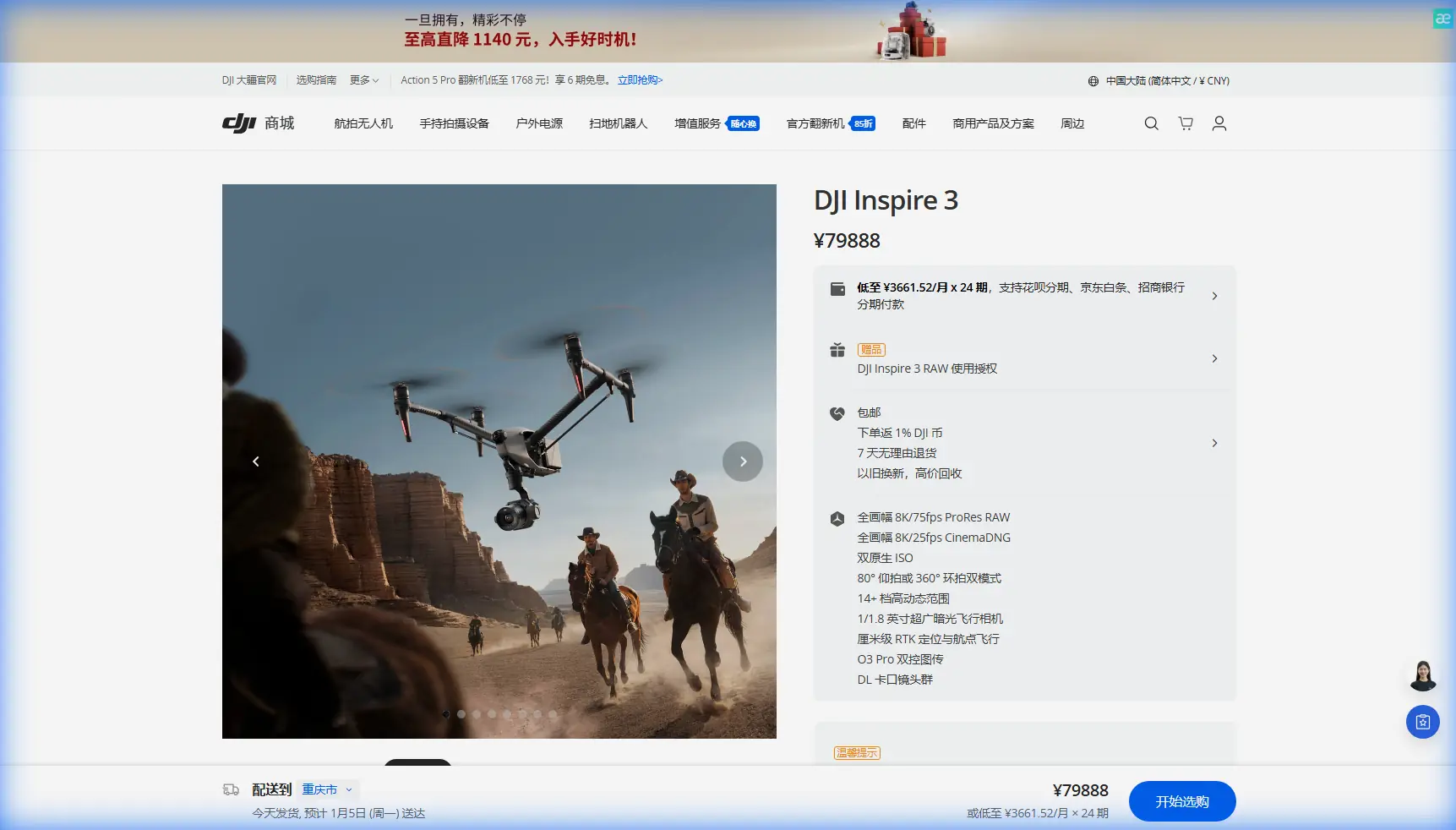
Inspire 3 for Extreme-Temperature Construction Site Scouting: A Technical Review
META: Expert review of the DJI Inspire 3 for construction site scouting in extreme temperatures, covering hot-swap batteries, O3 transmission, AES-256 security, photogrammetry workflows, and weather resilience.
Construction site scouting looks simple until the site stops behaving like a brochure. Heat shimmer over fresh concrete. Wind tunneling between steel frames. Dust where there should be visibility. Then the weather shifts halfway through the mission and suddenly the aircraft is no longer just a camera platform; it is the difference between a clean data run and a wasted mobilization.
That is the lens I want to use for the Inspire 3.
This is not a generic “flagship drone” overview. It is a technical look at how the Inspire 3 fits a very specific job: scouting large construction sites in extreme temperatures, where image quality matters, transmission reliability matters, and downtime costs more than most people account for. If your workflow includes visual documentation, progress tracking, photogrammetry, and occasional thermal signature checks with a separate payload strategy, the Inspire 3 occupies an interesting place. It is not the smallest option. It is not the simplest. But on difficult sites, that is often the point.
The real job: fast scouting, not just pretty footage
Construction teams usually say they need “site updates.” What they often mean is a bundle of different tasks:
- identify access issues before crews move in
- document structural progress
- check roof, façade, and steel conditions from safe stand-off positions
- build visual records that can be aligned against project milestones
- capture geometry for photogrammetry runs
- revisit the same flight paths under inconsistent weather
That last point is where many platforms start to show their limits. Repeating useful missions in harsh conditions demands consistency. A scouting aircraft has to launch quickly, hold a stable path in turbulent air, maintain a trustworthy downlink, and recover without dragging the operation into a battery-management headache.
The Inspire 3 is compelling here because its design choices are operational, not cosmetic. Hot-swap batteries are one of the clearest examples. On a construction site, battery changes are not a minor inconvenience. They are where momentum dies. When the crew has to shut down, reboot, and wait while weather is closing in, mission continuity disappears. A hot-swap system keeps the aircraft energized while packs are replaced, which reduces turnaround time and preserves the working rhythm of the team.
That matters a lot more in extreme temperatures than it does on a mild morning. Heat and cold both expose inefficiencies. The faster you can cycle back into the air, the less likely you are to lose the weather window.
Mid-flight weather changes are where the aircraft earns its keep
A recent style of site mission I keep coming back to involves an early start on a partly overcast day. Surface temperatures were already climbing off aggregate stockpiles and newly poured sections, and by the time the aircraft was midway through a perimeter pass, the wind shifted hard. Gusts started spilling around an unfinished tower core. Visibility stayed acceptable, but the atmosphere became unstable enough that lighter platforms would have delivered footage with subtle but damaging inconsistencies: minor yaw corrections, uneven tracking, and enough frame variation to degrade downstream mapping confidence.
This is where the Inspire 3’s airframe behavior and O3 transmission become operationally meaningful.
O3 transmission is not just a spec-sheet phrase. On active construction sites, signal conditions can be ugly. You have reflective steel, moving equipment, partial obstructions, and interference from dense urban surroundings or temporary site electronics. A robust transmission link helps the pilot maintain real confidence in aircraft position and framing when the environment is dynamic. If weather changes in the middle of the mission, the value of that link rises immediately. You are making more corrections, evaluating whether to complete a pass or break off, and possibly repositioning to safer angles around structures. Clean situational awareness is what keeps the mission useful instead of reactive.
The Inspire 3 handles those moments like a platform built for professional continuity. Not invincibility, and that distinction matters. No drone should be treated as weather-proof simply because it is expensive or capable. But when wind conditions tighten and the site starts producing microclimates around partially completed structures, the Inspire 3 tends to stay composed enough to finish critical scouting segments without turning every maneuver into a salvage operation.
For construction teams, that translates to fewer reshoots and better repeatability.
Photogrammetry on a site that refuses to cooperate
There is a persistent misconception that cinematic aircraft are a poor fit for technical data work. In practice, the answer depends on the workflow discipline of the operator.
The Inspire 3 can support photogrammetry-oriented missions when the pilot treats image capture as data collection rather than art. On large and complex sites, especially ones with multiple elevation zones, crane activity, and mixed material reflectivity, the aircraft’s stability and image quality can be used to generate strong reconstruction inputs. The caveat is that you still need proper mission planning, overlap discipline, and ground control.
GCP placement remains critical. If you are scouting a site in high heat or after sudden weather shifts, the temptation is to skip or reduce control points to save time. That decision usually comes back to punish the model. Ground control points are what anchor the image set to reality, particularly when conditions create inconsistent lighting or air movement during collection. An Inspire 3 flight can produce excellent source imagery, but without GCP discipline, your photogrammetry product may look clean while drifting just enough to create problems in measurement, alignment, or progress verification.
This is why I see Inspire 3 less as a one-drone-fits-everything tool and more as a premium scouting and capture system that performs best inside a deliberate workflow. Used properly, it can bridge visual inspection and mapping support with very little friction. Used casually, it becomes an expensive way to collect attractive but operationally thin imagery.
Extreme temperatures expose weak battery strategy
Let’s stay practical. Extreme temperatures are brutal on sortie planning.
Cold affects battery behavior in ways most teams understand, but intense heat can be just as disruptive in a construction setting. Add reflective surfaces, dark roofing membranes, rebar fields, and low-airflow takeoff zones, and thermal load becomes part of mission planning whether the crew acknowledges it or not.
This is why the Inspire 3’s hot-swap battery approach deserves more respect than it usually gets. The benefit is not only speed. It is system continuity under environmental pressure. When temperatures are hostile, the less dead time you create between flights, the more efficient your entire operation becomes. You can rotate packs intelligently, keep the aircraft available, and avoid turning every scouting block into a stop-start sequence.
On large developments, that can be the difference between documenting one sector before conditions deteriorate and finishing the whole planned sweep. If the weather changes mid-flight and you decide to bring the aircraft back, battery turnaround efficiency becomes even more valuable. You can reassess, swap, relaunch, and capture the revised priorities while the site is still in a comparable condition.
That is a very different operational profile from platforms that require a full restart cycle after every pack change.
Security is not abstract when construction data is sensitive
Most drone reviews treat encryption as a checkbox. For construction and infrastructure clients, it should not be.
The Inspire 3’s AES-256 capability is meaningful because site scouting often captures sensitive material: phased access routes, mechanical systems, structural details, temporary logistics layouts, and project progress before public release. On major builds, aerial data is not merely documentation. It is project intelligence.
AES-256 does not replace broader data governance. It does, however, strengthen one part of the chain that too many teams neglect: transmission and handling security at the aircraft level. If you are flying near urban projects, critical commercial developments, or client sites with strict confidentiality expectations, encryption is not technical theater. It is part of professional due diligence.
This also shapes how the Inspire 3 can fit into remote review workflows. When stakeholders want to assess a site from off-location, teams need confidence that captured and transmitted information is being handled responsibly. Secure systems build trust, and trust shortens approval cycles.
What about thermal signature work?
The phrase “thermal signature” often appears in site discussions, especially around envelope checks, roofing issues, solar installation verification, and heat-loss assessments. Here I would be careful and specific: the Inspire 3 is strongest as a high-end visual scouting and documentation platform. If your mission requires dedicated thermal inspection, that usually points to a separate payload strategy or a different aircraft configuration optimized for thermal sensing.
Still, the Inspire 3 absolutely has a role in thermal-adjacent workflows. It can perform the visual context capture that makes thermal findings useful. A thermal anomaly means more when paired with stable high-resolution visual imagery showing exact roof sections, façade interfaces, drainage patterns, or equipment placement. On a large construction site, that contextual layer is often what turns a suspicious heat pattern into an actionable field note.
So while I would not position Inspire 3 as the sole answer for thermal inspection, I would position it as one of the best visual companions to a serious inspection workflow.
BVLOS talk needs restraint and realism
BVLOS is one of those terms that gets thrown around far too casually. For construction scouting, the practical question is not whether the aircraft is “BVLOS-ready” in a marketing sense. The real question is whether your operation, regulatory approvals, site risk profile, observer plan, and communication stack support safe beyond-visual-line-of-sight work where permitted.
The Inspire 3 contributes to that conversation through transmission quality and professional control architecture, but no aircraft spec erases the operational burden. For most construction teams, the smarter immediate value is in stretching line-of-sight efficiency through better route design, better launch placement, and faster battery transitions. That alone can transform site coverage without pretending every mission needs to become a BVLOS program.
Where the Inspire 3 really lands for construction professionals
Here is the honest read: the Inspire 3 makes the most sense for construction teams and service providers who need premium visual scouting in difficult conditions and who know how to convert that capture into operational value.
Its strongest traits in this scenario are not flashy. They are practical:
- hot-swap batteries that preserve mission tempo
- O3 transmission that helps maintain control confidence when the site and weather become less predictable
- AES-256 support for sensitive project environments
- a stable, professional capture platform that can feed documentation and photogrammetry workflows when GCP and planning discipline are present
That combination matters on extreme-temperature sites because those are exactly the conditions where weak systems reveal themselves. Mid-flight weather changes are not edge cases in construction. They are normal. Wind funnels appear. Light changes. Heat rises off materials. Dust moves across the slab. The platform you choose has to stay useful after the environment stops being cooperative.
The Inspire 3 does.
Not because it removes risk. Not because it turns technical work into push-button automation. It succeeds because it gives experienced teams enough control, continuity, and image integrity to keep working when conditions become messy.
If you are evaluating whether it fits your site program, treat it as a serious professional tool, not a status object. Build the workflow around battery rotation, waypoint discipline, GCP strategy, and secure data handling. Do that, and the aircraft starts to show why it belongs on demanding construction assignments.
If you want to compare field workflows or discuss how teams are configuring site-scouting operations around this platform, you can message an Inspire specialist here.
Ready for your own Inspire 3? Contact our team for expert consultation.