
How to Scout High-Altitude Construction Sites With the DJI
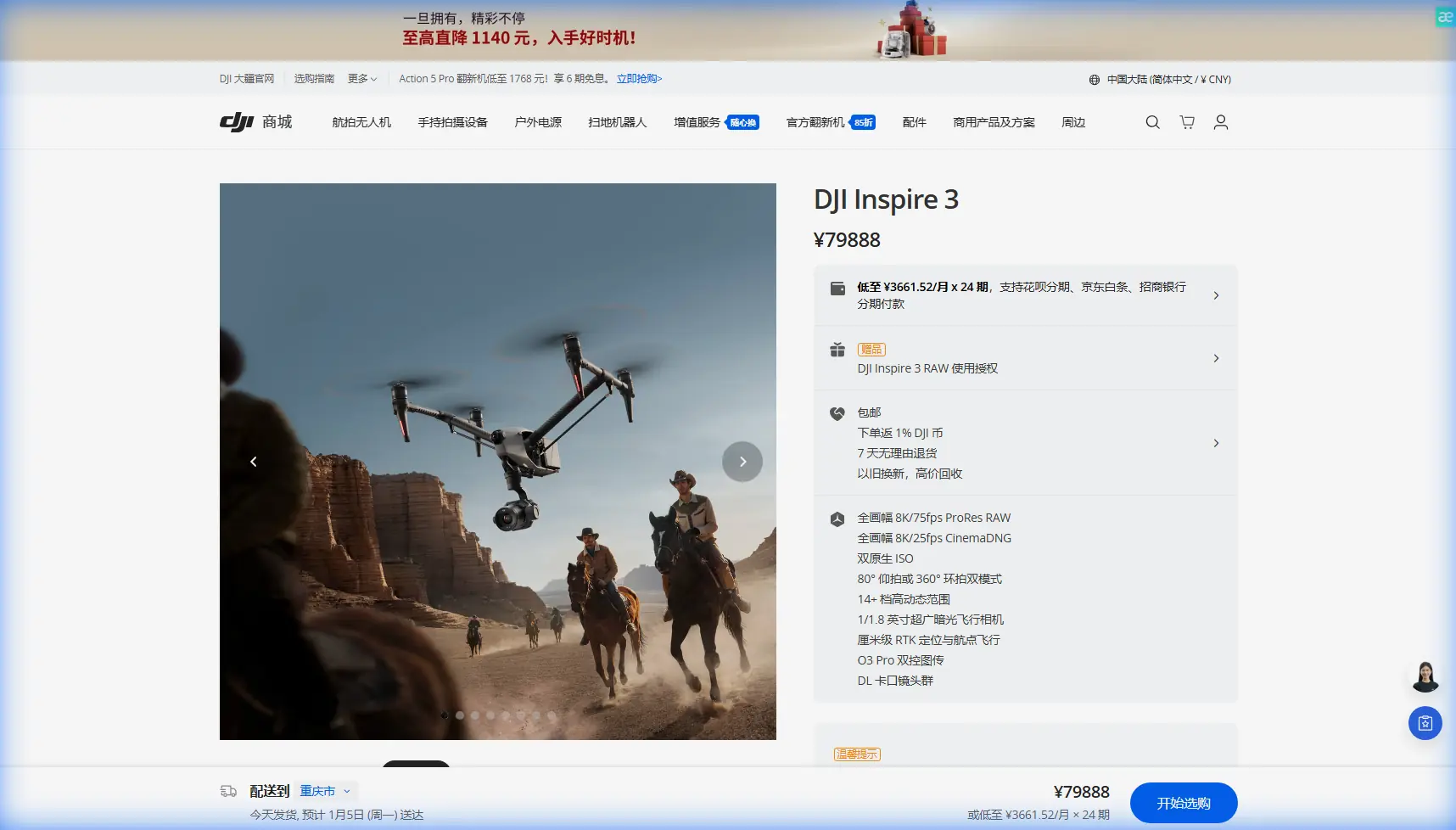
How to Scout High-Altitude Construction Sites With the DJI Inspire 3
META: Expert guide to using the DJI Inspire 3 for high-altitude construction site scouting, with practical advice on O3 transmission, RTK workflows, hot-swap batteries, photogrammetry planning, and secure data capture.
High-altitude construction scouting is where a drone stops being a nice visual tool and starts becoming a real field instrument.
Mountain roads, thin air, shifting weather, sharp elevation changes, and unreliable launch areas all expose weak aircraft very quickly. On a lowland site, you can get away with a platform that is merely convenient. On an elevated construction project, whether it is a road cut, tower foundation, lodge development, or remote utility build, convenience is not enough. You need stable flight, dependable video downlink, fast turnaround between sorties, and positional precision that supports actual project decisions.
That is where the DJI Inspire 3 earns its place.
Most people first associate the Inspire 3 with cinema work. That is fair. It was built with image quality and camera movement in mind. But on demanding construction scouting jobs, especially at altitude, some of its best traits are operational rather than artistic. The aircraft’s O3 Pro transmission, dual-battery hot-swap design, RTK-level positioning support, and robust flight behavior make it unusually capable for teams that need to inspect terrain, track site progress, and capture clean reference imagery under difficult conditions.
This is not a generic “fly a drone over a jobsite” discussion. If your task is scouting a construction site in high terrain, the workflow matters as much as the aircraft. Here is how I would approach it with an Inspire 3.
Start by defining the scouting objective
Before the aircraft comes out of the case, decide what kind of answer you need from the flight.
That sounds obvious, but it is where many site missions go sideways. “Scout the site” is too vague. A proper mission brief should answer one of these practical questions:
- Is the access road stable enough for heavy equipment mobilization?
- Has cut-and-fill progressed according to plan?
- Are spoil piles creeping toward runoff channels?
- Is there visible movement near retaining structures or temporary shoring?
- Are staging zones actually usable given slope and clearance?
- Has snowmelt, drainage, or erosion changed the work envelope since the previous visit?
Why this matters: the Inspire 3 can capture very high-quality visual data, but the flight path and altitude should be built around the decision you need to support. If you want photogrammetry for terrain comparison, you need overlap, consistency, and ground reference discipline. If you want to identify crane access constraints or haul route hazards, oblique passes and terrain-aware framing matter more than cinematic perfection.
High-altitude sites punish wasted battery cycles. A clear mission target keeps every sortie productive.
Know what the Inspire 3 does especially well on mountain and elevated sites
The Inspire 3’s biggest advantage over many smaller prosumer aircraft is not just image quality. It is the overall operating envelope.
First, the aircraft uses a dual-battery system with hot-swap capability. On a construction site at elevation, that is a serious productivity advantage. You do not want to fully power down, reboot, reacquire satellites, and rebuild mission rhythm every time you change power packs. Hot-swap batteries shorten the dead time between flights, which is especially valuable when weather windows are narrow and crew access to launch points is inconvenient. If you are working from a ridge turnout, temporary pad, or rough access bench, fewer full reset cycles mean less friction and less lost daylight.
Second, the Inspire 3’s O3 Pro transmission is one of the strongest reasons to choose it over lighter alternatives for difficult terrain scouting. In mountains or on stepped construction sites, line of sight gets interrupted by grade breaks, material piles, temporary structures, and terrain folds. A resilient transmission system matters because scouting is not just about where the aircraft can physically fly; it is about whether the pilot and visual team can maintain confident situational awareness while the aircraft covers complex topography. Strong transmission integrity reduces those moments where a flight becomes more about recovering visual certainty than collecting useful data.
Third, Inspire 3 supports RTK workflows. For construction scouting, that is operationally significant. RTK does not magically turn every image set into a survey deliverable on its own, but it improves positional consistency and strengthens repeatability between missions. If you are documenting slope progression, stockpile growth, excavation extents, or access corridor changes over time, repeatable positioning helps reduce alignment headaches later. On elevated sites where terrain changes can make visual interpretation deceptive, tighter location control matters.
Build the mission around altitude, not against it
Flying at high elevation changes aircraft behavior and mission planning in ways many crews underestimate.
Air density drops as altitude rises. That affects lift efficiency, braking feel, and the amount of power required during aggressive maneuvers or rapid climbs. On a mountain construction site, add gusts, rotor wash bouncing off slopes, and changing sun angle across rock and bare soil, and you have a flight environment that punishes rushed setups.
Here is the field rule: fly smoother than you think you need to.
With the Inspire 3, that means avoiding abrupt climb-outs right after launch, reducing unnecessary acceleration, and planning wider turns when working close to slope faces or retaining structures. The aircraft is capable, but battery consumption and stability margins are more precious at elevation. If your objective is site intelligence, not dramatic movement, every input should support image consistency and safe reserve power.
I also recommend dividing the site into mission blocks:
Macro orientation pass
A higher-level orbit or broad perimeter run to understand current access, equipment distribution, and terrain changes.Targeted inspection passes
Lower, slower runs over haul roads, cut slopes, drainage channels, laydown yards, and structural work fronts.Photogrammetry capture block
If you need reconstruction or progress mapping, run a disciplined overlap pattern with fixed altitude logic and repeatable headings.Oblique context set
Collect angled imagery that helps project managers understand conditions visually without needing to interpret a dense map product.
That sequence prevents the common mistake of burning batteries on detailed capture before you have built a coherent mental picture of the site.
Use RTK and GCPs intelligently
The Inspire 3’s RTK capability is useful, but construction teams should be realistic about what produces trustworthy outputs.
If your goal is progress comparison, volumetrics, or terrain modeling that has to line up with site control, combine RTK flight data with a sensible Ground Control Point strategy where conditions allow. GCPs are still valuable because mountain sites introduce multipath effects, elevation shifts, and varied surfaces that can complicate consistency. A few well-placed control points in stable, visible areas can dramatically improve confidence in your reconstruction.
Operationally, this matters for two reasons.
One, repeated flights over weeks or months become more comparable. If the project team wants to know whether a bench was actually widened, whether drainage diversion shifted, or whether spoil encroachment increased, aligned datasets matter more than raw image quality.
Two, disputes shrink. Construction environments generate questions about timing, sequence, and site condition. A clean RTK-plus-GCP workflow gives teams a stronger factual record.
The Inspire 3 is not marketed primarily as a mapping airframe in the way some enterprise systems are, but in skilled hands it can produce highly useful site intelligence when flown with repeatability and control discipline.
What about thermal signature work?
The phrase “thermal signature” comes up often on construction jobs, usually for diagnostics. Here, the limitation matters as much as the opportunity.
The Inspire 3 is fundamentally a high-end visual capture platform, not a native thermal inspection solution. So if your scouting requirement is centered on heat loss, electrical hotspot detection, curing irregularities, moisture intrusion, or buried utility tracing via thermal contrast, another aircraft may be the better primary tool.
That said, for many high-altitude site scouting tasks, visible-spectrum clarity is still the first priority. You often need to assess snowmelt patterns, drainage flow paths, aggregate distribution, embankment condition, and equipment access—not thermal anomalies. In those cases, Inspire 3 excels because it gives project teams crisp, stable visual records with strong positional repeatability. I would not force thermal expectations onto it. I would use it where visual detail and flight confidence are the mission drivers.
That is actually a competitive strength. Some drones try to be all things and end up average in critical field behavior. The Inspire 3 is stronger than many mixed-purpose options when the job calls for dependable visual scouting in complex terrain and professional-grade flight workflow.
Make O3 transmission part of your risk planning
The O3 transmission system is not just a spec-sheet talking point. On mountain jobs, it directly affects how aggressively and safely you can work terrain.
If the site has switchback roads, deep excavations, material stacks, or temporary structures, transmission quality can degrade before the aircraft itself is under real aerodynamic stress. This is why I plan my high-altitude scouting routes so the aircraft never disappears behind terrain features during the most detail-sensitive portions of the mission.
With Inspire 3, the stronger transmission link gives you more confidence than many compact competitors, especially when the site layout is irregular. But the correct lesson is not “push farther.” The correct lesson is “hold cleaner geometry.” Use ridgeline-adjacent launch points when practical, keep your antenna orientation disciplined, and avoid asking any drone to solve a terrain-obstruction problem through signal strength alone.
For teams operating under stricter oversight, secure transmission and data handling matter too. AES-256 encryption support is relevant here. Construction imagery can reveal infrastructure layouts, material staging, access limitations, and site sequencing. That may not sound sensitive until stakeholders realize how much operational detail is visible from the air. Encrypted workflows reduce exposure when site records are shared across contractors, consultants, and owners.
Battery strategy is where many site teams win or lose the day
High-altitude scouting rewards battery discipline.
The Inspire 3’s hot-swap battery setup helps more than most teams expect. It allows you to keep the mission moving while preserving aircraft readiness. On a remote site, that translates into a better cadence: land, swap, verify, relaunch. No wasted reset cycle. No unnecessary delay while weather shifts.
I structure battery use by mission purpose, not by casual percentage thresholds. For example:
- Battery set A: orientation and access-road overview
- Battery set B: slope and drainage inspection
- Battery set C: photogrammetry block
- Battery set D: reshoot reserve for any missed sectors
That sounds simple, but it reduces the temptation to cram too much into one flight. At altitude, reserve margins disappear faster than they do on flatter, calmer jobsites.
Also, cold morning conditions at elevation can change battery behavior. Keep packs managed properly before launch, and do not assume early-flight performance tells the whole story once wind picks up over sun-heated rock faces later in the day.
How to capture imagery that project teams can actually use
Beautiful footage is easy to admire and difficult to act on. Construction scouting needs imagery that answers questions.
When using the Inspire 3, I recommend collecting four categories of visuals:
1. Straight-down references
These are useful for plan comparison, material layout review, route tracing, and photogrammetry inputs.
2. Low oblique progress views
These help superintendents and engineers understand slope angles, bench widths, staging constraints, and equipment relationships in a more intuitive way than orthographic imagery alone.
3. Fixed repeat viewpoints
Return to the same position, height, and camera angle each visit. This creates a time-series record that project teams can interpret quickly.
4. Entry and egress corridor views
On high-altitude jobs, access often dictates schedule. Capture roads, temporary bridges, laydown approaches, and turning radii with enough context to show whether heavy vehicles can actually move as planned.
This is also where the Inspire 3 beats many lighter drones in practical terms. The aircraft feels more at home in a deliberate, professional capture routine. It is stable enough to support repeatable framing, and the overall flight system encourages structured operation rather than quick improvised passes.
Don’t oversell BVLOS
BVLOS gets mentioned often in discussions about large or remote construction sites. Treat it carefully.
For civilian commercial work, BVLOS operations depend on local regulation, approvals, risk controls, and company procedures. The Inspire 3’s transmission capability may support work across larger areas, but that does not mean a team should casually stretch operations beyond authorized visual conditions. On mountain sites, terrain can interfere with both visibility and link quality in unpredictable ways.
The practical takeaway is straightforward: use the aircraft’s strength to improve confidence and data quality within a compliant mission structure, not to blur the line between efficient operation and poor judgment.
A sample high-altitude Inspire 3 scouting workflow
If I were deploying to an elevated construction site tomorrow, my sequence would look like this:
- Review topography, access points, and forecasted wind periods
- Choose a launch point with clean sightlines over the highest-priority sectors
- Establish mission objectives: access review, slope condition, progress capture, or mapping
- If repeatable outputs matter, set RTK workflow and validate GCP visibility
- Fly a broad orientation pass first
- Run targeted low-speed inspection passes over roads, cut faces, drainage channels, and active work zones
- Capture a structured photogrammetry block only after the site picture is clear
- Finish with oblique context imagery for project managers and non-technical stakeholders
- Log battery performance and site-specific wind behavior for the next visit
If you are building or refining this kind of workflow and want to discuss field setup with someone directly, you can message an Inspire 3 specialist here.
Where Inspire 3 stands against competitors for this job
For high-altitude construction scouting, the Inspire 3 sits in a useful middle ground that many competing aircraft miss.
Smaller folding drones can be easier to pack, but they often feel less authoritative when the site is large, winds are inconsistent, and the mission needs to be repeated with professional discipline. Heavier enterprise mapping platforms may offer more native survey or thermal specialization, but they are not always the best fit when the deliverable is a blend of high-quality visual intelligence, progress documentation, and selective reconstruction workflow.
The Inspire 3 excels when the mission demands three things at once:
- premium visual detail
- reliable operational rhythm
- stable performance in complex terrain
That combination is rare enough to matter.
For a high-altitude construction site, those traits are not cosmetic. They influence whether you return with footage people admire or data the project can actually use.
Ready for your own Inspire 3? Contact our team for expert consultation.