
Scouting Power Lines in Windy Conditions With the DJI Inspir
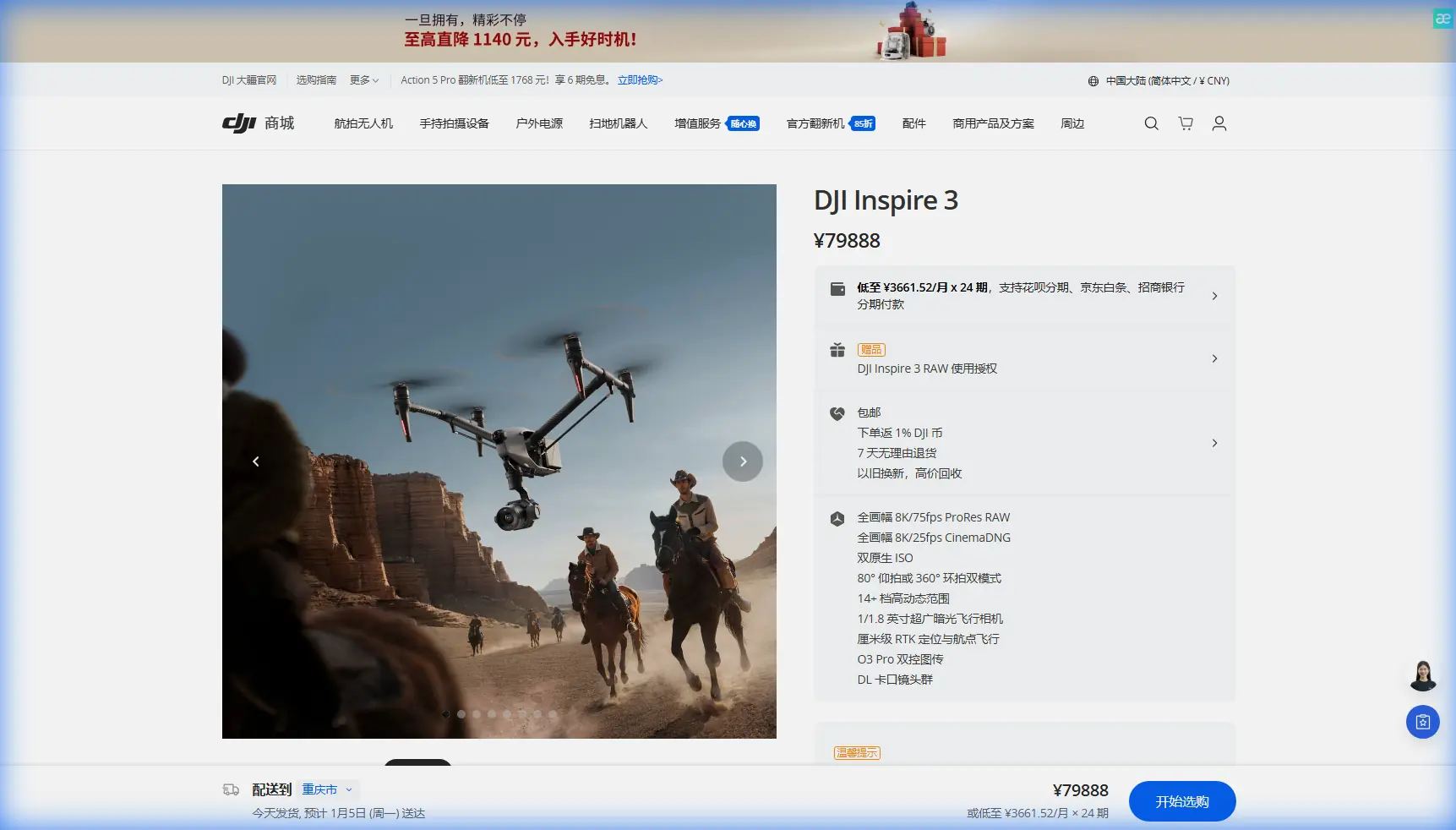
Scouting Power Lines in Windy Conditions With the DJI Inspire 3: A Technical Field Review
META: Expert technical review of using the DJI Inspire 3 for windy power line inspections, covering O3 transmission, hot-swap batteries, AES-256 security, thermal workflows, GCP alignment, and BVLOS planning.
Power line scouting in wind is where glossy spec sheets stop mattering and aircraft behavior starts telling the truth. The DJI Inspire 3 is usually discussed as a cinema platform, and that framing misses something useful: in the hands of an experienced utility team, it can become a highly disciplined observation tool for corridor assessment, structure awareness, and visual defect detection in places where gusts, terrain, and signal integrity all try to complicate the mission.
I have spent enough time around transmission routes to know that “windy” is rarely a minor inconvenience. It changes launch decisions, camera timing, route geometry, battery planning, and the way a pilot reads the aircraft over every span. If the mission is scouting power lines rather than capturing dramatic footage, the question is not whether the Inspire 3 can fly. The question is whether it can deliver stable, actionable data when crosswinds push the aircraft off-axis, conductors create visual clutter, and the crew must stay disciplined around electromagnetic noise, right-of-way access, and wildlife.
That is the lens for this review.
Where the Inspire 3 Actually Fits in Utility Scouting
The Inspire 3 is not a one-size-fits-all inspection aircraft. It is not the natural first pick for every utility workflow, particularly where integrated radiometric thermal payloads or tightly packaged enterprise software ecosystems are non-negotiable. But for visual reconnaissance, high-resolution asset review, corridor familiarization, vegetation conflict checks, and photogrammetry support around towers and substations, it has some real strengths that become more obvious in the field than in product brochures.
The first is flight authority in messy air. Long, exposed power corridors often create uneven wind behavior. You can have a fairly manageable launch area, then hit stronger lateral movement once you rise above tree line or approach ridges and open spans. In those conditions, aircraft stability affects more than image quality. It affects pilot workload. A platform that holds attitude cleanly and recovers predictably from gust input lets the crew focus on the line environment instead of spending the entire sortie fighting drift.
The second is image discipline. Power line scouting often begins before formal defect categorization. You may be trying to identify damaged insulators, unusual hardware angles, conductor clearance concerns, encroaching vegetation, or access constraints for a later maintenance team. That requires clean repeatable framing. The Inspire 3’s gimbal behavior, combined with its transmission reliability, makes it especially useful when the mission profile demands careful standoff positioning rather than aggressive close-in flying.
Wind Changes Everything, Especially Near Linear Infrastructure
Inspecting linear assets is not the same as orbiting a building or filming a fixed scene. The subject extends away from you, often through changing topography, and the aircraft must maintain both orientation and safe separation while still gathering usable imagery. Wind compounds every one of those requirements.
A headwind on the outbound leg can quietly eat into reserve margins. A quartering crosswind can shift your lateral reference and make conductor spacing harder to read at a glance. Gusts near lattice structures or around hill crests can disturb the aircraft just as the camera operator is trying to lock a view on attachment hardware or spacer dampers. This is why hot-swap batteries matter in practical terms. They are not just convenient. On long utility days, they reduce turnaround friction between sorties, which helps crews keep momentum when weather windows are narrow and repeated launches are necessary to document multiple structures before the wind builds further.
That operational rhythm matters more than many teams admit. If battery changeovers are clumsy, crews rush preflight steps or delay relaunches long enough for conditions to deteriorate. A hot-swap workflow supports steadier mission cadence and cleaner decision-making.
The Inspire 3 also benefits from O3 transmission in this environment. Power line routes can challenge situational awareness because the aircraft is often working against visually repetitive backgrounds: treelines, fields, rocky cuts, or industrial edges. A robust downlink matters because the pilot and visual observer need confidence in aircraft orientation and camera feedback while maintaining legal and safety boundaries. O3 transmission is not a magic shield against every obstruction or interference source, but in corridor work it contributes to a more dependable control-and-monitoring experience when the aircraft is being repositioned frequently along a line.
Security Is Not an Afterthought on Utility Missions
Utility infrastructure is sensitive by nature. Even when the task is a basic scouting flight, the captured imagery may reveal substation layouts, tower modifications, access roads, and maintenance conditions. That is why AES-256 encryption is not a footnote. It has operational significance whenever teams are transmitting or storing imagery tied to critical infrastructure.
People often talk about encryption as if it only matters in abstract IT discussions. In field operations, it matters because asset owners increasingly ask hard questions about data handling. If your flight team is building inspection records, pre-maintenance observations, or site imagery that feeds into a broader asset management process, secure transmission standards can influence whether a workflow is even approved. The Inspire 3’s AES-256 capability helps it fit more comfortably into utility environments where cyber hygiene is part of the mission architecture, not an optional add-on.
That becomes even more relevant when teams are planning for extended corridor operations or potential BVLOS frameworks. BVLOS is never just about aircraft range. It is a layered operational model involving airspace, detect-and-avoid strategy, emergency planning, command reliability, data integrity, and regulatory approval. If a utility operator is thinking beyond short visual scouting hops and toward scalable corridor programs, secure links and reliable transmission are foundational pieces of the conversation.
Visual, Thermal, and Mapping: Knowing What the Inspire 3 Can and Cannot Do
A lot of inspection teams make expensive mistakes by forcing a single aircraft into every role. The smarter move is understanding exactly where each platform delivers value.
For visual work, the Inspire 3 can be excellent. It is well suited to capturing structural context, detailed oblique views, conductor routing relationships, access conditions, and the surrounding terrain picture that maintenance planners often need but do not always get from tightly cropped inspection shots. If your utility operation needs a high-quality visual scout before dispatching a specialized thermal or LiDAR team, this aircraft makes sense.
Thermal signature analysis is more complicated. If the mission specifically depends on calibrated thermal data for hotspot diagnostics, connector heating trends, or precise anomaly documentation, the workflow has to be matched to the right payload ecosystem. The Inspire 3 can still support the job by providing visual confirmation, geometry, context imagery, and route familiarization for the thermal team. In that role, it becomes a force multiplier rather than the sole inspection instrument.
The same logic applies to photogrammetry. People do not always associate the Inspire 3 with utility mapping, but around substations, tower pads, access roads, and localized terrain changes, photogrammetric capture can be extremely useful. The catch is that good models depend on disciplined planning. GCP placement remains important when absolute alignment matters, especially if the output will feed design, maintenance planning, or change detection. Without well-distributed GCPs, a clean-looking model may still drift enough to reduce engineering confidence. That detail gets overlooked far too often.
A Field Scenario: Wind, Conductors, and an Unplanned Wildlife Variable
One of the more revealing moments in corridor work is when the script breaks.
During a windy line scout over mixed scrub and open ground, a deer moved through the right-of-way below the conductors just as the aircraft was transitioning to document a pole-top assembly. A few seconds later, a large hawk lifted from a nearby perch and cut across the airspace off the line’s edge. Neither event was dramatic in the cinematic sense. Operationally, both mattered.
The deer was irrelevant to air risk but useful as a reminder of how often line routes intersect with active wildlife corridors. The hawk was different. Birds of prey can become a real concern around utility routes, particularly where poles and towers create natural perches. In that moment, the value of stable sensor feedback and a controlled aircraft response became obvious. Rather than pressing through the shot, the crew widened separation, adjusted altitude, and temporarily shifted the inspection angle until the bird cleared the area.
That is the kind of decision that separates a mature operation from a reckless one. The Inspire 3’s sensor and transmission feedback helped the crew manage the encounter cleanly, but the larger lesson is procedural: power line scouting demands wildlife awareness, not just obstacle awareness. Windy days can make bird behavior less predictable, and linear infrastructure often attracts species you do not want to surprise at close range.
Practical Flight Technique for Windy Power Line Routes
The best results with the Inspire 3 come from flying it like a technical instrument, not a creative toy.
Start farther back than instinct suggests. In gusty conditions, extra standoff distance buys reaction time and preserves framing when the aircraft gets nudged laterally. It also reduces the temptation to make abrupt corrections near conductors. Keep the aircraft offset from the line rather than directly under or above it whenever the mission allows. That angle usually produces better visual understanding of hardware relationships and gives the pilot a safer geometry for maintaining separation.
Use repeated short segments instead of one long heroic pass. Corridor missions feel efficient when flown continuously, but short segmented sorties are often smarter. They simplify battery decisions, lower cumulative fatigue, and make it easier to re-fly a structure if the light or wind disrupts capture. Again, the hot-swap battery design supports this style of operation because the aircraft can return to work without long dead periods that break concentration.
Transmission discipline also matters. O3 transmission helps maintain a stable operational picture, but crews should still pre-identify likely signal challenges, especially around terrain folds, dense vegetation edges, metal-rich industrial zones, and substation environments. If a route section looks likely to compromise the link, reposition the crew rather than asking the aircraft to solve the problem for you.
For teams building documentation chains, secure handling should be part of the checklist from the beginning. AES-256 matters most when it is integrated into an actual policy: controlled storage, restricted access, and clear retention practices. On utility contracts, that professionalism can matter as much as the imagery itself. If your team is refining that workflow, it helps to compare mission design notes with operators who have already built corridor-specific procedures; I usually recommend crews message a utility drone specialist here before scaling a repeat inspection program.
What Utility Teams Should Watch Before Deploying the Inspire 3
The Inspire 3 rewards precision and punishes casual assumptions. That is a good thing, but it means utility crews should be honest about the mission profile.
If the primary objective is close-range thermography with integrated temperature analytics, choose accordingly. If the goal is visual intelligence in difficult air, route familiarization, support imagery for engineering teams, or high-quality data collection around assets where stable framing matters, the Inspire 3 has a strong case. It is especially capable when the crew understands three non-negotiables.
First, wind planning must be treated as a live variable, not a preflight checkbox. Corridor wind can shift by altitude, terrain, and span orientation. Second, mapping and documentation workflows need discipline. If photogrammetry is involved, GCP strategy cannot be an afterthought. Third, data security belongs inside the mission design. AES-256 and reliable transmission are only meaningful when paired with operational procedures that respect the sensitivity of infrastructure imagery.
The result is not a generic drone solution. It is a specialized field tool that can perform far beyond its reputation when used by crews who understand line environments.
That is the real takeaway from using the Inspire 3 for power line scouting in wind. Its value is not that it does everything. It is that it does several critical things well: stable visual acquisition, dependable link performance through O3 transmission, secure data handling through AES-256, and efficient sortie turnover with hot-swap batteries. Those details sound technical because they are technical. They also directly shape whether a windy-day mission produces useful information or just pilot stress and half-usable footage.
For utility work, that distinction is everything.
Ready for your own Inspire 3? Contact our team for expert consultation.