
Low-Light Venue Scouting With Inspire 3: A Field Case Study
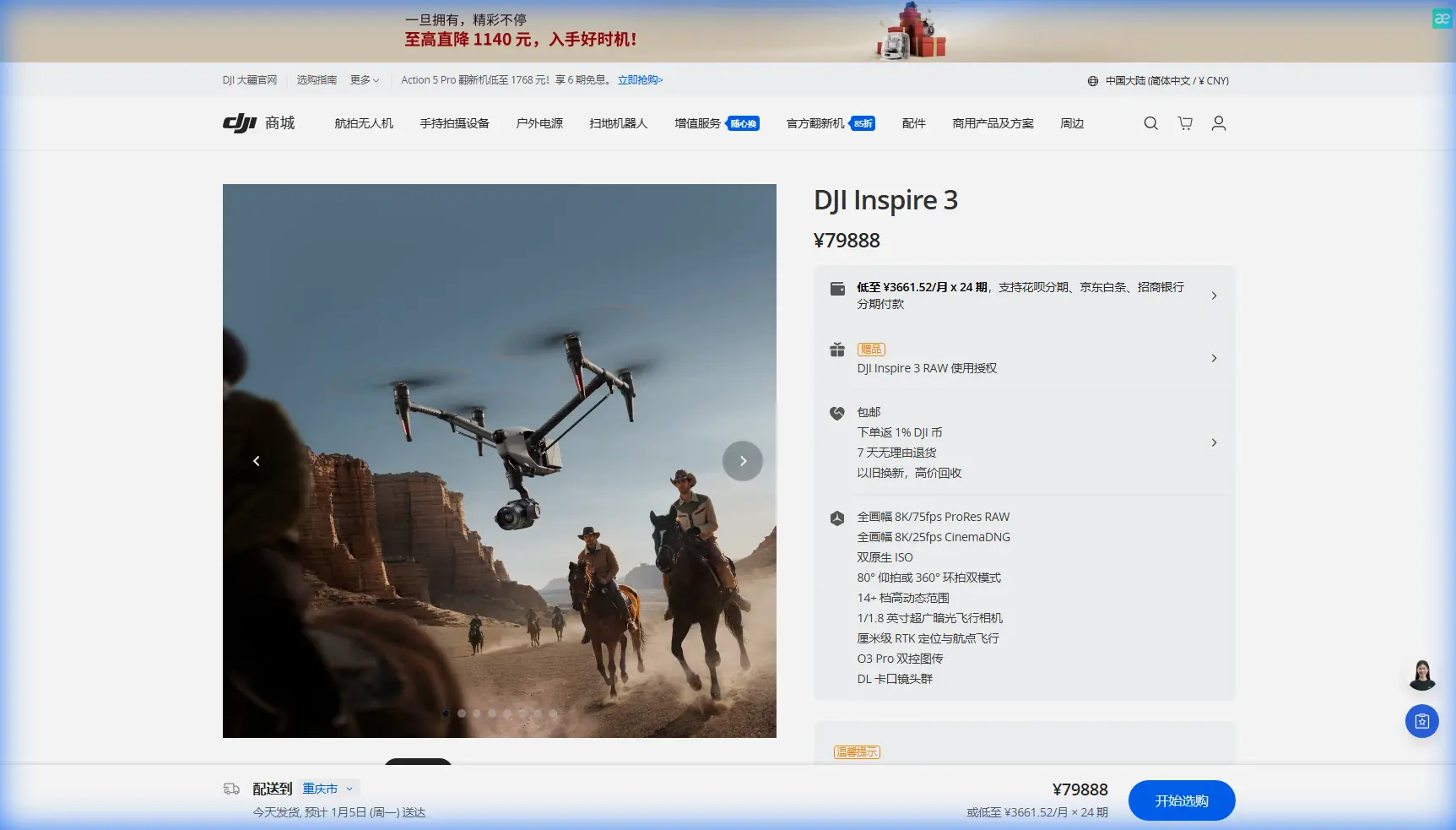
Low-Light Venue Scouting With Inspire 3: A Field Case Study in Data Integrity, Uptime, and Signal Discipline
META: A practical Inspire 3 case study on low-light venue scouting, covering transmission stability, hot-swap workflow, reliability metrics, and how disciplined data handling improves repeatable results.
The most revealing part of a low-light venue scout is not the hero shot. It is the moment when the aircraft, the crew, and the data pipeline are all asked to behave predictably in imperfect conditions.
That is where Inspire 3 starts to separate itself.
I recently structured a venue reconnaissance workflow around Inspire 3 for a team evaluating an event site after dusk. The brief sounded simple: inspect access routes, rooflines, lighting spill, façade geometry, and possible camera positions before a production crew committed to rigging plans. In reality, low-light scouting pushes several systems at once. You are dealing with compromised visual contrast, a dense RF environment, compressed scheduling, and a client who expects answers that can be trusted the next morning, not vague impressions gathered in the dark.
The lesson was not just that Inspire 3 can fly this kind of mission. It was that the quality of the mission depends on how seriously you treat two old aviation ideas that still matter in modern UAV operations: disciplined load-spectrum thinking and measurable readiness.
Why low-light scouting is harder than it looks
A venue scout after sunset is rarely a pure cinematography exercise. It often blends inspection logic, location intelligence, and pre-production planning. The pilot is trying to hold stable flight near structures. The visual observer is watching for obstructions and changing site activity. The production lead wants spatial confidence. The data team may also want usable geometry for photogrammetry, even if the primary mission is visual assessment.
In these conditions, aircraft behavior cannot be judged by a single smooth flight. It has to be judged by repeatability.
One of the most useful ideas from classical aircraft testing is that real operating data should be collected from representative environments and operators with different skill levels. The source material behind this article makes that point directly: test samples should come from different representative bases and pilots with different technical levels, and each typical mission profile should be repeated 3 to 5 times to ensure reliability of the sample. That principle translates remarkably well to Inspire 3 venue scouting.
For this job, we did not treat one twilight pass as truth. We repeated core orbits and approach lines across several batteries and from slightly different launch positions. Why does that matter operationally? Because low-light site work is full of variables that can fool a crew into overconfidence: changing ambient light, temporary interference, autofocus hesitation, reflective surfaces, and pilot adaptation over the first few minutes. Repeating the same mission segment exposes what is stable and what is merely convenient.
That is the difference between “we saw it” and “we can stand behind it.”
The hidden enemy is dirty data, not darkness
Another reference detail is easy to overlook but has huge practical value for UAV crews: measured flight-parameter records inevitably contain small noise and error codes, and those invalid data points should be filtered or removed before interpretation. In manned-aircraft fatigue and load analysis, that protects the integrity of the dataset. In drone operations, the same logic applies to your scout package.
When scouting a venue in low light, you generate multiple kinds of information at once:
- flight logs
- video downlink observations
- telemetry trends
- battery behavior
- route notes
- geospatial captures for mapping
- pilot annotations about interference, glare, or obstacle zones
If you review that package casually, small anomalies can distort your decisions. A brief telemetry spike might look like a signal problem when it was actually a transient environmental artifact. A sloppy timestamp note can make a façade issue appear tied to the wrong flight segment. A single weak pass in bad orientation might be mistaken for a site-wide transmission limitation.
So we built the workflow around preprocessing the mission data before making recommendations. That meant reviewing repeated passes, rejecting obvious outliers, and aligning observations to one primary reference point in time. The source material describes this in a more formal way: use a main parameter as the basis for selecting the exact moment, then interpret other parameters relative to that same instant. In UAV terms, that becomes a simple but powerful discipline: tie your observations to one trusted event marker, then reconcile camera view, aircraft attitude, transmission quality, and pilot notes around it.
This matters because venue scouts become planning documents. If the data is noisy, the production decision is noisy too.
Where Inspire 3 earns trust on site
Inspire 3 is well suited to this style of scouting because it can support a more structured field method rather than a one-pass improvisation. The aircraft’s professional imaging stack is only part of the story. What counts in practice is the combination of stable positioning, a robust transmission environment, hot-swap battery workflow, and the ability to move quickly between visual reconnaissance and more technical capture tasks.
On this venue mission, hot-swap batteries were not just a convenience. They changed the rhythm of the operation. We could preserve mission continuity while maintaining momentum across repeat passes, which is exactly what you want when comparing one route against another under similar ambient conditions. If your battery change introduces long delays, the lighting baseline changes and your comparison becomes weaker. Fast turnarounds make repeated low-light testing more meaningful.
That connects neatly with another concept from the reliability reference: turnaround time is the time required after landing to prepare for the next sortie under defined conditions. In the manned-aircraft context, it includes inspection and replenishment tasks. For Inspire 3 operators, the equivalent is obvious: battery exchange, aircraft check, payload readiness, SD status, route confirmation, and re-launch sequencing.
Why bring up a reliability metric in a drone scouting article? Because professionals should think this way. A scouting aircraft is not valuable only when airborne. It is valuable when it can land, reset, and go back up without unnecessary friction. That is what preserves the tempo of a real commercial operation.
Handling electromagnetic interference without losing the mission
The venue itself introduced another familiar problem: electromagnetic interference around steel structure, lighting infrastructure, and congested communications equipment. This is where crews often make a tactical mistake. They assume transmission issues in dense venues are purely a power problem or a software problem, when in many cases they are geometry problems.
We saw intermittent link quality degradation along one side of the site, particularly near a bank of installed venue electronics. The fix was not dramatic. We adjusted crew position and refined antenna orientation to improve the relationship between the controller and aircraft during the critical segment. Once the antenna alignment was corrected and the operator stopped standing in a partially shielded position relative to the structure, the link stabilized significantly.
That sounds basic because it is basic. Yet it is one of the most overlooked field skills in urban or event-heavy drone operations.
For low-light scouts, dependable downlink quality matters for more than flight safety and confidence. It affects interpretation. If your view drops or degrades during a dark façade inspection, you can misread shadow boundaries, miss temporary rigging, or overestimate usable access. Inspire 3’s O3 transmission ecosystem gives crews a strong platform, but platform capability does not replace RF discipline. Aircraft performance and crew positioning have to work together.
When sensitive venue material is involved, transmission security also matters. If you are scouting pre-opening event layouts, construction staging, or controlled-access sites, encrypted communications are not just a technical footnote. AES-256 support becomes relevant because the mission data may include operationally sensitive visual information even when the use case is entirely civilian.
Reliability should be measured in probabilities, not impressions
The second source document introduces several reliability terms that deserve more attention in the UAV world, especially for crews running repeat client work. One of them is mission completion success probability, defined as the probability that the aircraft can complete the specified mission within a defined mission profile.
That idea is useful for Inspire 3 operators because it reframes planning. Instead of asking, “Can this aircraft do the job?” ask, “What is the probability that this exact mission profile will be completed cleanly under these conditions?”
For low-light venue scouting, the mission profile may include:
- launch from a constrained staging area
- inspection of multiple exterior elevations
- stable orbit capture near lit architectural elements
- verification of access corridors
- optional photogrammetry pass for planning geometry
- return, battery change, and confirmation pass
When teams start thinking in mission-profile terms, their preflight decisions improve. They become more sensitive to controllable factors such as battery sequencing, observer placement, antenna direction, route order, and fallback paths. Inspire 3 is capable, but probability of success rises when the crew treats the sortie as a designed system, not a spontaneous flight.
Another term from the reference is maintenance-free alert time: the duration an aircraft can remain prepared and in a ready state under stated conditions without requiring maintenance. For manned systems, this is a readiness measure. For a professional UAV team, the equivalent question is practical: how long can Inspire 3 remain staged, configured, and ready for rapid deployment at a venue before checks, battery management, environment, or support actions begin to degrade readiness?
This matters in scouting because schedules drift. Gate access changes. Event staff delay your window. Lighting tests start late. A drone team that can keep the aircraft in a ready state without constant corrective fuss is far more useful on site than one that needs a mini-reset every time timing slips.
Why repeated passes beat overconfident single flights
The old aircraft-testing guidance about repeated mission profiles also changes how we build drone scouting deliverables. If a route matters, fly it more than once. If a line-of-sight corridor seems marginal, validate it under slightly different geometry. If a photogrammetry plan is being considered, do not assume the first pass tells the whole truth.
This is especially relevant when combining visual scouting with geometry capture. In low light, photogrammetry quality can suffer if contrast is weak or if the site has reflective or texture-poor surfaces. If the team also intends to place GCPs for accurate reconstruction on a later mission, the scout should identify where those control points can realistically be seen and maintained, not just where they would look good on a daytime planning map.
That is why I favor a case-study workflow for Inspire 3 scouting:
- Conduct a primary visual reconnaissance pass.
- Repeat critical segments to test consistency.
- Flag and filter suspect observations.
- Verify signal quality in known interference zones.
- Confirm turnaround efficiency with hot-swap workflow.
- Deliver a recommendation set based on repeated evidence, not isolated impressions.
This is slower than grabbing a few dramatic clips and leaving. It is also infinitely more useful.
The operational value of a simulation mindset
The load-spectrum source also mentions a flight-simulation-based method developed to address the gap between legacy data and newer, higher-performance aircraft whose behavior may differ too much for simple extrapolation. The underlying principle is relevant to Inspire 3 crews even if they never touch formal aeronautical simulation tools.
Do not over-rely on assumptions borrowed from another aircraft, another venue, or another pilot.
A lot of drone teams carry habits forward from previous platforms and call that experience. Sometimes that works. Sometimes it creates blind spots. Inspire 3 missions in complex venue environments benefit from a simulation mindset: pre-build the mission, model the route, anticipate problem zones, and then compare the real flight against that expectation. If the outcome diverges, update the model instead of forcing the data to fit the plan.
That is how mature operations improve.
What the client actually received
The final deliverable from this scout was not a folder of attractive night imagery. It was a decision package. The client got confirmed access visuals, roofline and obstruction notes, transmission-risk areas, suggested takeoff positions, likely GCP-friendly zones for a future mapping task, and an evidence-backed recommendation on where low-light flying would remain efficient versus where a dawn follow-up would be smarter.
That package had value because the mission was built around trustable data.
If you are planning a venue scout and want to compare methods or discuss signal management in difficult RF environments, you can message our flight team directly here.
Inspire 3 is often discussed as a camera platform first. For serious venue reconnaissance, that is too narrow. Its real strength is that it can support a disciplined operational method: repeatable routes, efficient resets, secure transmission, and enough system maturity to turn a dark, interference-heavy site into a usable planning model by the end of the night.
That is what professionals need from a scout aircraft. Not drama. Dependability.
Ready for your own Inspire 3? Contact our team for expert consultation.