
Inspire 3 in Mountain Vineyards: Field-Proven Scouting
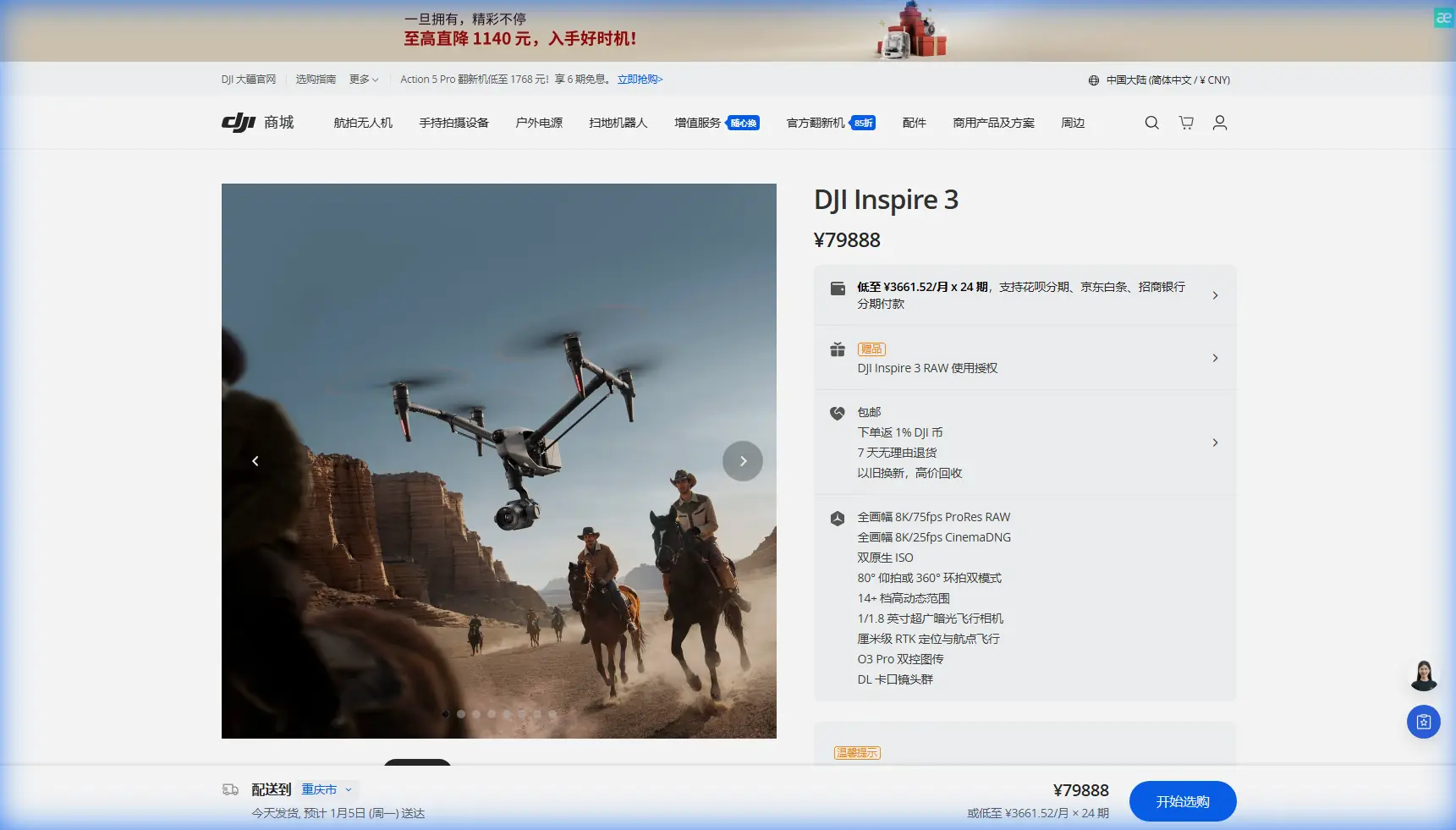
Inspire 3 in Mountain Vineyards: Field-Proven Scouting Practices That Respect Terrain, Time, and Data
META: Expert Inspire 3 scouting advice for mountain vineyards, with practical battery handling, terrain workflow, data integrity, and transmission considerations for reliable aerial surveys.
By Dr. Lisa Wang, Specialist
Mountain vineyards are beautiful right up until you have to map them properly.
Rows fold around ridgelines. Wind changes by the minute. Lighting shifts across slopes faster than many crews can adapt. And if your mission is more than pretty footage—if you need repeatable scouting data for canopy health, drainage patterns, access roads, or replanting decisions—the margin for sloppy workflow disappears.
That is where the Inspire 3 becomes interesting. Not because it is simply powerful, but because it can be disciplined. In vineyard work, discipline matters more than headline specs. You need stable capture, predictable battery behavior, clean transmission, secure data handling, and a mission design that respects the fact that mountain terrain is never uniform.
What follows is not a generic overview. It is a field-minded approach to using Inspire 3 for scouting vineyards in mountainous conditions, shaped around one central problem: how to gather dependable aerial intelligence when terrain, vibration, airflow, and battery timing are all working against consistency.
The real problem in mountain vineyards
Flat farmland forgives a lot. Mountain vineyards do not.
On a steep site, the aircraft is constantly dealing with changing relative elevation between itself and the ground. That affects capture geometry for photogrammetry, line-of-sight for transmission, and the amount of time the pilot spends making micro-corrections. Add terraced sections, narrow service roads, retaining walls, and isolated tree lines, and the mission stops being a simple grid flight.
The most common failure I see is not a crash or a hardware fault. It is data that looks acceptable in the field but becomes weak in post-processing. Overlap is inconsistent. Shadows break uniformity. Battery swaps interrupt a clean acquisition sequence. An operator loses transmission confidence near a fold in the ridge and rushes the final passes. The result is a map or inspection set that cannot support agronomy decisions with confidence.
So the solution has to start before takeoff.
Why structural thinking matters, even for a vineyard mission
One of the more overlooked lessons from aircraft design literature is that vibration behavior and structural frequency characteristics are not abstract engineering trivia. They affect mission quality directly.
The reference material includes discussion of stiffened plate structural characteristics and frequency response optimization, with one section specifically noting 加筋板结构的固有特性 at (1062) and another covering 结构频率响应优化设计 at (1133). On paper, those are aircraft structural topics. In the field, they remind us of something practical: when an airframe-camera system encounters repeated excitation—wind shear over terraces, acceleration after a turn, descent along a leeward slope—image stability and measurement fidelity depend on how well the platform manages vibration and resonant behavior.
For Inspire 3 operators, the operational significance is straightforward. If you are flying a mountain vineyard scouting run, avoid sharp, repetitive control inputs at the same speed and turn style over every row block. Uniformity sounds good, but mechanically induced oscillation patterns can become visible in image consistency, especially when wind channels through narrow valleys. Slightly adjusting route segmentation and turn smoothing often produces cleaner datasets than brute-force repetition.
That is also why payload security, prop condition, and takeoff surface selection matter more than many crews admit. A launch pad placed on loose gravel beside a mountain track is not just untidy. It can introduce dust contamination and subtle disturbances at the exact point where the aircraft and gimbal should begin from a clean baseline.
Build the mission around terrain, not around row direction alone
In vineyards, beginners often align their flight path purely with the vine rows. Sometimes that works. In mountains, it can be the wrong priority.
Your primary variables are slope angle, sun direction, and terrain shielding. If the ridge blocks your transmission path halfway through the mission, perfect row alignment will not save the dataset. The better method is to break the property into terrain-coherent sectors:
- upper exposed slopes
- mid-slope production blocks
- gullies and drainage cuts
- access corridors and service infrastructure
- lower shaded terraces
This segmentation makes each sortie easier to manage. It also helps if you are planning downstream photogrammetry with GCP support, because your control strategy becomes more logical. Ground control points should be visible, distributed across elevation change, and not clustered only near the easiest access roads. In mountain vineyards, vertical variation is the trap. A map can look visually complete while still carrying poor geometric confidence in the very areas where drainage and erosion decisions matter most.
If you are capturing thermal signature patterns as part of scouting—for instance, comparing heat retention zones around stressed blocks or irrigation irregularities—timing becomes even more sensitive. Thermal interpretation on slopes is heavily shaped by solar exposure and wind. The western terrace that looks warm at one hour may normalize later, while a shaded hollow can mislead you if you ignore cold air pooling. The Inspire 3 workflow should therefore separate visual mapping objectives from thermal-style observational objectives rather than trying to force everything into one rushed sortie.
Transmission reliability is not just about range
People mention O3 transmission as if it only means distance. In mountain vineyard work, the bigger issue is continuity.
A long-range link is useful, but folded terrain introduces abrupt masking. One second the downlink is clear; the next, a ridge shoulder, stone retaining wall, or tree band degrades the path. That does not merely affect piloting comfort. It affects decision quality. Operators who feel transmission instability tend to shorten lines, speed up, or abandon planned overlap at the edge of a block.
This is where disciplined route planning beats bravado. Keep the control point where you can preserve the strongest practical line-of-sight to the largest share of the sector. If one slope is transmission-shadowed, do not stretch from a single launch site out of convenience. Reposition. A five-minute relocation often protects an entire morning’s dataset.
For teams handling sensitive estate mapping, vendor records, or trial block analysis, encrypted workflows matter too. AES-256 is not a marketing footnote in commercial operations. Vineyard scouting can involve proprietary planting experiments, irrigation layouts, and production planning. If you are sharing captures across consultants, agronomists, and ownership groups, secure handling should be built into the workflow from day one, not patched on afterward.
The battery tip I give every mountain crew
Hot-swap batteries are one of those features that can either save your day or quietly ruin your consistency if handled casually.
Here is the field rule I use: never let a battery change dictate the end of a sector unless that sector was designed around the swap window.
In mountain vineyards, crews often push one more pass because the block is “almost done.” That is where errors pile up. Wind has risen. Shadows have shifted. The pilot is mentally transitioning to battery management instead of image discipline. You end up completing a dataset that is technically finished but operationally compromised.
The better practice is this:
- Define each sector so it can be completed with reserve, not just with optimism.
- Land before the batteries become the dominant concern.
- Use hot-swap capability to keep the aircraft ready, but restart only with a clear next segment boundary.
- After the swap, verify lens cleanliness, prop condition, and mission naming before relaunch.
That last point sounds basic. It is not. In mountain conditions, the period between sorties is when dust, moisture, and mental shortcuts creep in.
A practical battery management tip from field experience: if the morning is cold at elevation, keep the spare set insulated and physically close to the crew until needed. Batteries exposed too long on a shaded tailgate can deliver a very different confidence profile from batteries kept warm and staged properly. The swap itself may be quick; the performance consistency behind it is what matters.
Reliability by design, not by luck
The second reference document points to another useful mindset. It includes 系统可靠性设计 at (229) and notes 排气系统试验的一般要求 at (209), along with broader emphasis on test methods and component characteristics. While these source topics come from propulsion system design, the field lesson for Inspire 3 crews is still relevant: reliability comes from deliberate system thinking and test discipline.
For vineyard scouting, that means treating your aircraft package as a working system, not a camera that happens to fly.
Before a mountain mission, test:
- your storage workflow
- your controller-device pairing stability
- home point logic in uneven terrain
- return path assumptions if wind shifts
- visibility of GCP markers at operational altitude
- communication protocol between pilot and visual observer
That is reliability design in practice. You are reducing hidden points of failure before they become expensive re-flights.
A mountain vineyard is a poor place to discover that your observer cannot maintain visual continuity across the lower terraces, or that your chosen marker color disappears against pale stone soil. These are not dramatic failures. They are the sort that quietly degrade project quality.
A practical scouting workflow for Inspire 3 on steep vineyards
Here is the mission architecture I recommend.
1. Start with a scouting pass, not the mapping pass
Use the first flight to understand wind behavior on the site. Watch where it accelerates over exposed rows and where it tumbles near cuts or buildings. This is especially useful when the property spans multiple slope aspects.
2. Place GCPs where elevation changes, not just where it is easy to walk
A flat cluster near the vehicle access point creates false confidence. Spread control across the terrain that actually challenges the model.
3. Capture by slope segment
Do not force one huge mission over the whole estate. Separate sun-facing blocks from shaded blocks. Your consistency will improve immediately.
4. Monitor thermal signature contextually
If you are collecting thermal-adjacent observational insights, relate them to irrigation lines, drainage low points, and canopy density rather than treating hot or cool zones as self-explanatory.
5. Respect transmission geometry
Use O3 transmission strength wisely, but do not confuse signal capability with terrain immunity.
6. Use secure file discipline
If multiple parties need access, organize by block, altitude band, and sortie time. AES-256-aligned secure handling is part of professional practice, especially for proprietary agricultural operations.
7. Treat each battery cycle as a decision point
After each hot-swap, ask whether the next sector still matches the current light and wind conditions. If not, resequence.
What separates useful data from attractive footage
A vineyard owner or manager does not need cinematic ambiguity. They need decisions supported by evidence.
Can we identify weak drainage patterns before root stress spreads? Are upper terraces maturing unevenly because of exposure? Do access lanes show erosion risk after recent weather? Is replanting priority obvious from repeated scouting passes? Can photogrammetry outputs be trusted enough to support planning?
Those outcomes depend less on dramatic flying and more on method. The Inspire 3 is capable, but capability without repeatability is just expensive improvisation.
That is why the engineering ideas hidden in the reference material still matter here. Structural frequency behavior, response optimization, and reliability design are all reminders that performance under real conditions is created, not assumed. When you apply that mindset to a mountain vineyard mission, the aircraft becomes more than a platform for capture. It becomes a reliable survey instrument.
A note on BVLOS and mountain operations
Some operators are tempted to think difficult terrain automatically justifies BVLOS-style planning. The safer and more professional approach is to build your workflow around the actual rules, permissions, and site conditions that apply to your operation. In practical terms, mountain vineyards usually reward smarter staging and sectoring long before they reward more aggressive flight concepts.
If you are planning a complex estate survey and want to compare route design, control placement, or battery staging logic, you can message our field team here with the site profile and slope layout.
Final thought
The best Inspire 3 vineyard missions are rarely the most dramatic in the air. They are the ones that come back with coherent, trustworthy data after a morning of changing wind, broken terrain, and tight timing.
That takes planning shaped by the site itself. It takes respect for vibration and structural behavior, which the reference material highlights through sections like stiffened plate natural characteristics (1062) and frequency response optimization (1133). It takes system reliability thinking, echoed by the propulsion design reference at (229) and the testing framework noted at (209). And in the field, it takes small habits—especially around hot-swap battery timing—that prevent a technically successful flight from becoming an operationally weak survey.
For mountain vineyards, that difference is everything.
Ready for your own Inspire 3? Contact our team for expert consultation.