
Inspire 3 in Mountain Vineyards: A Field Tutorial
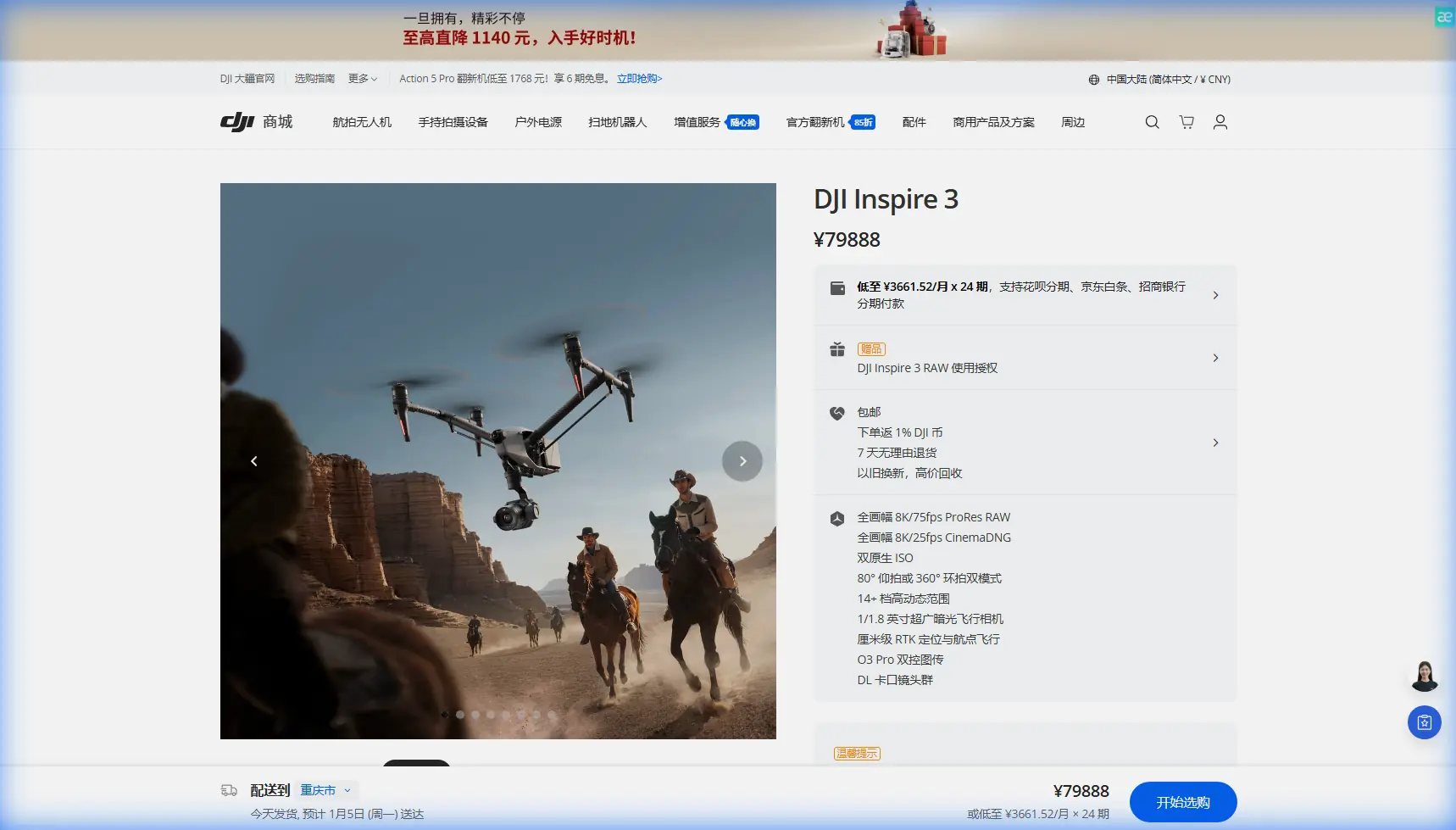
Inspire 3 in Mountain Vineyards: A Field Tutorial for Smarter Scouting
META: Practical Inspire 3 tutorial for mountain vineyard scouting, covering flight planning, weather shifts, transmission reliability, photogrammetry workflow, and sensor-driven decision making.
Mountain vineyards expose every weakness in an aerial workflow.
Steep rows distort scale. Wind funnels through gaps you did not expect. Light changes fast, especially when clouds roll over ridgelines. A drone that feels perfectly composed over flat land can suddenly become inefficient, unstable, or simply too slow to adapt once terrain starts dictating the mission.
That is where the Inspire 3 becomes interesting—not as a glamour platform, but as a disciplined tool for scouting high-value agricultural land where every pass needs to produce usable information.
I have used this kind of workflow in conditions where the objective was not cinematic beauty. The goal was operational clarity: identify canopy inconsistency, spot drainage-related stress, document row access, and capture geometry that could support later photogrammetry. In mountain vineyards, that means flying a platform that can deal with unstable conditions while still delivering clean, repeatable data.
This tutorial is built around that exact scenario.
Why mountain vineyard scouting is harder than it looks
A vineyard on a slope is not just a vineyard tilted at an angle. It is a dynamic environment with microclimates, uneven reflectance, altitude changes, and line-of-sight interruptions. Those factors influence three things immediately:
- Transmission stability
- Flight consistency along terrain
- Data quality for mapping and visual analysis
The Inspire 3’s usefulness starts with how well it preserves control and signal confidence when topography begins to interfere. That matters more than many operators admit. In steep agricultural terrain, a drone is not only battling distance; it is also dealing with occlusion from ridges, terraces, tree lines, and infrastructure.
That is why reliable transmission and link security are not abstract spec-sheet items. O3 transmission helps keep control response and image downlink stable in spaces where broken sightlines can otherwise force conservative, inefficient flight paths. If you are scouting blocks spread across mountain contours, that operational margin saves time and reduces the need to reposition your crew constantly. AES-256 also matters in a practical sense when agronomic imagery, land management records, or survey outputs are sensitive and intended for a limited decision-making circle.
Start with the mission, not the aircraft
For vineyard scouting, I break the flight into four mission types:
- Visual canopy inspection
- Terrain-aware route familiarization
- Photogrammetry capture
- Targeted thermal signature review, if the payload setup and mission design support it
Not every flight should try to do all four. That is where many teams waste battery cycles and return with mediocre data.
If the day’s priority is row health comparison after a recent weather event, keep the mission focused on repeatable visual collection and angle discipline. If the purpose is rebuilding block geometry for planning irrigation access or drainage corrections, then photogrammetry rules the setup, and every flight parameter should serve overlap, consistency, and control-point alignment.
Mountain vineyards punish mixed-purpose flying.
Pre-flight logic: borrow from real aircraft thinking
One thing fixed-wing aircraft design teaches very clearly is that more capability always introduces tradeoffs. In traditional nose-wheel steering design, engineers gained better ground handling but had to accept added weight, maintenance burden, and safety implications. That same design logic applies to drone operations in a more modern form: every additional system, accessory, and mission objective adds complexity.
For Inspire 3 crews, the lesson is simple. Do not overbuild the sortie.
Extra monitors, unnecessary payload changes, rushed waypoint edits, improvised accessories, and duplicated data tasks all create friction. In a mountain vineyard, friction becomes error because conditions shift quickly. The cleaner the setup, the better your reliability.
Another aircraft control lesson is even more relevant: fault-tolerant system design is rarely about adding hardware blindly. In the flight-control world, one conventional fault-tolerance approach can require 12 rate gyros and 8 accelerometers to sustain high redundancy, but that creates penalties in weight, power use, and maintenance. Alternative architectures reduce hardware count and improve serviceability, though they may be harder to implement well.
The operational significance for Inspire 3 users is direct. Reliability in the field is not only about redundancy on paper; it is about choosing a workflow with fewer failure points. In a vineyard scouting mission, that means:
- minimizing unnecessary app switching
- preloading routes before launch
- standardizing battery rotation
- locking capture settings before takeoff
- reducing manual intervention once the mission starts
The best field teams are not the ones surrounded by equipment. They are the ones whose system stays coherent when the weather turns.
The weather changed mid-flight. Here is what mattered.
On one mountain scouting run, the morning looked manageable at launch: light crosswind, stable visibility, and enough contrast on the vines to make block comparison worthwhile. About nine minutes into the flight, cloud cover thickened over the upper slope. Wind began to curl around a rock face above the vineyard, and the lower rows fell into flat, low-contrast shade while the top rows remained intermittently sunlit.
That shift can ruin a mapping set if you react too late.
The Inspire 3 handled the moment well for a practical reason: the platform let us adapt without turning the flight into improvisation. Instead of pushing through the original pattern, we split the mission logic immediately. We completed the exposed upper-slope visual pass while signal quality remained strong, then returned on a tighter route for lower-altitude row inspection where lighting inconsistency was less damaging to the objective.
Two features mattered operationally here:
1. Hot-swap batteries
When conditions change, the real advantage is not just more flight time. It is continuity. Hot-swap batteries let the crew relaunch fast enough to preserve the same weather window for the follow-up pass. In vineyards, a 20-minute delay can mean a completely different light environment, especially when mountain clouds are moving. Fast battery turnover protects data consistency.
2. O3 transmission
As the aircraft moved along the contour line, terrain shadowing increased. A transmission system that remains composed under partial obstruction reduces hesitation from the pilot and keeps route decisions deliberate. That matters when you are trying to finish a mission segment cleanly rather than rushing because the link feels fragile.
This is the sort of detail operators tend to understand only after enough field days. Mountain scouting is not won by raw endurance. It is won by how calmly the aircraft and crew handle interruption.
Best practice flight setup for vineyard scouting
Here is the workflow I recommend for Inspire 3 in steep vineyard terrain.
1. Walk the block before the first launch
Even if you know the site, walk at least one representative section.
Look for:
- row spacing changes
- poles, wire runs, and anti-bird infrastructure
- reflective surfaces that may affect exposure judgment
- gullies and access roads
- likely takeoff and recovery alternatives if wind shifts
If BVLOS is part of a broader legal and operational framework in your region, treat terrain shielding seriously. Mountain slopes create deceptive assumptions about where the aircraft can be seen or controlled comfortably. Mission planning should reflect the actual site, not the neat version of it on a map.
2. Decide whether the day is about inspection or measurement
This sounds obvious, but many crews blur the two.
For inspection, fly lower, slower, and with deliberate oblique angles that reveal canopy density variation, erosion channels, and problem rows.
For photogrammetry, discipline matters more than artistry:
- maintain consistent altitude relative to terrain
- preserve overlap
- use GCPs where precision matters
- avoid changing exposure strategy mid-grid unless the weather forces a reset
GCPs are especially valuable in mountain vineyards because the terrain itself exaggerates small geospatial errors. If you want useful outputs for drainage planning, access route design, or block comparison over time, your model needs control, not just pretty coverage.
3. Respect sensor priorities
Aircraft flight-control design places special importance on certain inertial sensors because some directly affect flight safety while others are more mission-supportive. That hierarchy is useful for drone crews too. Not every data stream deserves equal attention in the moment.
During a scouting flight, prioritize:
- aircraft attitude stability
- transmission confidence
- terrain separation
- battery state
- image consistency
Secondary details can wait until the aircraft is safe and the pass is complete.
This sounds almost too basic, but in gusty mountain conditions, pilots often get distracted by the live image and miss the aircraft’s relationship to terrain. The safest and most productive operators think like systems managers, not camera operators.
4. Build route segments instead of one heroic mission
Break the property into logical sections:
- lower rows
- mid-slope transition
- upper ridge blocks
- access roads and drainage lines
This makes weather adaptation much easier. If the upper slope becomes turbulent, you can complete lower sections cleanly and return later without corrupting the whole dataset.
Segmented routing also reduces rework in post. A photogrammetry set from the lower terrace should not be contaminated by rushed turns and inconsistent lighting from the ridge line.
Using Inspire 3 imagery for vineyard decisions
A good scouting mission should answer questions, not just create files.
In mountain vineyards, those questions usually include:
- Where is canopy vigor inconsistent?
- Which rows show likely water stress first?
- Are drainage paths creating visible erosion or saturation zones?
- Do access tracks need reinforcement before equipment movement?
- Which blocks should be revisited for closer agronomic review?
If your workflow includes thermal signature analysis, the point is not novelty. It is to cross-reference heat variation with terrain exposure, irrigation behavior, and canopy density. Thermal anomalies by themselves are not diagnosis. They are scouting cues.
The Inspire 3 becomes valuable when its flights are repeatable enough to support comparison over time. A single dramatic mission tells a story. A controlled sequence of missions supports management decisions.
A note on reliability and field discipline
The old aircraft-control literature keeps returning to a theme that still matters: there is no free reliability. Some architectures gain maturity but carry extra hardware burden. Others reduce hardware count and improve maintainability but demand better integration.
That principle maps cleanly onto Inspire 3 operations in agriculture.
If you want dependable scouting in mountain vineyards:
- reduce unnecessary complexity
- choose repeatable mission templates
- standardize your battery and media handling
- log weather changes with each sortie
- separate inspection flights from mapping flights whenever possible
This is how you get trustworthy outputs from changing terrain.
If your team is refining an Inspire 3 workflow for vineyard scouting, route planning, or photogrammetry control in difficult topography, you can message a field specialist directly to compare mission setups.
Final field checklist
Before launch, confirm the following:
- home point is practical, not merely convenient
- route segmentation matches terrain reality
- weather trend is monitored, not assumed
- camera settings fit the actual mission objective
- GCP layout is visible and documented if mapping
- battery rotation supports rapid relaunch
- transmission conditions are checked from likely weak zones
- the crew has a stop rule for wind or visibility degradation
The Inspire 3 is not automatically the right answer for mountain agriculture. But when the mission is designed properly, it is a very strong platform for vineyard scouting because it supports disciplined collection under pressure: shifting light, uneven terrain, narrow operational windows, and the constant need to balance inspection speed against data quality.
That is what separates a useful drone day from an expensive walk through the vines with a memory card.
Ready for your own Inspire 3? Contact our team for expert consultation.