
Spraying Coastlines at Altitude With the DJI Inspire 3
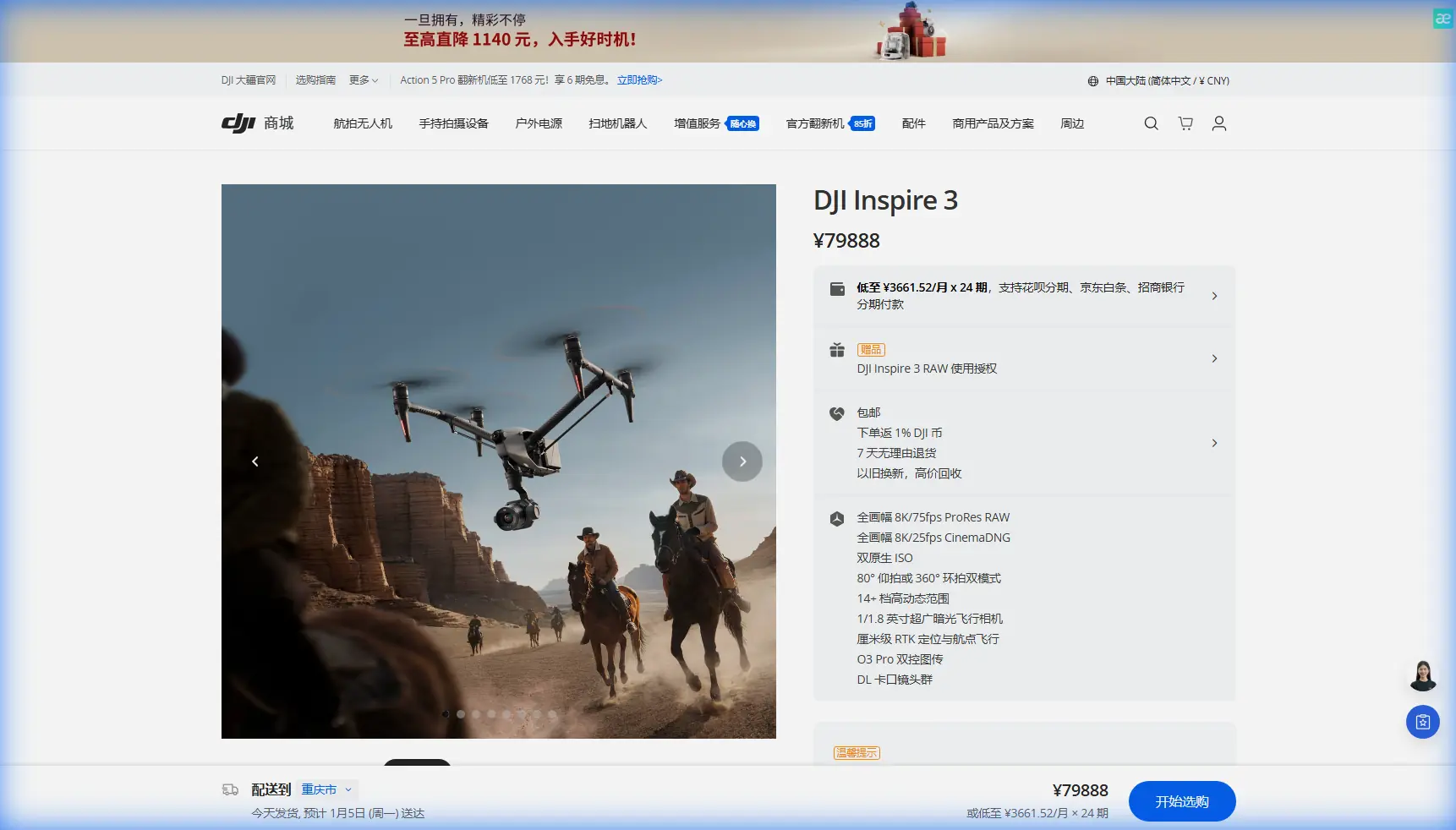
Spraying Coastlines at Altitude With the DJI Inspire 3: What Actually Matters in the Field
META: Expert technical review of using the Inspire 3 for high-altitude coastline spray support, with practical guidance on battery management, O3 transmission, thermal workflows, photogrammetry, and operational limits.
The DJI Inspire 3 is not a spraying aircraft. That needs to be said plainly before anything else. If your mission is literal liquid application along a coastline at high altitude, you need an agricultural platform built for payload, droplet control, and corrosive environments.
But that is not the end of the conversation. In real operations, the Inspire 3 can still have a very specific role around coastal spray work: route scouting, terrain modeling, thermal verification, hazard detection, shoreline change assessment, and visual overwatch where precision and image quality matter more than payload. Used that way, it becomes a decision aircraft. It helps you understand where to spray, when not to spray, and what the environment is doing before your heavier platform lifts off.
That distinction is operationally critical. Along coastlines, altitude changes fast, winds shear unexpectedly, and saline moisture punishes every weak point in your workflow. The Inspire 3 is valuable here not because it replaces a dedicated sprayer, but because it gives pilots and mission planners a cleaner picture of the job.
I have seen teams waste flight time because they treated a high-end cinema UAV like a generic camera drone. The Inspire 3 deserves a more disciplined approach than that, especially near cliffs, sea spray, and upland coastal ridges where every system gets stressed at once.
Where the Inspire 3 Fits in a Coastline Spray Mission
If you are supporting a spraying program in coastal terrain, the Inspire 3 is best deployed before and after application, not during direct chemical release. Think of it as the aircraft that reduces uncertainty.
Before the main spray mission, it can help with:
- identifying rotor wash risks near cliff faces and uneven escarpments
- mapping access routes for ground crews and refill points
- generating photogrammetry products for slope awareness and exclusion zones
- checking vegetation stress patterns that may influence treatment priority
- documenting man-made hazards such as wires, towers, and unstable access roads
After the mission, it can help with:
- confirming coverage boundaries visually
- spotting drift indicators along shoreline margins
- assessing wet zones, runoff channels, and sensitive habitat edges
- creating an audit trail for compliance and client reporting
This is where terms like photogrammetry, GCP, and thermal signature stop being buzzwords and become practical tools.
A coastline at altitude is rarely uniform. One side of a ridge may be cool and damp; the opposite face may be sun-loaded and dry. That changes vegetation appearance, airflow behavior, and the way treatment zones should be interpreted. If you build a terrain model with proper GCP placement before the operational day, your spray team is not guessing where the sharp grade transitions begin. They know.
That matters because poor spatial confidence leads to bad assumptions. Bad assumptions near cliffs and surf zones become lost time, missed sections, or a much worse conversation.
O3 Transmission Is Helpful, But Coastal Terrain Is the Real Boss
The Inspire 3 benefits from DJI’s O3 transmission architecture, and that is not a trivial spec-sheet detail. In coastal operations, radio performance is shaped by far more than line-of-sight distance. You are dealing with ridgelines, reflective water surfaces, shifting launch positions, and the occasional urge to “just edge a bit farther” to keep a subject framed.
O3 helps maintain a robust control and video link, which is valuable when you are working long lateral runs along a shoreline or climbing to maintain visual geometry over broken terrain. But pilots should not confuse stronger transmission with permission to stretch the mission envelope casually.
This is where experienced operators draw the line between capability and discipline. If you are evaluating a shoreline ahead of a spray mission, the link quality may still look solid while wind at the next headland has already turned ugly. Signal confidence does not equal environmental safety.
For teams thinking about BVLOS concepts, that distinction becomes even more serious. Even if a broader program is exploring BVLOS workflows, a coastline with altitude variation and marine weather shifts demands conservative planning, segmented routes, and a hard look at local regulatory constraints. The aircraft can support advanced operations planning, but the terrain decides whether the plan makes sense.
Thermal Signature: Useful, But Only If You Understand What You’re Seeing
The phrase thermal signature gets thrown around too loosely. In a coastal spray support context, what you are really after is not cinematic thermal drama. You want temperature patterns that help explain terrain, moisture, and vegetation behavior.
Thermal data can reveal differences in retained surface heat, damp pockets, drainage paths, and sections of vegetation that are responding differently from adjacent areas. In high-altitude coastal settings, these distinctions can be more pronounced than teams expect because sun exposure, wind, and salt loading vary dramatically over short distances.
Operationally, that means a thermal pass can help answer questions such as:
- Which gullies are holding moisture late into the day?
- Which ridge faces are drying out faster?
- Where might drift or runoff become more sensitive?
- Which sectors deserve closer inspection before committing a spray aircraft?
The catch is interpretation. Thermal imagery without context can mislead. A cooler patch may indicate moisture, shade, denser vegetation, or simply a different surface material. That is why pairing thermal observations with photogrammetry and ground-truth notes is the smarter workflow. One data layer suggests. The others confirm.
Photogrammetry and GCP: The Quiet Force Multipliers
If you want one workflow that consistently improves high-altitude coastline planning, it is this: build a reliable surface model before the treatment day, and do not skip GCP discipline when the job requires measurable accuracy.
Photogrammetry gives you more than a pretty 3D model. It gives the team a common operational map. On steep coastal ground, that changes how you define treatment blocks, assess approach paths, and identify no-go edges.
GCP use becomes especially important when the terrain has repeating textures, scrubland, rock shelves, or limited visual landmarks. A model without proper control points may still look convincing, but a visually convincing map is not the same thing as a trustworthy one. If your downstream decisions include exclusion zones, staging points, or habitat buffers, then “close enough” is not a professional standard.
This is one reason the Inspire 3 can contribute meaningfully even outside its core cinema identity. If the aircraft is already in your program for visual work, its mission value increases when teams use it to feed planning intelligence rather than just gather nice footage.
AES-256 and Why Data Security Is Not Just a Corporate Checkbox
A lot of operators only think about security when they are working around sensitive infrastructure. That is too narrow. Coastal spray programs often involve environmental boundaries, landholder data, route plans, and imagery of restricted or ecologically sensitive areas. Transmission and data protection matter here.
AES-256 support is operationally significant because reconnaissance flights do not only create images. They create location-linked intelligence. If you are documenting shoreline access, treatment extents, or vulnerable zones, you are handling information that should not be treated casually.
For enterprise teams, municipalities, and contractors working under environmental oversight, secure handling of reconnaissance data is not administrative clutter. It is part of professional risk control.
A Battery Management Tip From the Field
Now for the part that tends to separate smooth coastal days from expensive mistakes: battery handling.
The Inspire 3’s hot-swap batteries are one of its most useful field features, especially when you are trying to keep aircraft downtime short in changing conditions. On paper, hot-swap sounds like a simple convenience. In practice, on a cold, windy launch site above the sea, it can save a mission sequence.
My rule is simple: never hot-swap into a rushed relaunch without checking what the batteries just came from and what the aircraft is about to do next.
Here is why. Along the coast, teams often land after a demanding outbound leg, swap quickly, and relaunch immediately because the light is good or the weather window feels narrow. That is exactly when people stop thinking about battery temperature, wind exposure on the pad, and the fact that the next leg may involve a climb over a ridge rather than a gentler return path.
A pair of batteries that looked fine on landing can behave very differently after sitting in a cold salt-laden breeze for a few minutes while the crew reorganizes. The relaunch is where voltage sag surprises people.
The practical tip: keep the incoming pair protected and staged before the aircraft lands, and if the next flight profile includes an immediate climb or a long upwind segment, give yourself a few extra moments to verify battery condition before committing. Those seconds are cheaper than forcing the aircraft into a power-hungry correction later.
I also advise crews to think in mission segments, not just remaining percentage. A battery state that is acceptable for a low-level shoreline pass may be poor for a higher reposition over terrain. Percentage alone does not tell the whole story. Profile does.
Hot-swap capability is excellent, but only when paired with disciplined launch logic.
Salt Air Changes Maintenance Priorities
Anyone operating near the sea learns quickly that the coastline is not forgiving. Salt aerosol gets everywhere. It settles on landing gear mechanisms, connectors, airframe seams, and cases. High-altitude launch points can actually make this worse because crews assume cooler air means gentler conditions. Often it just means the contamination is less obvious until later.
For the Inspire 3, this means your maintenance rhythm should tighten up after coastal deployment. Not dramatic. Just consistent.
Pay attention to:
- battery contact cleanliness
- gimbal and moving assembly inspection
- connector surfaces after repeated field swaps
- case hygiene so residue is not reintroduced at every launch
- post-flight wipe-downs before the aircraft sits overnight
This is not glamorous work, but it preserves reliability. Near the coast, reliability is usually lost through routine neglect rather than sudden failure.
A Better Way to Use the Inspire 3 on Spray Jobs
The smartest teams do not ask, “Can the Inspire 3 do the spraying?” They ask, “Where does the Inspire 3 remove uncertainty from the spray operation?”
That question leads to better deployment choices.
Use it to scout a ridge before a heavier aircraft is committed. Use it to model terrain where visual judgment from the ground is poor. Use it to compare thermal patterns across adjacent slopes. Use it to document whether the conditions around a coastal treatment block are changing faster than the original plan assumed.
And if your crew needs a second opinion on route planning or pre-spray reconnaissance logic, it makes sense to message an operations specialist here before the weather window closes.
That is where the Inspire 3 earns its keep in this scenario. Not as a substitute for a true spraying platform, but as a precision intelligence asset that helps the rest of the operation perform better.
Final Assessment
For high-altitude coastline spray support, the Inspire 3 is at its best when used with a narrow, disciplined purpose. Its O3 transmission system supports confident overwatch in broken coastal terrain. AES-256 matters when reconnaissance data carries operational sensitivity. Hot-swap batteries can keep your window open, but only if crews manage temperature and mission profile intelligently. Photogrammetry with GCP turns steep, deceptive ground into something measurable. Thermal signature work adds value when it is interpreted carefully and not treated as magic.
That is the real review.
The Inspire 3 is not the aircraft that lays down product over a salt-blasted escarpment. It is the aircraft that helps the team understand that escarpment well enough to avoid costly decisions. In difficult coastal environments, that may be the more valuable job.
Ready for your own Inspire 3? Contact our team for expert consultation.