
Using Inspire 3 for Urban-Edge Field Spraying
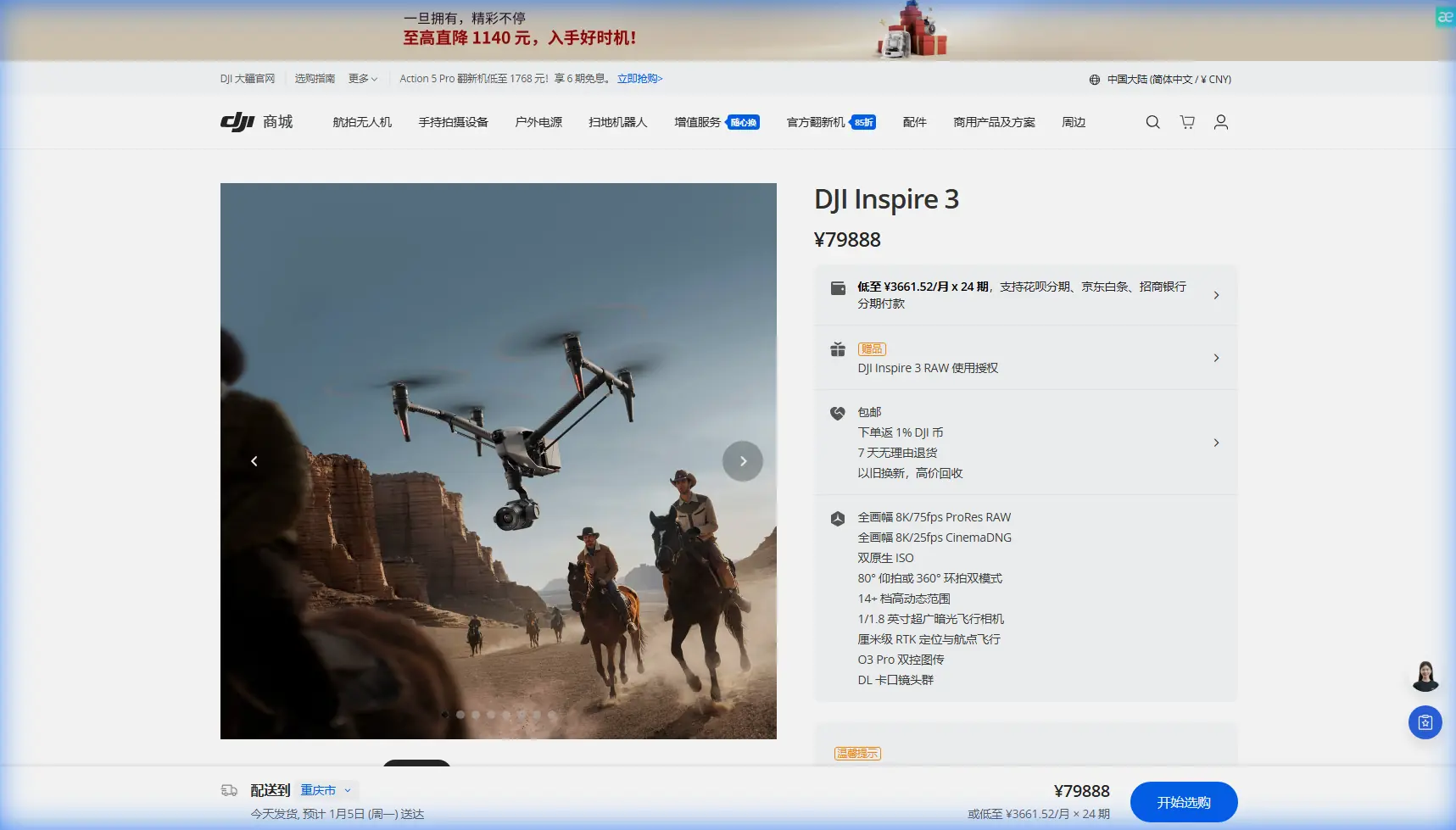
Using Inspire 3 for Urban-Edge Field Spraying: A Practical Tutorial on Control, Signal Discipline, and Risk Boundaries
META: Learn how Inspire 3 can support urban-edge field spraying planning, site assessment, interference handling, and precision data capture with practical operational guidance for safer civilian workflows.
Urban field spraying is awkward work.
Not because the crop block is large. Usually it is the opposite. The hard jobs are the fragmented plots pressed against roads, low-rise buildings, utility lines, greenhouses, warehouses, and all the stray sources of radio noise that make a clean drone operation feel less clean than it looked on the map. If you are evaluating the Inspire 3 for this environment, the real question is not whether it can fly a smooth route. It can. The question is whether you can build a disciplined workflow around it when the operating area is cluttered, reflective, and electromagnetically messy.
That is where experienced operators separate pretty footage from useful aerial work.
I’ll make one thing clear up front. Inspire 3 is not a dedicated agricultural spraying platform. It does not replace a purpose-built application drone carrying liquid payloads. What it does very well, though, is support the decision layer around spraying: pre-mission site review, edge mapping, obstacle verification, thermal signature checks where relevant, route planning support, and post-operation documentation. In dense urban-adjacent farmland, that support role can be the difference between a routine treatment and a day wasted by access problems, weak links, or unsafe assumptions.
Start with the mission the right way: planning, not flying
For urban-edge fields, I treat Inspire 3 as an aerial intelligence tool first.
Before any spray rig goes up, I want three things:
- A current visual record of the block and its access margins
- Accurate geometry for boundaries, buffers, and exclusion zones
- A signal plan for where control quality may degrade
Most teams obsess over battery count and forget the third item until they see unstable video or delayed command response near a building face. In city-fringe agriculture, electromagnetic interference is not an occasional nuisance. It is part of the site.
This is why antenna handling matters more than people admit.
The narrative spark in your workflow should be simple: if link quality drops, do not instantly blame the aircraft. First inspect your control geometry. In practice, that means adjusting antenna orientation to maintain the strongest possible relationship between controller and aircraft, especially when flying along field edges beside structures that reflect or absorb signal energy. Even with advanced transmission systems such as O3, a strong radio design does not exempt you from poor operator positioning. Bad body stance, controller shielding, vehicles, steel fencing, and rooflines can all punish the link.
When I brief a team, I tell them this: the antenna is not an accessory. It is part of the flight path.
Why structural and systems thinking matters, even for a civilian field mission
A lot of drone articles stay shallow. They talk about features, skip engineering, and leave operators with no framework for real decisions. That is a mistake.
The reference material behind this article comes from aircraft design manuals, and while Inspire 3 is not a manned airplane, the logic still transfers: reliability in aviation begins with margins, not optimism.
One of the source documents discusses hydraulic tube design and states that minimum burst pressure must exceed 4 times the working pressure. That number is not a random formula to memorize for drone work. Its operational significance is broader: critical systems should not be designed or operated right at the edge of expected load. In UAV field operations, that mindset becomes practical discipline. You do not plan your urban-edge mission assuming perfect radio conditions, perfect GNSS quality, or a perfect takeoff area. You build margin into every layer: line of sight, return path, battery reserve, alternate landing area, and human workload.
The same source also notes that under another calculation case, pressure resistance is evaluated at 2 times working pressure. Again, the lesson is not about copying hydraulic math onto a drone checklist. It is about recognizing that different stress cases require different validation methods. For Inspire 3, that translates directly into scenario-based planning. A wide-open farm edge on a quiet morning is one case. A narrow block bordered by telecom equipment, metallic sheds, parked vehicles, and apartment rooftops is another. The aircraft may be unchanged, but the operational proof you require before trusting the route should be stricter in the second case.
This is how professionals think: same platform, different assurance threshold.
Step 1: Survey the field edge like an infrastructure operator
In urban spraying support, the dangerous parts of the map are usually not the center of the crop. They are the borders.
Use Inspire 3 to capture a low-to-moderate altitude perimeter pass first. Your aim is not cinematic beauty. Your aim is to identify:
- utility crossings
- unrecorded netting or wires
- reflective surfaces that may interfere with visual orientation
- public access points
- rooftop HVAC clutter near the block
- temporary obstructions such as trucks or stacked materials
If your final spraying operation will rely on a separate agricultural aircraft, this perimeter record becomes the cleanest briefing asset for the spray team. In fragmented urban agriculture, a fresh perimeter file is often more useful than an old farm map.
If the project requires measurement accuracy, add photogrammetry. Use GCPs where the job demands tight spatial confidence. That is especially valuable when the “field” includes irregular planting pockets, service lanes, drainage margins, and no-spray setbacks near structures. Without GCP support, operators can still produce useful maps, but when the spraying boundary needs to stand up to review, fixed control points reduce argument later.
Step 2: Build a signal map before you need one
Most transmission problems announce themselves early if you bother to look.
I recommend a short diagnostic route at conservative distance and height. Fly one leg parallel to the most signal-hostile edge of the site, then repeat from a different pilot position. Watch for consistency. If quality changes sharply when the pilot moves only a little, you are dealing with local blockage or reflections rather than general range limitations.
This is the moment to handle electromagnetic interference with deliberate antenna adjustment.
Do not wave the controller around and hope. Face the aircraft cleanly. Reorient the antennas based on the actual relative position of the aircraft, not on habit from a previous mission. Move away from vans, reinforced walls, roadside power equipment, and dense metal fencing. If the best line is from a corner of the field rather than the obvious access gate, use the corner. A better launch position solves more problems than software tweaks.
In dense urban-edge work, I often tell teams to think of the control link as a corridor rather than a radius. You do not need equally good signal in all directions. You need predictably strong signal along the legs you will actually fly.
Step 3: Use thermal and visual data for treatment decisions, not guesswork
The context mentions thermal signature, and that deserves careful framing.
Inspire 3 is often discussed for imaging performance, but the useful question for spraying support is not “Can it see heat?” The real question is whether thermal contrast, where available in your workflow stack, adds decision value. In urban-edge fields, it sometimes does. Temperature patterns may help reveal irrigation inconsistency, stressed zones near hardscape, runoff influence, or heat-retaining borders beside concrete and roofing. Those patterns can change how a treatment plan is staged, especially when microclimates distort assumptions.
Visual data alone can miss those edge effects. Thermal context can expose them.
That said, thermal should support agronomic judgment, not replace it. A warm patch is not automatically a treatment zone. It is a prompt to investigate.
Step 4: Protect data like an enterprise asset
If you are mapping near urban properties, schools, warehouses, roads, or commercial buildings, the mission is not only about flight safety. It is also about data handling.
This is where encrypted transmission matters. Workflows that incorporate AES-256 are worth taking seriously because urban-edge agriculture often intersects with third-party property and sensitive site imagery. Even when the mission is purely civilian and focused on crops, the captured data can include neighboring infrastructure, vehicle movements, rooftop layouts, or logistics yards. Operators who shrug at this are behind the market.
Data security is not abstract compliance theater. It affects whether enterprise clients trust the process, whether documentation can be shared responsibly, and whether your operation looks mature enough to win repeat work.
Step 5: Plan battery behavior around continuity, not just endurance
Hot-swap batteries are one of those details that sound small until the site is difficult.
In an urban-edge field workflow, continuity matters. If you are building a photogrammetry set, validating edge obstacles, or collecting before-and-after records around a narrow weather window, minimizing downtime between sorties helps preserve consistency in lighting, field activity, and crew focus. Hot-swap batteries reduce interruptions, and that matters more when ground access is cramped or when nearby public activity means you want fewer drawn-out launch cycles.
The key is not to become complacent. Faster turnaround is only useful if battery logging, temperature awareness, and mission segmentation remain disciplined. Continuity should not become haste.
Step 6: Respect ground maneuver loads, even if your drone is airborne
The second source document is about aircraft loads during ground turning. It includes a detail many UAV operators never think about: in a ground pivot condition, the assumed vertical load factor is 1.0 and the ground friction coefficient is 0.8. It also notes that turning around one side of the landing gear can create significant lateral loading and torsional effects.
Why should an Inspire 3 operator care?
Because those numbers remind us that risk is not only in the air. Urban-edge agricultural operations often involve uneven launch pads, tight staging areas, rooftop terraces, compacted tracks, and hard-surface transitions between soil and pavement. During takeoff preparation, taxi-like hand movements, landing placement, and post-landing handling, lateral stress and uneven support matter. You may not be calculating fuselage torsion, but the engineering principle is directly relevant: side loads and friction events can produce meaningful stress even when forward motion seems minor.
Operationally, that means:
- choose level launch and recovery surfaces
- avoid hurried repositioning on rough ground
- inspect landing gear and mounting points after awkward touchdowns
- be extra cautious when operating from compact urban margins rather than open farm soil
In other words, don’t treat ground handling as an afterthought. Aviation references rarely do, and neither should professional drone teams.
A realistic workflow for an urban spraying support day
Here is the sequence I prefer for Inspire 3 support around field spraying:
1. Site arrival and interference scan
Stand still before you fly. Identify telecom hardware, metal roofs, parked trucks, substations, and likely reflective corridors. Choose pilot position for signal quality, not convenience.
2. Antenna setup and short link test
Launch a short diagnostic flight. If video or control quality fluctuates, adjust your antenna relationship and pilot position before moving to mission capture.
3. Perimeter visual pass
Document field edges, access points, buildings, and obstacles. This becomes your operational truth set.
4. Mapping sortie
Capture the geometry needed for photogrammetry. Add GCPs where precise boundary confidence matters.
5. Thermal or comparative imaging pass
If your workflow supports it, record thermal signature differences or comparative visual data for edge stress interpretation.
6. Post-flight review before spraying starts
Do not wait until the end of the day. Check the data immediately. Confirm that boundaries, hazards, and route assumptions are actually visible.
7. Secure handoff
Deliver only what the spray team needs, under controlled data practices.
If your team needs help standardizing this workflow for mixed urban-agriculture environments, you can send the site outline here: share the mission details directly.
What Inspire 3 does best in this role
For this kind of operation, Inspire 3 shines when used with restraint and precision. Not as a substitute for a dedicated crop application aircraft, but as the platform that sharpens decisions before fluid ever leaves a tank. It helps teams see the field as it really is: broken into micro-zones, interrupted by urban infrastructure, and shaped by signal conditions as much as agronomy.
That is the deeper lesson from the reference material. Good aircraft work is built on margins, validated assumptions, and respect for side-load scenarios that less experienced operators ignore. The hydraulic design source emphasizes verification against multiples of working pressure. The ground-load source highlights friction, turning loads, and lateral structural consequences. Bring that same mindset to Inspire 3, and your field spraying support work becomes more reliable almost immediately.
Not glamorous. Just correct.
And in urban-edge operations, correct is what keeps the day productive.
Ready for your own Inspire 3? Contact our team for expert consultation.