
How I’d Set Up an Inspire 3 Workflow for Mountain Vineyards
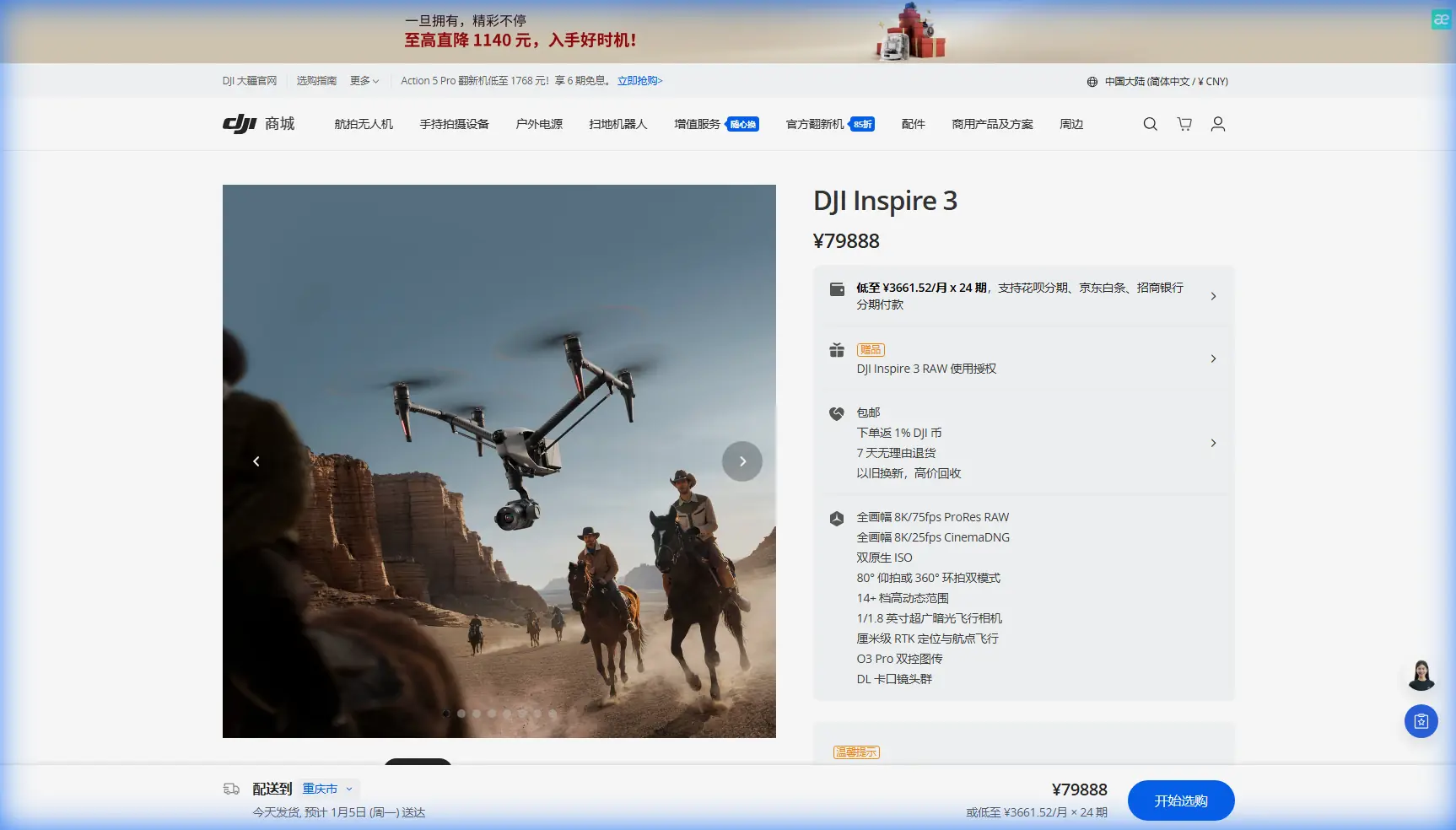
How I’d Set Up an Inspire 3 Workflow for Mountain Vineyards: Mapping, Thermal Clues, and Safer Spray Planning
META: A field-driven Inspire 3 workflow for mountain vineyards, covering terrain mapping, thermal signature review, O3 transmission, hot-swap battery strategy, and why cable and sealing details matter in steep agricultural operations.
Mountain vineyards punish lazy drone planning.
The slopes are irregular. Rows bend around contour lines. Wind funnels through cuts in the terrain, then disappears behind stone walls or tree lines. If your goal is better spray planning, runoff reduction, or row-by-row crop assessment, a flat-field workflow does not translate. That is where the Inspire 3 becomes interesting—not as a sprayer, because it is not one, but as an aerial intelligence platform that can make spraying in difficult terrain more precise.
I’ve seen growers focus too narrowly on camera specs. In steep viticulture, the real value comes from workflow discipline: terrain-aware mapping, repeatable image capture, thermal signature review at the right time of day, and dependable aircraft performance during long, stop-start field sessions. The Inspire 3 can fit that job well, especially when paired with a few smart accessories and a realistic operating method.
Start with the right mission: the Inspire 3 should inform spraying, not imitate it
For mountain vineyards, the Inspire 3’s role is upstream of the spray rig. It should help answer practical questions:
- Which blocks are showing uneven vigor?
- Where are cooler or wetter zones likely to hold disease pressure?
- Which rows are difficult to access efficiently from the ground?
- Where do slope, canopy density, and drainage patterns suggest adjusting application timing or volume?
That distinction matters. Many growers hear “drone in agriculture” and think only of direct application. In mountain vineyards, aerial reconnaissance often delivers the first operational gain. If a mapping flight prevents one unnecessary pass on a narrow access road or helps a spray team target a problem zone instead of treating a whole block uniformly, that is real value.
Why mountain vineyards demand better image planning
Vineyards on slopes create two technical headaches: elevation variation and angle distortion. If you fly a simple grid at a fixed altitude above takeoff point, ground sampling distance changes dramatically as the terrain rises and falls. The lower rows may be captured one way, the upper terraces another. That weakens photogrammetry and makes comparisons between blocks less trustworthy.
My recommendation is to plan terrain-aware missions whenever possible and to support them with GCPs if the vineyard owner wants map-grade repeatability. Even a small set of carefully placed control points can tighten the usefulness of orthomosaics and elevation models, especially where vine rows wrap around ridges or retaining features.
This is one place where the Inspire 3’s stability and professional flight behavior help. You are not simply collecting pretty footage. You are trying to build a decision layer for agricultural work on uneven ground. A beautiful flight means nothing if your map cannot support operational decisions.
A concrete detail most operators ignore: weight and cable routing affect reliability in the field
This may sound overly technical for an agriculture article, but it matters more than people think.
One of the reference engineering tables lists W48/8 relay connection wire dimensions and calculated weight. For example, a 26 AWG configuration is listed at 0.086 in outer diameter and 3.6 lb/1000 ft, while a heavier 12 AWG version reaches 0.232 in and 44.0 lb/1000 ft. Those are aircraft design numbers, not vineyard marketing copy, but they tell us something useful: small changes in conductor class and cable build change both bulk and mass quickly.
Why should an Inspire 3 operator care?
Because mountain vineyard work often depends on add-ons: external monitors, field chargers, RTK base station setups, vehicle power integration, tethered control stations, weather sensors, or third-party mounting solutions. Once operators start building a more professional field kit, cable management stops being cosmetic. Thick, poorly chosen leads add weight to portable battery systems, create snag points during rapid deployment on rocky ground, and increase connector fatigue when gear is constantly moved between vehicles and terraces.
I’ve watched teams lose time not because the drone had a problem, but because their support kit was messy and fragile. The lesson from those wire tables is simple: in professional aviation-style field operations, diameter and weight are not trivial details. They influence portability, setup speed, and long-term reliability.
Sealing and dust protection matter more on vineyard roads than in a studio
The second reference deals with pipeline connections and sealing, including a note that surface texture and elastic materials must maintain airtight sealing during forward movement of the connector. There is also a dimensional logic tied to minimum passage cross-section and the intended use of the connection system.
Again, this comes from aircraft design standards, but the operational meaning is easy to translate. Vineyard environments are hard on connectors. Dust from access roads, moisture from morning fog, chemical residue in equipment vehicles, and constant plugging and unplugging all attack the weak points in a field workflow.
That matters when you rely on:
- battery charging systems in mobile setups
- monitor and transmission connections
- SSD transfer stations
- RTK or network accessories
- weather-hardened cases and power adapters
A connector that is dimensionally correct but poorly sealed will fail at the worst time—usually halfway through a block, with wind building and light changing. The reference emphasis on sealing under motion is especially relevant because field crews rarely handle gear gently. Cases are opened on tailgates. Components get connected while standing on uneven ground. Cables are tugged, twisted, and repacked repeatedly.
For Inspire 3 vineyard work, I recommend choosing accessories that feel overbuilt rather than merely compatible. Good sealing and strain relief are not luxuries when your day involves steep access tracks and airborne dust.
Build the mission around thermal signature, not just RGB beauty
If the reader scenario is spraying vineyards in the mountains, thermal signature deserves a place in the workflow even if the Inspire 3 itself is not your thermal platform.
Here is the practical model: use the Inspire 3 for high-quality visible-spectrum mapping, terrain interpretation, and repeatable visual documentation. Then, if needed, bring in a third-party thermal payload solution or a companion thermal drone to inspect selected blocks identified by the Inspire 3 imagery. This is where a third-party accessory or ecosystem tool can genuinely expand capability.
One upgrade I’ve found useful is a high-brightness third-party field monitor with weather shielding, especially for mountain light conditions where contrast changes fast. It sounds simple, but being able to properly review canopy stress patterns, shadowed rows, and overlap quality on-site prevents bad data collection. If the thermal review is done with a second aircraft, the Inspire 3 still anchors the workflow by defining where thermal attention is actually needed.
Thermal clues can help identify zones where moisture retention, irrigation inconsistency, or canopy density differ enough to change disease risk. That does not replace agronomic judgment. It gives the spray team a sharper starting point.
O3 transmission is not just a convenience in broken terrain
Steep vineyards are notorious for fragmented line of sight. You may launch from one terrace and operate over another, with trees, walls, and terrain shoulders interrupting the path. In that setting, O3 transmission is not a brochure bullet. It affects confidence and continuity.
A stronger link gives the pilot and camera operator more stable situational awareness during route adjustments, especially when the aircraft moves across slope faces that briefly compromise signal geometry. If you are capturing photogrammetry sets or repeat comparison imagery, dropped confidence in the link often leads to conservative flying, inconsistent overlap, or unnecessary aborts.
That said, mountain terrain is exactly where operators must stay disciplined about local rules and operational limits. If someone is thinking about BVLOS concepts for large estates, that requires a proper regulatory and safety framework, not assumptions. The Inspire 3 can support sophisticated operations, but the terrain does not forgive casual planning.
Hot-swap batteries make a real difference when the site is spread vertically
On a flat farm, battery changes are annoying. On a mountain vineyard, they can derail the day.
When your launch point is two terraces below the next target block, every interruption multiplies. Hot-swap batteries are one of the least glamorous but most useful parts of an Inspire 3 workflow. They reduce downtime during relocation and let teams preserve mission tempo while light and wind remain usable.
This matters for more than convenience. If you are collecting photogrammetry for spray planning, consistency is everything. Long delays between flight segments can shift shadows, alter wind-driven canopy movement, and reduce comparability between blocks. Fast battery management helps keep data sets cleaner.
I usually advise teams to think in “vertical logistics” rather than flight time alone:
- Where will batteries be staged?
- How many elevation changes are needed between blocks?
- Is charging happening from a vehicle, a field inverter, or a generator?
- Which accessories are drawing from the same mobile power ecosystem?
That loops back to the cable and connector references above. A professional field operation works because all those little support details are thought through before launch.
A practical How-To workflow for Inspire 3 in mountain vineyards
Here is the sequence I’d use.
1. Scout access and launch geometry first
Before any mission planning software comes out, walk or drive the likely launch points. On mountain sites, the best image angle is not always the safest or most efficient launch position. Look for:
- clear sky view for transmission
- stable takeoff and landing surface
- minimal dust
- practical battery staging
- safe recovery path if wind shifts
2. Establish control if the output needs repeatability
If the vineyard manager wants trend analysis across the season, set GCPs or another reliable positional framework. Without that, comparisons become more approximate than many users realize.
3. Fly visual mapping in light that favors canopy separation
Avoid the worst midday glare if possible. You want clean row definition, manageable shadow behavior, and enough consistency across adjacent blocks.
4. Use Inspire 3 data to isolate suspect zones
Review for vigor changes, water flow patterns, canopy irregularity, erosion traces, and access bottlenecks that influence spray operations.
5. Add thermal review selectively
Thermal is most useful when directed by a prior visual map, not used as a blind search tool. This reduces unnecessary flight time and keeps the interpretation focused.
6. Turn imagery into spray planning, not just reports
The best deliverable is not a folder of files. It is a marked operational map showing:
- blocks needing closer agronomic inspection
- rows with likely differential treatment value
- terrain sections that complicate ground application
- areas where runoff or drift risk is elevated
7. Build a ruggedized support kit
Choose sealed cases, durable connectors, sensible wire gauges, and monitor setups that survive repeated field deployment. If you need help assembling a vineyard-ready Inspire 3 field package, you can message a specialist here: https://wa.me/85255379740.
What separates usable vineyard drone data from wasted flights
The answer is operational relevance.
An Inspire 3 flight becomes valuable when it changes what the team does next. In mountain vineyards, that may mean adjusting spray sequencing, flagging cold pockets, prioritizing a disease-prone terrace, or documenting which access route can support equipment movement without unnecessary delay.
The aircraft’s quality ceiling is high, but the field result depends on the discipline around it. Good transmission matters because terrain interrupts signal paths. Hot-swap batteries matter because the site is vertically fragmented. Cable diameter and weight matter because your mobile kit gets carried, repacked, and stressed all day. Sealing matters because connectors live in dust, moisture, and motion.
Those details are easy to dismiss when people talk only about cameras. They are much harder to ignore when you are halfway up a vineyard road, trying to finish a block before the wind comes over the ridge.
That is why I see the Inspire 3 as a serious support platform for mountain viticulture. Not a sprayer. Not a toy. A precision observation tool that becomes genuinely useful when the workflow around it is built with the same care as the aircraft itself.
Ready for your own Inspire 3? Contact our team for expert consultation.