
Inspire 3 in Urban Wildlife Operations: Power Discipline
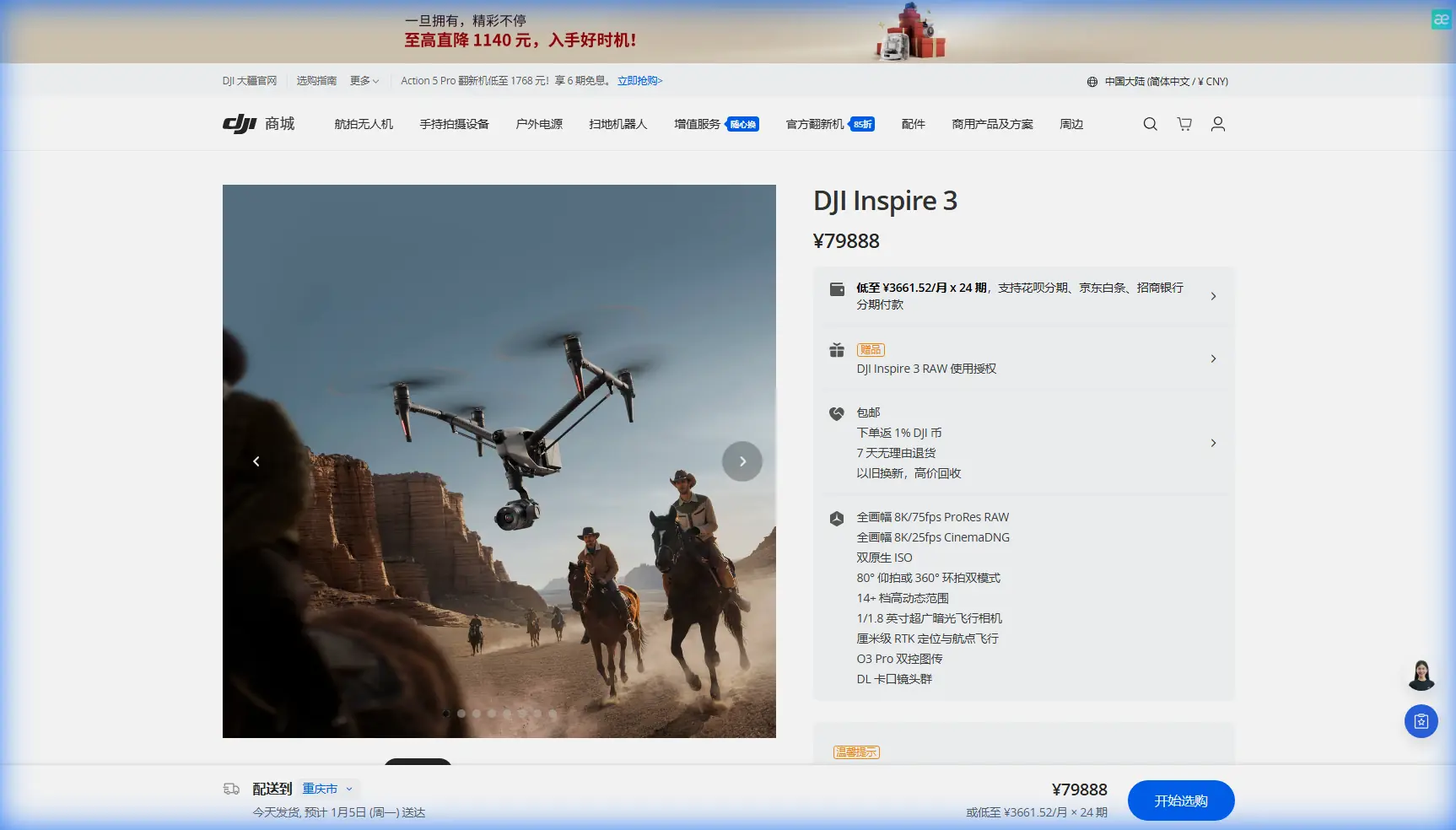
Inspire 3 in Urban Wildlife Operations: Power Discipline, Signal Positioning, and Why Crew Setup Matters
META: Practical Inspire 3 guidance for urban wildlife fieldwork, covering antenna positioning, power redundancy logic, transmission stability, battery workflow, and safe civilian operating practices.
Urban wildlife work asks more from a drone crew than most glossy product pages ever admit.
You are not flying over an empty field. You are working around reflective glass, patchy GNSS reception, congested RF conditions, trees, utility corridors, rooftops, moving people, and animals that do not behave on cue. If the mission involves observation, thermal signature review, habitat assessment, photogrammetry, or documenting movement patterns before a ground team intervenes, the aircraft matters. So does the operating method.
The Inspire 3 is often discussed as a cinema platform first. That misses part of the picture. In dense urban wildlife scenarios, it can be a very capable aerial tool when the crew treats it less like a camera toy and more like an aircraft system. That mindset shift is where reliable results begin.
I want to frame this around one theme that rarely gets enough attention: continuity. Not just image quality. Not just range. Continuity of power, continuity of link, continuity of crew decisions, and continuity of safe mission flow when one part of the chain starts to degrade.
That idea is echoed in traditional aircraft electrical design. One of the reference materials behind this article describes a power architecture where, if one generator fails, the left and right generator buses can be tied through an AC interconnect relay so a single generator can continue supplying the whole aircraft. Another section explains a transistor pulse-width voltage regulation circuit using a three-phase half-wave rectified sensing method, with switching tied to a pulsation frequency of 1200 pulses per minute, to keep output voltage stable. Those are not drone specs. They are bigger-aircraft design principles. But the operational lesson transfers cleanly to Inspire 3 fieldwork: stable missions depend on graceful handling of partial failure, not on pretending failure will never happen.
For urban wildlife crews, that is a useful lens.
Start with the wrong assumption: range is not your main problem
Most pilots obsess over maximum distance. In urban environments, maximum usable reliability matters far more.
The Inspire 3 benefits from modern transmission architecture, and readers searching for O3 transmission performance usually want one simple answer: “How far will it go?” In a city or built-up fringe habitat, that is the wrong question. Your practical limit is usually not raw link budget. It is signal cleanliness, line of sight, and the way your antenna orientation interacts with street canyons, concrete walls, metal roofs, tree moisture, and moving vehicles.
If you want stronger control and video reliability, your antenna positioning has to be deliberate.
Antenna positioning advice for maximum practical range
Here is the field rule I give crews: point the broadside of the antenna pattern toward the aircraft, not the tip directly at it.
In plain language, do not “aim” the antenna ends like laser pointers. Keep the controller antennas oriented so their faces present the strongest part of the pattern toward the drone. Small angle mistakes become bigger in urban RF clutter because reflected signals can create unstable performance, especially when the aircraft drops behind a roofline or between tall structures.
A few habits make a real difference:
- Stand where you have clean visual line of sight to the intended operating volume, not just the launch point.
- Avoid placing yourself next to vehicles, steel railings, utility cabinets, or building facades that can reflect or shadow the signal.
- Raise the controller slightly above chest level when needed rather than hunching over it.
- If you have a two-person crew, keep the pilot in the best RF position and let the camera operator adjust around that anchor.
- Reassess antenna angle during orbiting or lateral tracking passes. The aircraft’s relative position changes faster than many operators realize.
This matters more in wildlife observation than in cinematic passes because your loiter segments can be long, slow, and repetitive. A weak link may not show up during a quick transit, then degrade badly while you hold a thermal watch over a courtyard, canal edge, park corridor, or rooftop nesting area.
Power continuity is a workflow, not a battery percentage
Inspire 3 operators know the value of hot-swap batteries. But the feature only delivers what it promises when the crew builds the mission around it.
The fixed-wing reference I mentioned earlier describes an electrical system with supply priority logic: engine-driven generation first, then auxiliary generation, then external ground power. Again, this is not a one-to-one drone feature comparison. The significance is broader. Good aircraft systems establish a hierarchy of power sources so transitions happen predictably. Ground crews using Inspire 3 should think the same way.
For wildlife work in urban settings, your practical power hierarchy usually looks like this:
- Fully conditioned flight batteries as the primary mission energy source
- Fast turnaround charging workflow as the recovery layer
- Vehicle or site power support as the staging layer
- Spare mission planning options if charging cadence falls behind field tempo
That sounds obvious until the site gets busy. Then people start improvising.
Improvisation is what breaks continuity. One battery pair is warmer than the other. One set came off charge but was left sitting too long. One pack has a different cycle history. One observer asks for “just another minute” while the pilot is already mentally recalculating reserve margins around obstacles and landing options.
Urban wildlife operations reward conservative battery discipline. Hot-swap helps maintain readiness between short sorties, but it should not become an excuse for compressed decision-making. Build fixed swap thresholds. Build a clean handoff between aircraft recovery, payload review, battery verification, and relaunch authorization.
That is the drone equivalent of the bus-tie logic in larger aircraft systems: when one part of the energy chain changes state, the rest of the operation should keep working without drama.
Voltage stability has an operational twin: payload consistency
The aircraft design handbook reference gets unusually specific about voltage regulation, describing pulse-width control and a sensing method designed to stabilize generator output. The number that jumps out is 1200 pulses per minute. That matters because it reflects a core engineering goal: smooth, controlled output under changing conditions.
For Inspire 3 crews, the direct lesson is not about duplicating that circuit. It is about respecting how sensitive high-value aerial tasks are to power stability and controlled transitions.
Why does that matter in urban wildlife work?
Because many missions are not simple “fly and film” jobs. You may be:
- recording repeatable thermal signature observations at similar altitudes and look angles
- creating photogrammetry datasets of habitat edges, drainage routes, roof voids, or damaged structures where animals shelter
- cross-referencing imagery against GCP-based site documentation
- collecting time-separated visual records for behavior analysis and intervention planning
These tasks depend on consistency. Not perfection, but consistency.
Any operation with repeated takeoffs, frequent battery changes, and multiple teams touching the platform can lose data quality through small disruptions. The aircraft may still fly fine, yet the mission output becomes less trustworthy because your hover behavior, camera setup, route spacing, or timing drifted between sorties.
That is why professional teams should log more than battery percentages. Record ambient conditions, antenna setup, takeoff location shifts, route deviations, and whether the aircraft was forced into lower-altitude fallback behavior because of link or obstacle concerns. If you are using GCP-backed mapping workflows, even small changes in flight geometry can ripple into the deliverable.
Inspire 3 is not a spraying platform, and that distinction matters
The scenario brief mentions “spraying wildlife in urban.” I would be careful here. Inspire 3 is not a spray aircraft, and urban wildlife operations should stay on the right side of safety, animal welfare, and local regulation. For civilian practice, the stronger use case is assessment and documentation before any licensed ground team takes action.
That means using the aircraft to:
- locate animals without forcing close ground contact
- identify rooftop access hazards
- examine vegetation corridors and entry points
- review thermal signature patterns at dawn, dusk, or in shaded structures
- document environmental conditions before relocation, exclusion, rescue, or habitat management
This is one reason the platform’s image and transmission stability matter. The drone is often supporting a decision chain, not replacing it.
Urban missions are won on crew geometry
A lot of pilots think aircraft capability is the deciding variable. In city wildlife operations, crew placement can matter just as much.
Set the pilot where line of sight and signal quality are strongest. Set the observer where they can monitor public encroachment and low-altitude conflict risk. If you have a camera operator, place them where they are not physically pulling the pilot into a worse RF pocket.
That sounds minor. It is not.
In practice, I have seen excellent aircraft performance collapse because the team drifted ten meters closer to a wall, parked beside a van, or rotated their bodies without rechecking antenna orientation. The urban environment punishes casual posture.
AES-256 security discussions also come up in professional circles, especially when documenting sensitive sites such as wildlife rehabilitation facilities, infrastructure-adjacent habitats, or private buildings with nesting activity. Secure transmission matters. But encrypted transmission does not solve weak geometry. Security protects the data path; it does not guarantee a clean data path.
BVLOS language gets used too loosely
Many operators researching Inspire 3 eventually ask whether it can support BVLOS-style workflows. Technically minded people may focus on transmission capability and fail to ask the regulatory and operational question first.
For urban wildlife work, the smarter framing is this: how much of the mission can you accomplish while preserving strong visual oversight, stable link conditions, and predictable recovery options? In many cities, that answer is “more than enough,” especially if you pre-plan launch positions and segment the area into manageable blocks.
If a site is larger, break it into cells. Relocate deliberately. Reacquire the best antenna geometry each time. That usually produces cleaner data than stretching one launch position beyond its practical reliability envelope.
Hardware details are boring until they save your survey
The second reference document is a standards manual section on retaining ring dimensions and tolerances, including tabulated sizes in millimeters and theoretical weight values for 100-piece lots. On the surface, it has nothing to do with Inspire 3. Operationally, it is a reminder that aerospace reliability is built from ordinary mechanical discipline.
Dimensions. Tolerances. Fit. Retention. Repeatability.
Those are not glamorous words, but they should shape how you prep any professional drone for urban fieldwork. Check mount integrity. Check prop condition. Check transport-induced loosening. Check accessories and cable strain relief. Confirm that anything attached repeatedly in the field still fits and seats correctly.
The manual’s table runs through sizes up to at least 200 mm internal diameter in one sequence, which underscores the broader point: standards exist because tiny deviations in hardware interfaces can cascade into bigger failures later. On an Inspire 3 mission, a slightly compromised fit, a poorly seated component, or a rushed setup step can produce vibration, intermittent connection behavior, or operator uncertainty at the exact wrong moment.
A practical preflight sequence for urban wildlife Inspire 3 work
Here is the stripped-down method I recommend:
1. Define the mission output before launch
Is this thermal review, visual identification, habitat mapping, behavior documentation, or pre-intervention site assessment? The answer changes altitude, lens choice, route shape, and hover time.
2. Choose the pilot position for signal first
Do not launch from the most convenient sidewalk corner. Launch from the point with the cleanest likely line of sight through the whole task area.
3. Set antenna orientation before takeoff
Broadside toward the intended operating volume. Recheck during lateral repositioning or orbits.
4. Build battery swaps around fixed criteria
Use hot-swap capability to maintain operational tempo, not to stretch sorties beyond a prudent reserve.
5. Keep logs that support repeatability
If you are doing photogrammetry or evidence-grade documentation, note route changes, altitude adjustments, and environmental interference. Add GCP references where relevant.
6. Treat wildlife observation as a disturbance-sensitive task
Hold standoff distances. Avoid unnecessary low passes. Use the aircraft to reduce, not increase, stress on the animal.
7. Reposition the crew instead of forcing the link
When signal quality drops, move the operation base if practical. Urban structure rarely rewards stubbornness.
Where Inspire 3 fits best
The Inspire 3 is strongest in urban wildlife operations when the task needs precise imagery, stable crew coordination, and disciplined sortie turnover. It is less about brute endurance than about repeated, high-quality passes with clean decision-making between them.
That is why the old aircraft-system references are still useful. One teaches the value of redundancy and orderly source transfer when a power element fails. Another, even through a dry tolerance table, reminds us that reliability starts with component discipline. Together they point to the same conclusion for modern drone crews: the best missions are not the ones where nothing goes wrong. They are the ones where the system keeps performing when ordinary disruptions appear.
If you are planning an Inspire 3 workflow for urban wildlife assessment and want to compare launch geometry, antenna habits, or site-specific crew setup, you can message our flight team here.
Ready for your own Inspire 3? Contact our team for expert consultation.