
Inspire 3 for Coastline Surveying in Extreme Temperatures
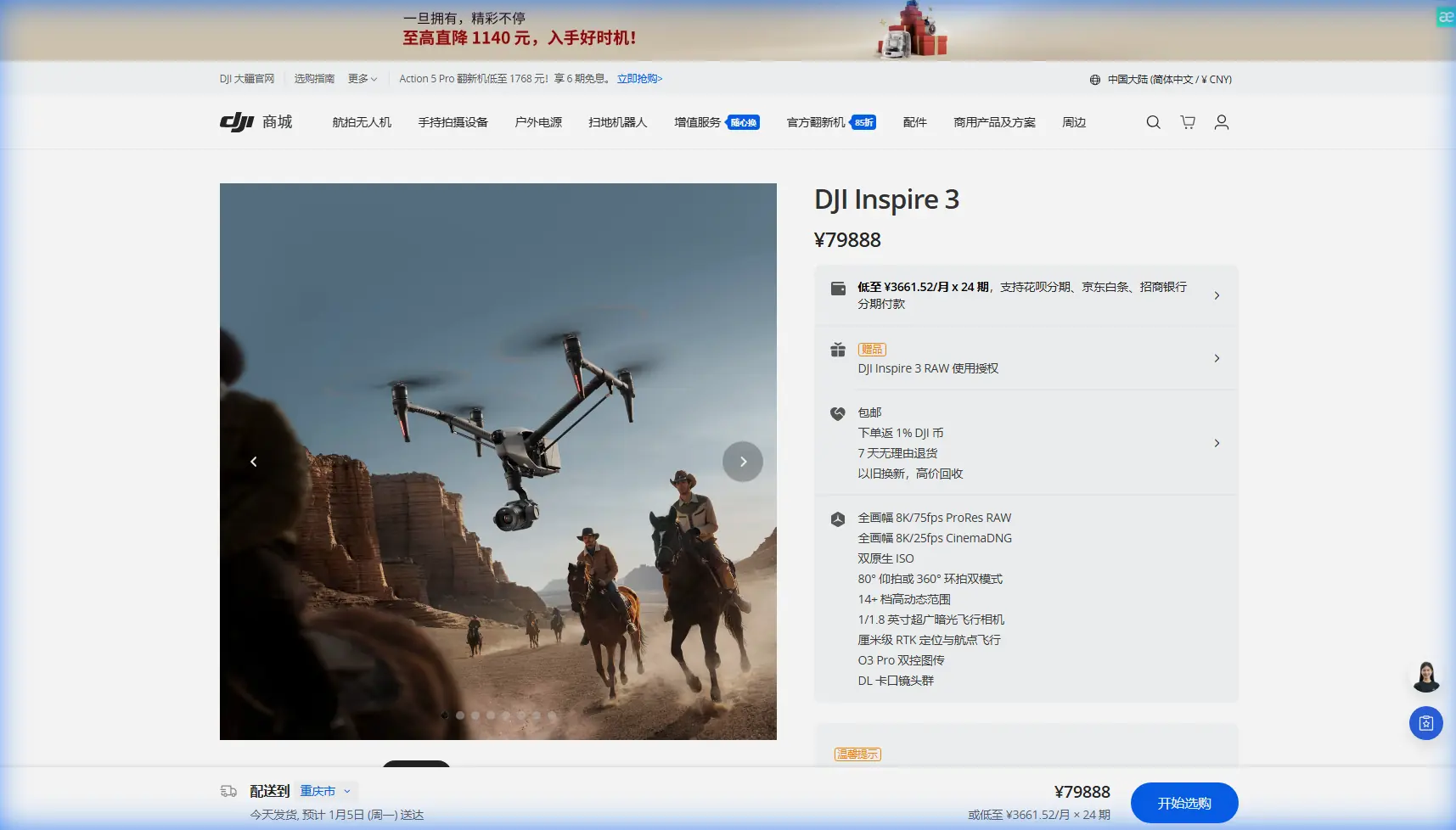
Inspire 3 for Coastline Surveying in Extreme Temperatures: A Specialist’s Field Tutorial
META: Expert tutorial on using the DJI Inspire 3 for coastline surveying in extreme heat and cold, with practical guidance on photogrammetry, thermal workflow, battery strategy, transmission reliability, and offshore mission planning.
Coastlines punish weak workflow. Salt spray creeps into connectors, glare destroys confidence in exposure, wind shifts fast, and temperature swings turn a routine mapping job into a chain of small failures. If you are planning to use the Inspire 3 in this environment, the aircraft can be exceptionally effective—but only if you build the mission around its real operational strengths rather than treating it like a generic camera platform.
I’m writing this from the perspective of a survey specialist who cares less about brochure language and more about whether a dataset closes properly when the shoreline is unstable, reflective, and thermally inconsistent. For that reason, this tutorial focuses on one scenario: coastal surveying in extreme temperatures using the Inspire 3, with an emphasis on photogrammetry discipline, transmission resilience, battery handling, and the practical limits of thermal interpretation.
The Inspire 3 is often discussed as a cinema aircraft first. That misses part of the story. In coastal work, its value comes from a combination of flight precision, dependable control link performance, and the ability to keep sortie tempo high with hot-swap batteries. Those details matter more than they sound on paper. When you are trying to capture a tidal zone before light angle, weather, and surface conditions change, a few saved minutes between flights can preserve consistency across the whole block.
1. Start with the mission geometry, not the aircraft
A coastline survey is rarely one survey. It is usually three overlapping problems:
- mapping the shoreline and adjacent terrain for measurable geometry,
- documenting erosion, structures, or surface anomalies visually,
- interpreting heat behavior or moisture behavior where thermal signature differences tell a useful story.
The Inspire 3 can support the first two directly and the third indirectly, depending on your payload strategy and workflow. That distinction matters. If your end goal is pure photogrammetry, your priority is repeatable image acquisition with strong overlap, controlled exposure, and solid GCP planning. If your goal includes thermal signature interpretation—for example, spotting seepage zones, compromised revetment sections, or temperature-driven discharge patterns—you need to treat thermal as a parallel evidence layer, not as a casual add-on.
In practice, I recommend defining the deliverable before you define the route. Are you producing an orthomosaic for shoreline retreat analysis? A structure inspection set for seawalls or piers? A multimodal evidence package where RGB and thermal observations need to align against surveyed control? The Inspire 3 performs best when you simplify that answer early.
2. Why the Inspire 3 makes sense offshore and along exposed shorelines
For coastal operations, three Inspire 3 attributes deserve more attention than they usually get.
First, the O3 transmission system gives you a stronger operational cushion in visually confusing environments. Shorelines are full of reflective surfaces, vessel traffic, structures, and occasional RF clutter from populated waterfront zones. Stable transmission is not just a convenience issue. It affects confidence when you are holding a long lateral line over water or repositioning near rock faces where visual depth perception can become unreliable. A clean link also improves coordination between pilot and camera operator when you are documenting specific sections of embankment or breakwater.
Second, AES-256 encryption matters more than many survey teams admit. Coastal projects frequently involve critical infrastructure, protected habitats, ports, utilities, or government clients. Secure transmission is not a flashy talking point here. It is part of professional risk management. If you are collecting imagery around sensitive assets, secure data handling expectations begin before the files ever leave the aircraft.
Third, hot-swap batteries are a genuine field advantage in unstable weather windows. Coastline missions are governed by tide, sun angle, wind direction, and surface reflectivity. When conditions line up, you want to keep the aircraft moving. A battery system that lets you turn flights quickly without a full shutdown helps maintain mission continuity and reduces the chance that one stitched map block ends up under visibly different light and shadow conditions than the next.
That last point becomes even more significant in extreme temperatures. In cold coastal air, battery efficiency drops faster than many crews plan for. In high heat, turnaround discipline becomes just as critical because battery packs need careful rotation and monitoring rather than casual reuse.
3. Extreme temperature planning: what changes in the field
Extreme temperatures do not just alter endurance. They change the whole data-acquisition strategy.
In cold conditions
Cold air can improve visibility but punish batteries and crew tempo. Launching with poorly conditioned packs is one of the fastest ways to create inconsistent flight duration across repeated lines. On a coastline, that inconsistency shows up as rushed final passes, compromised overlap, or uneven altitude behavior when the team starts compensating on the fly.
With the Inspire 3, build a battery rotation plan before the first takeoff. Keep packs temperature-managed, log flight time by pack pair, and avoid assuming that the second or third sortie will perform like the first. If you are trying to map a long coastal segment, divide it into blocks that can survive one shortened flight without damaging the full dataset.
Cold also affects operator judgment. Pilots tend to shorten hover checks and preflight observations when exposed on shore. Resist that. A 30-second pause to verify sensor status, horizon behavior, and wind trend can save an hour of reshoot time.
In hot conditions
Heat is rough in a different way. Midday glare is severe, exposed sand and rock surfaces radiate strongly, and thermal turbulence can make low-altitude precision less pleasant than expected. Battery handling becomes a pacing exercise. Do not chase continuous back-to-back flights without giving the packs a disciplined cycle.
Hot-weather shoreline photogrammetry also suffers from surface shimmer. Even when the aircraft is performing normally, your images may carry more subtle distortion than crews expect, especially over mixed wet-dry zones, tidal pools, and reflective sediment bands. In those conditions, I prefer to fly slightly earlier or later in the day and accept a longer field day in exchange for cleaner reconstruction.
4. Photogrammetry over coastlines: where teams usually lose accuracy
If you are surveying coastlines, the real enemy is not just wind. It is false confidence from beautiful imagery that reconstructs poorly.
Shorelines contain repeated textures, moving water, reflective surfaces, and changing boundaries. Good-looking images do not guarantee strong alignment. The Inspire 3 can gather excellent visual material, but your photogrammetry outcome still depends on old-fashioned survey discipline.
Use GCPs wherever the project permits and place them with the shoreline’s geometry in mind. Many teams distribute control points too evenly, as if a beach or seawall behaves like a parking lot. It does not. You need control that captures bends, elevation changes, transitions between hard and soft surfaces, and sections where the visual texture becomes ambiguous.
If the site is long and narrow, think in chained blocks rather than one huge uninterrupted corridor. A coastline dataset can drift subtly over distance, especially when sections of uniform sand or rock reduce tie-point quality. Anchoring each section with sensible GCP coverage keeps the block honest.
Operationally, the Inspire 3’s stable flight behavior helps here because consistency of capture matters. But consistency alone will not rescue bad planning. For shoreline mapping, I typically advise:
- high front and side overlap,
- fixed exposure where possible rather than letting the system react to glare,
- oblique passes when structures or elevation changes matter,
- separate acquisition logic for water edges versus inland margin.
The waterline itself is especially deceptive. It is visually dramatic but often unstable as a measurement boundary. If the shoreline is tidal, document the tidal state and decide which boundary you are actually mapping: wet-sand edge, vegetation line, manmade limit, dune toe, revetment edge, or another repeatable feature. That decision is more valuable than any camera setting.
5. Thermal signature work: useful, but only if you define the question
The Inspire 3 is not automatically a thermal survey machine simply because a coastal client wants heat-related insight. This is where professionals need to be blunt.
Thermal signature interpretation on coastlines can be extremely useful for identifying moisture intrusion, drainage outflows, void-related anomalies behind retaining features, or differing material behavior under solar load. But thermal work fails quickly when crews treat warm and cool areas as self-explanatory.
Ask first: what thermal pattern would actually matter here?
For example, a colder plume entering warmer coastal water may suggest discharge behavior. An uneven heating pattern along a seawall may indicate moisture retention or material inconsistency. A section of revetment that cools differently after sunset may warrant closer inspection. Those are operationally meaningful hypotheses. Random thermal color variation is not.
If you are pairing Inspire 3 RGB data with thermal observations from another platform or sensor workflow, align those missions carefully. Match timing as closely as practical. A thermal signature can change far faster than the physical geometry you are mapping photogrammetrically. The orthomosaic may still be valid hours later. The thermal interpretation may not.
6. The third-party accessory that genuinely helped
One third-party upgrade I have seen make a real difference in this environment is a high-brightness field monitor hood and weather shielding kit from Hoodman-style accessory suppliers, paired with a rugged landing pad system designed for sand and salt-prone sites. That combination sounds modest, but it improves decision quality.
On bright coastlines, pilot and camera operator screen readability is often worse than crews admit. Glare causes framing errors, missed focus issues, and poor thermal interpretation when reviewing supporting data onsite. A proper shielding solution lets the crew judge edge detail and exposure more accurately. The landing pad piece matters too. Coastal contamination is cumulative. Keeping the aircraft out of blowing sand and salt grit during repeated battery swaps protects the workflow over the course of the day, not just the aircraft cosmetically.
I would rank that kind of accessory investment above many “performance” add-ons because it addresses the actual field bottleneck: maintaining clean, confident decision-making in a harsh environment.
7. BVLOS and coastline logic
Many coastline jobs tempt teams toward BVLOS-style thinking even when the operation is not formally structured that way. Linear geography creates the illusion that you can simply keep going down the shore. That is exactly where operational discipline matters.
Whether your regulatory framework permits BVLOS or not, your planning should assume that communication reliability, visual awareness, recovery options, and emergency landing logic must be stronger over coastlines than over benign inland terrain. Water, surf, cliffs, and inaccessible stretches reduce your margin quickly.
The Inspire 3’s O3 transmission helps, but no transmission system should be treated as permission to be casual with route length. Build abort points. Mark retrieval constraints. Identify zones where RF reflections or vessel movement may complicate the flight. If the route crosses areas where people, wildlife, or infrastructure sensitivity increases, split the mission and treat each section as its own risk unit.
8. A practical workflow for an Inspire 3 coastline mission
Here is the field sequence I recommend for specialists working in extreme temperatures:
Begin with a site walk and control strategy. Confirm the shoreline feature you are actually measuring, not just the one that looks visually strongest from the air.
Lay out GCPs to anchor curvature, elevation transitions, and structural breaks. Do not rely on evenly spaced control if the coastline itself is uneven.
Build your flight blocks around temperature and light. In cold weather, protect battery consistency. In heat, avoid forcing the most critical mapping during peak shimmer and glare.
Run a short test line first. Check image sharpness, horizon consistency, overlap logic, and whether reflective surfaces are creating exposure instability.
Use the Inspire 3’s hot-swap capability to preserve mission rhythm, but log battery behavior with discipline. Fast turnaround only helps if the packs remain predictable.
If thermal interpretation is part of the project, define the hypothesis before flying. Collect the RGB baseline cleanly, then pair thermal observations in a time window that preserves meaning.
Review samples in the field using proper screen shading or a protected monitor setup. This is one of the fastest ways to catch avoidable reshoots.
If you need a second opinion on route design or payload planning, I’d suggest sending a quick field brief through our UAV operations chat before committing to a long shoreline block.
9. What makes the Inspire 3 especially effective here
For this specific use case, the Inspire 3 earns its place not because it does everything, but because it does several hard things reliably at once.
It keeps teams moving with hot-swap batteries when environmental timing matters. It supports secure operations through AES-256 transmission encryption when projects involve sensitive coastal assets. It offers robust O3 transmission performance that reduces stress in reflective, wind-exposed environments. And it provides the kind of stable image capture platform that gives photogrammetry a fighting chance in terrain that is inherently messy.
That does not eliminate the need for careful survey design. Nothing will. But it means the aircraft is less likely to become the weak link if the operator respects the environment and builds the mission around coastal realities rather than generic aerial habits.
For shoreline work in extreme temperatures, that is the standard that matters. Not whether the aircraft sounds advanced, but whether the dataset remains usable after the field day is over.
Ready for your own Inspire 3? Contact our team for expert consultation.